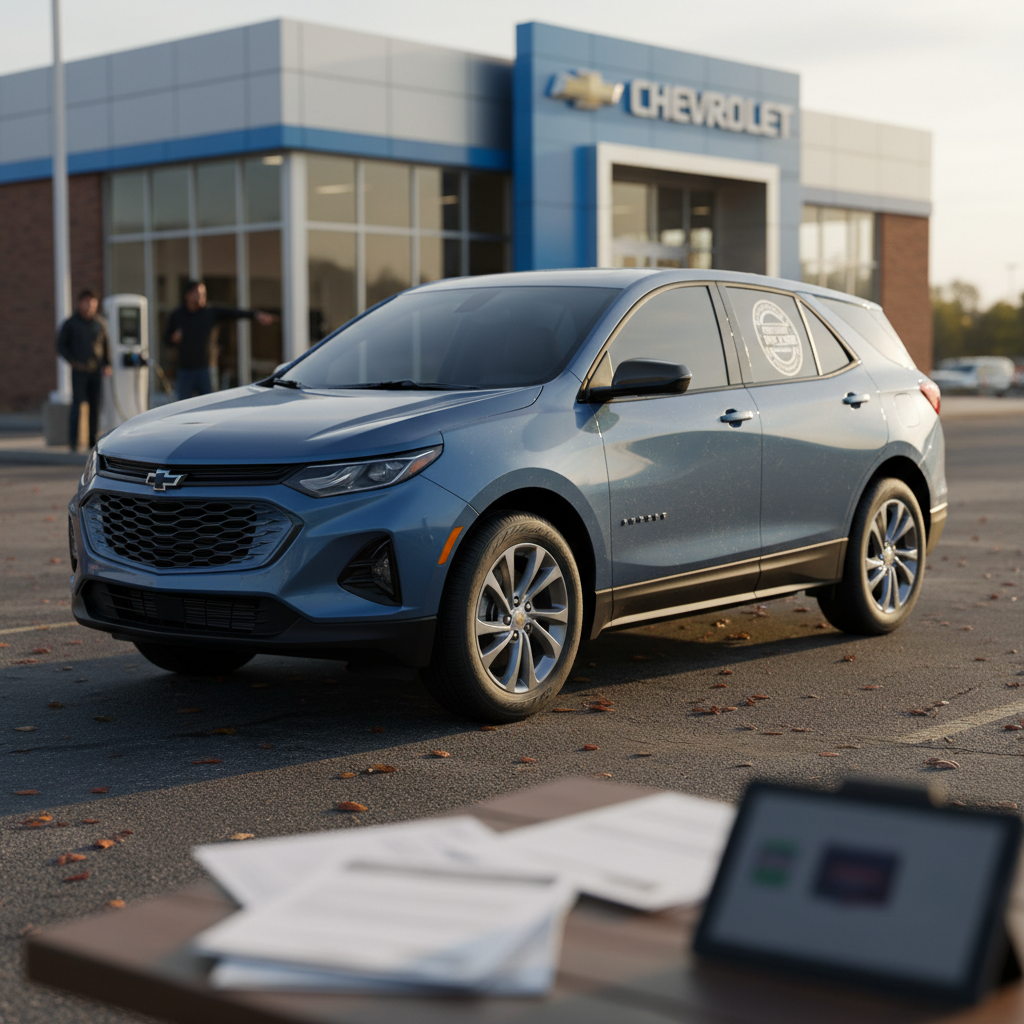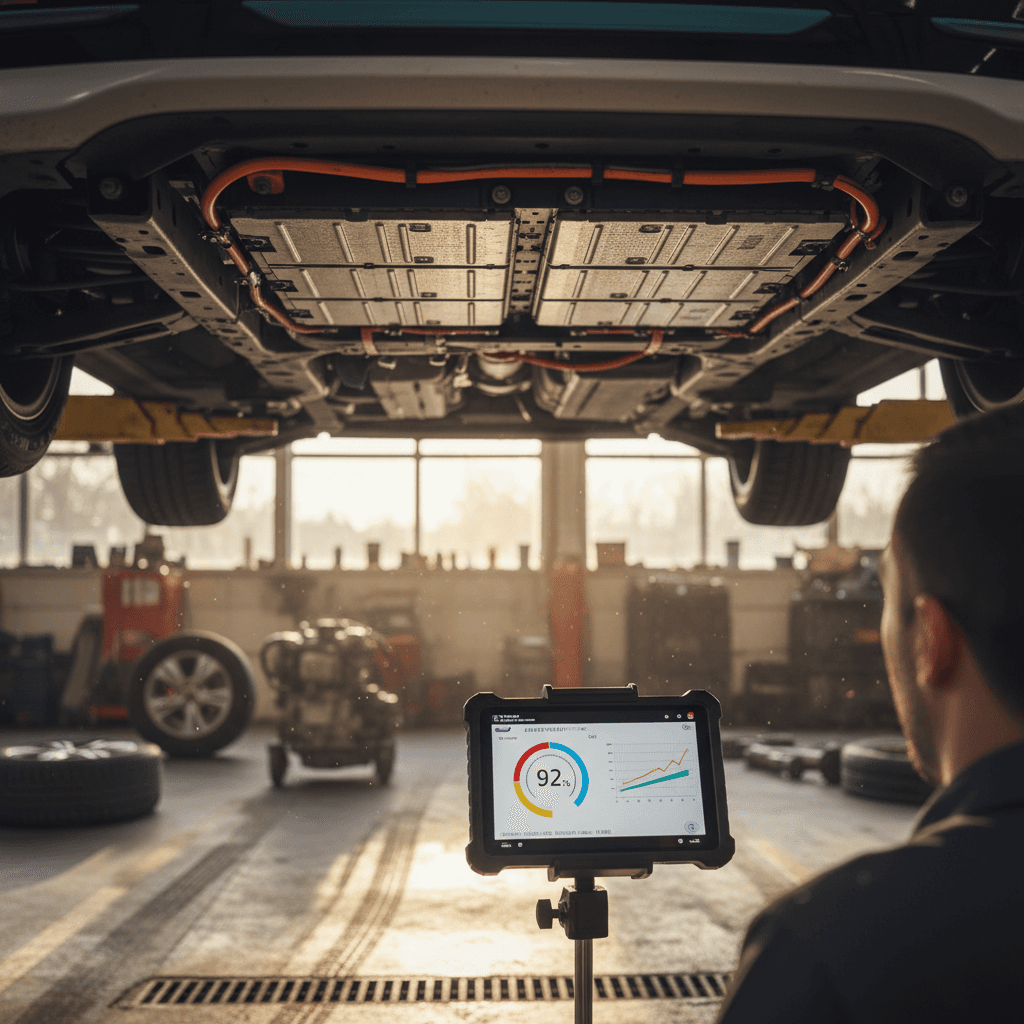
If you’re driving, or thinking about buying, a Kia Niro EV, the big question is obvious: how long will the battery last before range loss becomes a problem or a replacement bill shows up? The good news is that modern Niro EV packs are engineered to outlast most people’s ownership window, especially if you understand how degradation works and treat the battery well.
Key takeaway up front
Kia Niro EV battery lifespan at a glance
Kia Niro EV battery life in simple numbers
Those numbers are averages, not guarantees, but they match what we’re seeing across real‑world EV data and early‑generation Niro EVs that have already logged years of daily use. The rest of this guide breaks down what that means for your specific driving pattern, and especially if you’re comparing new vs. used Niro EVs.
How long does a Kia Niro EV battery really last?
Think of battery lifespan in two layers: 1. Warranty life: Kia backs the Niro EV’s high‑voltage battery for up to 10 years or 100,000 miles for the first owner in the U.S. That’s Kia’s way of saying, “We’re confident this pack will stay healthy well into six figures of mileage.” 2. Functional life: How long the pack stays healthy enough that you’re happy with the range. With typical 1–2% annual degradation, many Niro EV batteries should remain quite usable for 12–18 years in moderate climates before range loss becomes a deal‑breaker.
- In a mild climate with mostly Level 2 charging, it’s realistic for a Niro EV battery to last well past 150,000 miles, and often beyond 200,000 miles, with acceptable range.
- In very hot climates with lots of DC fast charging, you might see faster degradation, think closer to the low end of that 12–18 year span.
- Most owners will sell or trade the car for other reasons (features, size, styling) before the battery is truly “worn out.”
A simple way to frame it
Kia Niro EV battery warranty and what it really means
Kia’s battery warranty is generous but also a bit misunderstood, especially when you’re looking at second‑owner or used Niro EVs.
Kia Niro EV battery warranty basics (U.S.)
How Kia structures time, mileage, and capacity coverage for the Niro EV high‑voltage battery.
| Owner type | Coverage length | Mileage cap | Capacity guarantee | What it means in practice |
|---|---|---|---|---|
| Original owner | 10 years | 100,000 miles | Typically ~70%+ capacity | If the pack loses capacity unusually fast in that window, Kia can repair or replace it. |
| Subsequent owner | Often 5 years | 60,000 miles | Varies by market; may not include capacity | Powertrain coverage is shorter; battery defect coverage can be more limited for used buyers. |
| Everyone | Basic warranty | Varies by market | Not capacity‑based | Separately covers defects in materials/workmanship on the rest of the car. |
Always confirm details in your specific vehicle’s warranty booklet, but this table reflects the general pattern for recent Niro EV model years in the U.S.
Don’t assume full 10‑year coverage as a second owner
Crucially, Kia’s high‑voltage battery warranty isn’t just about the pack failing entirely. It also addresses excessive capacity loss, usually interpreted as dropping below roughly 70% of the original usable capacity during the warranty window. Normal, gradual range loss is expected and not considered a defect.
Typical battery degradation in the Niro EV
Most modern EVs with nickel‑rich lithium‑ion packs, including the Niro EV, show a recurring pattern: a small drop in the first couple of years, then a much slower decline. Real‑world fleet data and owner reports point to roughly 1–2% capacity loss per year in normal use, with hotter climates and heavy DC fast charging creating the outliers on the high side.
- Many early‑build e‑Niro / Niro EV owners report minimal noticeable range loss even after 4–5 years and tens of thousands of miles, especially in cooler climates.
- It’s common to see 95–98% state‑of‑health reported after ~2–3 years and 20,000–40,000 miles, which lines up with that 1–2% per‑year pattern.
- Kia also builds in a buffer between the battery’s gross capacity and what the car exposes to you as usable kWh. As the pack ages, some of that buffer is consumed, which helps “hide” early degradation so your displayed range stays more stable.
What does 20–25% loss feel like?
Miles vs. years: how to think about lifespan
Battery lifespan in miles
EV engineers often think in terms of charge cycles. If a Niro EV pack is designed for around 1,000 full‑equivalent cycles and you average 240–250 miles per full pack, you’re in the ballpark of 240,000–250,000 miles before hitting that 70% capacity mark.
- High‑mileage drivers (20,000+ mi/year) will reach the cycle limit faster, but usually still within the vehicle’s natural service life.
- Lots of short trips with frequent charging add partial cycles, but don’t necessarily hurt the pack if temperatures and voltages are well‑managed.
Battery lifespan in years
Even if you baby the car and barely drive it, the pack ages with the calendar. That’s because time, temperature, and state of charge quietly wear on the chemistry.
- In moderate climates, most EV packs are on track for 12–15 years before capacity falls to around 70–75%.
- In very hot climates with lots of high‑SOC storage, that could be closer to the low teens.
- For many U.S. households, that’s roughly in line with how long they keep any vehicle.
The silent battery killer: heat + high charge
Factors that shorten, or extend, Kia Niro EV battery life
Biggest drivers of Niro EV battery lifespan
Some you can’t control (climate), others you absolutely can (charging habits).
Climate & temperature
Hot environments accelerate chemical aging inside the pack.
- Parking outside in blazing sun every day speeds degradation.
- Frequent rapid fast‑charging in high heat can compound the effect.
- Cold hurts temporary range, but is much less damaging long‑term.
Charging style
How you charge matters at least as much as how often.
- Regular Level 2 charging at home or work is the gentlest option.
- Using DC fast charging occasionally on road trips is fine.
- Living on fast charging for daily use will wear the pack faster.
State of charge habits
Keeping the pack near the extremes, 0% or 100%, is harder on chemistry.
- Best practice is living roughly in the 20–80% window for daily use.
- Charge to ~100% only when you really need maximum range and then drive soon after.
Mileage & trip patterns
Ironically, EVs like being used.
- Consistent daily driving with overnight charging is ideal.
- Very long storage periods at high or very low SOC are riskier.
Software & maintenance
Keeping the car updated and serviced helps the battery management system do its job.
- Software updates can tweak thermal management and charging behavior.
- Documented service history is a plus when you’re buying used.
Storage conditions
Where you park and store the car matters.
- A shaded driveway or garage slows heat‑related aging.
- Long airport‑style parking sessions are safest at ~40–60% SOC.
Used Kia Niro EV: how to check battery health
If you’re considering a used Niro EV, battery lifespan isn’t an abstract question, it’s central to whether the deal pencils out. The trouble is that the car only gives you indirect signals about pack health: estimated range, dash readouts, maybe a basic “state-of-health” number in an app. None of those tells the whole story by itself.
Battery checks to make before you buy a used Niro EV
1. Compare displayed range at 100%
On a fully charged battery, compare the estimated range to the original EPA rating for that model year (often around 239–253 miles for recent Niro EVs). Adjust for temperature, tires, and driving history; a modest difference is normal, a huge gap can be a red flag.
2. Review charging and use history
Ask how the previous owner charged the car: mostly at home on Level 2, or almost entirely on DC fast chargers? A car that lived on highway fast chargers in Phoenix will age differently than one home‑charged in Seattle.
3. Check remaining battery warranty
Confirm whether the car still has any high‑voltage battery warranty left, and whether you’ll get the full term as a second owner. Don’t rely on ad copy; read the warranty guide for that VIN and model year.
4. Scan for warning lights or reduced power
On a test drive, watch for battery or powertrain warning lights, sudden power limits, or big swings in state‑of‑charge readouts. These can signal deeper issues than normal degradation.
5. Get a professional battery health report
For higher‑value used EVs, a third‑party diagnostic that looks at pack health, cell balance, and degradation trend is worth it. That’s exactly what you get by default when you buy through Recharged.
6. Look at how the car was stored
Ask where the car spent its life: garaged or baking in the sun? Northern climate or deep South? Long‑term storage at full charge in a hot climate is a risk factor.
How Recharged handles Niro EV battery health
Ready to find your next EV?
Browse Vehicles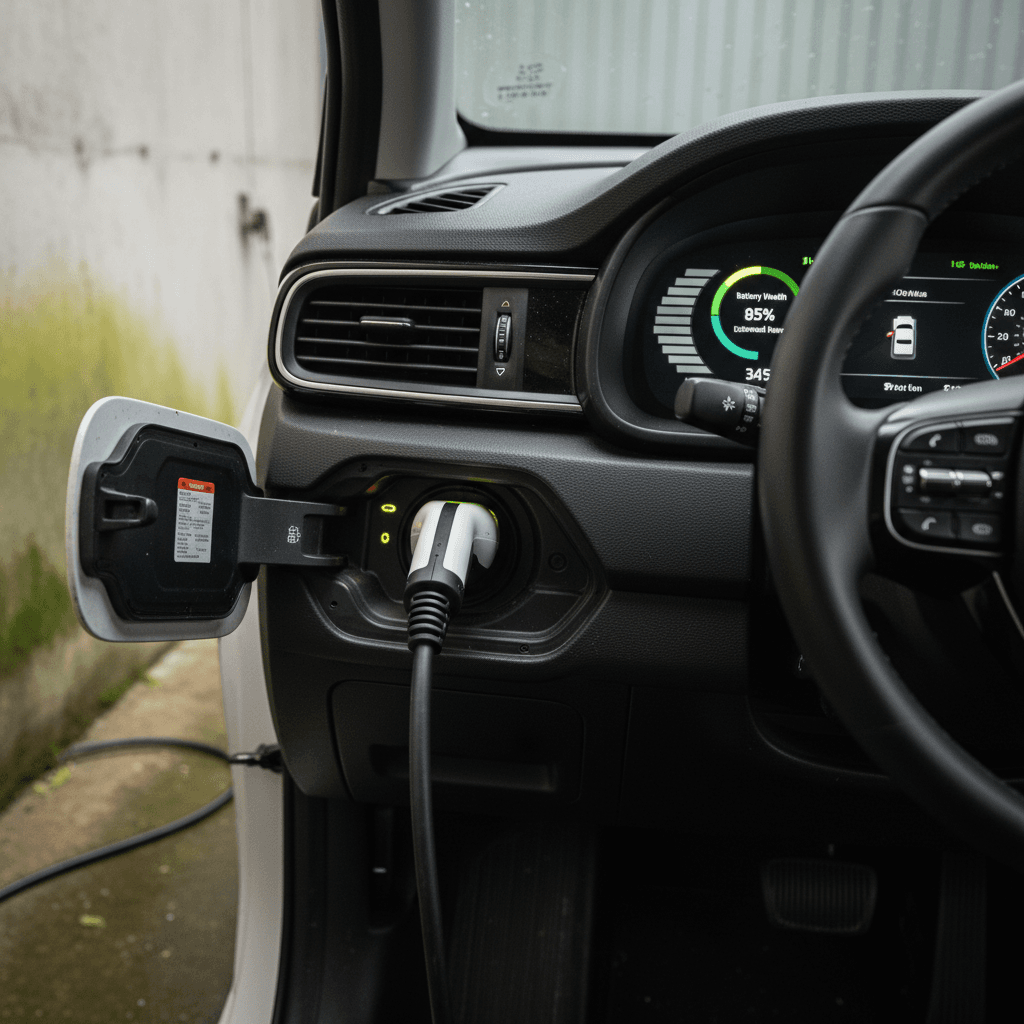
How to make your Kia Niro EV battery last longer
You can’t control chemistry, but you can absolutely nudge the odds in your favor. The following habits have an outsized impact on how long your Niro EV battery stays close to its original range.
Practical habits to maximize Niro EV battery life
Keep daily charging in the 20–80% band
For routine commuting, there’s no need to sit at 100%. Many owners set a charge limit around 80% for daily use, topping to ~100% only before road trips.
Avoid parking at 0% or 100% for long periods
If you arrive home nearly empty, plug in soon. If you need 100% in the morning, time the charge so it finishes close to departure rather than sitting full overnight, especially in hot weather.
Favor Level 2 over DC fast charging
Use DC fast charging when you need it, but try not to make it your daily refueling routine. A home Level 2 charger is gentler on the pack and more convenient in the long run.
Care about where you park
Shade or a garage is worth real battery life, particularly in hot climates. Every degree you can keep the pack cooler on summer days slows chemical aging.
Keep software up to date
Kia occasionally refines thermal management and charging logic via software updates. Keeping the car current helps the battery management system protect the pack.
Drive smoothly when possible
You don’t have to baby the car, but constant full‑throttle launches and heavy braking add heat and stress. Smooth driving is easier on both the battery and the rest of the drivetrain.
Plan for the long term
Kia Niro EV battery lifespan: FAQ
Common questions about Kia Niro EV battery life
Should battery life stop you from buying a used Niro EV?
For most shoppers, battery lifespan shouldn’t be a deal‑breaker on a Kia Niro EV. The chemistry is mature, real‑world degradation is modest when the car is treated reasonably, and Kia’s long high‑voltage warranty provides a strong safety net for first owners. The real risk isn’t that Niro EV packs are fragile, it’s going in blind on a used car without knowing how that particular pack has been treated.
If you’re shopping used, the smart move is to combine good questions (charging habits, climate, storage) with hard data from a proper battery health assessment. That’s exactly the gap Recharged is built to fill: every Niro EV we list comes with a Recharged Score Report that translates complex battery diagnostics into simple, transparent information, alongside fair market pricing and end‑to‑end EV‑specialist support.
Do that, and the question stops being “Will this Niro EV battery suddenly die?” and becomes “Does this specific car’s range and warranty window fit my life?” For most drivers, the answer will be a confident yes, especially if you buy the right car, with the right battery, at the right price.