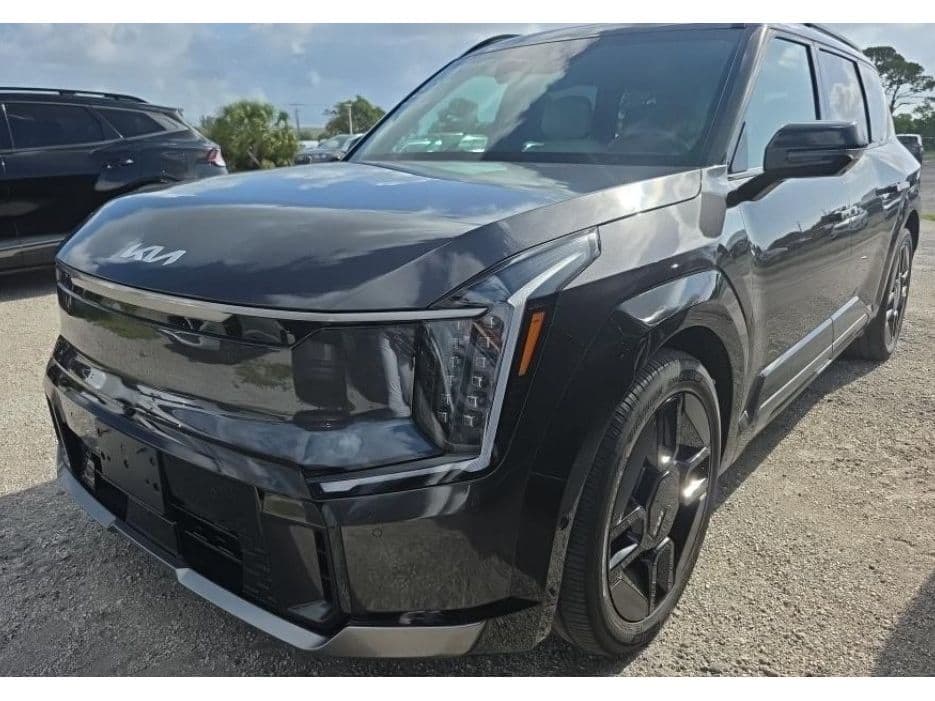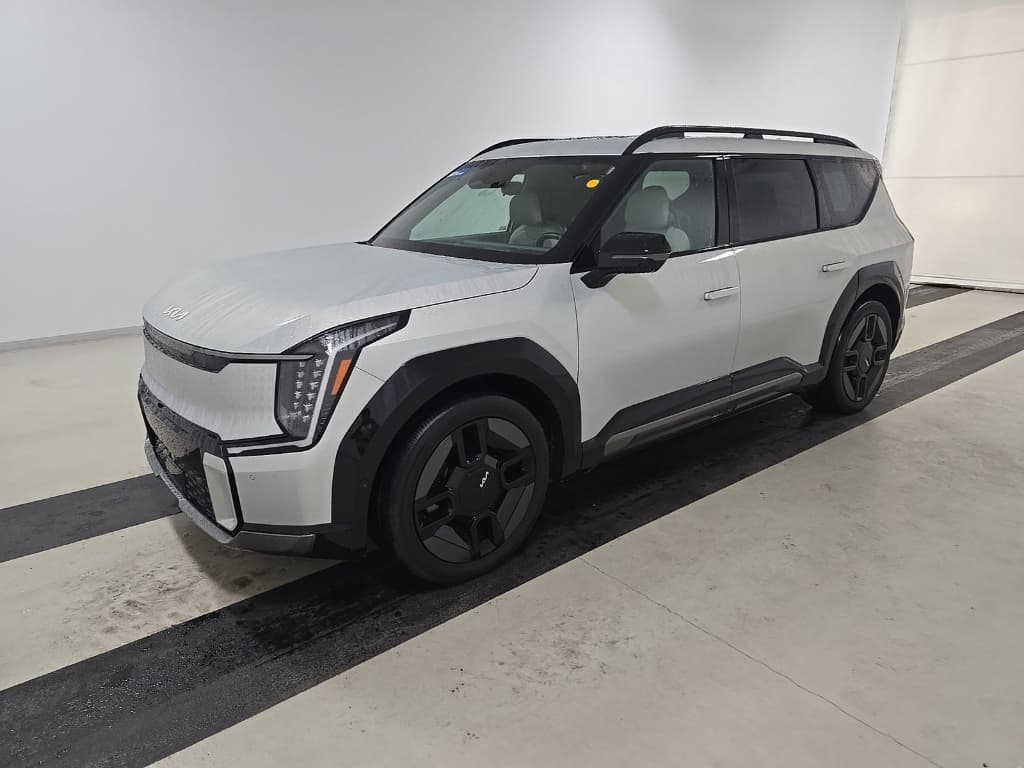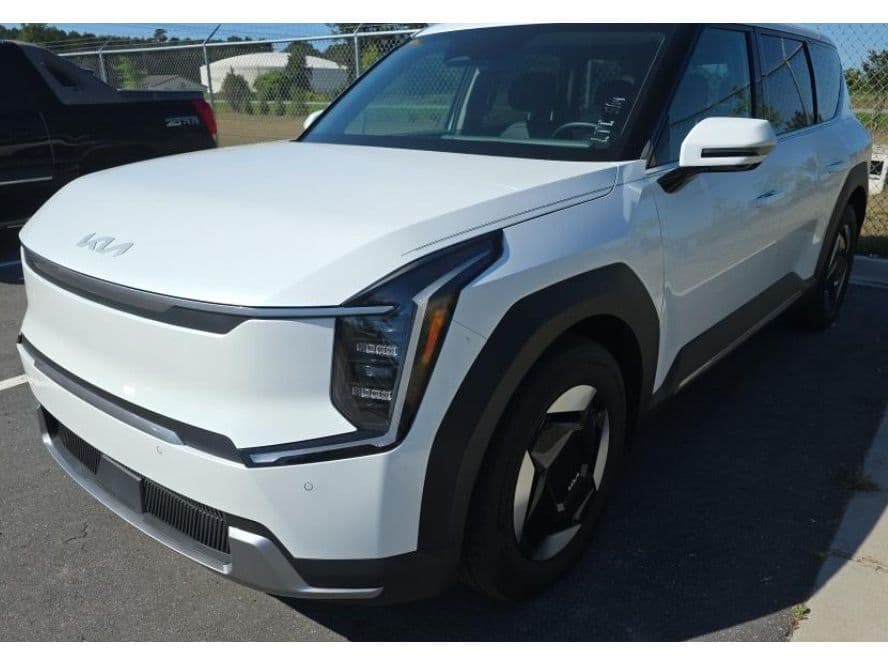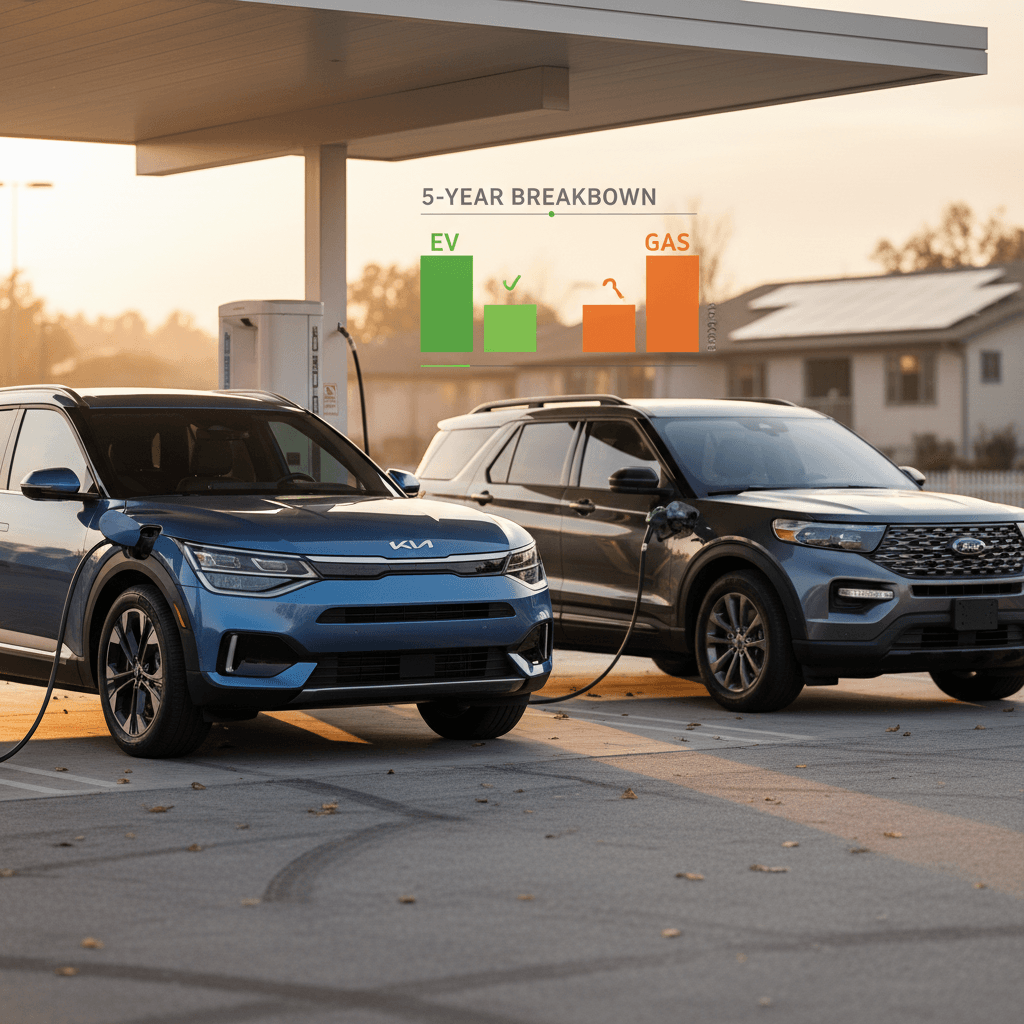
You don’t buy a three‑row family SUV lightly. When you look at the Kia EV9 total cost vs a gas car equivalent, the sticker price is only the starting point. Over five years, fuel, maintenance, incentives, and resale value can add up to a five‑figure swing in either direction.
Bottom line in one sentence
Why Kia EV9 vs Gas SUV costs matter
If you’re cross‑shopping a Kia EV9 with a gas‑powered three‑row like a Kia Telluride, Hyundai Palisade, Honda Pilot, or Toyota Highlander, you’re really asking one core question: will the higher upfront price of the EV9 pay you back over time? With gas prices bouncing around and electricity remaining relatively stable, the answer often comes down to how much you drive and where you charge.
This guide uses realistic U.S. averages to compare a Kia EV9 to a similarly equipped gas SUV over five years and 60,000 miles. Your exact numbers will vary by state, utility rate, and driving habits, but the framework here will help you plug in your own details.
Use this as a template
What we compare: Kia EV9 vs gas equivalent
Our comparison assumptions (5‑year / 60,000 miles)
These are realistic, but conservative, U.S. averages. Adjust them for your situation.
Vehicles compared
- Kia EV9 Wind RWD or similar trim
- Gas SUV: Kia Telluride / similar three‑row, V6 or turbo four
Usage pattern
- 12,000 miles per year
- 5‑year ownership (60,000 miles)
- Mix of city/highway driving
Energy costs
- Home electricity: $0.15/kWh
- Public fast charging used sparingly
- Gasoline: $3.50/gallon average
Other key factors
- Financing over 5–6 years
- Federal EV tax credit eligibility where applicable
- Resale values based on current EV and SUV trends
Important disclaimer
Headline results: 5‑year total cost at a glance
Approximate 5‑year cost comparison (60,000 miles)
The short version

Purchase price, incentives, and financing
Sticker price: EV9 vs gas SUV
A new Kia EV9 typically carries a higher MSRP than a comparably equipped Kia Telluride or similar gas SUV. It’s common to see a gap of $8,000–$12,000 before incentives, depending on trim and options.
- Gas three‑row SUV (nicely equipped): often in the mid‑$40,000s.
- Kia EV9 (mid‑level trims): frequently in the low‑to‑mid $50,000s before incentives.
Incentives and financing
Many shoppers can shrink that gap with incentives and smart financing:
- Federal clean vehicle tax credit: Up to $7,500 on eligible vehicles and buyers. In some cases, this can be applied at the point of sale to reduce the upfront price.
- State/local incentives: Some states and utilities add rebates or bill credits for EV purchases or home charger installations.
- Financing: Spreading the higher EV9 price over a 5‑ or 6‑year loan can make monthly payments comparable once you factor in lower fuel and maintenance spending.
If you’re looking at a used Kia EV9, you skip the steepest new‑car depreciation. On Recharged, you can also review a vehicle’s Recharged Score Report for battery health and fair‑value pricing, which helps keep financing and long‑term costs predictable.
Don’t forget used‑EV credits
Fuel vs electricity costs for the Kia EV9
Fuel is where EVs usually earn their keep. To compare, you need three things: how efficient each vehicle is, the price of energy, and how many miles you’ll drive.
Estimated 5‑year fuel vs electricity spending (60,000 miles)
Assumes 60,000 miles, $3.50/gal gasoline, $0.15/kWh home electricity, and typical efficiency for each vehicle type.
| Vehicle | Efficiency assumption | Energy price assumption | Estimated 5‑year energy cost |
|---|---|---|---|
| Kia EV9 | ~2.5–3.0 miles per kWh | $0.15 per kWh at home | ≈$3,000–$3,600 |
| Gas three‑row SUV | ~22 MPG combined | $3.50 per gallon | ≈$9,500–$10,000 |
Your actual numbers will vary with driving style, climate, and energy prices, but these figures are realistic planning anchors.
Spread over five years, that’s a difference of roughly $6,000–$7,000 in the EV9’s favor, assuming mostly home charging. Habitual DC fast charging at higher rates will trim those savings but usually won’t erase them unless your public charging prices approach or exceed gasoline on a cost‑per‑mile basis.
Public fast charging caveat
Maintenance and repairs: EV9 vs gas SUV
EVs like the Kia EV9 don’t need oil changes, spark plugs, timing belts, or transmission fluid flushes. Regenerative braking also reduces brake wear. Over five years, that simplicity adds up.
Typical 5‑year maintenance expectations
Real‑world costs will vary by dealer, region, and how hard you drive.
Gas SUV
- Regular oil and filter changes
- Transmission service
- Engine air and fuel filters
- More frequent brake jobs
Kia EV9
- No engine, no oil
- Fewer moving parts overall
- Brake pads last longer
- Software updates handle some fixes
Shared items
- Tire rotations (possibly more frequent on heavier EV9)
- Cabin air filters
- Alignment and suspension checks
A reasonable planning estimate is that an EV9’s routine maintenance over five years will land 20–40% lower than a comparable gas SUV. If a gas model might average $900–$1,200 per year in maintenance and wear items, an EV9 might often land in the $600–$800 range, primarily for tires and basic inspections.
What about battery replacement?
Insurance, registration, and other fees
Insurance can be a wild card. EVs sometimes cost a bit more to insure because of higher repair costs and complex electronics. On the other hand, advanced safety tech and lower annual mileage for some EV owners can pull costs down.
- Plan for insurance on an EV9 to be roughly similar to or slightly higher than a gas SUV of the same value.
- Some states charge additional annual EV registration fees to offset lost gas tax revenue. These might run a few hundred dollars a year but are usually outweighed by fuel savings.
- Parking, toll discounts, and HOV incentives in some regions can partly offset any extra fees.
Net effect of fees
Resale value and depreciation
Depreciation is the largest single cost of owning almost any new vehicle. Both large SUVs and new EVs lose value quickly in the first few years, but the patterns can be different.
How depreciation can play out
Illustrative 5‑year examples based on current market behavior.
Gas three‑row SUV
- Well‑known, high‑demand models like the Telluride have shown historically strong resale.
- After five years, it’s common for a popular gas SUV to retain 45–55% of its original value, depending on mileage and condition.
Kia EV9
- Modern EVs have seen faster early depreciation than some gas peers, partly due to rapid tech improvements and incentive effects.
- However, as charging networks expand and more buyers seek large EVs, demand for spacious used EVs like the EV9 is building.
From a planning standpoint, it’s reasonable to assume broadly similar 5‑year depreciation for a well‑regarded gas SUV and an in‑demand EV9, especially if the EV9 maintains competitive range and charging speeds. Over a longer horizon, EV resale may benefit from tightening emissions rules and growing demand for zero‑emission vehicles.
How Recharged helps on resale risk
Five‑year Kia EV9 vs gas SUV cost table
Illustrative 5‑year total cost of ownership
Approximate five‑year costs for a Kia EV9 vs a comparable gas three‑row SUV, assuming 60,000 miles. Purchase prices and resale values are rounded for simplicity.
| Category (5 years / 60,000 miles) | Kia EV9 (estimate) | Gas three‑row SUV (estimate) |
|---|---|---|
| Purchase price (out‑the‑door, after any EV9 incentives) | $53,000 | $45,000 |
| Finance interest (typical loan) | $6,000 | $5,000 |
| Fuel / electricity | $3,000–$3,600 | $9,500–$10,000 |
| Maintenance & repairs (routine) | $3,000–$4,000 | $4,500–$6,000 |
| Insurance & fees (incremental EV vs gas difference) | +≈$1,000 (possible extra EV fees/insurance) | Baseline |
| Estimated resale value after 5 years | $30,000–$32,000 | $23,000–$25,000 |
| Net 5‑year cost (very rough) | ≈$70,000–$75,000 | ≈$72,000–$78,000 |
Use this table as a framework. Swap in your local fuel, electricity, and purchase prices for a personalized view.
Notice how the categories trade off: the EV9 starts more expensive but pays you back in fuel and maintenance, while the gas SUV starts cheaper and repays you with a more familiar ownership pattern. Depending on how you drive and charge, the EV9 can end up slightly cheaper, roughly equal, or slightly more expensive over five years, but rarely wildly off in either direction.
How buying used changes the math
The moment you start looking at used Kia EV9s, total cost of ownership shifts in your favor. You avoid the steepest initial depreciation and still get modern battery tech, advanced safety features, and a spacious three‑row layout.
Why a used EV9 can be a cost sweet spot
1. Lower upfront price
A pre‑owned EV9 can cost thousands less than new while offering very similar range, charging speeds, and tech, especially in the first few model years.
2. Incentives may still apply
Depending on rules at the time of purchase, some used EVs can qualify for a federal used clean vehicle tax credit, further lowering your net price.
3. Known battery condition
With a battery health report, like the <strong>Recharged Score Report</strong> provided on every EV sold through Recharged, you can see how the pack has aged before you buy.
4. Shorter payoff horizon
Because your starting price is lower, it usually takes fewer years of fuel and maintenance savings to come out ahead versus a similarly priced gas SUV.
Where Recharged fits in
Ready to find your next EV?
Browse VehiclesIs the Kia EV9 worth it vs a gas SUV?
When you stack all the pieces together, purchase price, incentives, fuel, maintenance, and resale, the Kia EV9 usually lands in the same ballpark or better than a comparable gas three‑row SUV over a five‑year, 60,000‑mile window. The more you drive and the more you can charge at home, the more the EV9 tends to pull ahead on cost.
Who the EV9 often makes financial sense for
- Families driving 10,000–15,000 miles per year.
- Owners with reliable home or workplace charging.
- Shoppers who can take advantage of federal or state EV incentives.
- Buyers comfortable with modern tech and over‑the‑air updates.
Who might lean toward a gas SUV
- Drivers without practical access to home charging who would rely heavily on DC fast chargers.
- Shoppers planning to keep the vehicle only 2–3 years, where initial depreciation weighs heavily.
- Buyers in regions with very low gasoline prices and relatively high electricity rates.
If you’re seriously comparing a Kia EV9 vs a gas SUV equivalent, the final decision often comes down to charging convenience and your appetite for new technology rather than cost alone. The good news: for many households, the EV9 doesn’t just match the gas alternative on total cost, it delivers quieter driving, instant torque, and zero tailpipe emissions as a bonus. And if you want to tip the math further in your favor, a quality used EV9 with a verified battery report from Recharged can make the numbers even more compelling.