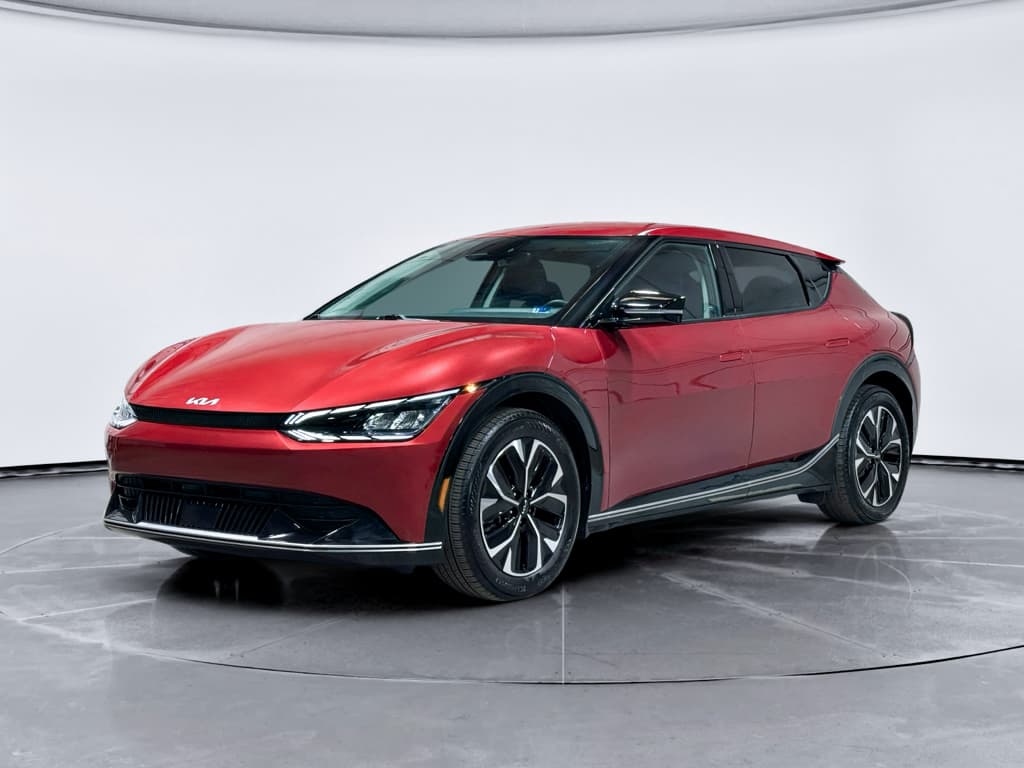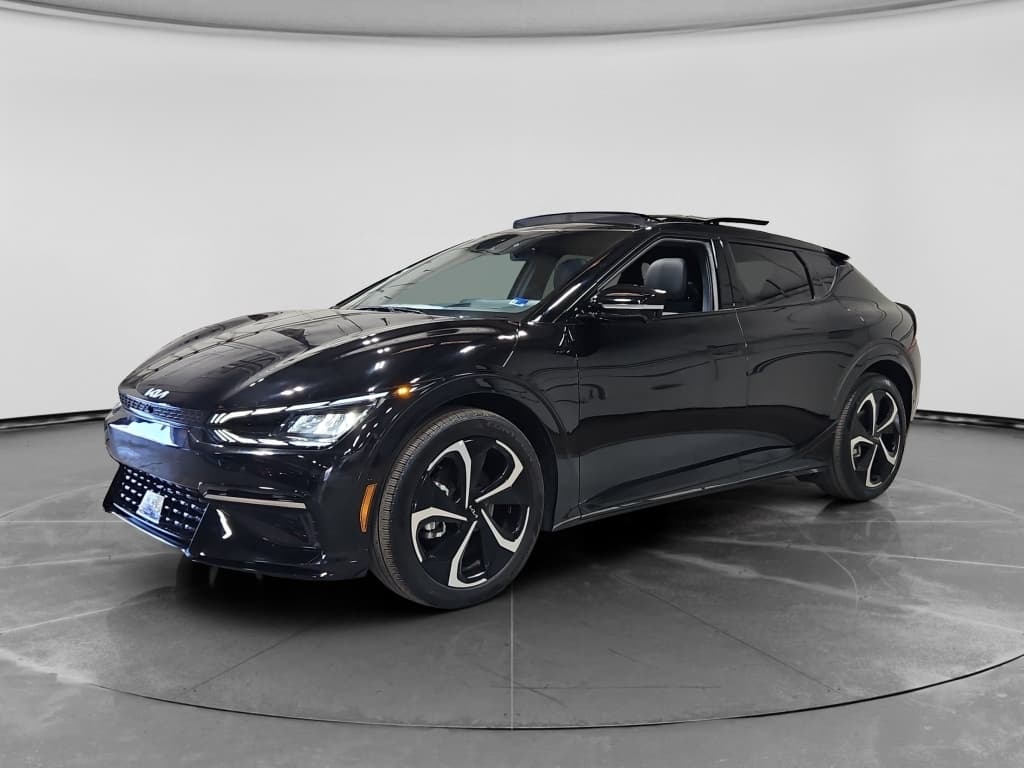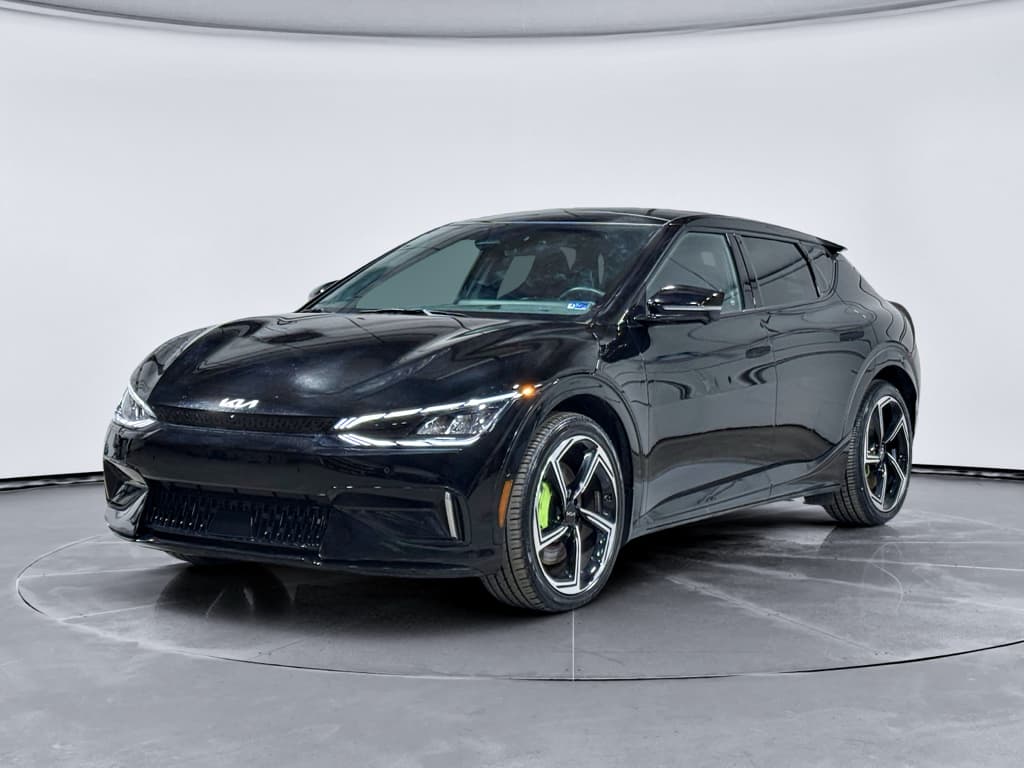
If you’re watching the **Kia EV6 price forecast for 2026**, you’re not alone. EV pricing has been on a roller coaster, MSRPs up one month, heavy discounts the next, and tax-credit eligibility changing along the way. For shoppers trying to decide between a new or used EV6, 2026 could be a pivotal year.
About this 2026 EV6 forecast
Why Kia EV6 pricing in 2026 matters right now
EV6 is entering mid-life
The EV6 launched for the 2022 model year. By 2026, it’s no longer the shiny new tech toy, it’s a maturing nameplate competing with newer compact crossovers and Kia’s own EV3 and EV9. That usually means **stronger incentives on new models** and more inventory in the used market.
Tax credits and local deals are shifting
The EV6’s transition to U.S. assembly and a native NACS port made it more attractive in 2025, and many 2025 EV6 trims qualify for a full **$7,500 federal tax credit** when purchased, with aggressive factory cash layered on top. Those same forces will heavily influence what the 2026 model will actually transact for.
If you’re thinking about a **used EV6 in 2026**, today’s new-car pricing still matters. Steep factory cash on new models tends to pull used prices down, especially for 2–3‑year‑old examples coming off lease. That’s the backdrop for the rest of this forecast.
Where Kia EV6 prices stand going into 2026
Kia EV6 pricing snapshot, 2024–2025
On paper, the 2025 Kia EV6 looks pricey, with a **mid‑$40,000 starting MSRP** and well‑equipped trims that can climb into the $50,000s and beyond. In practice, a combination of federal credits, Kia customer cash, and dealer discounts has often pulled the real transaction price down by **$10,000 or more** for qualified buyers.
MSRP vs. actual transaction price
Key forces shaping the 2026 Kia EV6 price forecast
Four big levers on 2026 EV6 pricing
MSRP is just one piece of the puzzle
1. Federal and state incentives
Because the EV6 is now assembled in Georgia and appears on federal eligibility lists, **many 2025–2026 trims are expected to qualify for up to $7,500 in federal tax credits**, subject to income and price caps. Some states then stack their own rebates or tax credits on top.
2. Slower EV demand growth
U.S. EV market share keeps rising, but growth has cooled from the early‑adopter surge. Automakers like Kia have reacted with **heavier discounting** to keep volume up, which tends to cap how high effective prices can go in 2026.
3. Competitive pressure
The EV6 competes head‑on with crossovers like the Hyundai Ioniq 5, Tesla Model Y, and a growing set of Chinese‑built EVs overseas. With Tesla cutting prices and new entrants undercutting legacy brands, Kia has limited room to raise EV6 prices aggressively.
4. Model lifecycle & product mix
By 2026, the EV6 will share showroom space with the EV3 and EV9, and may be edging toward a refresh or strategic repositioning. That often translates into **more retail support on mid‑cycle models** and a growing supply of 2–4‑year‑old used inventory.
How to read any 2026 price forecast
Forecast: New 2026 Kia EV6 MSRP and incentives
Kia hasn’t published 2026 EV6 pricing at the time of writing, but we can get reasonably close using 2024–2025 changes as a guide. The 2025 EV6 saw list prices rise by roughly **low‑single‑digit thousands of dollars** on many trims while incentives became more generous once U.S. production and tax‑credit eligibility kicked in.
Illustrative 2026 Kia EV6 MSRP ranges (U.S.)
Approximate MSRP bands based on current 2025 pricing and modest year‑over‑year increases. These are directional, not official numbers.
| Trim level (illustrative) | 2025 MSRP ballpark | 2026 MSRP outlook | Notes |
|---|---|---|---|
| Light / base RWD | ~$44,000–$45,000 | ~$45,000–$46,000 | Small bump likely, still positioned as entry EV6. |
| Wind / mid‑grade RWD or AWD | ~$48,000–$55,000 | ~$49,000–$56,000 | Expect slight increases with incentives doing the heavy lifting. |
| GT-Line AWD | ~$55,000–$60,000 | ~$56,000–$61,000 | Price pressure from premium rivals may limit increases. |
| EV6 GT performance | ~$65,000+ | ~$66,000+ | Higher price, less likely to qualify for purchase credits if imported. |
Directional 2026 price bands assume similar trim structure to 2025 and 1–3% list‑price inflation.
Forecast, not a price sheet
The more important story is likely incentives. With EV competition intensifying and policymakers leaning on automakers to move more zero‑emission metal, it’s reasonable to expect **continued factory cash, low‑APR offers, or lease subvention on 2026 EV6 models**, especially if inventory builds up.
Forecast: Used Kia EV6 prices in 2026
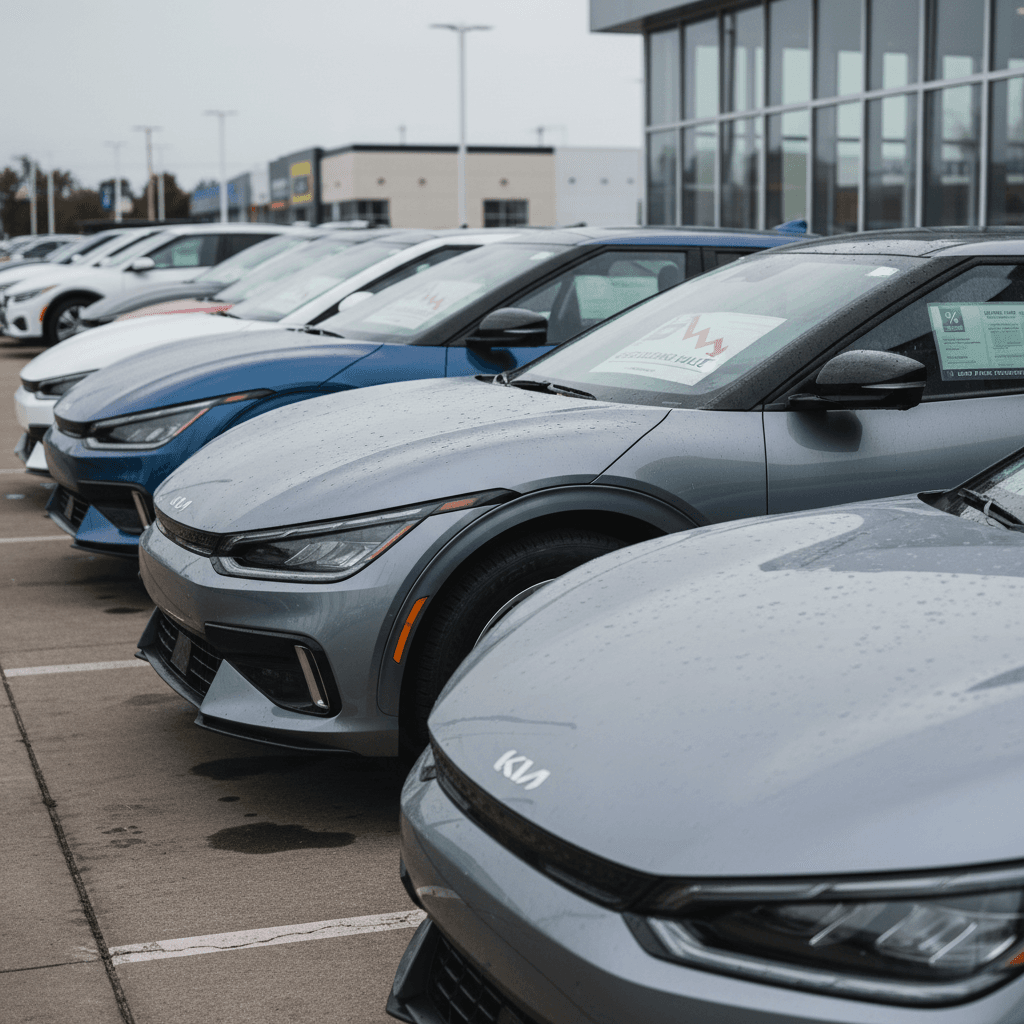
Used EV values have reset over the last two years as new‑EV prices fell and more off‑lease inventory hit the lanes. The EV6 isn’t immune; like most EVs, it has seen **faster early depreciation** than comparable gasoline crossovers, even though the underlying product is strong.
What will drive used EV6 values in 2026?
1. Wave of off‑lease 2022–2024 EV6s
Three‑ and four‑year leases written on early EV6 models will be expiring into 2026, swelling used supply. More supply usually means **softer wholesale and retail prices**, especially on volume trims like Wind and GT-Line.
2. Battery health transparency
Buyers are rightly focused on **battery state of health (SOH)**. Vehicles with documented diagnostics, like the Recharged Score battery report that comes with every EV we sell, should command stronger prices than similar EV6s without proof of pack health.
3. Tech & charging compatibility
From 2025 on, the EV6 moves to a native NACS charge port for North America, making Tesla Supercharger access easier. Earlier CCS‑port EV6s are still capable but may be viewed as slightly less convenient, nudging their values down relative to NACS‑equipped 2025–2026 models.
4. Broader used‑EV price environment
If other mainstream EV crossovers (Model Y, Ioniq 5, Mustang Mach‑E) keep seeing **aggressive new pricing**, they’ll pull down used values across the segment, including the EV6. If incentives ease and production tightens, used prices could firm up instead.
The sweet spot: 2–3‑year‑old EV6s
Directional used price bands for 2026
Exact numbers will vary by region and spec, but it’s reasonable to expect many **2–4‑year‑old EV6s** to transact in the **high‑$20,000s to mid‑$30,000s** range in 2026, with newer, higher‑trim examples pushing higher and high‑mileage examples dipping lower.
What this means for shoppers
If you’re shopping used in 2026, you’re likely to see EV6s **priced well below equivalent new crossovers**, especially once you account for options like AWD and bigger wheels. That value gap is what’s drawing many buyers out of new‑ICE SUVs and into used EVs instead.
Lease vs. buy: How 2026 pricing changes the math
EV incentives in the U.S. have made leasing unusually attractive because the federal credit can often be captured by the leasing company and passed through as a **capitalized cost reduction**, even for trims that don’t qualify for purchase credits. That dynamic is likely to continue into 2026.
2026 EV6: lease or buy?
How pricing trends tilt the scales
Leasing advantages
- Leasing can apply the **full $7,500 credit** even to some higher trims that may not qualify for purchase.
- Protects you from **future value swings** if EV6 resale softens further.
- Lets you step into updated tech and charging standards every 2–3 years.
Buying advantages
- Combines **discounted new‑car prices** with long‑term ownership savings if you keep the EV6 7–10 years.
- Lets you capture the **purchase tax credit** on eligible trims if you qualify by income and price.
- Paired with falling used prices, buying out a lease or going used can dramatically lower your cost of entry.
A simple 2026 rule of thumb
How tax credits and discounts change the price you actually pay
For 2026, the clean‑vehicle tax credit framework is expected to keep rewarding **North American assembly and qualifying battery supply chains**, which is good news for most EV6 trims built in Georgia. The nuance is in how those credits flow to you and how they interact with dealer‑level discounts.
- Many EV6 trims are expected to remain eligible for up to **$7,500 in federal credits** when purchased, subject to MSRP and income caps.
- Kia has already shown a willingness to put **$3,000–$10,000 of customer cash or equivalent support** on the hood when sales soften.
- Dealers in some markets have added further discounts on in‑stock EV6s when inventory sits.
- Stacked together, it’s possible in 2026 to see effective prices on new EV6s land **near or even below well‑optioned gas crossovers** after credits and incentives.
Watch out for ‘after all rebates’ fine print
Practical tips for shopping a Kia EV6 in 2026
Smart 2026 EV6 shopping game plan
1. Decide new vs. used based on total cost, not just price tag
Run the numbers on a **new EV6 after credits and discounts** versus a comparable used EV6 with no credits but a much lower sticker. Include sales tax, registration, and financing costs to see the true spread.
2. Compare several markets, not just one dealer
EV incentives and inventory vary widely by region. Cross‑shop dealers within a few hours’ drive and monitor online marketplaces, especially for **off‑lease EV6s** landing at franchised dealers and EV‑focused marketplaces like Recharged.
3. Demand hard data on battery health for any used EV6
Battery health is the heart of EV value. At Recharged, every used EV6 comes with a **Recharged Score** report that quantifies pack health, fast‑charging history, and more, so you aren’t guessing about the most expensive component in the car.
4. Pay attention to charging hardware (CCS vs. NACS)
Later‑model EV6s with a **native NACS port** will be simpler to use at Tesla Superchargers in the U.S., which can support slightly stronger pricing. Earlier CCS‑port cars are still compelling, but factor the cost and convenience of adapters into your offer.
5. Time your purchase around incentive cycles
Automakers often sweeten deals at **quarter‑ends and year‑end**, or when a new model year launches. If Kia introduces a refreshed EV6 or pivots marketing to the smaller EV3, that could be a moment when EV6 incentives spike.
6. Use digital tools to line up financing first
Pre‑qualifying for EV financing, through your bank, credit union, or platforms like Recharged, lets you focus negotiations on **vehicle price** instead of monthly payment tricks.
Where Recharged fits in
Ready to find your next EV?
Browse VehiclesFAQ: Kia EV6 price forecast for 2026
Frequently asked questions about 2026 Kia EV6 pricing
Bottom line: What 2026 EV6 pricing means for you
By 2026, the Kia EV6 will be a proven, mid‑cycle electric crossover competing in a crowded field, and its pricing will reflect that reality. Expect **slightly higher MSRPs on paper**, but also **meaningful incentives and tax credits** on many trims, keeping real‑world transaction prices in check. In the used market, rising off‑lease supply and faster‑than‑ICE depreciation should deliver **compelling deals** for shoppers who do their homework.
If you’re shopping the EV6 in 2026, your best move is to treat every offer as a math problem: **MSRP, minus credits, minus incentives, plus fees and financing**, then compared to a low‑mileage used EV6 with verified battery health. Whether you end up new or used, taking a data‑driven approach, and leaning on EV specialists like Recharged, will put you in a much stronger position than chasing the loudest advertised deal.