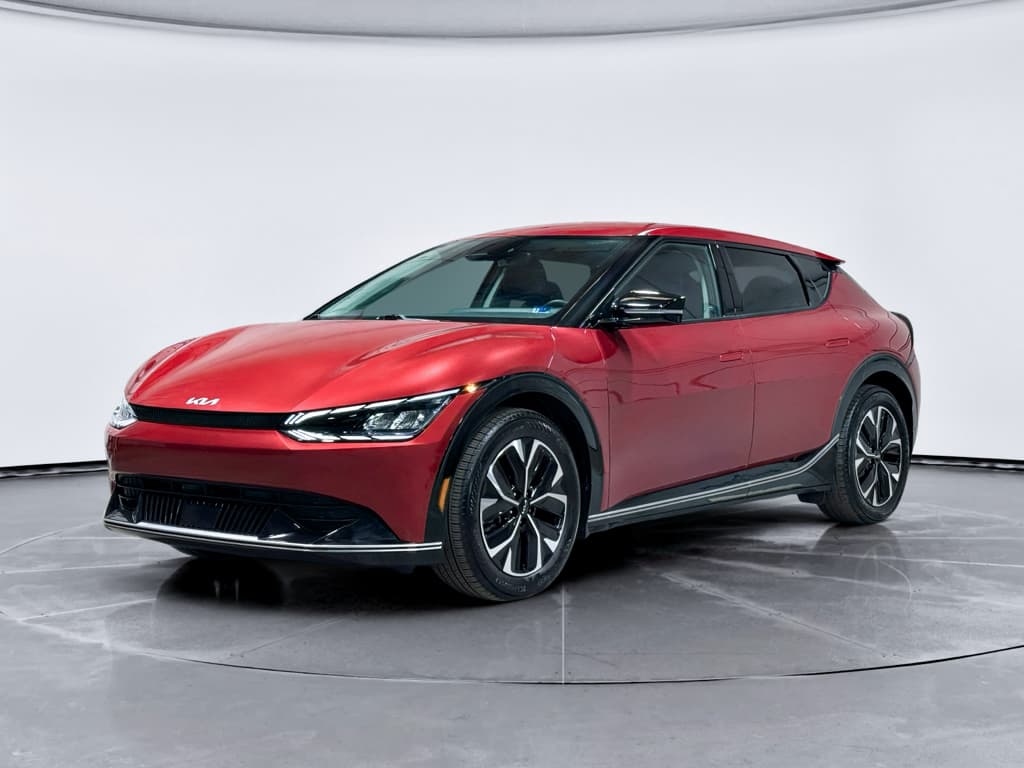
If you’re used to traditional gas cars, the Kia EV6 maintenance schedule can feel almost suspiciously light. No oil changes, no spark plugs, no timing belts. But that doesn’t mean “no maintenance” – it just means you need to focus on a different set of items and understand what’s truly required versus what a dealership might try to sell you.
Big picture
Kia EV6 maintenance overview
Kia structures EV6 maintenance around miles or time, whichever comes first. Globally, EV6 intervals differ slightly by region, but U.S. owners typically see reminders around 7,500–8,000 miles for basic service like tire rotation and inspections. European manuals often show 30,000 km (about 18,750 miles) intervals for similar checks, which is why you’ll see conflicting discussions in owner forums.
The important thing is this: your warranty obligations are based on Kia’s official maintenance schedule in your owner’s manual, not on any dealer‑printed menu. That schedule emphasizes inspections and a few key fluid changes at long intervals, especially for brake fluid and high‑voltage coolant.
Kia EV6 maintenance at a glance
Service interval basics: miles vs time
Every scheduled item on the Kia EV6 maintenance schedule has two triggers: a mileage number and a time interval. You perform the service when you hit whichever comes first. For example, if brake fluid is listed as “48,000 miles or 48 months,” a low‑mileage driver might reach 4 years long before 48,000 miles – and still need the fluid replaced.
- Daily driver (15,000+ miles/year): You’ll hit the mileage intervals first and visit a shop more often, mostly for tires and inspections.
- Average commuter (10,000–12,000 miles/year): Mileage and time intervals will stay reasonably in sync.
- Low‑mileage/urban driver (under 7,500 miles/year): Time will trigger many services before mileage does – especially brake fluid and inspections.
Use your car, not just the app
Kia EV6 maintenance schedule (quick table)
Exact line‑items can vary slightly by model year and market, but this table reflects the core U.S. EV6 maintenance pattern many owners will see. Always confirm specifics in your printed or digital owner’s manual.
Typical Kia EV6 maintenance schedule (U.S.)
Miles OR months, whichever comes first. “Inspect” means check condition and replace only if needed unless your manual explicitly says “replace.”
| Interval | Main items | Notes |
|---|---|---|
| Every 7,500–8,000 miles or 12 months | Tire rotation, brake pads/rotors inspection, brake lines/hoses inspection, suspension & steering inspection, fluid level checks, general EV system inspection | This is the bread‑and‑butter service: mostly inspections plus tire rotation. |
| Every 15,000–16,000 miles or 24 months | Repeat 7,500‑mile checks; cabin air filter inspection/replacement as needed | Some dealers do cabin filters at 15k; many owners stretch to 20k–30k based on environment. |
| Every 30,000 miles or 36 months | Add more detailed underbody, driveline, and steering inspections; 12V battery inspection; brake hoses and connections inspection | Still no major EV‑specific fluid changes yet, just deeper checks. |
| 48,000 miles or 48 months | Replace brake fluid plus all standard inspections | Brake fluid absorbs moisture over time, which can affect braking performance and corrosion. |
| 60,000 miles or 60 months | Repeat 30k‑style inspections, tire rotation, cabin filter, 12V battery check | For many owners, tires and possibly brake pads will be due somewhere between 30k–60k miles. |
| 120,000 miles or 120 months | Replace high‑voltage system coolant (battery/inverter/motor) plus full inspection | This is the first big EV‑specific fluid service; follow Kia’s procedure to avoid faults. |
| After 120,000 miles | Coolant: replace again every ~24,000 miles or 24 months (per many manuals); brake fluid: every 48,000 miles or 48 months; continue regular inspections | Intervals tighten slightly because fluids are aging in a higher‑mileage vehicle. |
Use this as a practical guide, then verify against the maintenance schedule section of your own EV6 manual.
Always defer to your manual
Key Kia EV6 maintenance items explained
Tires and rotations
The EV6 is heavy for its size and has strong instant torque. That combination is great for acceleration and stability, but it’s hard on tires. That’s why Kia and most dealers push tire rotations about every 7,500–8,000 miles for U.S. drivers. Skipping rotations can lead to uneven wear and premature replacement – especially on the rear tires if you drive enthusiastically.
- Rotate every 7,500–8,000 miles (or sooner if you see uneven wear).
- Check pressures at least monthly; EVs are sensitive to under‑inflation for both range and tire life.
- Budget for a full set of tires roughly every 25,000–40,000 miles, depending on driving style and climate.
Where to rotate tires
Brake pads and brake fluid
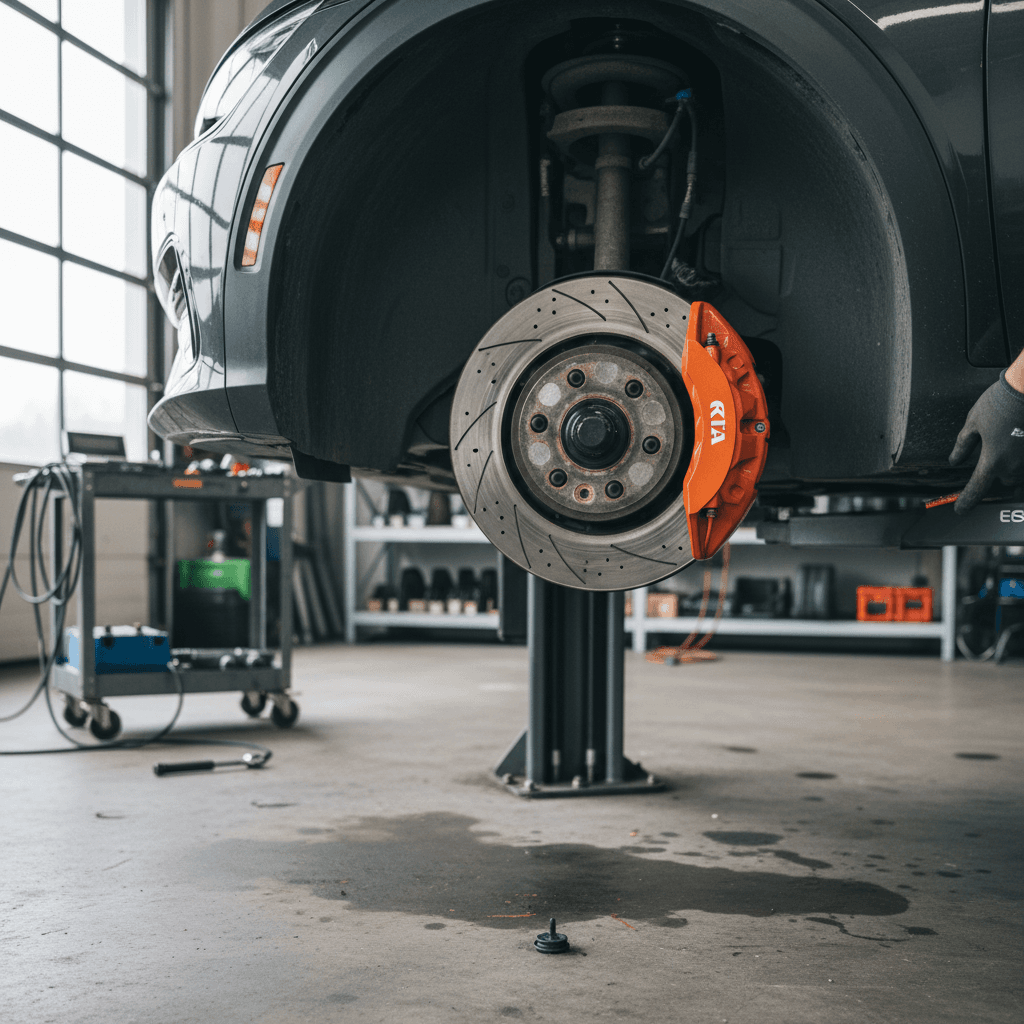
Because the EV6 uses strong regenerative braking, its physical brake pads and rotors often last much longer than on a gas car. It’s common to see EV pads still looking healthy at 60,000 miles or more, especially if you drive mostly in town and use high regen settings.
Brake fluid is a different story. It slowly absorbs moisture from the air, which can reduce boiling point and promote corrosion inside the braking system. That’s why U.S. EV6 manuals typically call for a brake fluid replacement at 48,000 miles or 48 months, whichever comes first. Some owners and independent techs consider this interval conservative, but it’s the schedule Kia can point to if there’s ever a warranty dispute.
Don’t ignore spongy brakes
High‑voltage coolant
The Kia EV6 uses dedicated coolant loops to manage temperatures in the battery, inverter, and motor. Coolant quality matters here because contamination or incorrect fluid can cause corrosion or electrical issues in parts that are extremely expensive to replace.
Most EV6 manuals call for the first coolant replacement around 120,000 miles or 120 months. After that, the interval usually tightens – for example, every 24,000 miles or 24 months. You’ll see dealers try to recommend coolant flushes far earlier (30,000 miles, 60,000 miles, etc.), but unless your manual or a specific service bulletin says otherwise, that’s an upsell, not a requirement.
Coolant is not a DIY beginner job
12‑volt battery and cabin filters
Like every modern EV, the EV6 still uses a conventional 12‑volt battery to power accessories and control systems. It’s inspected regularly but not replaced on a fixed interval. In practice, many owners will need a new 12‑volt somewhere in the 3–6‑year range depending on climate and usage.
The cabin air filter keeps dust, pollen, and pollution out of the HVAC system. Kia often lists replacement around 15,000–30,000 miles, but the right interval depends heavily on your environment. Urban and dusty areas may need more frequent changes, while some highway‑heavy drivers can stretch it longer.
Easy DIY win: cabin filter
Dealer “extras” vs Kia’s official schedule
If you’ve already visited a Kia service department with your EV6, you’ve probably seen a colorful maintenance menu that doesn’t quite match your owner’s manual. Dealers routinely suggest more frequent brake fluid flushes, coolant changes, throttle‑body cleanings (on an EV!), “fuel system” cleanings, and other services that simply don’t exist in Kia’s EV6 schedule.
Common dealer upsells
- Coolant flush at 30k–60k miles
- Brake fluid flush every 15k–30k miles
- Fuel system or injector cleaning
- Very short inspection intervals (3k–5k miles)
These are often carried over from internal‑combustion maintenance menus.
What Kia actually cares about
- Documented services at the intervals in your manual
- Using the correct fluids when replacement is required
- Evidence that inspections and rotations were done
- Completing recall and service campaign work
For warranty purposes, the manual wins every time.
How to push back (politely)
What about the high‑voltage battery?
The component you care most about on an EV6 is the high‑voltage battery pack, but it doesn’t appear in the maintenance schedule the way consumables like tires and fluids do. Kia treats the pack as a long‑life component with an 8‑year/100,000‑mile warranty (in the U.S.), so you won’t see “replace battery” as a line item.
Keeping your EV6 battery healthy
These habits matter more than any scheduled service for long‑term range and performance.
Avoid 0–100% extremes daily
Frequent deep discharges and full charges are tougher on lithium‑ion packs. For daily use, try to stay roughly between 20% and 80% when convenient.
Be selective with DC fast charging
DC fast charging is great for road trips but harder on the battery than Level 2 at home. Using it occasionally is fine; relying on it as your primary charging method isn’t ideal.
Watch heat and cold
Extreme temperatures stress batteries. Precondition before rapid charging in cold weather and avoid letting the car bake at 100% charge in very hot conditions.
Battery health and used EV6s
DIY vs dealer service for your EV6
Compared with an ICE vehicle, the Kia EV6 invites more do‑it‑yourself maintenance for owners who are comfortable turning a wrench. At the same time, there are areas – particularly involving high‑voltage systems – where it’s smart to stay hands‑off.
What most owners can DIY (and what to leave to pros)
1. Tire pressure checks and rotations (with basic tools)
Checking and adjusting tire pressure is a must‑do DIY task. If you have a jack, stands, and experience, you can also rotate tires at home – but many owners prefer to pay a tire shop a modest fee to do it quickly and safely.
2. Cabin air filter replacement
A straightforward glove‑box access job on most EV6 trims. You can buy OEM or quality aftermarket filters online and change them yourself in under 10 minutes.
3. Wiper blades and washer fluid
Simple, routine items that don’t require any special EV knowledge. Just be sure to use winter‑rated washer fluid if you live in a freezing climate.
4. Visual inspections
You can periodically inspect tires, lights, and underbody components for obvious issues. If you see fluid where it shouldn’t be or unusual rust or damage, schedule a professional inspection.
5. Dealer or EV‑savvy shop: brake fluid & coolant
Bleeding brakes and servicing high‑voltage coolant systems require proper tools and procedures. For these jobs, a Kia dealer or independent EV specialist is usually worth the cost.
Documentation still matters
Maintenance costs and buying a used EV6
On paper, the Kia EV6’s maintenance schedule is lighter than a gas crossover’s. Third‑party cost‑to‑own analyses still show meaningful maintenance and repair costs over five years, but most of that comes from tires, brakes, and out‑of‑warranty repairs – not constant routine service.
Where things get interesting is in the used market. A first owner who followed (or exceeded) the schedule and avoided unnecessary flushes leaves you with a car that’s easier to live with. One who skipped inspections, ran mismatched tires, or ignored warnings leaves you inheriting their deferred maintenance.
How Recharged approaches used Kia EV6 maintenance
Buying used doesn’t have to mean guessing what the previous owner did.
Verified battery health
Every EV we sell, including the EV6, comes with a Recharged Score battery health report so you’re not left speculating about pack condition.
Service history review
We dig into available service records to understand how the car was maintained – and we’re transparent when the history is incomplete so you know what you’re walking into.
Nationwide, EV‑savvy support
From our digital retail experience to our Richmond, VA Experience Center, our specialists can walk you through maintenance expectations and help you compare EV6s to other used EV options.
Ready to find your next EV?
Browse VehiclesIf you’re cross‑shopping a used EV6 against other used EVs, remember to weigh what the next 3–5 years of maintenance actually look like: tires, brake fluid once or twice, a coolant change if you’ll own it past 120,000 miles, and routine inspections. That’s usually far less painful than ownership of a high‑mileage turbo gas SUV.
Owner checklist: staying on top of EV6 maintenance
Practical Kia EV6 maintenance checklist
Confirm your official schedule
Open the maintenance section of your EV6 owner’s manual or the Kia owners portal and note the key intervals for <strong>tire rotation, brake fluid, and coolant</strong> for your model year.
Set reminders based on time and miles
If you drive less than 7,500 miles per year, time‑based intervals will matter most. Add reminders for 12 months, 24 months, 48 months, and 10 years for major items.
Standardize tire care
Pick a tire shop or routine and stick to it: rotation every ~7,500–8,000 miles, monthly pressure checks, and alignment checks if you see uneven wear or the car pulls.
Plan ahead for fluids
Brake fluid at 4 years and coolant at 10 years aren’t surprises if you plan for them. Get a quote from a Kia dealer and at least one independent EV‑savvy shop so you know the going rate.
Keep your own mini logbook
Use a notes app or simple spreadsheet to track date, mileage, and what was done. It helps with resale value and supports any future warranty conversations.
Be skeptical, not cynical
When a shop recommends something extra, ask how it relates to Kia’s schedule and whether there’s a specific problem they see. Some recommendations are genuine; others are just revenue.
Kia EV6 maintenance schedule FAQ
Frequently asked questions about the Kia EV6 maintenance schedule
The Kia EV6 maintenance schedule is a good illustration of what the EV transition looks like at street level: less busywork, more long‑term thinking. If you follow the intervals in your manual, stay skeptical of unnecessary add‑ons, and keep the battery and tires happy, the EV6 is one of the simpler modern vehicles to own. And if you’re considering a used EV6, working with a seller that can show you both maintenance history and real battery health – the way Recharged does – turns that schedule from an abstract table into real‑world peace of mind.