If you’re looking at a 2025 BMW i7, you’re probably wondering less about 0–60 times and more about whether this big luxury EV can really deliver its promised range on a cold, fast-moving interstate. This 2025 BMW i7 range test guide breaks down the battery, EPA numbers, and independent highway testing so you know what to expect in the real world, especially if you’re eyeing a used i7 on a marketplace like Recharged.
Why range testing matters for the i7
2025 BMW i7 range overview
Headline range stats for the 2025 BMW i7
On paper, the 2025 BMW i7’s range sits comfortably above 300 miles for its efficiency‑oriented trims and wheels. In practice, careful independent testing shows that the i7 can come very close to, and sometimes even slightly exceed, its EPA rating on the highway, something not every luxury EV can claim. The key variables are trim (eDrive50, xDrive60, M70), wheel choice, and your speed and climate usage.
Battery pack and charging basics
Before you dive into range tests, it helps to understand the hardware you’re working with. All versions of the 2025 BMW i7 share the same high‑capacity lithium‑ion battery pack, which gives you a large energy buffer but also a lot of weight to move around.
BMW i7 battery and charging specs
Core battery and charging specs are shared across 2025 i7 trims.
| Spec | Value | Notes |
|---|---|---|
| Gross battery capacity | ≈105.7 kWh | Total energy in the pack |
| Usable battery capacity | ≈101.7 kWh | Energy available for driving |
| Max DC fast charge rate | 195 kW | 10–80% in roughly 30–35 minutes in ideal conditions |
| Onboard AC charger | 11 kW (US) | About 10–11 hours for a full charge on a 48A Level 2 |
| Platform voltage | ≈400 V | Standard for current premium EVs |
| Complimentary fast charging | Up to ~3 years / energy‑limited offers | Often includes Electrify America access for new i7 buyers; used buyers should confirm terms |
These specs apply to the eDrive50, xDrive60, and M70 versions of the BMW i7 unless otherwise noted.
Realistic home charging for an i7
Official EPA estimates vs. real-world range tests
The EPA test cycle gives you a standardized number, but large luxury EVs like the i7 often behave differently at 75–80 mph than they do on the dyno. That’s why independent highway tests are so important if you’re planning real road trips.
EPA estimates for 2025 BMW i7
- eDrive50 (RWD): up to about 314 miles on efficient 19" wheels.
- xDrive60 (AWD): up to roughly 311–318 miles depending on wheel size.
- M70 xDrive: performance‑focused, rated around 285–295 miles.
- Wheel size and aero options can swing EPA range by 20–30 miles.
EPA ratings are combined city/highway numbers under controlled conditions, not a guaranteed result at 75 mph in winter.
Independent highway range testing
- On a controlled highway loop, a xDrive60 on 21" wheels has delivered about 310 miles before reaching a low state of charge, slightly beating its EPA rating.
- In mixed driving, owners typically report 250–300 miles per charge depending on climate and speed.
- Winter highway runs at 75–80 mph with heat on can drop available range by 15–25%.
The i7 is one of the rare big EVs that can match, or beat, its sticker number on the highway when driven thoughtfully.
EPA range is not a guarantee
Range by trim: eDrive50 vs xDrive60 vs M70
The 2025 BMW i7 comes in three main electric configurations: the efficiency‑tilted eDrive50, the all‑wheel‑drive xDrive60, and the high‑output M70 xDrive. All share the same battery, but the motors, power output, and aero/wheel packages change how far you’ll actually go on a charge.
How each 2025 BMW i7 trim stacks up on range
Same battery, three personalities.
i7 eDrive50 (RWD)
The efficiency play. Single‑motor, rear‑wheel drive.
- EPA range: up to ~314 miles on 19" wheels.
- Best use case: long‑range comfort cruising.
- Real‑world highway: ~270–300 miles at 70–75 mph in fair weather.
i7 xDrive60 (AWD)
Balanced performance and confidence in bad weather.
- EPA range: roughly 311–318 miles depending on wheels.
- Highway test: about 310 miles on 21" wheels in independent testing.
- Real‑world mixed: ~260–290 miles for most drivers.
i7 M70 xDrive
The power play: 650 hp, serious acceleration.
- EPA range: around 285–295 miles.
- Trade‑off: big wheels, stickier tires, and more power hurt efficiency.
- Real‑world highway: ~230–270 miles depending on speed and climate.
Which i7 trim is the range sweet spot?
City vs. highway: how the i7 behaves in the real world
Like most EVs, the 2025 BMW i7 is more efficient in stop‑and‑go or suburban driving than it is at a steady 78 mph. Big frontal area and weight aren’t your friends at high speeds, but the i7’s strong regenerative braking helps claw back energy in lower‑speed driving.
Around town and suburban commuting
- Frequent slowing and braking let the i7’s regen system recapture energy.
- In moderate temperatures (50–75°F), many owners see 3.0–3.3 mi/kWh in mixed city driving.
- That translates to roughly 300–330 miles on a full charge if you use most of the pack.
- Heavier use of climate control or short, cold trips will cut those numbers.
Highway and road‑trip behavior
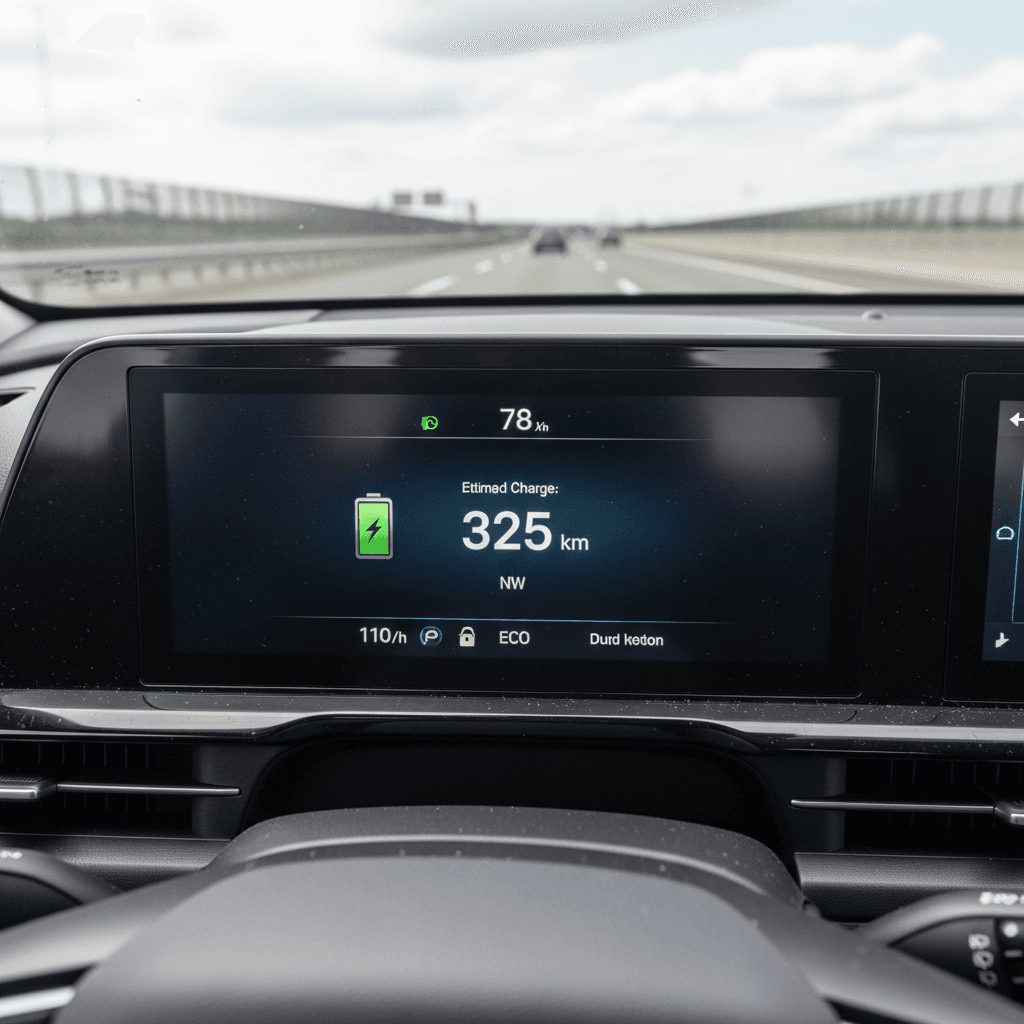
- At 70–75 mph, expect efficiency closer to 2.5–2.8 mi/kWh for the eDrive50/xDrive60 and slightly less for M70.
- That works out to about 250–290 miles of comfortable real‑world highway range for the non‑M trims.
- Running 80+ mph or driving into a stiff headwind can shave another 10–15% off.
- Preconditioning the cabin and battery while plugged in before departure helps preserve range on cold days.
What actually limits your 2025 i7’s range?
If you’re comparing a 2025 BMW i7 range test to your own experience, the usual suspects, speed and temperature, still matter. But with such a large pack and a very feature‑dense cabin, the i7 adds a few unique wrinkles.
- Speed and aerodynamics: Pushing a big body through the air gets increasingly expensive above 70 mph. Every 5 mph over that can cost several percentage points of range.
- Temperature: Cold batteries are less efficient and require energy for preheating. In winter, plan on losing 15–30% of range on highway drives if you don’t precondition.
- Wheel and tire choice: 19‑inch aero‑optimized wheels will always do better than wide, sticky 21‑inch performance tires.
- Cabin and comfort loads: The i7’s rear theater screen, ventilated seats, and multi‑zone climate don’t consume as much as the motors, but on a long drive they add up.
- Elevation and wind: Long climbs and strong headwinds can take a big bite out of what looks like a comfortable buffer on your range estimate.
Beware short, cold drives
How to maximize range in a BMW i7
You don’t have to baby a 2025 BMW i7 to see solid real‑world range, but a few smart habits can turn a 250‑mile day into a 300‑mile one. That’s especially valuable if you’re relying on public charging or planning long legs between DC fast chargers.
Practical steps to stretch your BMW i7’s range
1. Choose your wheels wisely
If you care about range more than looks, prioritize 19‑inch or aero‑optimized wheels. They can easily be worth 15–25 miles of additional highway range compared with aggressive 21‑inch setups.
2. Use Eco Pro or efficient drive modes
BMW’s Eco‑oriented modes soften throttle response, adjust climate settings, and can make it easier to hold a moderate cruising speed, all of which help the i7 hit its EPA numbers.
3. Precondition while plugged in
On cold or hot days, use the BMW app to warm or cool the cabin and battery while the car is still on shore power. That way, the initial energy hit doesn’t come out of your driving range.
4. Dial in your cruising speed
If you’re chasing a long leg, dropping from 78 mph to 70 mph can be the difference between arriving with 10% and 2% state of charge. The i7’s adaptive cruise makes this easy to live with.
5. Optimize charging stops
On road trips, it’s usually faster to charge from about 10–60% or 10–80% state of charge rather than topping all the way to 100%. The i7 charges quickest in the middle of the pack’s state‑of‑charge window.
6. Watch live consumption data
Use the i7’s energy consumption displays to see how hills, speed, and climate control affect efficiency in real time. A quick glance now and then can teach you how to gain 10–20 extra miles without much sacrifice.
A long‑range luxury EV when used smartly
Used BMW i7 range: what to watch for
Because the i7 launched for the 2023 model year, the earliest cars are now old enough to appear regularly on the used market. If you’re shopping a 2023–2025 i7, especially from a third‑party seller, range and battery health should be near the top of your checklist.
Key range questions to ask when buying a used i7
You’re not just buying a luxury sedan, you’re buying a 100 kWh battery pack.
Battery health and usage history
- Ask for recent state‑of‑health or capacity checks if available.
- Look for signs of heavy DC fast‑charging use (lots of road‑trip mileage in a short time).
- Confirm software is up to date; OEM updates can improve efficiency and charging behavior.
Real‑world range today
- On a fully charged battery, what range estimate does the car show in Comfort/Eco mode?
- Has the owner tracked typical highway range at 70–75 mph?
- Compare their anecdotes to the EPA numbers and independent tests in this article.
How Recharged helps de‑risk used i7 range
Because the i7’s pack is large and operates with a conservative buffer, early data suggests that degradation should be relatively modest in the first few years if the car is charged and stored sensibly. Still, confirming battery health is crucial, replacing a 100+ kWh pack out of warranty is a five‑figure conversation you don’t want to have.
2025 BMW i7 range test FAQ
Frequently asked questions about 2025 BMW i7 range
Key takeaways for BMW i7 range shoppers
The 2025 BMW i7 isn’t just a tech‑laden flagship; it’s a legitimately capable long‑range EV when driven with a bit of forethought. In independent highway testing, the xDrive60 has matched or slightly beaten its EPA rating, and the eDrive50 can comfortably cover similar distances with fewer driven wheels and a bit more efficiency. The M70 trades some of that range for serious performance, but still delivers real‑world numbers many drivers will find more than adequate.
If you’re cross‑shopping new and used examples, focus on trim and wheel choice, understand how your typical routes and climate affect range, and, above all, make sure you’re getting transparent battery health information. That’s where platforms like Recharged are designed to shine: every EV includes a Recharged Score battery report, fair‑market pricing, and access to EV specialists who can translate test‑cycle numbers into real‑world expectations for your life. That way, when you see a 2025 BMW i7 range test, you’ll know exactly what it means for your next road trip.