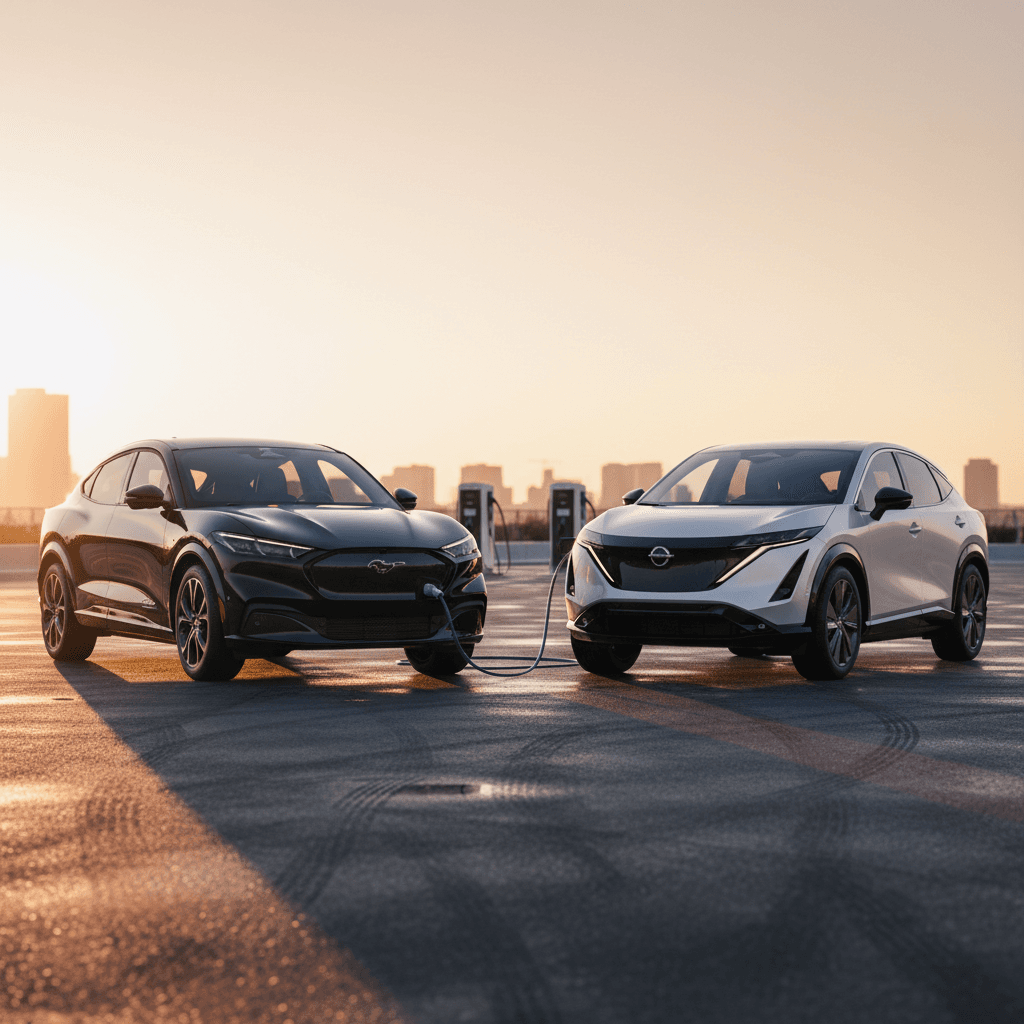
If you’re shopping for a used EV, a Ford Mustang Mach-E with around 50,000 miles can look like a bargain, especially compared with a new one. But how does this stylish electric crossover really hold up once the honeymoon is over? In this 50,000-mile review, we’ll walk through battery health, real-world range, reliability, recalls, and ownership costs so you can decide whether a higher‑mileage Mach-E belongs in your driveway.
Quick context on model years
Who this 50,000-mile Mach-E review is for
- Shoppers considering a used Ford Mustang Mach-E with 30,000–70,000 miles.
- Current Mach-E owners wondering what to expect as they approach 50,000 miles.
- Gas or hybrid drivers deciding if an electric crossover will hold up for the long haul.
- Anyone comparing a used Mach-E with rivals like the Tesla Model Y, Hyundai Ioniq 5, or Kia EV6.
We’ll focus on the everyday questions that matter: How much range do you really get after tens of thousands of miles? What tends to break, or not break? What will you spend on tires and maintenance? And how does the Mach-E stack up as a used buy, especially when you factor in Ford’s recall history and evolving software updates?
Ford Mustang Mach-E at 50,000 miles in a sentence
Ford Mustang Mach-E 50,000-mile snapshot
Summing up the Ford Mustang Mach-E 50,000‑mile experience: the core EV hardware, battery, motors, and drivetrain, has generally held up well when recalls and software updates are current. Range loss is noticeable but usually modest. Where you need to be sharp as a used buyer is on recall completion, 12‑volt battery health, and high-voltage junction box history, because these are the areas that create the horror stories you see in owner forums.
Battery health and range at 50,000 miles
Ford offers the Mach-E with two main pack sizes: a Standard Range battery around 70–72 kWh usable and an Extended Range pack around 88–91 kWh usable, depending on model year and drivetrain. In the real world, owners with 40,000–60,000 miles typically report roughly 5–10% capacity loss when the car has been charged sensibly (no constant 100% DC fast charging, not living at 0% or 100%, and minimal extreme heat exposure).
Extended Range (most common used choice)
- EPA when new: roughly 270–320 miles depending on RWD vs AWD and wheel size.
- Typical 50k‑mile real-world: 230–260 miles in mild weather at mixed speeds.
- Heavy highway use or cold climates: 190–220 miles between charges is more realistic.
Standard Range
- EPA when new: roughly 220–250 miles.
- Typical 50k‑mile real-world: 180–210 miles in mixed driving.
- In winter or at 75–80 mph: plan on 150–180 miles between fast charges.
How to quickly spot a weak pack
It’s worth emphasizing that Ford’s 8‑year/100,000‑mile high‑voltage battery warranty (longer in some states) is still in effect at 50,000 miles for most used examples. That doesn’t make the pack immortal, but it does give you a safety net if a cell or module fails or if the battery falls below Ford’s defined capacity threshold.
Real-world efficiency and road-trip behavior
In everyday driving, a 50,000‑mile Mustang Mach-E behaves much like a new one from behind the wheel. Where you’ll notice age is in how carefully you plan range on long trips, especially if the car has an Extended Range battery that’s lost a handful of usable kilowatt‑hours.
Typical efficiency after 50,000 miles
What you can expect in different driving conditions
City & Suburban
In stop‑and‑go or suburban use, many owners see 2.7–3.2 mi/kWh, especially on 18" or 19" wheels. The Mach‑E’s strong regen works in your favor here.
70–75 mph Highway
Sustained interstate speeds are where you feel the hit. Expect around 2.2–2.6 mi/kWh in mild weather, with range dropping further in headwinds or low temps.
Cold Weather
Below freezing, cabin heat and battery conditioning can trim another 15–30% off range. Remote pre‑conditioning while plugged in helps a lot.
Watch your wheel and tire combo
Reliability, recalls, and common issues
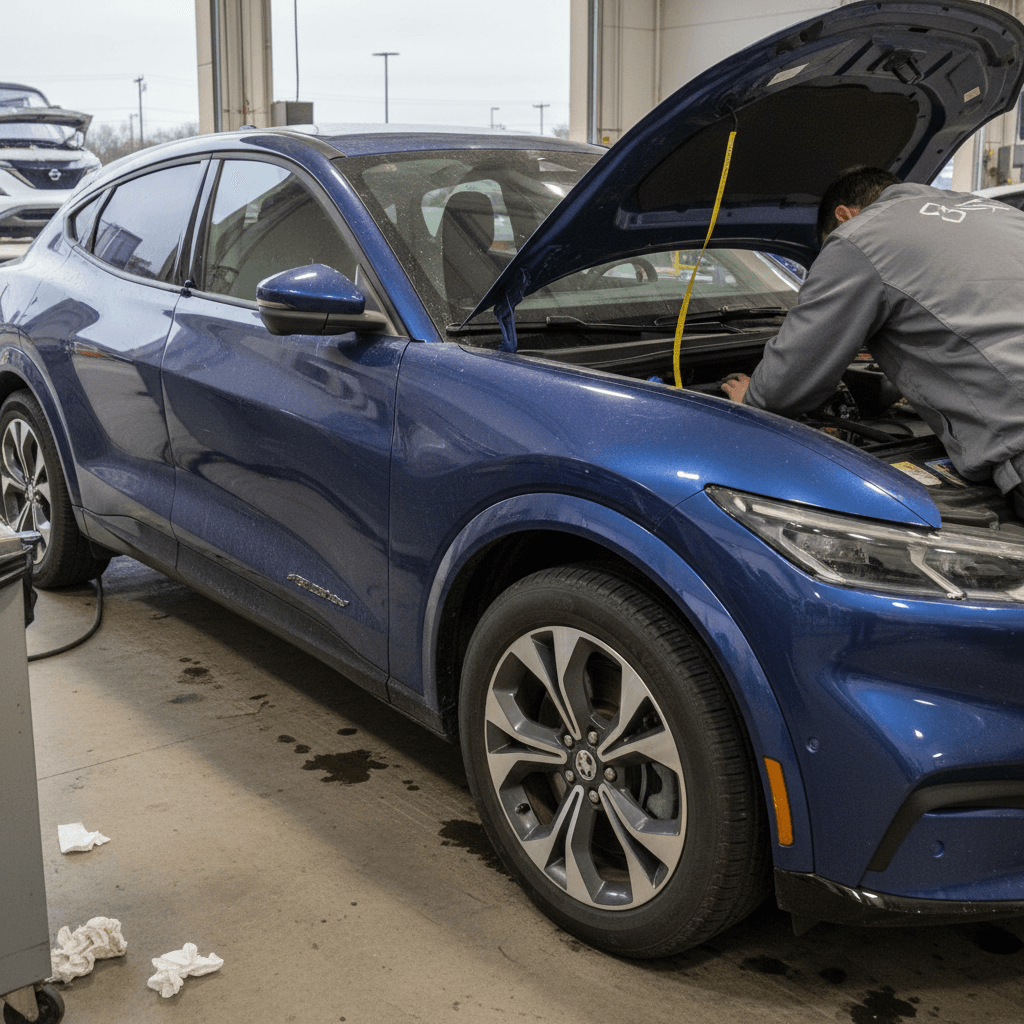
This is where you need to look beyond the glossy brochure. By the time a Mach-E hits 50,000 miles, most of the big problems it will ever have are either already visible, or have been handled under warranty. Ford has issued multiple recalls and technical service bulletins on the Mach‑E, many of them software‑based, but a few are more serious hardware concerns.
Common issues on higher-mileage Mach-Es
Not every Mach-E will experience these problems, but you should ask about them on any used example, especially early build 2021–2022 models.
| Issue | Typical Symptoms | Fix | Should It Scare You? |
|---|---|---|---|
| High-Voltage Battery Junction Box (HVBJB) / contactor issues | “Stop Safely Now” messages, loss of power, car won’t go into drive after DC fast charging or hard acceleration. | Software update and, in some cases, replacement of the junction box or related components under warranty. | Serious if ignored, but many cars have been updated. Verify recall completion. |
| 12-volt battery failures | Random error messages, car won’t wake up, screens going dark, door handles not responding. | 12V battery replacement; sometimes reveals deeper HVBJB problems if they recur quickly. | Annoying but common on many EVs. Budget for replacement around the 3–5‑year mark. |
| Electronic door latch recall (2021–2025) | Rear doors may stay locked if the low-voltage battery is weak, potentially trapping rear passengers. | Ford software update for control modules, often applied via dealer visit or OTA. | Important safety fix. Confirm recall status before buying. |
| Park engagement / rollaway recall (some 2024–2026) | Car may not properly stay in Park; warnings on cluster. | Ford recall repair to integrated park module and software. | Check recall status; once fixed, not a deal‑breaker. |
| Early software/infotainment quirks | Frozen SYNC screen, slow boot‑up, random alerts. | Over‑the‑air or dealer software updates. | Mostly cleaned up on well‑maintained cars. Test every screen and feature. |
Use this as a checklist when reviewing service history on a 50,000‑mile Mach‑E.
Do not ignore HVBJB history
Ford has also had an unusually high volume of recalls in recent years across its lineup, including the Mach‑E. That doesn’t automatically make the vehicle a lemon, but it means you absolutely must:
- Run the VIN on Ford’s site or NHTSA’s recall tool.
- Verify that campaigns for door latches, HVBJB/contactors, and park engagement have been completed.
- Ask the seller for documentation of software updates and major repairs.
Maintenance, tires, and running costs
Compared with a gas-powered SUV, a 50,000‑mile Mustang Mach‑E is refreshingly simple to maintain. There are no oil changes, spark plugs, timing belts, or exhaust components to worry about. Most of what you’ll spend over the first 50,000 miles falls into three buckets: tires, cabin filters/fluids, and the 12‑volt battery.
Typical costs by 50,000 miles
Tires (1 full set, sometimes 2)
The Mach-E is heavy and torquey, which is fun, but hard on rubber. Many owners see a full set of tires by 30,000–40,000 miles, especially on AWD or with aggressive driving. Budget $900–$1,400 for quality all‑seasons, more for performance rubber.
Brake wear
Regenerative braking means pads and rotors often last well beyond 50,000 miles if the car is driven normally. Still, have a shop check for rust buildup on rotors in salt states.
Cabin filter and brake fluid
Ford recommends periodic cabin air filter replacement and brake-fluid checks. These are inexpensive items, but verify they’ve been done at least once by 50,000 miles.
12-volt battery
Expect to replace the low‑voltage battery sometime between years 3–5. Shop around, some dealers mark these up. A fresh 12V can prevent a lot of puzzling warning lights.
Electricity vs gasoline
How the Mach-E feels to drive after 50,000 miles
The good news is that time is kind to the Mach‑E’s driving experience. At 50,000 miles, you’re not typically dealing with loose, floaty steering or a rattling structure. The skateboard‑style EV platform gives it a solid, planted feel, and that doesn’t evaporate with mileage.
What still feels great
- Instant torque: Even a modest RWD Mach-E has punch off the line, while AWD and GT trims feel properly quick.
- Quiet cabin: Road and wind noise remain well controlled on most pavement if the tires are in good shape.
- Steering and balance: The low center of gravity keeps the Mach-E feeling more like a sport wagon than a tall, tippy SUV.
Where age can show up
- Interior squeaks: Some owners report small creaks in cold weather, especially from the hatch area.
- Suspension thumps: Listen for clunks over sharp bumps that might indicate worn bushings or loose trim.
- Door seals and water leaks: Rare but worth checking after heavy rain or a car wash, particularly on early builds.
Test-drive like you live with it
Used Mustang Mach-E buying guide (what to check)
A Ford Mustang Mach‑E with 50,000 miles can be an excellent value, as long as you avoid the small percentage of problem cars. Here’s how to stack the odds in your favor.
10 key checks before you buy a 50,000-mile Mach-E
1. Confirm recall completion by VIN
Run the VIN through Ford’s site and the NHTSA recall tool. Ensure campaigns for door latches, HVBJB/contactors, and park engagement are marked as completed, not just “open” or “scheduled.”
2. Review high-voltage repair history
Ask specifically about any “Stop Safely Now” incidents, power loss, or junction box replacements. A single, well‑documented repair is fine; a pattern of repeat visits is not.
3. Check 12-volt battery age
Find out if the 12V battery has been replaced. If not, negotiate room in the price to replace it soon, especially if the car is more than three years old.
4. Inspect tires and alignment
Uneven tire wear can signal alignment problems or suspension issues. On a heavy EV, that gets expensive quickly. Factor a new set of tires into your budget if tread is low or wear is uneven.
5. Test every charging method
Plug into Level 2 AC and, if possible, a DC fast charger during your test period. Verify the car starts and maintains charge rates without error messages.
6. Evaluate real-world range
Start near 100% state of charge and drive a familiar loop. Compare projected range to the EPA rating for that trim, then adjust expectations for age, weather, and driving style.
7. Work all doors, windows, and handles
Make sure the electronic door latches behave normally from inside and out. Pay attention to rear doors if you have kids, this ties directly to the latch recall.
8. Scan for water intrusion
Lift the cargo floor, check door sills, and look around the panoramic roof (if equipped) for moisture signs. Water and high‑voltage electronics don’t mix.
9. Confirm software is current
In the settings menus, check for available updates or ask for a printout from a Ford dealer. Up‑to‑date software can dramatically improve charging behavior and infotainment stability.
10. Consider a pre‑purchase EV inspection
A shop that understands EVs, or a trusted marketplace that performs battery‑health diagnostics, can reveal issues you can’t see on a short test drive.
Where the Mach-E shines as a used buy
How Recharged evaluates used Mach-Es
Because the Mach-E’s story is so dependent on software updates, recall history, and battery health, you want more than a quick visual once‑over. That’s exactly where Recharged comes in if you’d rather not decode this on your own.
What the Recharged Score looks at on a used Mach-E
Beyond a basic Carfax and a quick test drive
Battery health diagnostics
Recharged uses its Recharged Score to evaluate pack condition, charging behavior, and historical data where available. You get a clear, quantified view of battery health, not just a dash estimate.
Recall & repair verification
We verify recall completion, major high‑voltage repairs, and software updates so you’re not inheriting someone else’s unfinished warranty work.
Turnkey used EV experience
From financing and trade‑ins to nationwide delivery and EV‑specialist support, Recharged is built to make buying a used Mach‑E feel simple and transparent, whether you shop 100% online or visit our Richmond, VA Experience Center.
Why consider a Recharged Mach-E
Ford Mustang Mach-E 50,000-mile FAQ
Ford Mustang Mach-E 50,000-mile questions answered
Is a used Mach-E with 50,000 miles a good buy?
When you strip away the headlines and recall notices, a Ford Mustang Mach‑E with around 50,000 miles can be an excellent long‑term partner. The battery and motors are proving durable for most owners, range loss is usually modest, and day‑to‑day running costs are often lower than a comparable gas SUV. The key is being choosy: insist on a car with completed recalls, clear service history, and verified battery health.
If that sounds like a lot to juggle, you don’t have to tackle it alone. Recharged was built from the ground up for used EV buyers, pairing Recharged Score battery diagnostics with fair pricing, financing, trade‑in support, and even nationwide delivery. Whether you’re cross‑shopping Mach‑E trims or just trying to decide if a 50,000‑mile EV fits your life, taking advantage of that expertise can make your next electric car purchase feel less like a gamble and more like a smart, informed move.