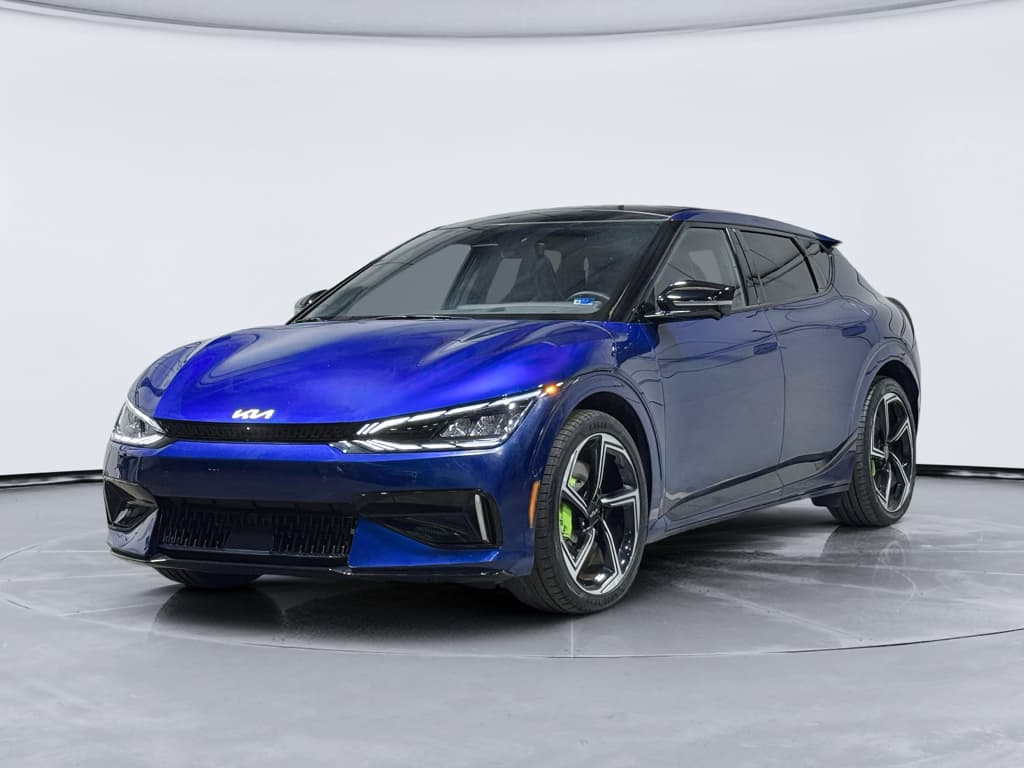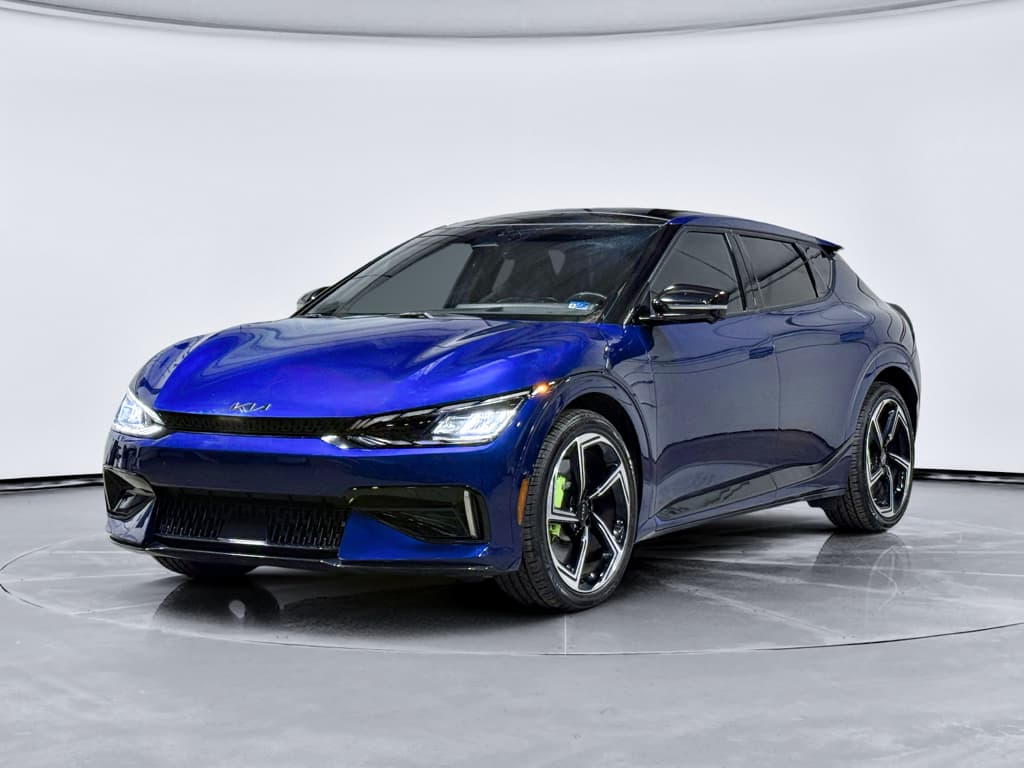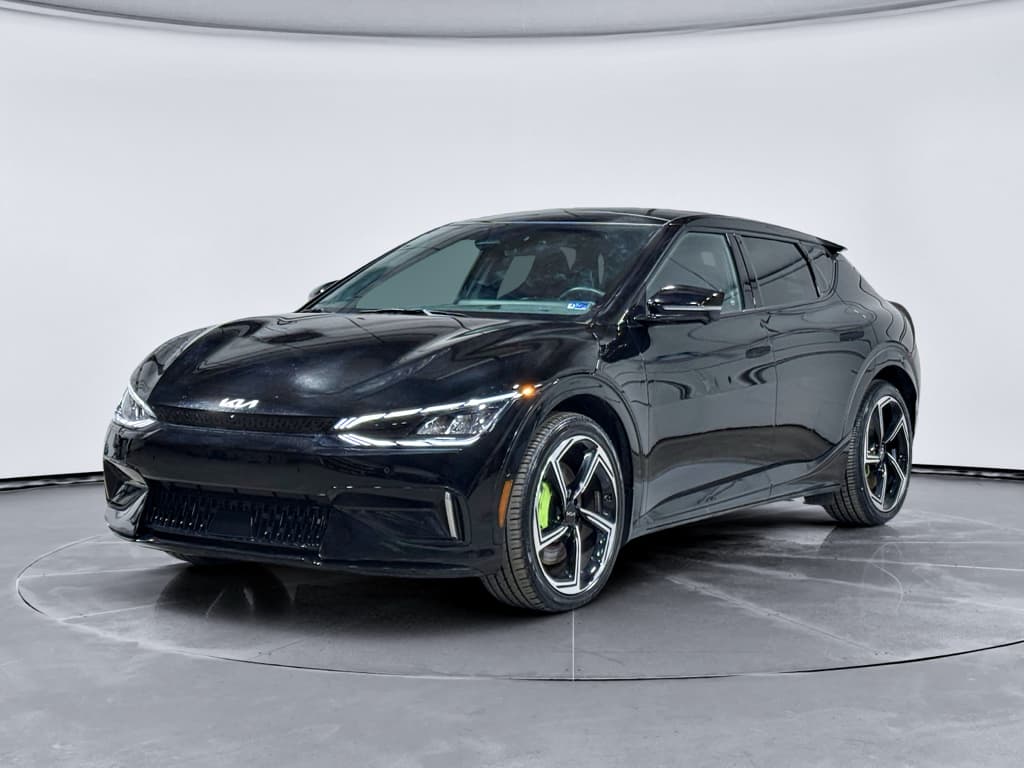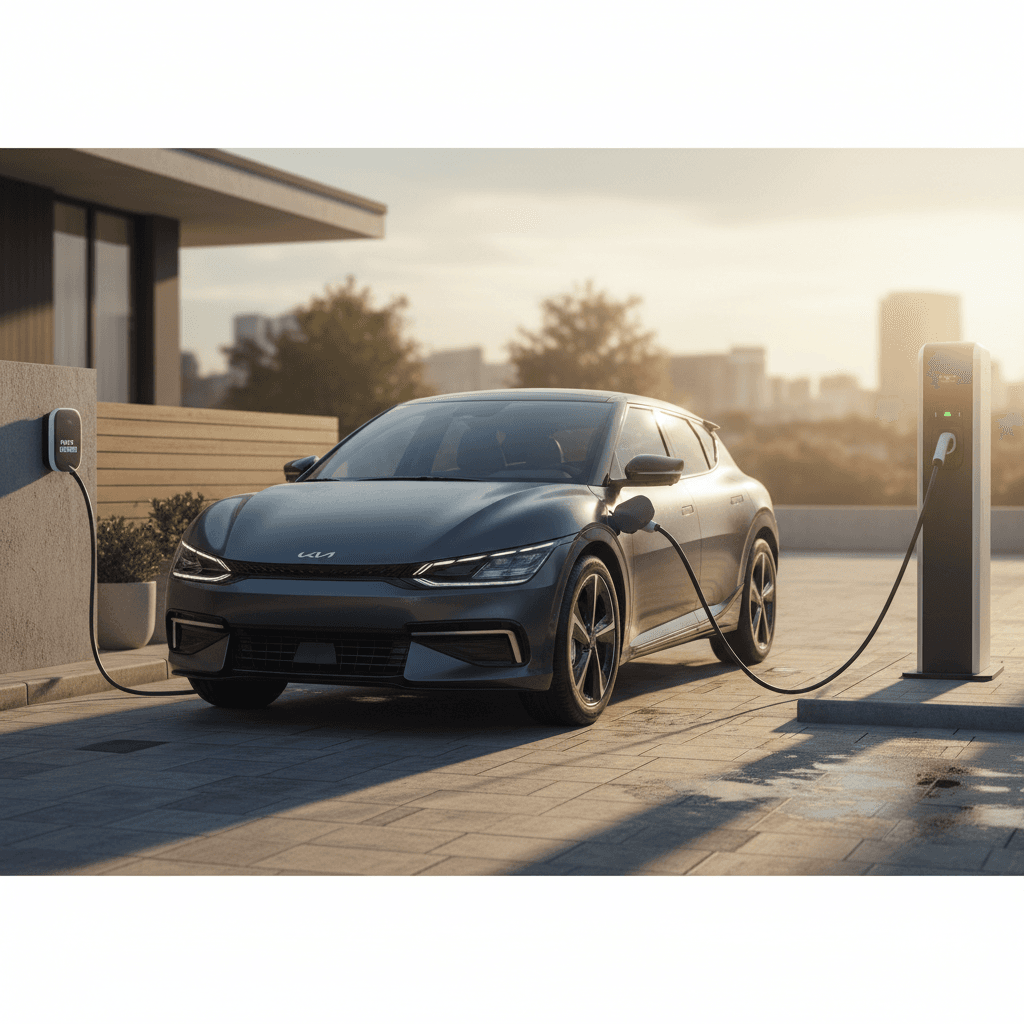
If you own, or are eyeing, a Kia EV6, you’ve probably heard the marketing line: “10–80% in about 18 minutes.” Impressive, yes. But what does that actually look like at your house on a 240V outlet, in winter, or on a crowded road-trip charger? This Kia EV6 charging speed guide breaks down real-world times at home and on DC fast chargers so you know exactly what to expect day to day.
Quick EV6 charging snapshot
Kia EV6 charging basics: the numbers that matter
Kia EV6 key charging specs at a glance
Three specs largely determine your real-world Kia EV6 charging speed: battery size, the car’s onboard AC charger (11 kW), and the power of the station you plug into. The battery is your “tank,” the onboard charger is your “funnel,” and the station is the “hose.” The slowest of the three is always the bottleneck.
EV6 battery sizes and what they mean for charging speed
Kia EV6 battery sizes by trim (U.S. market, recent model years)
Exact trim names change year to year, but this summarizes how the two main battery packs show up in the lineup.
| Pack | Approx. capacity | Typical trims | EPA range ballpark | Impact on charging |
|---|---|---|---|---|
| Standard Range | ~58 kWh | Entry "Light" RWD and similar | ~225–240 mi | Smaller “tank” charges faster but delivers fewer miles. |
| Long Range | 77.4 kWh | Most Wind / GT-Line / higher trims | ~250–310 mi | More range, but more energy to refill, longer home charge times. |
Knowing your pack size is the first step to understanding your charging times.
If you’re not sure which battery your EV6 has, check the window sticker, the Monroney label in your paperwork, or the specs page in the Kia app. Most EV6s sold in the U.S. use the 77.4 kWh long-range pack, which is what we’ll reference for most time estimates in this guide.
A quick way to ballpark charge time
Home charging: Level 1 vs Level 2 for the EV6
Level 1 (120V household outlet)
- Uses a standard 3‑prong 120V outlet.
- Power: ~1.3–1.8 kW depending on the portable EVSE and circuit.
- Adds roughly 3–5 miles of range per hour.
- Good as a backup or for very light daily driving.
If you drive less than 25–30 miles per day and can plug in for 10–12 hours overnight, Level 1 can work, but it’s slow and unforgiving if you come home nearly empty.
Level 2 (240V home charging)
- Requires a 240V circuit (like an electric dryer or range).
- Power: up to 11 kW on the EV6, typically 7–11 kW depending on the breaker.
- Adds roughly 25–40 miles of range per hour.
- Best for most owners, especially in colder climates.
A properly installed Level 2 charger turns the EV6 into a "full tank every morning" car, even for longer commutes.
Don’t cheap out on electrical work
Realistic Kia EV6 Level 2 charging times
On 240V, the Kia EV6 is limited by its 11 kW onboard charger. That means there’s no benefit to installing a 19 kW commercial monster in your garage, anything above an 11 kW (48A) wallbox is just wasted potential. Here’s how that translates into real time for the long-range 77.4 kWh pack.
Kia EV6 long-range (77.4 kWh), common Level 2 scenarios
Approximate home charging times in mild weather, from 10% state of charge.
| Circuit & charger | Approx. power | 10–80% time | 10–100% time | Miles of range per hour* |
|---|---|---|---|---|
| 240V / 20A (16A draw) | ≈3.8 kW | ~12–13 hours | ~15–16 hours | ~12–15 mi/hr |
| 240V / 30A (24A draw) | ≈5.7 kW | ~8–9 hours | ~11–12 hours | ~18–22 mi/hr |
| 240V / 40A (32A draw) | ≈7.7 kW | ~6–7 hours | ~9–10 hours | ~24–28 mi/hr |
| 240V / 60A (48A draw, max) | ≈11 kW | ~4.5–5 hours | ~7–8 hours | ~32–40 mi/hr |
Use these as planning numbers, not promises; temperature and losses will nudge things up or down.
*Miles per hour caveat
Choosing the right home charging setup for your EV6
1. Confirm your panel capacity
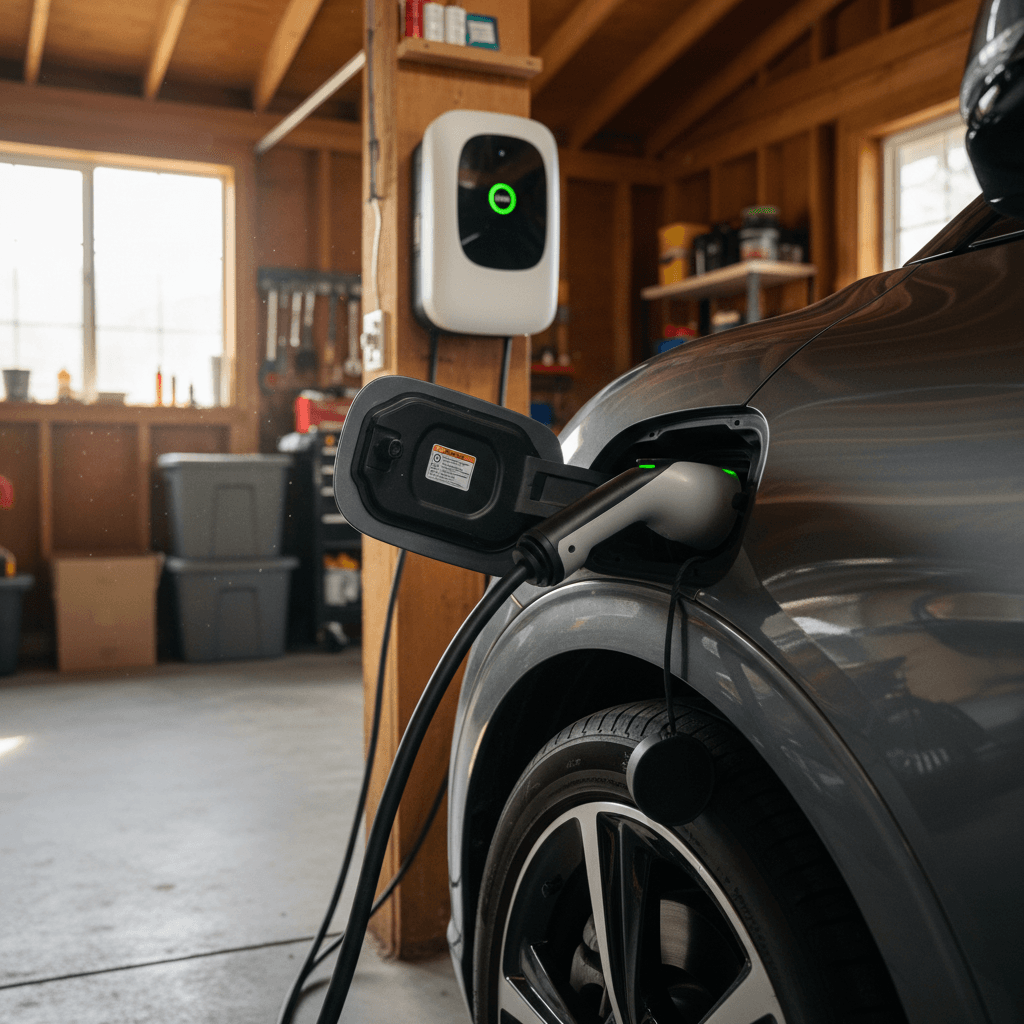
Have an electrician check how much spare capacity your service panel has. A 40A circuit (32A charging) is often an ideal balance between speed and cost.
2. Decide on plug‑in vs hardwired
Plug‑in wallboxes (NEMA 14‑50) are flexible; hardwired units can support higher amperage and cleaner installs. Either will max out the EV6 if sized correctly.
3. Match charger amps to your circuit
Your EVSE’s max current must be 80% of the breaker rating. A 50A breaker safely supports a 40A charger; a 60A breaker can handle 48A.
4. Think about cable length and location
Measure where you park, how you pull in, and where the port is (rear passenger side). A 20–25 ft cable avoids daily gymnastics.
5. Factor in future EVs
If you might add a second EV later, consider oversizing conduit or adding a subpanel now. It’s cheaper than opening the wall twice.
DC fast charging: 800V speed, real-world results
On the highway, the Kia EV6 finally gets to flex its technology. The 800V architecture, shared with cousins like the Hyundai Ioniq 5 and Genesis GV60, allows the EV6 to pull well over 200 kW on capable DC fast chargers. That’s how you get the famous 10–80% in about 18 minutes claim.
Kia EV6 DC fast charging, long-range battery, ideal conditions
Approximate DC fast-charging performance when the charger and battery are both in their happy place (warm pack, powerful station, no sharing).
| Charger rating | Max power the EV6 can actually use | 10–80% time | Miles added in 20 minutes (RWD long-range) |
|---|---|---|---|
| 50 kW DC fast charger | ≈45–50 kW | ~65–75 min | ~80–100 mi |
| 150 kW DC fast charger | ≈160–180 kW peak | ~22–25 min | ~170–200 mi |
| 350 kW ultra-fast charger | ≈220–240 kW peak | ~18–20 min | ~190–220 mi |
Real owners often see numbers close to this on modern 150–350 kW stations.
Cold batteries charge slowly
Make the most of DC fast charging in your EV6
A little strategy can save you time, money, and battery stress.
Arrive in the sweet spot
Plan to arrive at DC fast chargers with 10–30% state of charge. The EV6 charges fastest at lower states of charge; starting at 60% wastes time on the flattish part of the curve.
Charge only to 80–90%
Above ~80%, charging speed tapers hard to protect the battery. Unless you truly need full range, unplug around 80–90% and get back on the road.
Watch both time and cost
Many networks bill by the minute. Staying for the last slow 10–20% often costs more per kWh than the fast middle part of the session.
Frequent DC fast charging isn’t a lifestyle
How to get the fastest (and smartest) charging speeds
- Keep your EV6’s software up to date so it can talk nicely with new chargers and manage preconditioning better.
- Use the in‑car navigation to route to DC fast chargers; when supported, the car can warm the pack en route for faster charging.
- At home, set a scheduled charge start time to align with off‑peak electricity rates and to finish right before you leave, which keeps the pack warm.
- Avoid routinely charging to 100% or running down close to 0%, living mostly between 20–80% is kinder to the battery.
- If a DC fast session looks unusually slow, try a different stall or another network; not all stations are created equal.
When to prioritize maximum speed
- Long road trips with tight arrival windows.
- Rare situations where you arrived at a charger nearly empty.
- Cold weather drives where you need extra margin.
In these cases, it’s fine to lean on DC fast charging and higher states of charge, just don’t make it your daily pattern.
When to prioritize battery health
- Daily commuting and errands within your normal range.
- Parking for days at an airport or trailhead.
- Owning the vehicle long‑term or planning resale.
Here, favor Level 2 charging, shallow cycles, and 20–80% state of charge. Your long‑term capacity, and resale value, will thank you.
What it costs to charge a Kia EV6
Charging speed is one half of the story. Cost per kWh is the other. The EV6’s efficiency is solid for a midsize crossover, but what you pay depends almost entirely on where you plug in and when you draw power.
Typical cost to add ~200 miles in a long-range EV6 (U.S. examples)
Assumes about 30 kWh per 100 miles in mixed driving, so ~60 kWh to add ~200 miles.
| Charging type | Assumed rate | Energy used | Approx. cost for ~200 mi |
|---|---|---|---|
| Home Level 2, off‑peak | $0.12/kWh | 60 kWh | ~$7.20 |
| Home Level 2, standard rate | $0.20/kWh | 60 kWh | ~$12.00 |
| Public Level 2 | $0.25/kWh | 60 kWh | ~$15.00 |
| DC fast (typical per‑kWh pricing) | $0.40/kWh | 60 kWh | ~$24.00 |
| DC fast (per‑minute, high demand) | Effective ~$0.50–0.60/kWh | 60 kWh | ~$30.00–$36.00 |
Your actual numbers will vary with local electric rates and driving style.
Home charging is where the EV6 wins
Charging speed, degradation, and used EV6 shopping
On a used Kia EV6, charging behavior is one of the best tells of battery health. A pack that charges much slower than expected, especially on DC fast chargers, may be sending a message. So may an EV6 that appears to rip from 10–60% and then crawls from 60–80% even in warm weather.
What charging can tell you about a used Kia EV6
Red flags and green lights when you’re shopping pre-owned.
Potential red flags
- Fast charging sessions that never exceed ~60–70 kW on a healthy 150–350 kW station.
- Owner history of constant road‑trip DC fast charging, rideshare duty, or high annual mileage.
- Dashboard range estimates that are dramatically below original EPA numbers, even at 100%.
Reassuring signs
- Consistent 150–200+ kW peaks on modern DC fast chargers in mild weather.
- Home charging habits centered on Level 2, with modest daily mileage.
- Range estimates that roughly align with the original EPA ratings.
How Recharged helps with EV6 battery health
Kia EV6 charging speed FAQ
Frequently asked questions about Kia EV6 charging speed
Bottom line: how fast is the Kia EV6, really?
Live with a Kia EV6 for a week and you quickly realize its headline charging numbers aren’t just brochure fiction, they’re a pretty good description of how the car behaves when you set it up right. At home on a 40–48A Level 2 charger, it’s an easy overnight refill. On the road at a modern 150–350 kW station, it’s a coffee‑and‑bathroom‑break kind of stop, not a sit‑down‑for-lunch ordeal.
The trick is matching your charging setup to your life: a solid 240V installation at home, a basic understanding of how DC fast charging tapers, and habits that keep the battery living mostly between 20–80%. Get those pieces right and the EV6 becomes what many owners quietly discover it to be: one of the least stressful EVs to keep charged, whether you buy it new or pick up a used example with a verified Recharged Score and known battery health history.