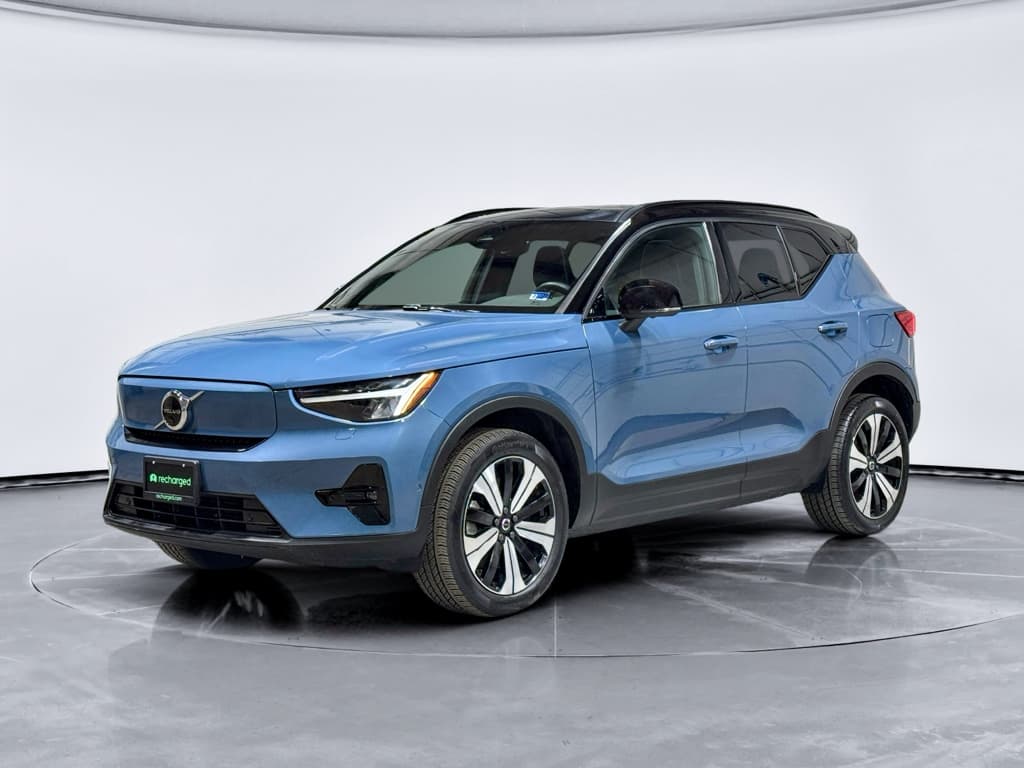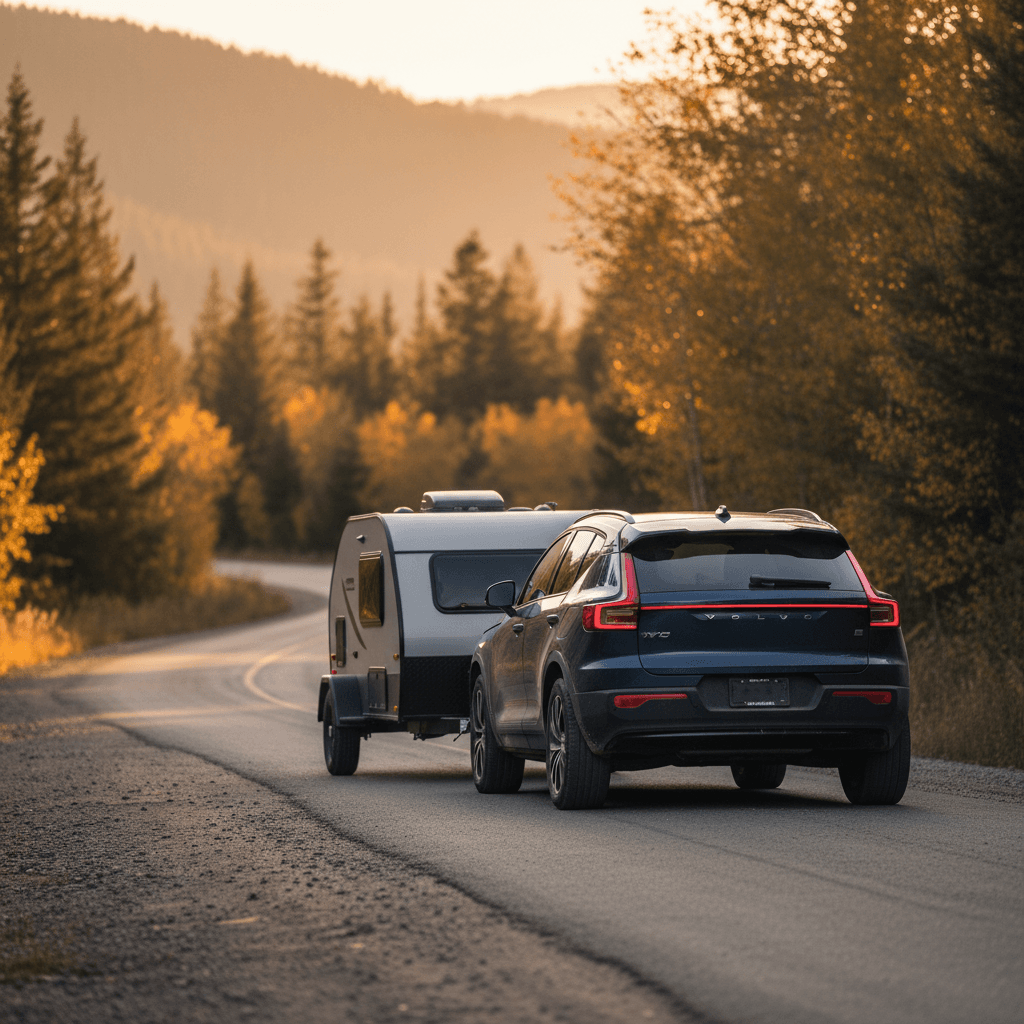
If you love the look and feel of the Volvo C40 Recharge but also want to tow a small camper, utility trailer, or toys, the obvious questions are: how much can it tow, and how badly does towing kill the range? The spec sheet only tells part of the story, especially with an EV.
Quick takeaway
Volvo C40 Recharge towing overview
The C40 Recharge is a compact, fast electric crossover that shares bones and powertrains with the XC40 Recharge. That means a heavy EV platform with a big battery, dual‑ or single‑motor setups, and instant torque, great for pulling away from a light with a trailer hooked up. But it also means aero drag and weight are your enemies once you’re at speed.
Volvo C40 Recharge towing & range at a glance
Key numbers you should understand before you hitch up
Towing capacity
Depending on market and configuration, a C40 Recharge with a factory towbar is typically rated for:
- ~2,000 lb (900 kg) on some single‑motor versions
- Up to ~3,300 lb (1,500 kg) on better‑equipped models
Always confirm the exact number for your VIN in the owner’s manual and door‑jamb label.
Battery & EPA range
- Earlier dual‑motor models: ~78 kWh pack, EPA range typically 220–230 miles
- Updated 2024+ models: up to 82 kWh pack, EPA combined range up to ~297 miles (RWD) and ~257 miles (AWD)
Range while towing
On the highway with a modest trailer, most EVs, including the C40, see:
- 30–50% range loss as a realistic planning window
- Heavy or tall campers can push losses toward 50–60%
Check whether your C40 is rated to tow at all
Official Volvo C40 Recharge towing capacity by model
Volvo’s official towing figures vary by market and model year. In Europe and other regions where towing with smaller cars is common, you’ll often see the C40 Recharge rated up to 1,500 kg (about 3,300 lb) braked with a maximum towball load around 75–100 kg. U.S. documentation for the C40 is more conservative and sometimes doesn’t list a tow rating at all, even though dealers may offer a hitch.
Typical Volvo C40 Recharge towing specs (approximate)
Representative towing numbers for common C40 Recharge configurations. Always verify your exact rating in official Volvo documentation for your car’s model year, market, and VIN.
| Configuration | Drive layout | Battery | Braked tow rating* | Unbraked tow rating* | Max tongue weight* |
|---|---|---|---|---|---|
| Early Twin Motor (2022–2023) | AWD | ~78 kWh | ~2,000–3,300 lb (900–1,500 kg) | ~1,650 lb (750 kg) | ~165–220 lb (75–100 kg) |
| Single Motor (select markets) | FWD/RWD, market‑dependent | ~69–79 kWh | ~2,000–2,200 lb (900–1,000 kg) | ~1,650 lb (750 kg) | ~165–220 lb (75–100 kg) |
| Single Motor Extended Range (2024+) | RWD | ~82 kWh | Up to ~3,300 lb (1,500 kg) in some markets | ~1,650 lb (750 kg) | ~165–220 lb (75–100 kg) |
| Twin Motor (2024+) | AWD | ~82 kWh | ~2,000–3,300 lb (varies by market) | ~1,650 lb (750 kg) | ~165–220 lb (75–100 kg) |
These are ballpark figures, not a substitute for your owner’s manual.
Never exceed the lowest rating in the system
If you’re shopping for a used C40 Recharge and plan to tow, it’s worth verifying whether the car left the factory with the official tow package or had an aftermarket hitch added later. Factory‑equipped cars typically include wiring and cooling considerations that accessory hitches may not match.
How towing affects Volvo C40 Recharge range
In a gas SUV, you feel towing at the pump. In an EV like the C40 Recharge, you feel it in how often you’re stopping to charge. Two physics problems show up the moment you add a trailer: extra rolling resistance from the weight, and much more aero drag from that box in the wind.
- At city speeds, extra mass matters more than aero. You’ll see some range loss, but it’s manageable, especially with a light utility trailer.
- At highway speeds, aero dominates. A tall camper can behave like a parachute, dramatically increasing energy use per mile.
- Cold weather, headwinds, and higher speeds (75+ mph) stack on top of towing, sometimes making range loss feel brutal.
Typical C40 Recharge towing range penalties
Use a percentage, not a fixed number
Real-world range loss with different trailers
To make this concrete, let’s start with ballpark real‑world highway range for a healthy C40 Recharge in mild weather, then apply towing penalties. These are planning examples, not promises, they assume 65–70 mph, moderate temps, and relatively flat terrain.
Scenario 1: Light utility trailer
You have a dual‑motor C40 rated around 220–230 miles EPA. On the highway, unloaded, you might see 190–210 miles in the real world.
- Trailer: 4x8 open utility trailer, ~1,000–1,500 lb loaded
- Expected range loss: roughly 30–35%
Planning range: Aim for 120–140 miles between fast‑charge stops, keeping a buffer for wind or detours.
Scenario 2: Small camper or teardrop
Same C40, this time towing a small teardrop camper or low‑profile travel trailer in the 2,000–2,500 lb range, just within the car’s rating.
- Expected range loss: roughly 40–50% at 65–70 mph
Planning range: Think in terms of 90–120 miles between charges, and don’t be surprised if winter temps or hills push you toward the lower end.
Scenario 3: Roof box vs. trailer
If you don’t actually need a full trailer, a roof box or hitch‑mounted cargo carrier can be kinder to your range, especially a low, narrow one.
Expect roughly 10–25% range loss from aero drag with a big roof box, often less punishing than a boxy trailer of the same frontal area.
Scenario 4: Updated 2024+ C40 RWD
The rear‑wheel‑drive, extended‑range C40 has an EPA rating close to 300 miles. On the highway, unloaded, you might see 220–240 miles in good conditions.
Towing a modest camper with a 40–50% penalty still leaves you with roughly 110–150 miles between fast charges, meaningfully better than the early twins, but still not pickup‑truck territory.
How to plan trips in a C40 Recharge while towing
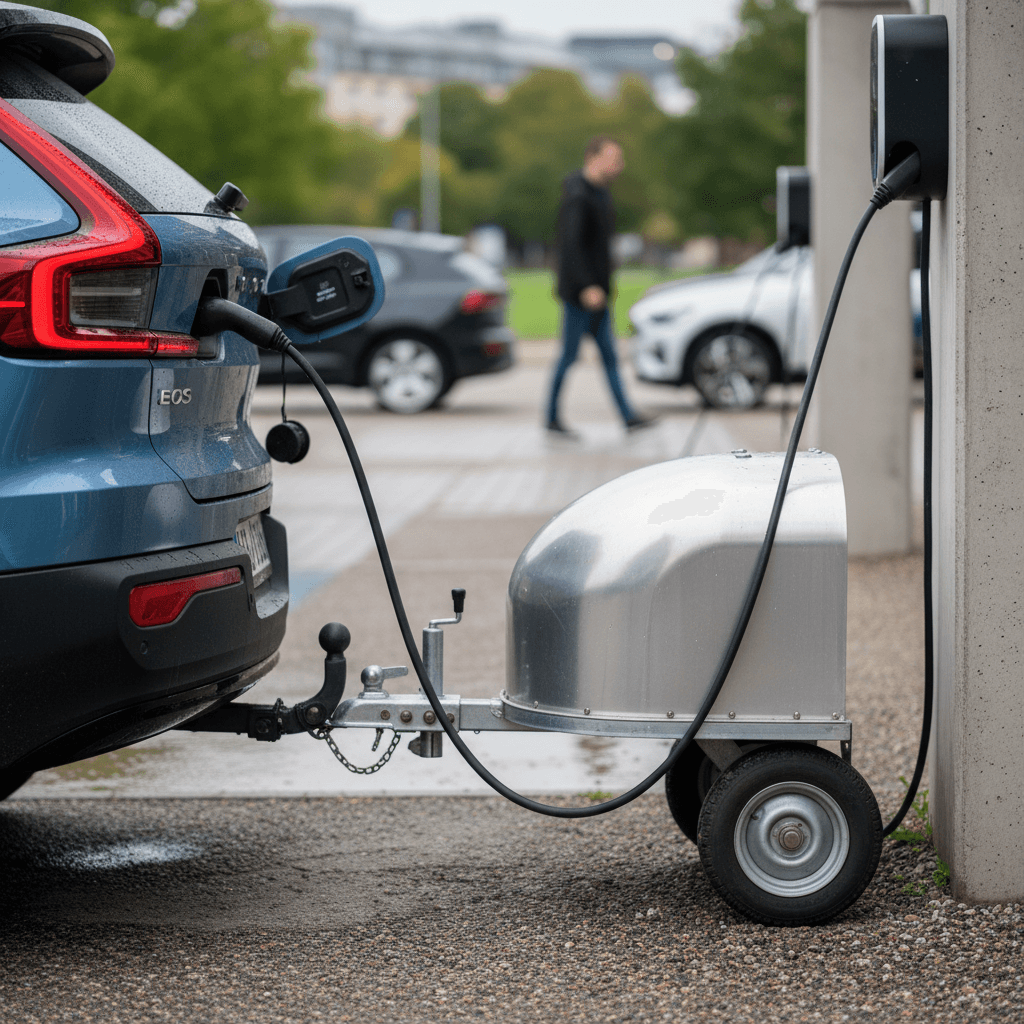
Road‑tripping with a trailer behind a C40 Recharge isn’t impossible, but it does require a different mindset from a gas crossover. You’re building your day around shorter, more frequent charging stops and being honest about how far you can really go between plugs.
Towing trip planning checklist for your C40 Recharge
1. Start with your real solo highway range
Before you tow, do at least one highway trip without a trailer at your normal speed and weather. Note what your C40 actually delivers from 90% down to ~10–20% charge. That’s your realistic baseline, not the EPA sticker.
2. Apply a conservative range penalty
For a light, low trailer, assume at least <strong>30–35%</strong> range loss. For a camper, assume <strong>40–50%</strong>. Then build an extra 10–15% buffer so you’re not sweating the last few miles.
3. String chargers 60–100 miles apart
Use PlugShare, A Better Routeplanner, or your preferred app to lay out chargers roughly every 60–100 miles, depending on your trailer and weather. Skip any that look sketchy or have poor reliability ratings.
4. Aim to charge between 10–70%
DC fast chargers feed an EV quickly up to around 60–70% state of charge, then slow down. When towing, it’s often faster overall to do <strong>more short sessions</strong> between 10–70% than a few long ones to 100%.
5. Factor in speed limits and grades
A 75‑mph interstate through mountain passes is a very different energy story than a 60‑mph coastal highway. If you’re climbing or facing strong winds, adjust your plan or accept that you’ll stop more often.
6. Have a backup charging option
On rural routes, know where your backup chargers are in case a site is full or down. If you’re camping, confirm you can plug into a 30A or 50A RV pedestal and know which adapter you need.
Pro move: pre‑test your route without the trailer
Hitches, tongue weight, and loading basics
Because the C40 Recharge is a relatively small, tall crossover, proper loading matters as much as adhering to the spec‑sheet tow rating. Get the tongue weight wrong or overload the rear, and the car will feel nervous, especially in crosswinds.
- Aim for trailer tongue weight around 8–12% of the total trailer weight, as long as that stays within the C40’s and hitch’s tongue‑weight rating.
- Load heavy items low and slightly forward of the trailer axle to avoid sway.
- Check and adjust trailer tire pressure; under‑inflated tires can add drag and heat.
- Make sure your wiring harness provides proper brake‑light and turn‑signal operation, and that electric trailer brakes (if equipped) are correctly adjusted.
Mind your payload, not just the tow rating
Driving techniques to cut towing range loss
The way you drive your C40 Recharge with a trailer can easily make a 20–30% difference in energy use. EVs are brutally honest: there’s no exhaust note to hide how hard they’re working.
Simple ways to stretch your towing range
They also happen to make towing safer and less stressful
Slow down a notch
Dropping from 75 mph to 65 mph can feel tedious, but aero drag rises with speed. In many EVs, that 10‑mph cut is the difference between stopping every 80 miles and every 120 miles when towing.
Watch the wind and weather
Headwinds and cold temps are range killers. If possible, time long legs so you’re not driving into a strong headwind in sub‑freezing temps. Pre‑condition the cabin and battery while plugged in to avoid wasting energy on initial warm‑up.
Drive smoothly
Use cruise control gently, avoid constant passing, and leave big gaps. Every burst of acceleration with a heavy trailer spikes power draw. The C40’s instant torque is addictive; towing is when you need to ignore that temptation.
Use the energy screen as your coach
Is the Volvo C40 Recharge actually good for towing?
Viewed through pickup‑truck glasses, the C40 Recharge is not much of a tow rig. It’s short, relatively heavy for its size, and has a modest tow rating. Viewed as a compact European crossover that happens to be electric, it makes a lot more sense.
Where the C40 shines
- Instant torque makes pulling away from junctions feel effortless.
- Low center of gravity (battery in the floor) helps stability versus a comparable gas crossover.
- Perfectly suited to light‑duty towing: small campers, utility trailers, and toys.
- Quiet, refined powertrain makes long days more relaxing, no droning engine.
Where it falls short
- Even with the 82 kWh pack, usable towing range is limited compared with larger‑battery EV trucks and SUVs.
- Short wheelbase and tall body mean more sensitivity to crosswinds with a big trailer.
- Factory tow package availability is inconsistent by region and trim, especially in the U.S.
- Fast‑charging network density still matters a lot for ambitious tow trips.
Light‑duty, not heavy‑haul
Buying a used C40 Recharge for towing
If you’re eyeing a used C40 Recharge specifically because you want a compact EV that can also tow on weekends, it pays to shop carefully. You’re balancing battery health, tow rating, and the previous owner’s use and charging habits.
Used C40 Recharge towing buyer checklist
Confirm factory tow rating and equipment
Ask the seller for photos of the <strong>door‑jamb label</strong> and the owner’s manual section on towing. Look for a factory‑installed towbar and wiring rather than a random aftermarket hitch with no paperwork.
Get objective battery health data
Towing means running the battery hard on road trips. When you shop with Recharged, every C40 comes with a <strong>Recharged Score battery health report</strong> so you can see how much usable capacity the pack has retained.
Check for signs of hard use
Look for unusual rear‑suspension wear, wiring hacks for trailer lights, or evidence of heavy roof loads that might hint at frequent towing or maxed‑out payload. None are deal‑breakers by themselves, but they’re bargaining chips.
Prioritize the newer powertrains if you can
The updated 2024‑onward C40s with the <strong>82 kWh pack and more efficient motors</strong> give you noticeably better towing headroom. If your budget stretches, they’re worth a look for range alone.
Plan your financing and trade‑in online
Because you’ll probably want a hitch, wiring, and maybe a brake controller, it helps to leave room in the budget. With Recharged, you can <strong>get pre‑qualified, trade‑in your current car, and add everything up front</strong> in a single digital deal sheet.
If you want a second opinion while you’re comparing a C40 Recharge to, say, a used Model Y or Ioniq 5 for towing duty, Recharged’s EV specialists can help you compare real‑world range and tow ratings model by model, not just quote brochure numbers.
Volvo C40 Recharge towing capacity & range loss FAQ
Common questions about Volvo C40 Recharge towing
Bottom line: When the C40 shines, and when it doesn’t
The Volvo C40 Recharge can absolutely tow, within reason. If your world is small campers, yard‑work trailers, and occasional weekend toys, it’s a stylish, comfortable EV that can do the job as long as you respect its limits and plan for a 30–50% range haircut. For that use case, it’s closer to an electric Swiss Army knife than a compromise.
If, instead, you’re picturing cross‑country hauls with a tall travel trailer, charging every 80 miles and hunting for DC fast chargers in the middle of nowhere, the physics simply aren’t on your side. You’re better served by a larger‑battery EV truck or SUV, or a different strategy altogether.
Whichever way you lean, going used can make the numbers work. Recharged’s marketplace focuses on used EVs like the C40 Recharge, pairing each car with transparent battery health data, expert guidance, and nationwide delivery. That way, when you finally back up to a trailer, you know exactly what your C40 can tow and how far it can realistically go.