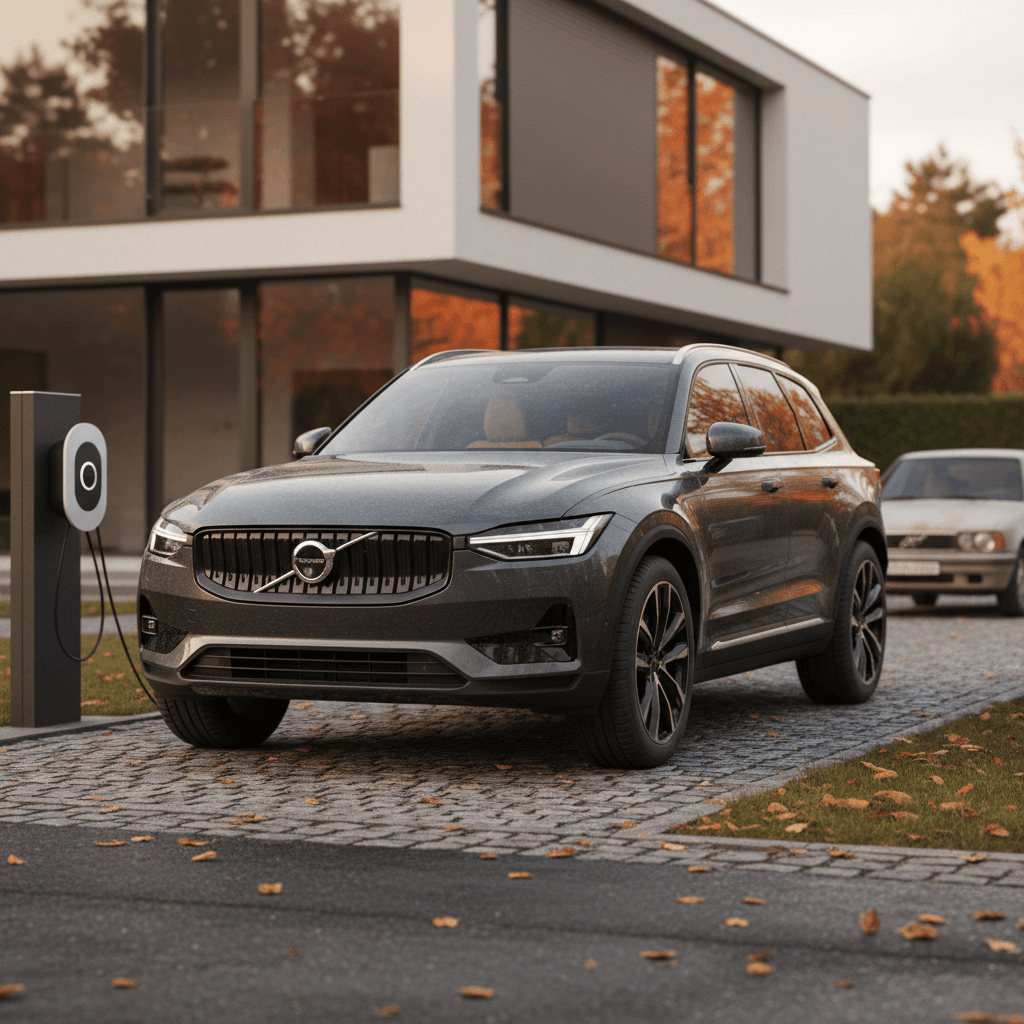
You’re looking at the **Volvo EX90** and wondering, in 2026, if this big Scandinavian electric SUV is actually worth writing an $80,000‑plus check for. On paper it’s everything a modern family EV should be: three rows, about 300 miles of range, a fortress of safety tech, and that minimalist calm Volvo does so well. But the past few years have also brought **software delays, lidar drama, and fierce new rivals**. Let’s separate the cool from the costly and figure out whether the Volvo EX90 is worth buying in 2026, or if your money is better spent elsewhere, including the used EV market.
Context: where the EX90 sits in 2026
Should you buy a Volvo EX90 in 2026?
Short answer
If you value safety, serenity, and Scandinavian design over raw performance or software wizardry, the Volvo EX90 can absolutely be worth buying in 2026, especially if you plan to keep it for many years and use the third row regularly.
But if you’re chasing maximum range, bleeding‑edge fast charging, or flawless infotainment, there are rivals (and some used EVs) that give you more for the money.
What this guide will do for you
We’ll walk through:
- Real‑world pros and cons of living with an EX90
- How its range, charging, and tech stack up in 2026
- How it compares to Kia EV9, Tesla Model X, Rivian R1S and others
- Whether you should consider a lightly used luxury EV instead
And because this is Recharged, we’ll also show where a used EV with verified battery health might quietly be the smarter move.
Volvo EX90 in 2026: the 30‑second take
2026 Volvo EX90: fast facts that matter
How to read all those numbers
Key specs that actually matter
Core 2026 Volvo EX90 specs (U.S. overview)
Trim names and exact figures vary by market, but this captures what most American buyers will care about in 2026.
| Spec | Twin Motor | Twin Motor Performance |
|---|---|---|
| Drive layout | Dual‑motor AWD | Dual‑motor AWD |
| Battery (gross / usable) | 111 kWh / ~107 kWh | 111 kWh / ~107 kWh |
| EPA‑style range target | High‑200s to ~300 mi | Slightly lower due to power/wheels |
| 0–60 mph (est.) | Around mid‑5s | Around mid‑4s |
| Max DC fast charge | Up to 250 kW (400V platform in earlier years) | Up to 250 kW |
| Seats | 6 or 7 | 6 or 7 |
| Towing capacity | Up to ~4,000–5,000 lb (trim‑dependent) | Similar, check specific build |
Approximate U.S. specs; always confirm final numbers on the exact vehicle you’re shopping.
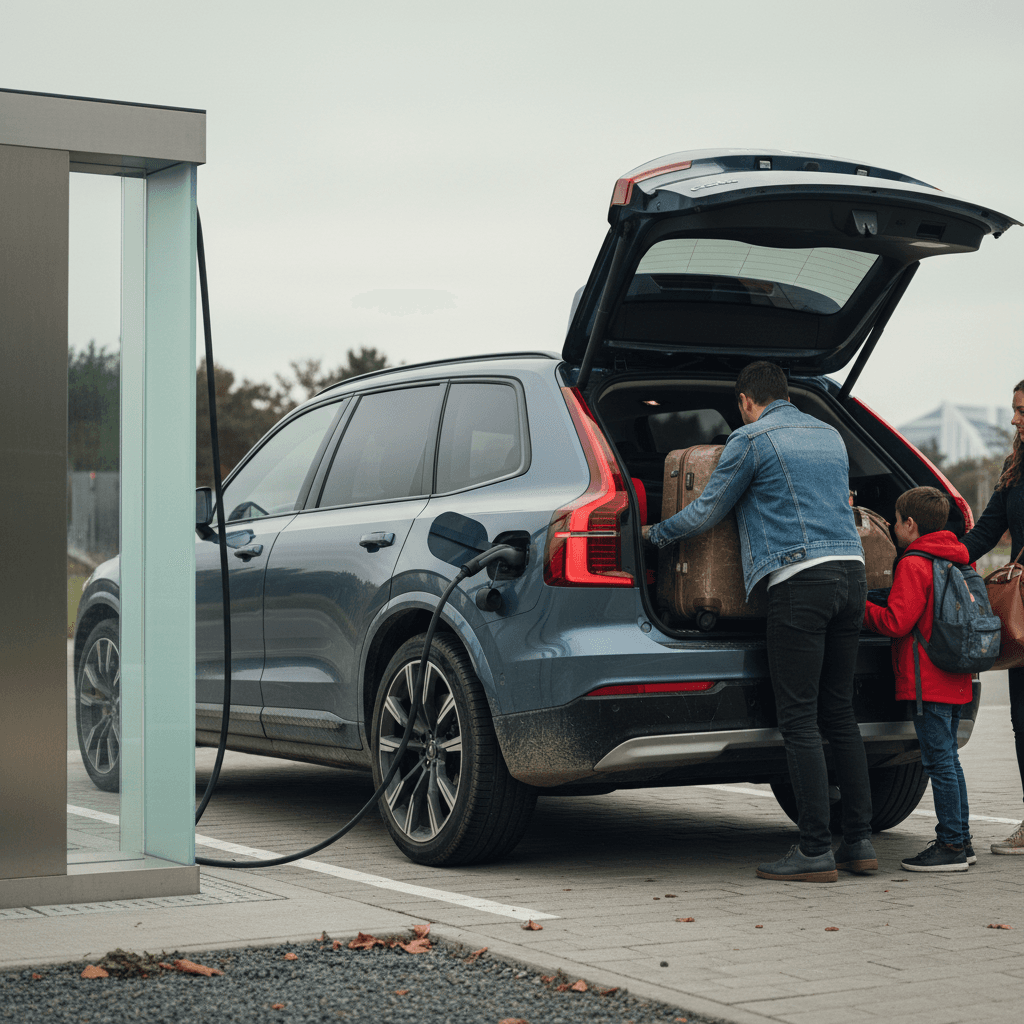
Numbers aside, think of the EX90 as a **battery‑electric XC90 turned up to 11**. It’s long, tall, and unapologetically family‑first. The third row actually fits real humans for short stints, the cargo area is square and usable, and the suspension tuning leans more toward “airport lounge” than Nürburgring. If you want a canyon carver, look elsewhere; if you want your kids to nod off by mile 10, this is your jam.
Where the Volvo EX90 is genuinely brilliant
Volvo EX90 strengths in everyday life
These are the reasons people fall in love with this SUV, and stay loyal to the brand.
Safety that borders on obsessive
Volvo still treats safety as a religion. The EX90 brings:
- A structural safety cell built around the 111 kWh pack
- Advanced driver monitoring to catch drowsiness and distraction
- Surround sensors and highway driver‑assist that feel calm rather than video‑gamey
You buy one of these because you care deeply about what happens in the one bad second of the year.
Best‑in‑class serenity
Step into an EX90 after a long day and the cabin whispers, “Sit. Breathe.”
- Open‑pore wood, wool and recycled textiles
- Big glass area without feeling like a fishbowl
- Excellent seat ergonomics in all three rows
It’s one of the least stressful places to sit in traffic in 2026.
Competent range & charging
Around 300 miles of range and DC fast charging up to roughly 250 kW put the EX90 in the comfortable middle of the pack. It’s not a charging rock star, but it’s not an underachiever either.
For typical family use, school runs, commuting, weekend trips, you’ll simply plug in at home and stop thinking about it.
Where EX90 really shines for U.S. families
Where the EX90 falls short (and might drive you nuts)
- **Early software gremlins.** The EX90’s launch was delayed because of software and driver‑assistance issues, and 2024–2025 owners saw updates, recalls and some frustration as Volvo sorted things out.
- **Lidar drama.** Volvo originally promised roof‑mounted lidar hardware as a centerpiece of future hands‑free driving. By late 2025 the company had publicly moved away from its lidar supplier, leaving early buyers with expensive hardware of uncertain long‑term value.
- **Weight and efficiency.** This is a heavy, upright SUV on a 400‑volt architecture in early model years. It’s efficient for its size, but rivals are catching up with lighter 800‑V platforms and faster real‑world charging.
- **Price creep.** Once you spec the trim you actually want, twin‑motor performance, six seats, nice wheels, you’re quickly in the mid‑$80k range. Financing, taxes and insurance will take the total cost of ownership even higher.
- **Infotainment learning curve.** The big Google‑based center screen is powerful but can feel menu‑deep and occasionally laggy compared with the best systems from Tesla, Hyundai/Kia and BMW.
Be realistic about first‑generation hiccups
Volvo EX90 vs. key rivals in 2026
2026 Volvo EX90 vs popular three‑row EV rivals
How the EX90 stacks up at a glance against other large family EVs you’re likely cross‑shopping.
| Model | Seats | Est. range (max trims) | Charging architecture | Character | Typical price window |
|---|---|---|---|---|---|
| Volvo EX90 | 6–7 | ~300 mi | 400 V (moving toward 800 V on newer iterations) | Calm, safety‑first, minimalist | ~$76k–$90k |
| Kia EV9 | 6–7 | Up to ~304 mi | 800 V | Great value, very fast charging, more playful | ~$56k–$80k |
| Tesla Model X | 6–7 | Up to ~335 mi | 400 V (excellent Supercharger access) | Fast, space‑efficient, aging cabin design | ~$80k–$100k |
| Rivian R1S | 5–7 | Up to ~390 mi (large pack) | 400 V | Adventure‑oriented, off‑road capable, tech‑forward | ~$75k–$105k |
| Mercedes EQE SUV (2+kids) | 5 | Up to ~280 mi | 400 V | Posh, tech‑heavy, less practical third row | ~$75k–$95k |
Approximate U.S. market comparisons for 2026; trims and pricing vary by configuration.
In that company, the EX90 isn’t the quickest, the cheapest, or the longest‑range. What it does better than most is **feel like a grown‑up family car first and a gadget second**. The Kia EV9 undercuts it on price and charges faster. The Rivian R1S is more adventurous and charismatic. Tesla’s Model X still owns the weirdo‑spaceship niche. The EX90’s pitch is quieter: you buy it because you trust it to look after your people without drama.
Head vs. heart comparison
Software, lidar and “new model” worries: is the tech trustworthy yet?
Software: better than 2024, still evolving
The EX90’s rollout in 2024 and early 2025 was throttled by software and driver‑assist issues. By 2026, most of the big stability problems have been addressed with over‑the‑air updates and hardware tweaks. Day‑to‑day, the car now behaves like a modern EV should: it wakes up, connects, navigates and charges without daily drama.
That said, you should still expect the occasional quirk after major updates, a blank app page here, a grumpy sensor there. Think of it like owning a high‑end smartphone in its second major OS version.
Lidar and driver‑assist expectations
Early EX90 marketing leaned hard on the roof‑mounted lidar as a bridge to future hands‑free driving. By late 2025, after supplier and strategy changes, that promise looks much softer. The hardware is there on some builds, but there’s no guaranteed timeline for truly hands‑free capability.
If you buy an EX90 in 2026, treat the lidar as a safety sensor that may or may not gain extra talents later, not as a golden ticket to Level 3 autonomy.
Don’t pay a premium for future promises
New Volvo EX90 vs. used luxury EV SUV
Before you lock yourself into a long loan on a brand‑new EX90, it’s worth asking a blunt question: **what else could $80,000–$90,000 buy you in the EV world, especially used?** Luxury EVs depreciate quickly, and the EX90’s biggest rivals have already taken their first‑owner hit.
What a new EX90 buys vs. a used EV alternative
How the same budget plays out in the real world.
Brand‑new Volvo EX90
- Full factory warranty + 8‑year battery warranty
- Latest build hardware and software from the factory
- Exactly the color and trim you want (eventually)
- Top‑shelf safety and a showroom‑fresh interior
Downside: steep early‑years depreciation and a large financed amount in a still‑evolving tech package.
Lightly used luxury EV SUV
- 2–3‑year‑old Tesla Model X, BMW iX, Mercedes EQE SUV, Rivian R1S, or even an early EX90
- Price already knocked down tens of thousands from original MSRP
- Real‑world reliability history you can actually research
- Still under battery warranty in many cases
Downside: you compromise on exact spec, and you must be picky about battery health.
How Recharged can tilt the math
Who the Volvo EX90 is (and isn’t) right for
Who should seriously consider a Volvo EX90 in 2026?
Families who truly use three rows
If you’ve outgrown two‑row crossovers and regularly carry grandparents, teens, or full‑size friends, the EX90’s third row and cargo packaging make sense. You’re paying for the space; use it.
Safety‑first buyers
You’re the person who reads IIHS crash reports for fun and you’ve always associated Volvo with safety. The EX90 continues that lineage with a deep obsession for crash protection and driver monitoring.
Buy‑and‑hold owners
If you tend to keep vehicles 8–10 years, the EX90’s calm design and strong safety story age better than flashier, trend‑chasing rivals. Depreciation hurts less when you’re amortizing over a decade.
Drivers who hate shouty design
You want an EV that doesn’t look like it escaped from an anime storyboard. The EX90 is handsome, upright and understated, the kind of car that looks right at a PTA meeting or a black‑tie event.
- **Who might want something else:**
- If you road‑trip constantly and live or die by charging speed, an 800‑V EV9 or Hyundai Ioniq 7‑type vehicle will serve you better.
- If you want playful, outdoorsy vibes and genuine off‑road chops, the Rivian R1S is more in character.
- If you’re deeply skeptical of first‑generation software platforms, a proven used Model X or iX with known history may be a lower‑stress choice.
How to shop smart for a Volvo EX90 (or alternative)
6 smart steps before you buy
1. Decide what you’re really paying for
Make a short list: is your priority safety, third‑row space, fast charging, or brand image? If the EX90’s unique strengths (safety, serenity, usable three rows) don’t top that list, you may be overpaying for the badge.
2. Look for later build dates
Because early EX90s saw more software and hardware tweaks, ask for vehicles built after major update milestones and check recall history. Later builds generally mean fewer trips back to the dealer.
3. Test the tech on your actual routes
On a long test drive, deliberately use navigation, driver‑assist, and phone integration on the roads you’ll actually drive. Does it feel predictable and calm, or does it nag and misbehave?
4. Run the total cost of ownership
Beyond MSRP, add home charger installation, insurance, financing, and energy costs. Compare that total to a high‑quality used EV SUV. Many buyers are surprised how compelling a verified used EV looks next to a brand‑new EX90.
5. Cross‑shop at least one used option
Even if you’re leaning new, take an hour to browse <strong>Recharged</strong> or similar marketplaces for used three‑row EVs with battery‑health data. It’s the best way to sanity‑check the value of a new‑car quote.
6. Consider pre‑qualifying your financing
Before you fall in love with any one build, get a sense of your real budget. Recharged lets you <strong>pre‑qualify for EV financing online</strong> with no impact on your credit, so you can walk into Volvo (or any seller) knowing your numbers.
FAQ: Volvo EX90 worth buying in 2026?
Common questions about the Volvo EX90 in 2026
Bottom line: is the Volvo EX90 worth it in 2026?
If you strip away the marketing haze, the **Volvo EX90 in 2026** is a deeply competent, occasionally brilliant electric family SUV with a few first‑generation warts. It’s worth buying if you look at that price tag and think, above all, **“I want the safest, calmest three‑row EV I can get, and I plan to keep it.”** It’s less compelling if you’re chasing maximum spec sheets, lowest payment, or future‑tech promises.
Before you sign anything, do yourself a favor: drive an EX90 back‑to‑back with at least one rival, then spend 30 minutes browsing **used EV SUVs with verified battery health** on Recharged. You may still come back to the Volvo, a lot of thoughtful buyers will, but you’ll be doing it with clear eyes, real numbers, and a sense that you bought the right electric family hauler for the next decade, not just the newest one.