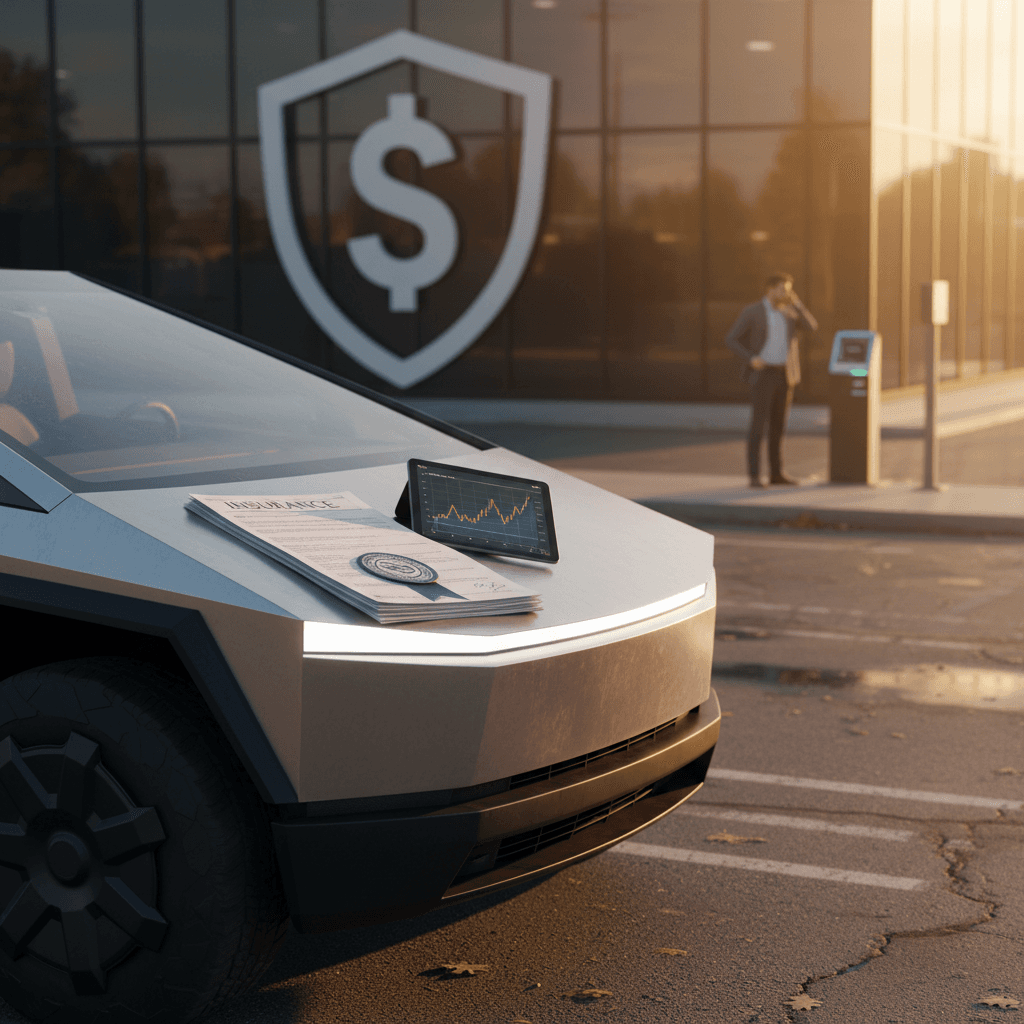
If you’ve priced a policy lately, you already know: Tesla Cybertruck insurance cost in 2026 is no joke. Early national data shows full-coverage Cybertruck premiums often land in the high $3,000s to mid‑$4,000s per year for typical drivers in the U.S., roughly double the national average for car insurance and noticeably higher than most full‑size pickups.
A quick word on numbers
Tesla Cybertruck insurance cost in 2026: the short version
2026 Tesla Cybertruck insurance at a glance
Put simply, insuring a Cybertruck in 2026 is expensive but not impossible. If you’re seeing quotes around $4,000–$5,000 per year for full coverage, you’re not being singled out, that’s the neighborhood most owners are living in right now. The good news: with the right coverage choices and a little legwork, you can often knock that bill down meaningfully without stripping your policy bare.
How much does Tesla Cybertruck insurance cost in 2026?
Let’s start with the numbers most shoppers care about. Pulling together recent industry analyses and insurer quote data, here’s where 2026 Cybertruck insurance costs are generally landing for U.S. drivers buying full‑coverage policies (liability, comprehensive, and collision). These are not rock‑bottom “perfect driver, perfect zip code” prices, they’re realistic ranges for everyday owners.
Estimated 2026 Tesla Cybertruck insurance costs
Approximate full‑coverage premiums for a new Cybertruck in 2026 for typical driver profiles. Your own results will vary.
| Driver profile | Annual premium (approx.) | Monthly (approx.) | How it compares to national avg. |
|---|---|---|---|
| Clean record, 40 years old, suburb, good credit | $3,600–$4,200 | $300–$350 | Roughly 1.8–2.1× U.S. average |
| Clean record, 30 years old, urban area, good credit | $4,000–$4,800 | $335–$400 | Around 2–2.3× U.S. average |
| Minor ticket on record, 35 years old | $4,400–$5,200 | $365–$435 | 2.2–2.5× U.S. average |
| Young driver, 25 years old, clean record | $5,000+ | $420+ | Can easily run 2.5–3× U.S. average |
| High‑risk driver (recent at‑fault accident) | $6,000+ | $500+ | Varies widely; some carriers will decline entirely |
Use this table as a directional guide, not a guaranteed quote.
Several major insurance aggregators peg 2024–2025 Cybertruck premiums in the low‑to‑mid $4,000s per year for average drivers, and some cost‑to‑own calculators even show higher single‑year figures for early builds. When you bake in modest national rate relief for 2025–2026 and some insurers getting more comfortable with the truck, high‑$3,000s to mid‑$4,000s is a fair expectation for 2026 unless you’re in a particularly pricey state or have blemishes on your record.
Sticker shock is normal
Why is Tesla Cybertruck insurance so expensive?
Insurers don’t care about social‑media buzz. They care about claim severity, repair costs, and predictability. The Cybertruck is scoring poorly on two of those three, and the third is still an unknown. Here’s what’s pushing premiums up.
- Stainless‑steel exoskeleton. The same rigid, angular body that makes the Cybertruck stand out also makes it hard to fix. Large stainless panels can’t be quickly massaged and painted like aluminum on an F‑150; they often need expensive replacement, which drives up claim costs.
- High purchase price. A six‑figure sticker, once options and taxes are added, means insurers are on the hook for a lot of money if the truck is totaled. Higher vehicle value almost always equals higher comprehensive and collision premiums.
- Limited repair network. Cybertruck‑ready body shops and parts pipelines are still catching up. Longer repair times mean higher rental‑car payouts and more expensive claim settlements.
- Early‑production unknowns. Insurers dislike uncertainty. The Cybertruck is new, with evolving loss data, so many carriers build in a risk buffer, or simply refuse to write the truck at all in some states.
- EV‑specific risks. Battery damage, heavy curb weight, and instant torque all influence how claims play out. Even minor collisions can involve complex diagnostics or battery inspections.
Why some insurers are backing away
7 factors that change your Cybertruck insurance quote
The Cybertruck’s design sets a high starting point, but your personal details decide where you actually land. Think of the vehicle as the stage and you as the script. Change the script and the price changes.
Key levers that move your Cybertruck premium
1. Location and garaging
Urban zip codes with more traffic, theft, and vandalism will push Cybertruck rates up fast. Rural or suburban areas with lower claim frequency often see meaningfully lower quotes. Parking in a locked garage is a plus.
2. Driving record
A clean record is gold. One recent at‑fault accident or DUI can send Cybertruck rates into the $6,000‑plus territory. Even minor speeding tickets can add hundreds per year.
3. Annual mileage and usage
Using your Cybertruck as a daily commuter or work truck exposes it to more risk than weekend‑only use. If you realistically drive less, be sure your quoted mileage reflects that.
4. Credit‑based insurance score
In most states, insurers can use credit‑related data when setting rates. Strong credit typically means lower premiums; poor credit can add thousands over a multi‑year ownership window.
5. Coverage limits and deductibles
Full‑coverage Cybertruck policies with high liability limits and low deductibles cost more. Nudging deductibles from $500 to $1,000 and right‑sizing liability can trim your bill without gutting protection.
6. Safety features and telematics
Advanced driver‑assistance systems and Tesla’s built‑in safety features can help some carriers offer discounts. Opt‑in "drive‑tracking" programs that reward smooth driving can be especially valuable with a high‑risk vehicle like this.
7. Policy bundling and carriers
Pricing varies dramatically between insurers. Some simply don’t want the Cybertruck risk; others will compete for it, especially if you bundle home, umbrella, or insure multiple vehicles on the same policy.
Tesla Insurance vs traditional insurers for Cybertruck
For a lot of Cybertruck shoppers, the first quote they see is from Tesla Insurance. In some states Tesla is extremely competitive; in others, traditional carriers still win. The only universal truth: you should treat Tesla Insurance as one quote, not your only quote.
Where Tesla Insurance can shine
- Vehicle expertise: Tesla understands its own repair network, parts pricing, and software better than anyone, which can translate into more precise underwriting.
- Telematics‑based pricing: Some Tesla Insurance programs lean hard on real‑time driving behavior. Smooth, cautious drivers may see meaningful savings after a few months.
- Streamlined claims: Having the automaker and insurer under one roof can simplify communication when something goes wrong.
Where a traditional carrier can win
- Broader discounts: Big insurers stack savings for multi‑car, homeowner, safe‑driver, and longevity that Tesla can’t always match.
- Risk appetite differences: Some carriers simply rate Cybertruck less harshly than others; we’ve seen owners cut premiums nearly in half by switching.
- Customer service preferences: If you prefer a local agent or established national brand, you may feel more comfortable outside Tesla’s ecosystem.
Shop it like a contractor bid
8 smart ways to lower Cybertruck insurance in 2026
You can’t change the Cybertruck’s stainless skin, but you have more control than you think over what you pay each year. These are practical moves that matter with a high‑value EV.
Practical Cybertruck insurance savings moves
Mix and match the ones that fit your life and risk tolerance.
Right‑size your coverage
Start with your current limits and ask yourself where the real risks are:
- Keep liability limits healthy, especially if you have assets to protect.
- Raise comprehensive and collision deductibles to $750–$1,000 if you can comfortably absorb a larger hit.
- Drop extras you don’t use, like high‑priced rental upgrades, if the math doesn’t work for you.
Bundle your policies
Combine your Cybertruck with your home, renters, or umbrella policy. Bundling can snag you 10–25% off with some carriers, not just on the truck, but across multiple lines.
Use telematics wisely
Usage‑based programs track driving habits like hard braking, speeding, and late‑night trips. If you’re a smooth, daytime driver, these programs can offset the Cybertruck’s built‑in risk premium over time.
Update your details
Don’t let your insurer assume facts that aren’t true:
- Make sure your annual mileage is realistic.
- Confirm that the Cybertruck is garaged if it is.
- Update life changes (marriage, moving to a safer neighborhood, a teen driver leaving for college without the truck).
Compare quotes every 6–12 months
As insurers gather more Cybertruck data in 2026, some will quietly become more competitive, others less so. A quick round of quotes once a year can keep you from overpaying just because you auto‑renewed.
Stack every discount you can
Ask bluntly about:
- EV or green‑vehicle discounts
- Safe‑driver and accident‑free tiers
- Pay‑in‑full or automatic‑draft savings
- Defensive‑driving course credits
Individually they’re small; together they can shave meaningful money off a premium this high.
Don’t under‑insure a six‑figure truck
Cybertruck insurance vs F‑150 Lightning and other trucks
If you’re cross‑shopping electric pickups, the insurance line on the spreadsheet is where the Cybertruck often looks the least friendly. Recent comparisons from insurance analysts show the Cybertruck carrying some of the highest full‑coverage premiums of any electric truck currently on sale.
Estimated 2026 insurance cost: Cybertruck vs rivals
Typical full‑coverage premiums for comparable electric trucks in 2026 for similar driver profiles.
| Truck | Est. annual premium | Difference vs Cybertruck | Notes |
|---|---|---|---|
| Tesla Cybertruck | $3,800–$4,700 | + $0 (baseline) | Highest or near‑highest premiums among electric pickups |
| Ford F‑150 Lightning | $2,700–$3,300 | – $1,000 to – $1,500 | Generally the cheapest electric pickup to insure right now |
| Rivian R1T | $3,100–$3,800 | – $500 to – $700 | Still high for a truck, but often cheaper than Cybertruck |
| Gas F‑150 / Silverado 1500 | $1,800–$2,400 | – $1,800 to – $2,500 | Traditional trucks remain far cheaper to insure in most states |
These are directional estimates, not guaranteed quotes.
Where Cybertruck can still win on total cost
Insurance tips if you’re buying a used Cybertruck
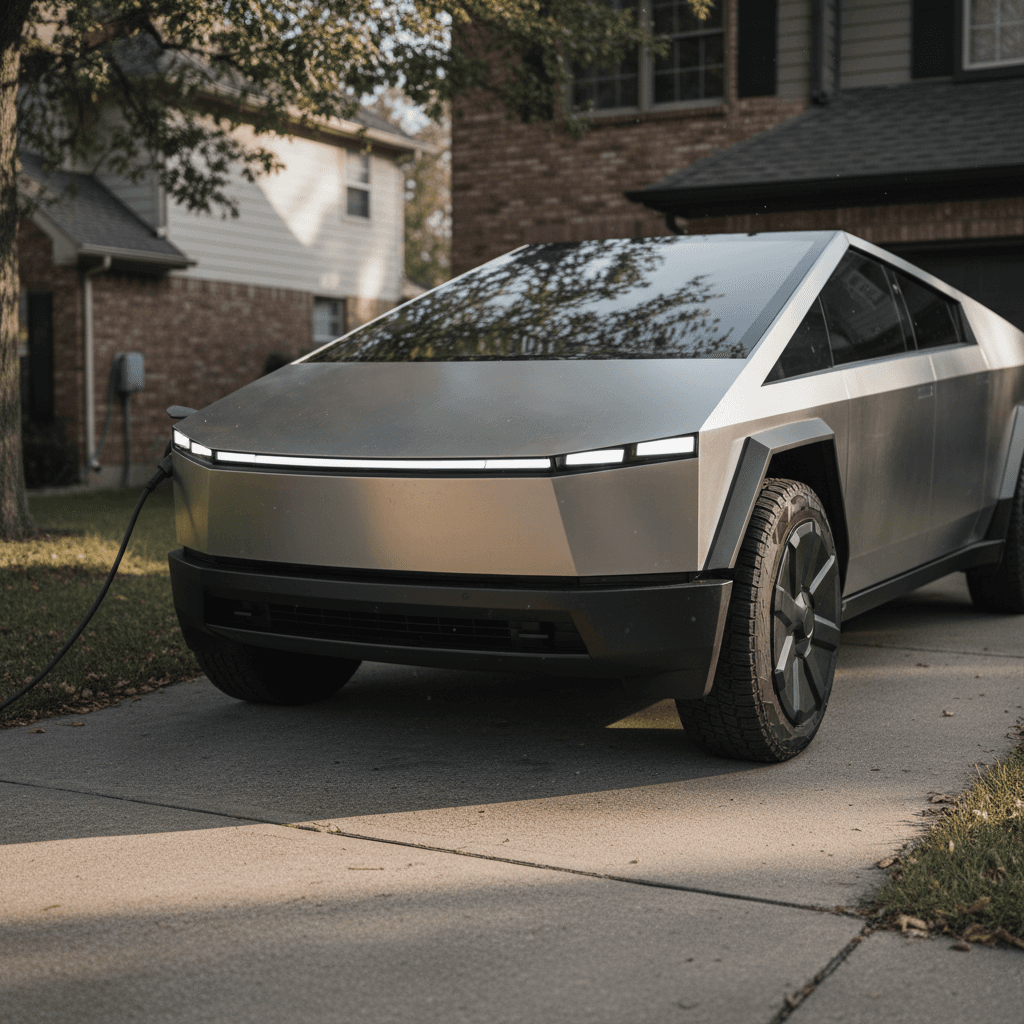
By 2026, more Cybertrucks are slowly showing up on the used market. That’s where Recharged lives every day: helping buyers understand the true cost of owning a pre‑owned EV, not just the monthly payment. With a used Cybertruck, insurance needs to be part of the test‑drive conversation, not an afterthought.
Before you sign on a used Cybertruck, do this
1. Get a quote by VIN, not just model
Insurance pricing can vary slightly by configuration and build, and claim history on a specific vehicle can matter. Always grab a quote using the actual VIN of the truck you’re considering.
2. Review the truck’s damage and repair history
Look closely at body repairs. Stainless panels and structural components that have already been fixed once can change how future claims are handled, and which insurers will touch the vehicle.
3. Match coverage to real‑world value
If you’re buying used at a significant discount from new MSRP, you may be able to adjust comprehensive and collision limits and deductibles accordingly, without undercutting yourself.
4. Ask about aftermarket add‑ons
Big off‑road wheels, wraps, or custom lighting can change how your Cybertruck is rated. Verify that any upgrades are disclosed and properly covered, not just assumed.
5. Compare quotes on several trucks
If you’re choosing between two used Cybertrucks and an F‑150 Lightning, get insurance quotes on all three. A $70/month premium difference over five years is real money.
How Recharged can help
Sample Cybertruck insurance scenarios for 2026
It’s one thing to see national averages; it’s another to understand what a Cybertruck might cost for someone like you. These hypothetical scenarios use realistic 2026 numbers to show how the knobs and dials affect your premium.
Scenario 1: The suburban commuter
Profile: 42‑year‑old driver, married, good credit, clean record, 10,000 miles/year, suburban Ohio, garaged.
- New Tesla Cybertruck, full‑coverage, $500 deductibles
- Quoted around $3,700/year (~$310/month)
- Raises deductibles to $1,000 and bundles home policy
- Revised premium drops to about $3,150/year
Scenario 2: City‑dwelling early adopter
Profile: 34‑year‑old single driver, good credit, no accidents, one speeding ticket in last 3 years, lives in a dense part of Los Angeles, street‑parks overnight.
- New Cybertruck, full‑coverage, $500 deductibles
- Quotes cluster around $4,800–$5,300/year
- Moves to a secure garage and enrolls in a telematics program
- After six months of strong driving scores, premium settles around $4,200/year
Scenario 3: Used Cybertruck shopper
Profile: 50‑year‑old driver, married, excellent credit, clean record, rural Texas, 8,000 miles/year, shops a 2‑year‑old Cybertruck vs new F‑150 Lightning.
- Used Cybertruck quote: about $3,400/year
- New Lightning quote with similar coverage: about $2,650/year
- Owner chooses Cybertruck anyway, but budgets the extra ~$60/month for insurance into the purchase decision.
FAQ: Tesla Cybertruck insurance cost in 2026
Common Cybertruck insurance questions, answered
Bottom line: should high insurance kill the Cybertruck dream?
The 2026 reality is plain: the Tesla Cybertruck is one of the most expensive mainstream vehicles to insure in America. Premiums that comfortably clear $4,000 a year aren’t rare, and in high‑risk situations they can go higher still. That’s not a reason to walk away automatically, but it is a reason to run the numbers with clear eyes before you fall for the stainless‑steel swagger.
If you’re leaning toward a Cybertruck, new or used, treat insurance as a core part of your decision, right alongside battery health, range, and price. Shop multiple quotes, experiment with coverage and deductibles, and consider whether a slightly less radical electric pickup might better fit your budget. And if you’re exploring the used market, remember that Recharged is built for exactly this kind of puzzle: transparent pricing, verified battery health, and EV‑savvy guidance to help you pick the right truck, not just the wildest one.