If you’ve driven gas cars your whole life, it’s easy to assume you can tow an electric car the same way. You can’t. To tow an electric car safely, you have to protect high‑voltage components and motors that can be damaged, sometimes permanently, if the wheels spin while the vehicle is off. The good news: once you know a few rules, you can confidently handle an EV breakdown without turning it into a four‑figure repair.
First thing to know
Why electric cars need special towing
Electric vehicles use a large high‑voltage battery pack and one or more electric motors that are usually directly connected to the drive wheels. When those wheels spin, the motors can act like generators and push power back through the system. That’s great for regenerative braking when you’re driving, but when the car is being towed and the systems aren’t fully in control, it can overheat electronics or stress the battery.
- Unlike many gas cars, most EVs do not have a true mechanical neutral that fully disconnects the wheels from the drivetrain.
- Spinning the drive wheels while the car is off can create voltage in the motor and power electronics, causing heat and potential damage.
- High‑voltage components are tightly packaged around the battery; improper lifting or tie‑down points can crush coolant lines or wiring.
Regeneration risk
Why getting EV towing right matters
Golden rules for towing an electric car safely
The 5 golden rules of safe EV towing
Apply these every time, whether it’s a Tesla, Nissan Leaf, Hyundai Ioniq, or any other EV.
1. Prefer a flatbed
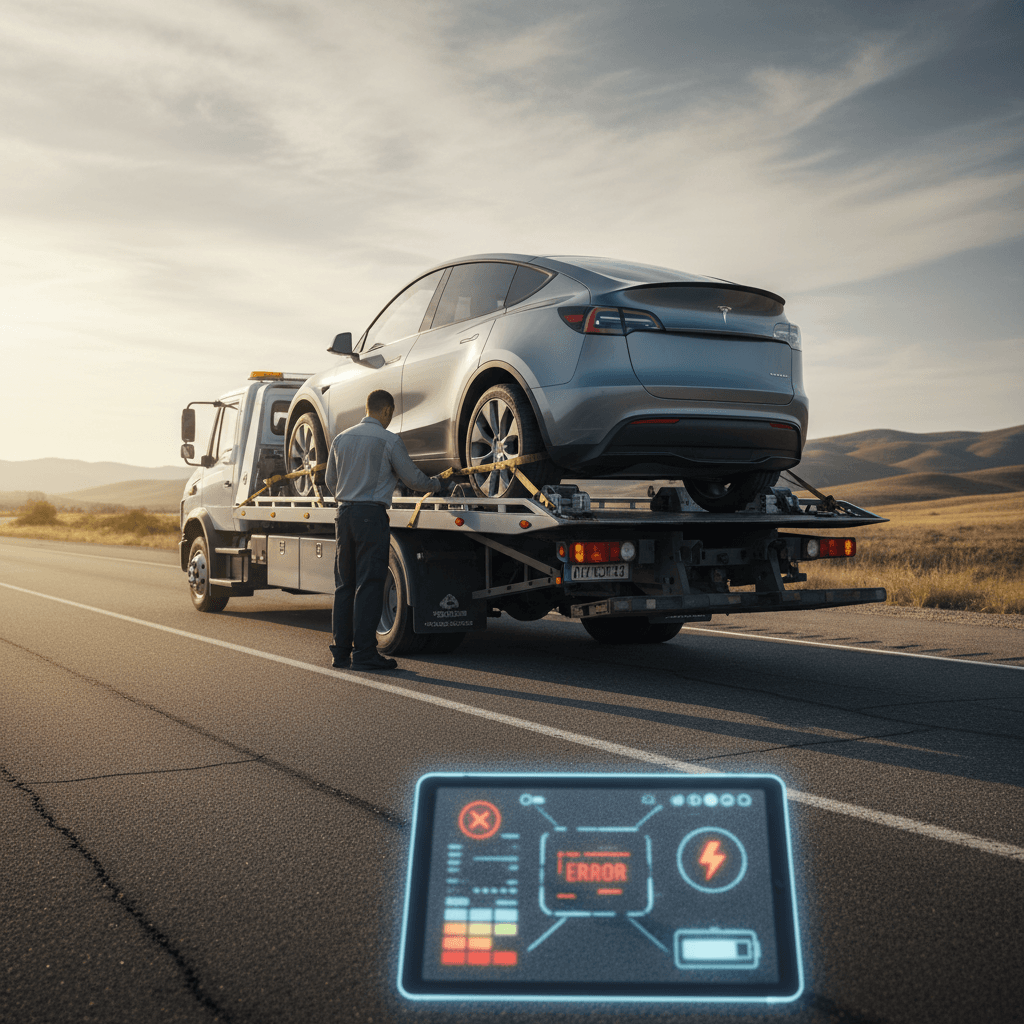
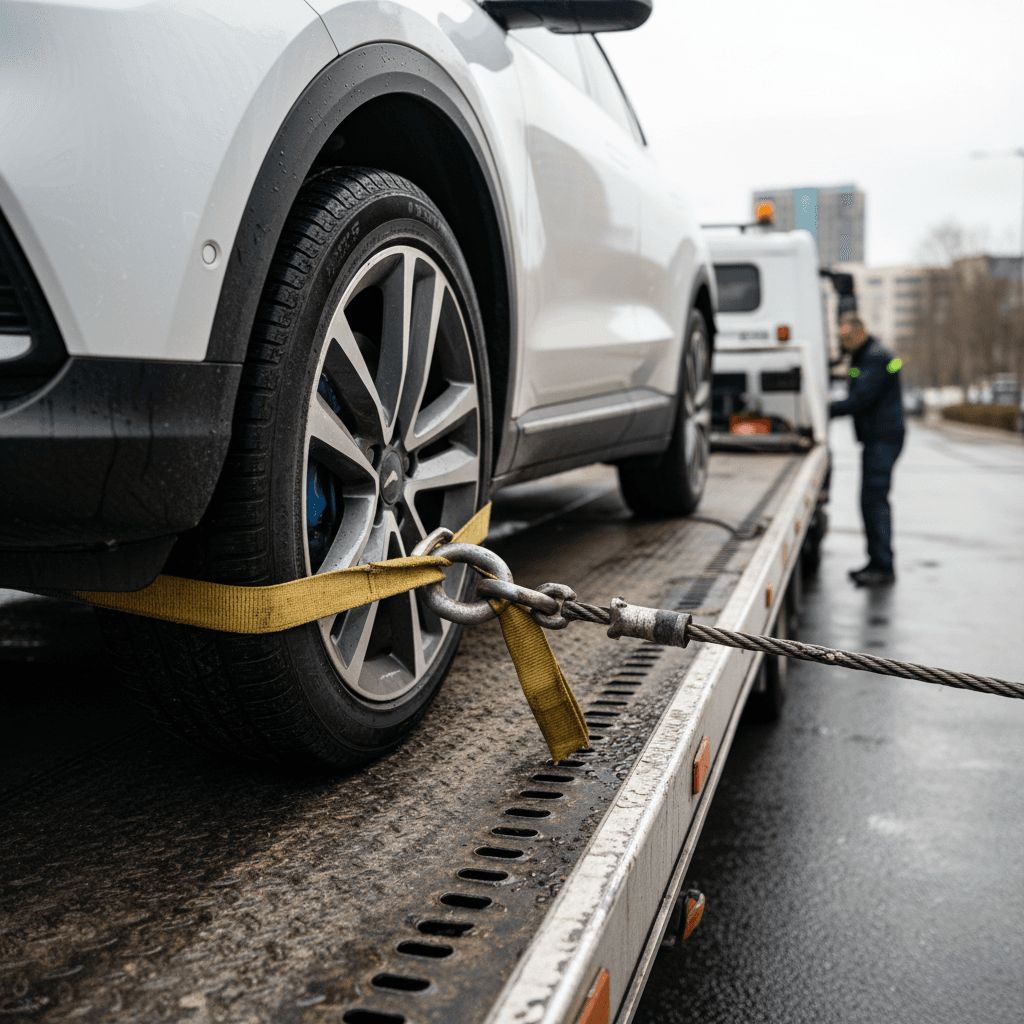
The safest method for almost every EV is a flatbed tow truck with all four wheels off the ground. This avoids spinning the drive wheels and protects motors, inverters, and the battery.
2. Follow your manual
Your EV’s owner’s manual has a towing section with model‑specific rules, whether a short distance tow with dollies is allowed, where to attach tow hooks, and how to enable transport or Tow Mode.
3. No wheels‑down towing
Unless the manual explicitly says otherwise, never let the drive wheels roll on the road. No flat‑towing behind an RV and no traditional hook‑and‑chain towing.
4. Secure the vehicle
Make sure the car is in Park and the parking brake is applied until the tow operator is ready. Remove the key or key card and keep it away so the car can’t wake up unexpectedly.
5. Stay clear of orange cables
High‑voltage components are usually marked with orange cables or covers. Don’t touch or lean on them, especially after a crash or if you smell smoke or see damage.
6. Use professionals
With EVs, towing is not a DIY job. Call your roadside assistance or a professional tow company and tell them you have an electric vehicle so they arrive with the right equipment.
Step‑by‑step: what to do when your EV breaks down
When your EV suddenly loses power or shows a serious warning, you don’t have time to become a towing expert on the shoulder of the highway. Use this simple sequence to keep yourself, and your car, safe.
Roadside checklist for a broken‑down EV
1. Get to a safe spot
Signal, pull as far off the road as you safely can, and turn on your hazard lights. If you’re on a highway, stay behind the guardrail if possible once you’ve exited the vehicle.
2. Secure the vehicle
Put the car in Park, apply the parking brake, and remove the key/key card from the vehicle. In many EVs the systems stay partly awake if the key is nearby.
3. Call roadside assistance
Tell the dispatcher you’re in an <strong>electric vehicle</strong> and that it must be <strong>towed on a flatbed</strong>. If you drive a Tesla or another brand with its own assistance program, use that number first.
4. Check the owner’s manual app
Most modern EVs have a digital manual in the infotainment system or brand app. Look up the “towing” or “transport” section while you wait so you can confirm model‑specific instructions.
5. Prepare for the tow truck
Gather your key, registration, and insurance. If it’s safe, note any visible damage or warning messages to show the tow operator and later, your service advisor or insurer.
6. Brief the tow operator
When the truck arrives, say clearly: <strong>“This is an electric car. It needs a flatbed, no wheels on the ground. Please follow the manufacturer’s towing procedure.”</strong> Don’t be shy about insisting.
Helpful script for the tow driver
Choosing the right towing method for your electric car
Not every EV is built the same way, but the hierarchy of safe towing methods is remarkably consistent. Flatbed is best; short‑distance dollies or wheel lifts are sometimes acceptable if done correctly; wheels‑down towing is almost always off‑limits.
Common EV towing methods and when to use them
Always confirm against your specific owner’s manual, but this table gives you a realistic starting point.
| EV / Drivetrain type | Safest method | Sometimes allowed (short distances) | Generally unsafe |
|---|---|---|---|
| Tesla (all models) | Flatbed with all four wheels off ground | All four wheels on heavy‑duty dollies; very short repositioning moves at walking speed only | Any towing with drive wheels on the ground; flat‑towing behind an RV |
| Dual‑motor AWD EVs (Rivian, Ioniq 5 AWD, etc.) | Flatbed only | Specialized dollies lifting all four wheels if flatbed unavailable | Two‑wheel lift towing; flat‑towing with any wheels down |
| FWD EVs (Nissan Leaf, many older EVs) | Flatbed recommended | Front wheels lifted with rear wheels on dollies, limited distance/speed | Front wheels on ground with car in Neutral for long distances |
| RWD EVs (some performance models) | Flatbed recommended | Rear wheels lifted with front dollies, limited distance/speed | Rear drive wheels on the ground for any extended towing |
| Plug‑in hybrids | Flatbed recommended | Varies widely, must follow the exact manufacturer procedure | Assuming they tow like a regular gas car without checking the manual |
If you’re uncertain which method is allowed for your car, choose a flatbed or don’t tow until you’ve confirmed.
Don’t improvise with dollies
Tow Mode / Transport Mode
Many EVs offer a Tow Mode or Transport Mode that temporarily releases the electric parking brake and prepares the car for winching onto a flatbed.
- Often selected through the center touchscreen.
- May require the 12‑volt system to be working.
- Designed for low‑speed, short‑distance movement only.
Some Teslas, for example, require Tow Mode to be enabled before the car is winched up, but still must ride on a flatbed.
“Neutral” in an EV
EVs may show a Neutral position on the gear selector, but that doesn’t guarantee a mechanical disconnect like in a traditional automatic transmission.
- The motor is often still coupled to the wheels.
- Rolling the car long distances in Neutral can still spin the motors.
- Manufacturers explicitly warn against Neutral towing for most EVs.
In short: Neutral is OK for rolling the car a few feet in a parking lot, not for miles behind a tow truck.
Protecting the battery and high‑voltage system
The high‑voltage battery is the single most expensive component in your EV. Safe towing is really about keeping that pack, and the electronics around it, out of harm’s way, especially after a failure, crash, or exposure to water.
- Never crawl under a crashed or flooded EV trying to rig your own tow. High‑voltage components may be damaged or exposed.
- Avoid touching or stepping on orange‑colored cables, covers, or junction boxes. Those typically mark high‑voltage parts.
- Ask the tow operator to use approved tie‑down points, often marked in the owner’s manual or with small triangle or jack‑point symbols under the rocker panels.
- If there’s visible underbody damage, request that the vehicle be lifted from known jack points and not from random suspension or battery casing areas.
- Make sure the vehicle is stored in an open, well‑ventilated area if there are any signs of battery damage, smoke, popping sounds, or a sweet/chemical odor.
If you suspect battery damage
Special rules for towing after a crash or flood
A simple breakdown is one thing; recovering an EV after a serious collision or flood is another. Here, safety for you and first responders takes priority over saving the car.
After a crash vs after a flood
In both cases, assume the high‑voltage system could be compromised.
After a crash
- Keep a safe distance if airbags deployed or there is heavy body damage.
- Do not attempt to disconnect the 12‑volt battery unless you are trained and it is clearly safe.
- Tell first responders it’s an electric vehicle and point out any smoke, sounds, or leaking fluids.
- Towing and storage should follow EV‑specific emergency response guides; a flatbed to a secure yard is usually required.
After a flood or submersion
- Do not stand in water around the vehicle or touch the car while you’re in standing water.
- Back away and call emergency services; let professionals assess shock risk.
- Once recovered, the vehicle should typically be stored away from buildings because of delayed fire risk from a damaged battery.
- Many insurers total EVs that have been significantly submerged due to long‑term corrosion concerns.
Common EV towing mistakes that cause expensive damage
Most horror stories you hear about EV towing could have been avoided. The underlying issue is the same: treating an electric car like a conventional automatic and assuming that Neutral and a hook are all you need.
- Allowing a general‑purpose tow truck to hook from the front and drag the car with drive wheels on the ground.
- Flat‑towing an EV behind an RV because it’s lighter and quieter than a gas vehicle, almost all manufacturers explicitly forbid this.
- Using incorrect tie‑down points that crush battery casings, underbody panels, or cooling lines.
- Rolling the vehicle long distances in Neutral or with Tow Mode on instead of loading onto a flatbed.
- Trying to jump‑start or “wake up” a severely damaged EV to make it roll, instead of winching it in its current state.
Warranty risk
Why towing history matters when buying a used EV
Safe towing isn’t just about the day you break down, it also affects the long‑term health and value of the car. A used EV that has been improperly towed might look fine on the outside but carry hidden damage in the battery, motors, or cooling system.
Hidden problems from bad towing
- Subtle battery cooling issues that only show up under fast‑charging or heavy loads.
- Premature wear or noise from the drive unit after being dragged with wheels spinning.
- Damaged underbody panels that let road grime or moisture reach high‑voltage components.
- Intermittent warning lights that are hard to trace back to the original tow event.
How Recharged helps you avoid surprises
When you shop for a used EV through Recharged, every vehicle includes a Recharged Score Report with verified battery health, fair‑market pricing, and expert inspection.
- Our EV specialists are trained to spot signs of improper towing or impact damage.
- Battery diagnostics help reveal issues that might stem from past abuse.
- We’ll walk you through what the data means so you can buy with confidence.
If a car’s history raises red flags, our team will tell you, and help you find a better match.
Peace of mind with expert support
EV towing FAQ
Frequently asked questions about towing an electric car
Key takeaways: how to tow an electric car safely
Towing an electric car safely isn’t about memorizing every technical detail, it’s about following a few non‑negotiable rules. Assume you need a flatbed with all four wheels off the ground, never let the drive wheels spin for any real distance, and don’t improvise around high‑voltage components. If your EV breaks down, get yourself to safety, call roadside assistance, and clearly state that your car is electric and must be treated that way.
Handled properly, a tow is just a temporary inconvenience, not the start of a five‑figure repair. If you’re shopping for a used EV or want help understanding how an individual car’s history might affect its long‑term reliability, the team at Recharged is there to walk you through the details, from battery health to towing history and everything in between.