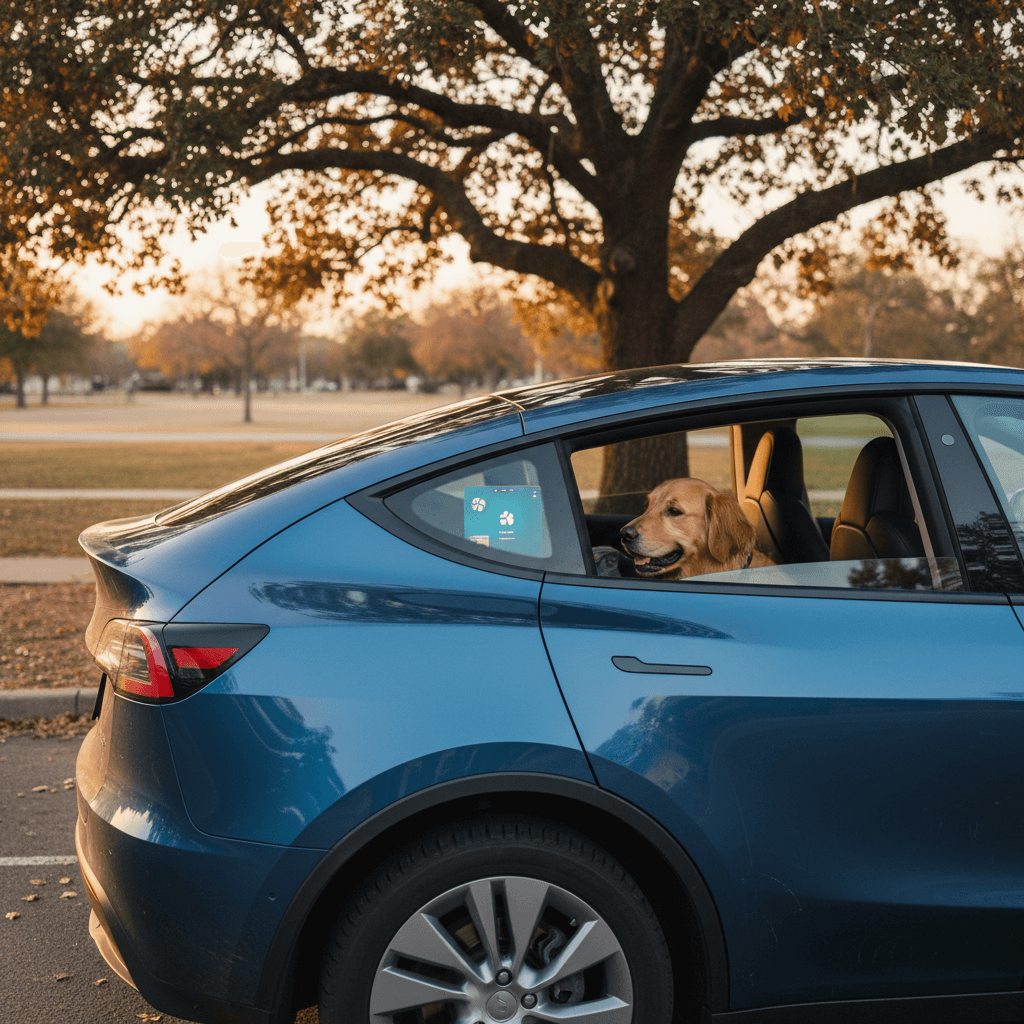
If you drive an EV, you’ve probably wondered whether leaving your dog in an electric car is actually safe, especially now that models from Tesla, Hyundai, Kia and others offer “Dog Mode” or “pet mode.” Electric cars can keep climate control running without an idling engine, but that doesn’t mean you can treat them like a kennel on wheels. Here’s what’s truly safe, what’s risky, and how to protect your dog, your car, and yourself legally.
Critical perspective
Is it ever safe to leave a dog in an electric car?
The honest answer: “Safer” doesn’t mean “safe.” EVs give you tools gas cars don’t, like running climate control without exhaust, but a lot can still go wrong: software glitches, a drained traction battery, a dog hitting door handles, or someone interfering with your car.
When people *think* it’s safe
- Quick coffee stop with Dog Mode on
- Cool, cloudy day with windows cracked
- Short pharmacy run while watching the app
- Parking in covered garage with A/C running
Why risk is still real
- Car temps can spike in minutes even in mild weather.
- Software or app issues can quietly shut climate off.
- Battery can drop below safety threshold while you’re inside.
- Curious dogs can open doors or damage the interior.
General rule of thumb
How fast does a parked car heat up around your dog?
Why “just a few minutes” can be dangerous
Dogs cool themselves mainly by panting, not sweating. In a hot, enclosed car, they’re re-breathing hot air. Even if it doesn’t feel that warm to you outside, the greenhouse effect through the windows can make the cabin unbearable in a short time. Cracked windows or a bowl of water don’t change this math.
Don’t trust the forecast
What makes electric cars different from gas cars for pets?
Electric vehicles do have real advantages over gas cars when it comes to keeping the cabin at a safe temperature. Those advantages, though, still depend on software working correctly, enough battery charge, and you staying close by.
EV vs. gas car: Pet-safety pros and cons
Why EVs are better, but still not foolproof, for brief, supervised stops with pets
EV advantages for dogs
- Climate control without idling: The A/C or heat can run off the traction battery while the car is “off,” without exhaust or engine noise.
- Fine temperature control: You can usually set and monitor a precise cabin temperature from the center screen or app.
- Pet-specific modes: Some EVs advertise the interior temp on the screen so passersby know the dog isn’t in distress.
- Quiet operation: Less engine noise reduces stress for noise-sensitive dogs.
EV limitations and risks
- Battery dependence: If the battery drops too low, the car may shut climate off or warn you with little time to react.
- Software bugs and updates: Over-the-air updates sometimes introduce glitches, owners have reported pet modes turning off unexpectedly.
- Connectivity gaps: If your phone or the car loses signal, you may not see status changes in time.
- Security issues: Quiet, idling cars can be theft targets, and a thief may not realize a dog is inside.
Good use case vs. bad use case
How Tesla Dog Mode and other EV “pet modes” work
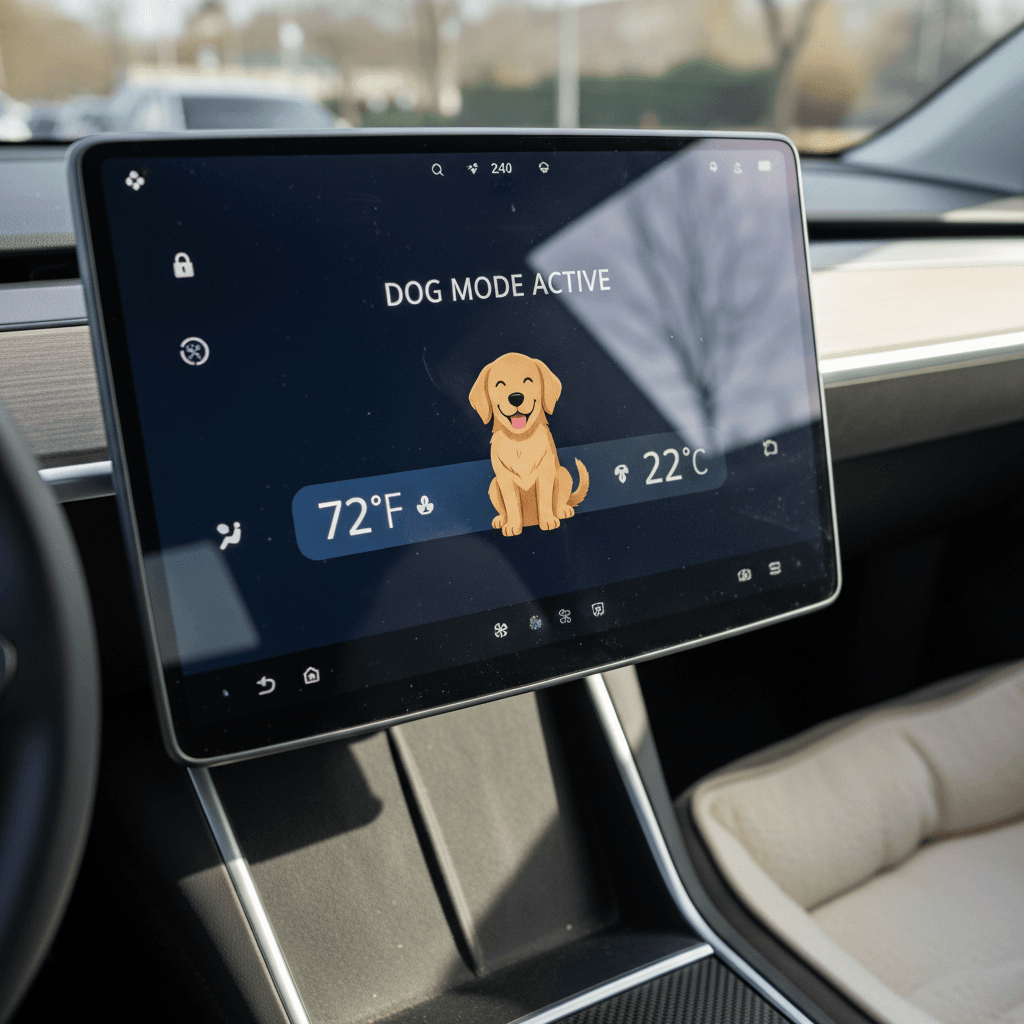
Several EV makers now offer special settings for pets, Tesla’s Dog Mode, Hyundai and Kia’s Pet Mode, and similar features in other brands. These modes are designed to keep the cabin comfortable while clearly signaling to passersby that your dog isn’t baking in a shut-off car.
Common EV pet modes at a glance
Exact names and behavior vary by model and software version, but most EV pet modes share core ideas.
| Brand / feature | What it does (in general) | Typical limits or requirements | What people walking by see |
|---|---|---|---|
| Tesla Dog Mode | Keeps HVAC running at a set temp with the car in Park and doors locked. | Requires sufficient battery (often ~20% or higher). If the battery falls too low, the car attempts to notify you and may exit Dog Mode. | Large center-screen message noting A/C is on, showing current interior temperature and that the dog is safe. |
| Hyundai / Kia Pet Mode | Maintains a set temperature with the vehicle locked after you exit, sometimes with specific time limits. | Battery state-of-charge limits; may shut off after a set duration or below a battery threshold. | Cluster or infotainment messages; some models show an on-screen pet icon and the interior temp. |
| Other EVs (generic cabin overheat / remote climate) | Allows remote climate control from a phone app or “keep climate on” setting while you’re away. | Often restricted by time or battery; some are meant more for protecting the car’s interior than monitoring a pet. | Usually no big public-facing message, bystanders may assume the car is off and the dog is in danger. |
Always check your own owner’s manual, software behavior can change with over-the-air updates.
Don’t assume Dog Mode is bulletproof
Checklist before you ever leave your dog in an EV
If you decide to use an EV’s climate control or pet mode at all, treat it like a carefully controlled exception. This checklist helps you stay on the safer side of that line.
10-point EV dog safety checklist
1. Ask: “Is this trip really dog-friendly?”
If your dog will spend most of the outing alone in the car, the safest move is to leave them at home. Air conditioning at home beats any car, electric or otherwise.
2. Learn your car’s pet-mode behavior
Read the manual, then practice: turn pet mode on, walk a short distance away, watch the interior temp and phone alerts, and see what happens at different battery levels.
3. Start with a healthy battery buffer
Many EV pet modes require at least ~20% state of charge, but you shouldn’t cut it that close. Aim for <strong>40–50% or more</strong> before even considering leaving your dog in the car.
4. Limit time to minutes, not “a while”
Think in 5–10 minute windows, tops. Long lines, slow kitchens, and delayed prescriptions are routine. Only leave your dog if you could abandon your errand and walk back immediately.
5. Park smart, then stay close
Choose a spot with shade if possible, near the door of the business, and where you can see your EV from inside. Avoid upper deck parking that bakes in direct sun.
6. Verify temperature and locks twice
Before you walk away, confirm on the screen and the app that pet mode is active, the target temperature looks safe, and all doors and windows are locked and secure.
7. Muzzle or harness door-handle artists
Some dogs learn to hit interior door levers or window switches. Use the child-lock settings on rear doors and consider a harness clipped to a tether so they can’t bolt out if a door opens.
8. Keep your phone charged and on you
If your phone dies, goes into airplane mode, or loses signal, you won’t see climate warnings. A portable power bank can be as important as a leash on road trips.
9. Leave a clear note for bystanders
Even with pet mode, clip a card to the window: "Climate control on, interior at 70°F, dog monitored via app, back in 5 minutes." That won’t solve everything, but it may prevent a broken window or 911 call.
10. Have a Plan B if something fails
Before you leave the car, decide what you’ll do if the app warns you, the store line grows, or a staffer pages you about your car. The answer should always be: <strong>drop the errand and get back to your dog.</strong>
Legal risks of leaving dogs in cars, even EVs
Across the U.S., more and more jurisdictions treat leaving animals in cars as neglect or cruelty when conditions could reasonably cause harm. These laws usually don’t care whether it’s a gas car or an EV, they care about the risk to the animal and whether you were responsible.
- Many states explicitly prohibit leaving pets in conditions that pose risk of heat or cold injury, even for short periods.
- Some states allow police, animal control, or even private citizens (“good Samaritans”) to break a window to rescue an animal in distress.
- Cities and counties can layer on their own ordinances, which may be stricter than state law.
- With EVs, prosecutors may argue that you *knew* enough to use climate control but still left an animal in a high‑risk situation for too long.
EVs don’t exempt you from hot-car laws
The takeaway: know your local rules, but don’t push the line. From a legal and ethical standpoint, keeping your dog out of parked cars is the safest way to go, even if you own the most advanced EV on the market.
Common failure scenarios you should plan for
Most owners who get into trouble didn’t set out to neglect their dog. They trusted technology, underestimated wait times, or assumed a “mild” day was harmless. Here are failure scenarios every EV driver should think through.
Realistic “what ifs” for dogs in EVs
If you can’t live with any of these, don’t leave your dog in the car.
Battery falls faster than expected
Connectivity or phone failure
Software update glitch
Dog opens a door
Good Samaritan breaks a window
Theft or tampering
Ask yourself one question
Safer alternatives to leaving your dog in the car
The safest strategy is to design your routine so the dog rarely has to wait in the car at all. That takes a bit of planning, but it’s easier than dealing with a medical emergency or legal problem later.
- Do pet‑free errands separately from dog‑friendly trips.
- Use curbside pickup where you can stay in or near the car with climate on.
- Travel with another adult who can stay in the vehicle if you must go inside.
- Look for stores that explicitly allow dogs inside and keep visits short.
- On road trips, plan stops around dog‑friendly rest areas, not long restaurant sits.
- If you’re staying in a hotel, leave your dog in the climate‑controlled room instead of the parking lot.
Build a dog-first trip plan
How this fits into choosing a family- or pet-friendly EV
If you’re shopping the used EV market with a dog in the family, pet safety should sit right alongside range, charging speed, and cargo space. Whether you buy from a traditional dealer or a digital retailer like Recharged, it’s worth asking how a given model handles climate and pet modes.
Pet-friendly EV features to look for
Use these questions when you’re comparing used EVs online or at a showroom.
Climate and pet features
- Does the car have a specific Dog Mode / Pet Mode with on‑screen messaging?
- Can you monitor interior temperature and climate status from a phone app?
- What happens to climate at low battery, does it shut off or reduce power?
- Are there reliable owner reports about how stable the pet mode is after updates?
Everyday dog usability
- Flat, low cargo floors for crates or beds.
- Easy‑to‑clean materials (vinyl or leatherette vs. delicate cloth).
- Rear A/C vents and, ideally, separate rear climate controls.
- Child locks and door settings that prevent accidental escapes.
At Recharged, every vehicle comes with a Recharged Score Report that details battery health and how the car has been used. If you’re planning road trips with your dog, that battery transparency matters, especially if you’ll rely on climate control while parked. You can browse used EVs online, compare features, arrange financing, and even handle your trade‑in without leaving home.
FAQ: Dogs and electric cars
Frequently asked questions about leaving dogs in EVs
Bottom line for EV owners with dogs
Electric cars absolutely make it easier to keep the cabin comfortable for your dog than a traditional gas vehicle, no exhaust, precise climate control, and pet‑specific modes are real advances. But none of that changes a core truth that veterinarians, animal‑welfare groups, and prosecutors agree on: leaving a dog unattended in a vehicle always carries risk.
If you choose to use Dog Mode or any pet mode, do it sparingly, keep absences short, maintain a big battery buffer, and stay close enough that you can get back fast if something changes. Better yet, structure your trips so your dog spends more time at home, on the trail, or in a climate‑controlled room, and less time waiting in a parking lot, no matter how advanced your EV is.
When you’re ready to find a used EV that fits both your driving and your dog’s comfort, Recharged can help you compare models, understand battery health with a Recharged Score Report, and line up financing and delivery, all online. A thoughtful EV choice plus smart pet‑safety habits will do far more for your dog than any single button labeled “Dog Mode.”