If you’re considering a BMW i7, or already own one, the big question is simple: what does the BMW i7 battery warranty actually cover? With a six‑figure luxury EV, you want to know exactly how long BMW will stand behind the most expensive part of the car: the high‑voltage battery pack.
Quick answer
BMW i7 battery warranty at a glance
Core BMW i7 warranty coverage (recent U.S. models)
Exact language varies slightly by model year and state, but for 2023–2026 U.S. BMW i7 sedans you can assume a familiar pattern: a comprehensive 4‑year / 50,000‑mile new‑vehicle warranty, plus a separate high‑voltage battery limited warranty lasting 8 years or 100,000 miles, whichever comes first.
Always confirm your VIN
How long the BMW i7 battery warranty lasts
- High‑voltage battery limited warranty: Typically 8 years / 100,000 miles from the original in‑service date, whichever comes first.
- Start date: The clock starts when the car is first placed in service (sold, leased, or put into demo use), not when you buy it used.
- End of coverage: Coverage expires as soon as either the time or mileage limit is exceeded, even if the other number is lower.
For example, if an early BMW i7 was first sold on January 1, 2024, the high‑voltage battery warranty would typically run until January 1, 2032 or 100,000 miles, whichever happens first. If the car already has 70,000 miles when you buy it used, you’d still have 30,000 miles or the remaining years of battery coverage as a later owner.
Quick way to check remaining coverage
What the BMW i7 battery warranty actually covers
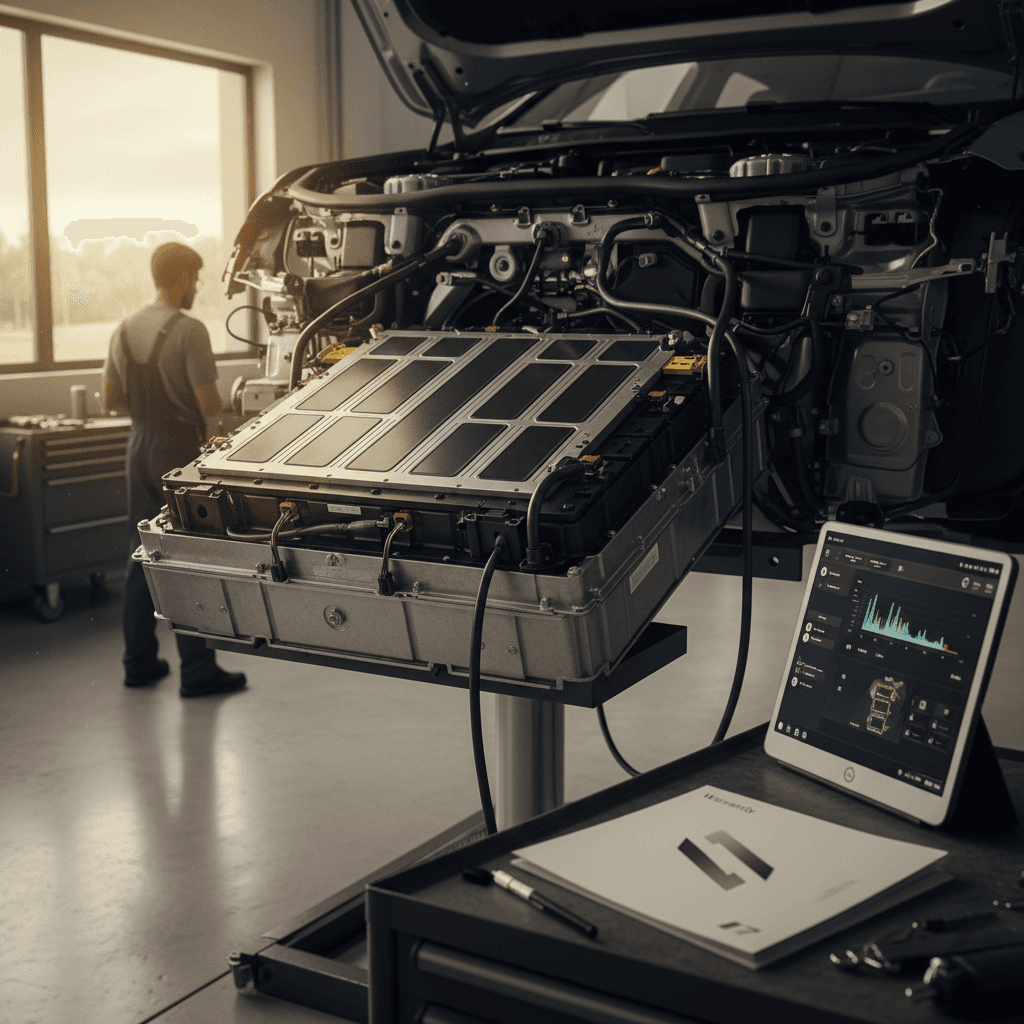
The i7’s high‑voltage battery warranty is a defect warranty, not a blanket guarantee that the pack will always behave like new. In plain English, BMW is promising to repair or replace the high‑voltage battery pack if something goes wrong due to defects in materials or workmanship within the time and mileage limits.
Main areas the i7 battery warranty can cover
All subject to BMW’s inspection and authorization
Defective cells or modules
High‑voltage electronics in the pack
Safety‑related defects
Good news on repair costs
In practice, warranty repairs on a BMW i7 battery are usually targeted fixes, replacing specific modules or electronics, rather than swapping the entire pack. Full pack replacements under warranty do happen, but BMW will generally look for the least invasive factory‑approved repair that restores the car to specification.
What isn’t covered under the i7 battery warranty
Just as important as what’s covered is what isn’t. The high‑voltage battery warranty is not a catch‑all for every issue that involves the word “battery.” Like other brands, BMW carves out a long list of exclusions.
Common exclusions in BMW i7 battery coverage
Always read your specific warranty booklet, but these exclusions show up repeatedly across BMW EV warranty language.
| Item | Typically NOT Covered By HV Battery Warranty |
|---|---|
| Normal capacity loss over time | Gradual range loss from age/use that still leaves the pack within BMW’s acceptable State of Health (SoH) range. |
| Damage from accidents | Crashes, impacts, or road debris that damage the pack, handled by insurance, not warranty. |
| Improper modifications | Aftermarket tuning, non‑approved battery work, or hacking the thermal management system. |
| Incorrect charging equipment | Damage traced to non‑compliant chargers, faulty wiring, or DIY electrical work. |
| Neglect or misuse | Repeatedly ignoring critical warnings, deep discharging and storing empty, or extreme overheating due to misuse. |
| Non‑HV batteries | 12‑volt accessory battery and key fob batteries are covered separately, not by the HV battery warranty. |
These items typically fall outside high‑voltage battery warranty coverage unless a clear manufacturing defect is involved.
Don’t assume abuse is covered
Does the BMW i7 battery warranty cover degradation?
Every lithium‑ion battery loses some capacity over time. The key question for an i7 owner is whether BMW’s warranty promises anything specific about degradation, for example, a guarantee that the pack won’t fall below a certain State of Health within the warranty window.
1. Defect vs. expected wear
BMW’s U.S. battery language emphasizes defects in materials or workmanship. That means BMW is covering things that go wrong due to something it did wrong, not the gradual, expected capacity loss that all EV batteries experience.
2. Capacity thresholds
On some recent BMW EVs and in certain programs, BMW has highlighted capacity benchmarks around 70–75% State of Health as an internal trigger for deeper diagnosis. For a brand‑new i7, dropping to that level within the 8‑year / 100,000‑mile window would be unusual and would typically prompt a warranty review.
Important nuance on degradation
If you suspect your i7’s battery has lost an abnormal amount of capacity within the warranty period, the next step is to have a dealer or qualified EV shop run a formal battery health test. At Recharged, every used BMW i7 we list includes a Recharged Score battery health report that makes this degradation picture much clearer for buyers.
How the battery warranty works on used and CPO BMW i7s
Because the BMW i7 is still a relatively new model, most examples on the used market in 2026 are still well within that 8‑year / 100,000‑mile battery window. That’s good news whether you buy BMW Certified Pre‑Owned or from an independent EV retailer like Recharged.
Used vs. BMW Certified Pre‑Owned i7: what happens to the battery warranty?
The high‑voltage battery coverage usually follows the car, not the owner.
Regular used BMW i7
BMW Certified Pre‑Owned i7
Why battery paperwork matters on a used i7
If a prior owner already had modules replaced under warranty, those repairs don’t reset the 8‑year / 100,000‑mile clock. You’re still tied to the original in‑service date. What they do give you is a paper trail showing that BMW has already handled known defects on that particular car.
Other BMW warranties that indirectly affect your battery
The battery warranty is only one piece of the puzzle. Several other BMW warranties and programs interact with your i7’s high‑voltage system and overall ownership costs.
Coverage layers that matter for your i7
1. New Vehicle Limited Warranty (4 yrs / 50k mi)
Covers most components on the car, including many high‑voltage parts outside the battery pack itself, charge ports, certain control modules, and cooling system components, subject to exclusions.
2. Corrosion (Rust Perforation) Warranty
Longer‑term coverage against rust‑through on body panels. It doesn’t apply to the battery pack directly but helps protect the structure around it.
3. Emissions‑related warranties
In some states, additional emissions coverage can apply to high‑voltage components on plug‑in models. The i7 is fully electric, but owners in California‑aligned states should still review the emissions section of their warranty booklet.
4. Optional extended service contracts
BMW and third‑party providers offer extended protection plans. Read the fine print carefully, some cover high‑voltage components more robustly than others, and some largely mimic the original powertrain coverage.
Watch the small print
How to protect your BMW i7 battery warranty
You don’t have to baby a BMW i7 to keep its battery healthy, but a few habits can both extend pack life and make it easier to get support if something goes wrong under warranty.
Practical steps to keep your i7’s battery (and warranty) in good shape
1. Use proper charging equipment
Stick with <strong>UL‑listed Level 2 home chargers</strong> and reputable DC fast‑charging networks. Avoid sketchy adapters or DIY wiring that could be blamed if something fails.
2. Keep software and services up to date
Allow BMW to install OTA updates and complete service campaigns. These can improve battery management, charging behavior, and diagnostic accuracy, helping your case if a defect appears.
3. Avoid extreme, prolonged abuse
Occasional full‑throttle runs or fast‑charge sessions are fine. What hurts is <strong>constant</strong> DC fast charging from very low to 100% in extreme heat, or leaving the car parked for months at near‑empty or near‑full state of charge.
4. Document issues early
If you notice rapid range loss, repeated charge‑port faults, or battery warnings, get them documented at a BMW dealer while you’re still inside the warranty window.
5. Keep records organized
Hold onto service receipts, charger installation paperwork, and any battery health reports. A clean paper trail helps in borderline warranty decisions and boosts resale value.
BMW i7 vs other EV battery warranties
If you’re cross‑shopping the i7 against other luxury EV sedans, the headline numbers on battery coverage are actually quite familiar. Most major brands have converged around a similar warranty window for their flagship packs.
How the BMW i7’s battery warranty stacks up
Typical U.S. high‑voltage battery defect coverage for recent luxury EV sedans.
| Model | Typical HV Battery Warranty (U.S.) | Notes |
|---|---|---|
| BMW i7 | 8 yrs / 100,000 mi | Defect‑based coverage; capacity loss evaluated case by case. |
| Mercedes EQS Sedan | 10 yrs / 155,000 mi (varies by program) | Often includes a capacity‑retention clause; check fine print. |
| Lucid Air | 8 yrs / 100,000–150,000 mi (varies by pack) | Longer mileage on some trims; conditions apply. |
| Tesla Model S | 8 yrs / 150,000 mi | Includes a minimum battery capacity clause for pack and drive unit. |
| Porsche Taycan | 8 yrs / 100,000 mi | Defect‑based coverage similar to BMW’s approach. |
Always verify specific model‑year coverage with the manufacturer or dealer before buying.
Where BMW i7 sits in the pack
BMW i7 battery warranty: FAQs
Frequently asked questions about the BMW i7 battery warranty
Bottom line: how much peace of mind does the i7 warranty give you?
For a six‑figure luxury EV, the BMW i7 battery warranty is a critical part of the value equation. With 8 years / 100,000 miles of defect coverage on the high‑voltage battery plus a 4‑year / 50,000‑mile new‑vehicle warranty, BMW shoulders most of the early‑life risk on the car’s most expensive component.
Where you still need to be proactive is in understanding degradation and verifying the pack’s health on any used i7 you’re considering. That’s exactly where tools like the Recharged Score, with verified battery diagnostics, transparent pricing, and EV‑specialist support, turn a complex decision into a straightforward one.
If you’re cross‑shopping, the i7’s coverage is competitive with other flagship EVs, and BMW’s real‑world experience with high‑voltage batteries is solid. Get the facts on your specific car’s warranty start date and battery health, buy from a seller who can show you the data, and you can enjoy the i7’s silent, effortless performance with confidence for years to come.