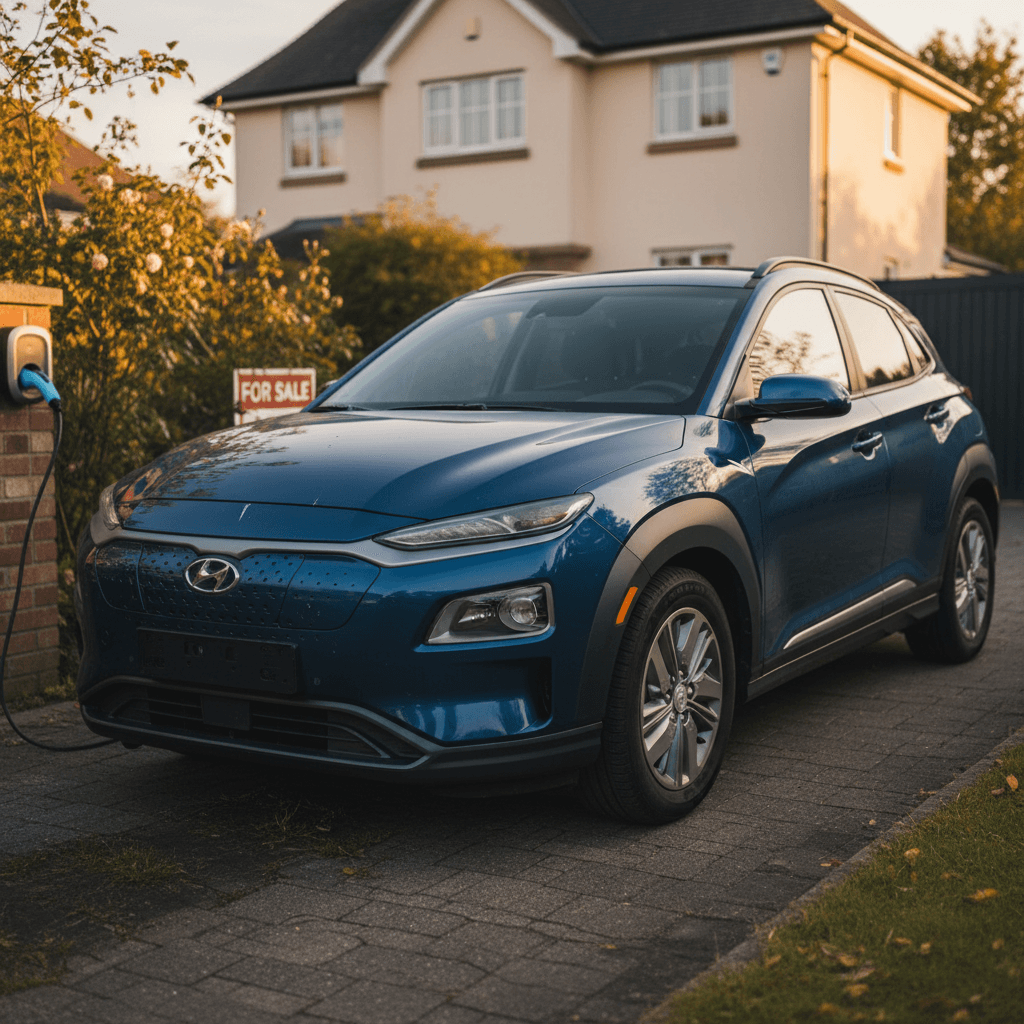
If you’re shopping for a small electric SUV in 2026, the question isn’t just whether the Hyundai Kona Electric is good, it’s whether it’s good for you. With strong efficiency, a usable real‑world range, and more years of battery data now under its belt, the Kona Electric has quietly become one of the most sensible EVs on the road. But it also has tradeoffs in space, DC fast‑charging speed, and pricing that you’ll want to understand before you sign anything.
Quick take
Kona Electric at a Glance in 2026
Hyundai Kona Electric: Key Numbers (2024–2025 U.S. Models)
- First‑gen (2019–2023) – Smaller body, 64 kWh pack in most U.S. cars, around 258 miles EPA range.
- Second‑gen (2024–present) – Larger, more refined interior, two battery sizes globally (around 48–49 kWh and 64–65 kWh), with U.S. models focusing on the larger pack for roughly 230–260 miles of range depending on configuration.
Range and Efficiency: How Far Does the Kona Electric Really Go?
On paper, the Kona Electric’s range numbers don’t grab headlines like some 300‑plus‑mile rivals. In practice, its efficiency makes those miles go a long way. Recent independent testing has seen real‑world averages around 4.0–4.3 miles per kWh on the extended‑range battery in mixed driving, enough to beat many larger crossovers that carry more battery but deliver similar or less range.
- Early U.S. cars (2019–2023) are rated about 258 miles EPA.
- Second‑gen cars with the bigger battery typically land in the low‑ to mid‑200‑mile EPA range, but careful drivers in mild weather routinely see more.
- In cold weather or at 70–75 mph highway speeds, it’s realistic to budget a 15–25% range hit, just like almost every other EV.
Range reality check
Compared with small EV SUVs like the Chevy Bolt EUV and Kia Niro EV, the Kona Electric typically sits in the same ballpark for range but edges ahead on energy efficiency. That means lower electricity costs per mile over the years, especially if you’re paying public‑network rates instead of cheap home electricity.
Charging Performance: Great at Home, Just-Okay on Road Trips
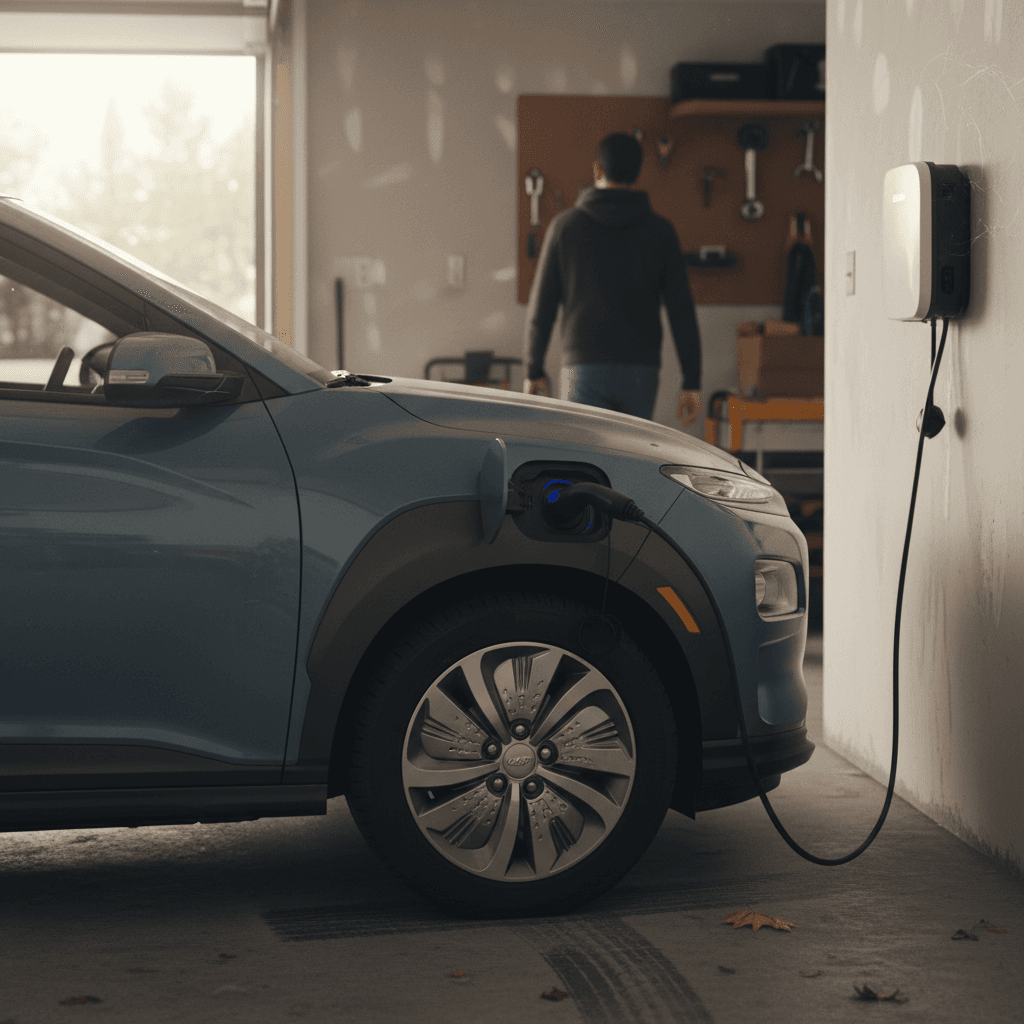
The Kona Electric shines as a home‑charging commuter. All recent U.S. models support roughly 10–11 kW AC charging, which means a properly sized Level 2 charger can add about 30–35 miles of range per hour. Plug in overnight and you’ll wake up to a full battery most mornings.
Kona Electric Charging: Home vs. Highway
Where the Kona fits naturally, and where it compromises
Home & Daily Use
- Up to ~10–11 kW AC charging capability.
- Full recharge from near‑empty overnight on a 40–48A Level 2.
- Easy to schedule charging for off‑peak electric rates.
For a homeowner or someone with reliable workplace charging, this is where the Kona Electric feels effortless.
Road Trips & DC Fast Charging
- 400‑volt architecture, peak DC around 100–115 kW.
- Good 10–60% speeds, but charge rate tapers noticeably above ~60%.
- Expect ~45 minutes for 10–80% in ideal conditions, longer in cold weather or on lower‑power stations.
Not terrible by any means, but slower than newer 800‑V EVs and some rivals that can hold higher power longer.
Road‑trip expectations
- Does the car include any CCS‑to‑NACS adapter from a previous owner?
- Has the software been updated to support new charging networks?
Reliability and Battery Health: What We Know So Far
The Kona Electric’s reliability story is nuanced. Early 2019–2020 cars were swept into a large high‑voltage battery recall due to fire risk concerns, and most affected packs were replaced under warranty. That’s scary on paper, but it also means some older cars now carry essentially new battery packs. Later builds and second‑generation models haven’t seen issues on that scale so far.
- Owner reports suggest low battery degradation on well‑cared‑for cars, even past 60,000–80,000 miles, when they’re driven and charged regularly.
- The standard U.S. battery warranty has typically covered the pack for around 8 years/100,000 miles (check the exact terms for the model year you’re considering).
- More day‑to‑day complaints tend to involve 12‑volt battery hiccups, infotainment bugs, and the occasional fit‑and‑finish gripe, annoying but usually fixable.
Battery recall perspective
By 2026, we finally have multi‑year data showing Konas holding their capacity well when owners avoid extreme abuse (long‑term 100% parking, constant fast‑charging from near‑empty, or months of sitting unused). The car also includes built‑in battery protections and software that limit truly damaging behavior for most everyday drivers.
At Recharged, every Kona Electric we list comes with a Recharged Score Report, including verified battery health diagnostics, so you’re not just guessing based on a range estimate on the dash. That matters, because the on‑screen “guess‑o‑meter” is exactly that: an educated guess based on recent driving, not a medical chart for the battery.
Interior Space and Driving Experience
Hyundai designed the Kona Electric as a subcompact crossover, not a family hauler. The first‑gen car felt almost hatchback‑sized inside; the second‑gen 2024+ model grows noticeably in rear‑seat and cargo space but is still on the small side next to larger EV crossovers like the Hyundai Ioniq 5 or Tesla Model Y.
What it does well
- City‑friendly size: Easy to park, easy to thread through tight streets.
- Quiet and smooth: Electric torque off the line and a well‑tuned suspension make it feel more grown‑up than the price suggests.
- Modern tech: Recent models get big screens, over‑the‑air updates in some markets, and a clean, EV‑first cabin layout, especially in the 2024+ redesign.
Where it compromises
- Rear‑seat legroom: Fine for kids and average‑height adults, tight if you frequently haul tall passengers.
- Cargo volume: Enough for a grocery run or a weekend away, but you’ll pack more carefully than you would in a midsize SUV.
- Front‑wheel‑drive only: No AWD option on the Kona Electric, which matters if you live in snow country and want extra traction.
Value and Pricing in 2026: New vs. Used Kona Electric
In 2026, the Kona Electric sits in an interesting spot. New EV competition has exploded, yet the small‑SUV segment is still relatively thin compared with the ocean of gas crossovers. That makes the Kona Electric, especially as a used buy, one of the better value plays for shoppers who don’t need a massive interior.
Kona Electric Value Snapshot (U.S. Market, 2026)
Approximate positioning of Kona Electric across model years vs. key considerations. Actual prices vary by mileage, trim, incentives, and region.
| Model years | Typical position vs. new EVs | Who it suits best | Key watch‑outs |
|---|---|---|---|
| 2019–2020 (battery recall era) | Often among the lowest‑priced used EV SUVs | Budget shoppers, short‑to‑medium commutes | Confirm recall battery replacement, verify pack warranty, check for 12‑V battery and infotainment updates. |
| 2021–2023 (1st‑gen refined) | Solid value vs. newer rivals; often undercuts Niro EV and Ioniq 5 | Commuters who want max range per dollar | Look for documented service, tire wear, and a trustworthy battery health report. |
| 2024–2025 (2nd‑gen, larger body) | Newer styling and tech; may be priced close to bigger EVs when new | Buyers who want a modern cabin but still prioritize efficiency | Weigh space and charging speed against similarly priced, larger EVs; check software update status. |
Use this as a directional guide, then cross‑check real‑world listings and battery health reports.
Where Kona Electric really shines on value
At Recharged, Kona Electrics are priced using fair‑market data plus the Recharged Score so you can see, in black and white, how battery health, mileage, and equipment compare to similar EVs nationwide. You can also get pre‑qualified for EV financing online with no impact to your credit, then have a vetted Kona delivered to your driveway.
How Hyundai Kona Electric Compares to Rivals
Kona Electric vs. Key Small EV Rivals
All are capable; the right choice depends on how you drive.
Chevy Bolt EUV
- Similar size and range to first‑gen Kona Electric.
- Often even cheaper used as GM has wound down the Bolt line.
- Interior feels more upright and airy; DC charging is also modest.
If absolute lowest purchase price is your priority and you don’t mind older tech, a Bolt EUV might undercut the Kona.
Kia Niro EV
- Shares a lot of hardware DNA with the Kona Electric.
- Generally offers a bit more rear‑seat and cargo room.
- Pricing can be slightly higher for similar years and miles.
Niro EV is the right call if space matters more than a slightly lower payment.
Bigger EVs (Ioniq 5, Model Y, etc.)
- More space, faster DC charging, stronger performance options.
- Higher purchase price and, often, higher insurance.
- Can be overkill if you mostly commute solo.
Worth cross‑shopping if you routinely haul people or gear, or road‑trip often.
How to compare fairly
Who the Hyundai Kona Electric Is (and Isn’t) Perfect For
Great choice if…
- You drive under ~80–100 miles most days and can install or already have a Level 2 charger.
- You want a compact, easy‑to‑park EV with strong efficiency and a mature reliability record.
- You’re value‑oriented and open to a used EV with verified battery health.
- You prefer a traditional crossover shape over a futuristic design.
Probably not your best fit if…
- You road‑trip multiple times a month and demand the fastest possible DC charging.
- You routinely carry adults in the back seat or large dog crates and strollers.
- You live in a region with limited CCS fast‑charging and no access to a home charger.
- You must have all‑wheel drive in winter instead of good tires and traction control.
Used Kona Electric Buying Checklist
What to Check Before You Buy a Used Kona Electric
1. Verify battery recall and warranty status
For 2019–2020 cars, confirm whether the high‑voltage battery recall was completed and when. For all years, ask the seller or dealer to show remaining battery warranty coverage.
2. Get an objective battery health report
Don’t rely solely on the in‑car range estimate. Ask for a recent service record with a battery health check, or shop with a marketplace like Recharged, where a Recharged Score Report includes independent battery diagnostics.
3. Review DC fast‑charging history
Moderate fast‑charging is fine, but a car that lived on DC chargers from 0–100% every day is less ideal. Ask how and where the previous owner usually charged.
4. Inspect tires, brakes, and suspension
EVs are heavier and can be harder on consumables. Uneven tire wear or tired shocks on a small crossover like the Kona can hint at rough use or frequent pothole duty.
5. Test all tech and driver‑assist features
Check infotainment, Bluetooth, cameras, adaptive cruise, lane‑keeping, and parking sensors. A thorough test drive will surface bugs that might otherwise show up after you buy.
6. Confirm home‑charging compatibility
Make sure your garage or parking situation can support a proper Level 2 charger. Factor installation costs into your budget, or look for a car bundled with a compatible home unit.
Don’t skip the paperwork
Frequently Asked Questions About the Kona Electric in 2026
Kona Electric 2026: Your Top Questions, Answered
Bottom Line: Is the Kona Electric Worth Buying in 2026?
If you strip away the hype and look at the fundamentals, the Hyundai Kona Electric in 2026 is a quietly excellent small EV. It’s efficient, generally reliable, and now backed by years of real‑world battery data. Its biggest weaknesses, modest DC fast‑charging and limited interior space, are real but manageable for the right driver.
So is the Hyundai Kona Electric worth buying in 2026? For commuters, city and suburban households, and anyone who can rely on home or workplace charging, the answer is a confident yes, especially if you’re open to a used example with documented battery health. For frequent road‑trippers and families who live out of their car, you’ll want to weigh larger, faster‑charging EVs before deciding.
If you’re ready to see whether a Kona Electric fits your life and your budget, you can start by browsing used listings on Recharged, compare them with other small EV SUVs, and lean on EV‑specialist support to talk through charging, range, and ownership costs. That way, your decision isn’t just about whether the Kona Electric is a good car, it’s about whether it’s the right car for you.