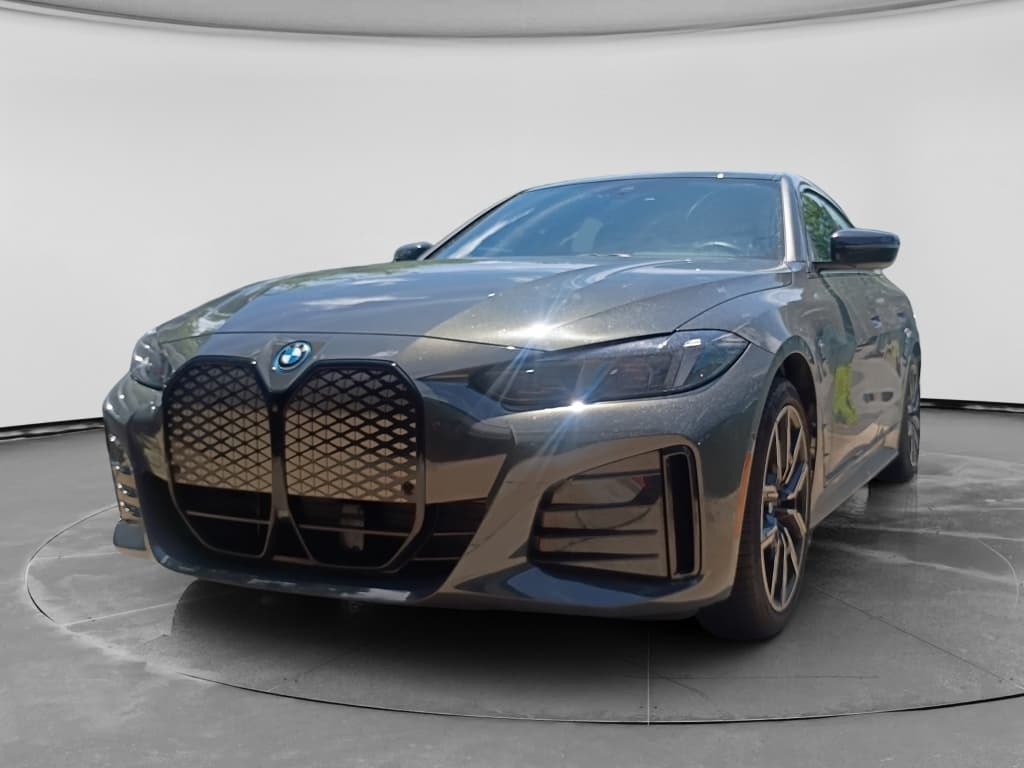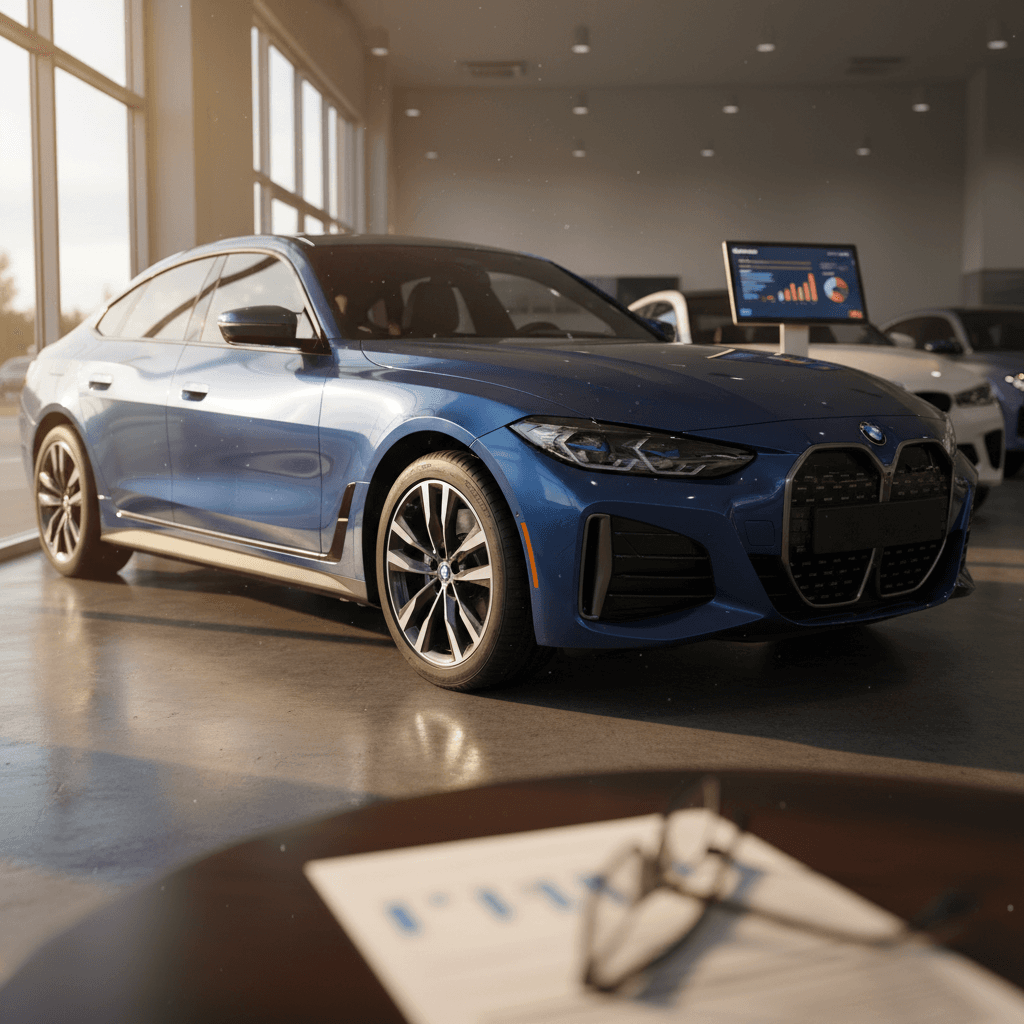
If you’re shopping for a premium electric sedan in 2026, the obvious question is: is the BMW i4 worth buying compared with a Tesla Model 3 or Hyundai Ioniq 6? The answer is nuanced. The i4 delivers classic BMW dynamics, solid range, and a real luxury interior, but it’s also heavier and often pricier than its closest rivals. This guide walks through trims, range, charging, reliability, ownership costs, and used-market realities so you can decide if a new or used BMW i4 makes sense for you.
Quick verdict
Overview: Is the BMW i4 Worth Buying in 2026?
BMW i4 at a glance (U.S. market, 2025–2026)
The BMW i4 is built on the G26 4 Series Gran Coupe platform and has been in production since 2021. By 2026, it’s a mature product with multiple trims, competitive range, and access to an increasingly robust charging ecosystem. At the same time, newer "clean-sheet" EVs and BMW’s own upcoming Neue Klasse sedans are reshaping expectations. That puts the i4 in an interesting place: excellent to drive and relatively proven, but no longer the newest kid on the block.
New vs. used in 2026
BMW i4 trims, range, and performance in 2026
BMW has iterated on the i4 since launch, but the 2025–2026 lineup in the U.S. still centers on four main variants: eDrive35, eDrive40, xDrive40, and M50. Here’s how they broadly shake out as of the 2025 model year, which carries into early 2026 with modest tweaks.
BMW i4 trims (approximate 2025–2026 U.S. specs)
Key specs for the major BMW i4 versions relevant to 2026 buyers. Exact figures vary slightly by wheel size and options.
| Trim | Drive | Approx. EPA Range | Power (hp) | 0–60 mph (est.) | Typical new MSRP* |
|---|---|---|---|---|---|
| eDrive35 | RWD | ~256 mi | ~282 | ~5.8 sec | ≈ $53,000 |
| eDrive40 | RWD | ~295–320 mi | ~335 | ~5.5 sec | ≈ $58,000 |
| xDrive40 | AWD | ~279–290 mi | ~396 | ~4.9 sec | ≈ $62,000 |
| M50 | AWD | ~245–270 mi | ~536 | ~3.7 sec | ≈ $71,000+ |
BMW i4 range and performance are competitive but not class-leading in every metric.
About the numbers
In independent testing, an early i4 eDrive40 Gran Coupe delivered real-world highway range just a couple of miles shy of its EPA rating, which is encouraging for road-trip reliability rather than just lab numbers. The eDrive40 is the sweet spot for many buyers: strong acceleration, long range, and rear-wheel drive dynamics that feel closer to a classic BMW. The M50 turns the volume up on performance but sacrifices some range and rides a bit firmer, especially with larger wheels.
Which BMW i4 trim fits your priorities?
Match your driving style to the right version
eDrive35 – Value play
Best if you want BMW badging at the lowest entry price.
- Lowest MSRP, decent range for commuters
- Still quick enough for daily use
- Works well if you mainly charge at home
eDrive40 – All-rounder
The “just right” mix for most buyers.
- Near-300+ mile range with smaller wheels
- Rear-drive, balanced handling
- Feels like a proper BMW sport sedan
xDrive40 & M50 – Performance
For all-weather or performance-focused drivers.
- All-wheel drive traction
- M50 offers serious straight-line speed
- Some range penalty vs. RWD trims
Charging experience and network access
The i4’s charging story in 2026 is a mix of strengths and trade-offs. On paper, peak DC fast-charging power trails the very best in class, but for most owners the more important question is: how easy is it to find a working, reasonably fast charger on your routes? In that respect, the BMW i4 has gotten more compelling each year.
Charging strengths
- Solid DC rates: Real-world charging curves put the i4 mid-pack, but acceptable for 20–80% top-ups on road trips.
- Comfortable road-trip car: Quiet cabin, strong highway stability, and adaptive cruise make charging stops feel like part of a relaxed routine.
- Improving app ecosystem: BMW’s apps and partner networks have steadily integrated more third-party DC fast chargers into a single interface.
Charging limitations
- Not an 800V architecture: Unlike Ioniq 5/6 or EV6, the i4 can’t hit the very fastest public DC rates.
- Charging curve matters: Peak kW figures don’t tell the whole story; sustained power tapers earlier than some rivals.
- Home charging is key: If you can’t reliably charge at home or work, the compromise vs. a Tesla ecosystem is more noticeable.
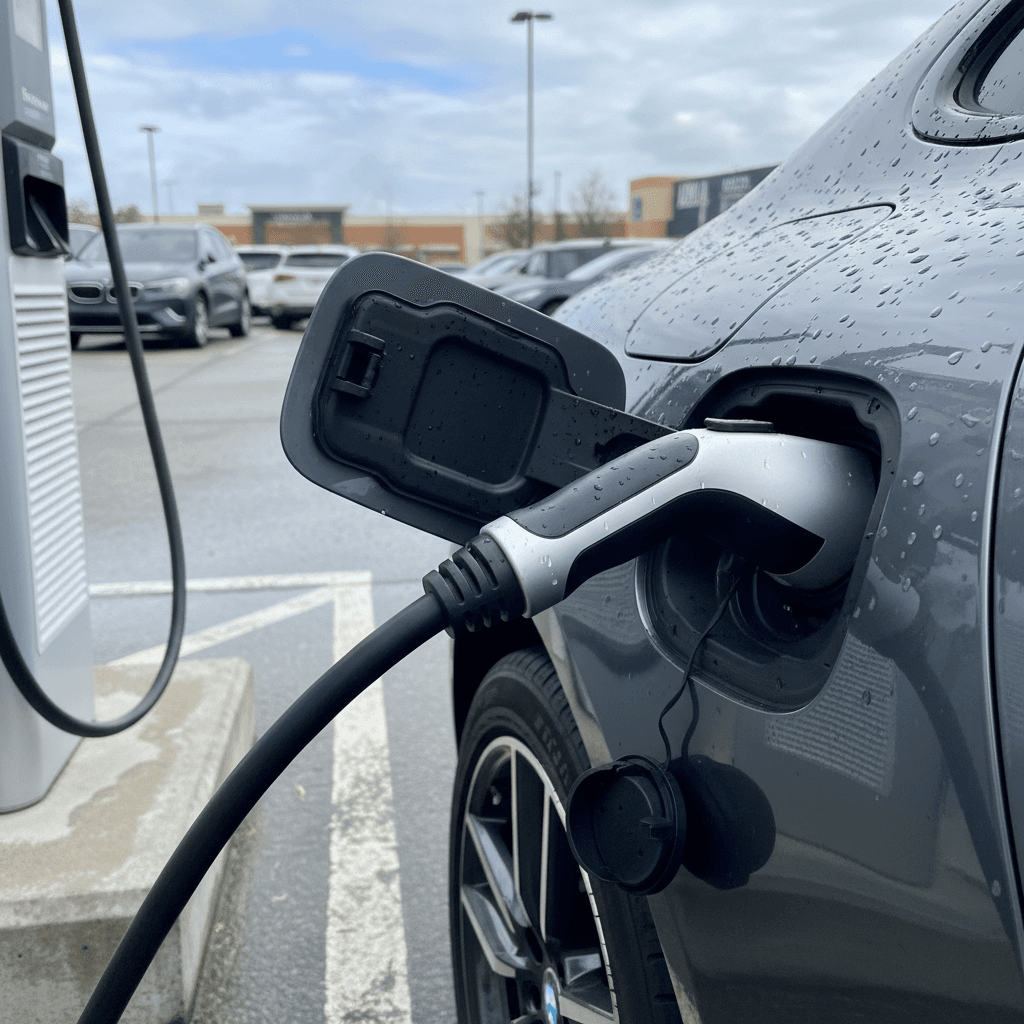
What about Tesla Supercharger access?
For a U.S. commuter who can install a 240-volt Level 2 charger at home, the i4’s charging experience is largely painless: you plug in overnight and wake up to a full battery. For heavy road-trippers in regions where non-Tesla DC fast charging is still spotty, the expanding Supercharger access is a major reason the i4 is more worth buying in 2026 than it was in 2022.
Reliability, battery health, and recalls
Because the i4 has been on sale since 2021, we have a growing picture of its real-world reliability. Survey data and owner forums suggest that the i4 is above average for reliability among EVs, with most issues concentrated in software bugs, occasional charging faults, and a small number of high-voltage battery module failures that have triggered recalls or warranty replacements.
- Independent reliability ratings for recent i4 model years sit in the upper tier of EVs, ahead of some early Teslas and several first-generation EV platforms.
- The 2024 model year has seen a handful of recalls, some related to battery protection and crash behavior, but fixes are straightforward and covered by BMW.
- Real-world owners reporting 20,000–40,000 miles on early i4s often see 1–3% reported battery degradation, which is effectively imperceptible in daily driving.
- Anecdotal reports of outright high-voltage battery failure do exist but are rare and typically handled under BMW’s battery warranty.
Don’t skip recall checks
Battery longevity is still an evolving story for every EV, but early data suggests the i4’s pack chemistry and thermal management are holding up well. The bigger concern in 2026 isn’t that an i4’s battery will suddenly die, it’s making sure you know its actual usable capacity before you buy, especially on higher-mileage used examples.
How Recharged approaches i4 battery health
Ownership costs and resale value
The i4 sits in an interesting spot on the cost curve. You’re paying for BMW brand, build quality, and cabin design, so sticker prices and option costs are higher than mainstream EVs. The flip side is that depreciation has already taken a meaningful bite out of early cars, which is good news if you’re shopping used in 2026.
Where the BMW i4 saves, and where it doesn’t
Think total cost of ownership, not just monthly payment
Cost advantages
- Fuel savings: Electricity typically undercuts premium gasoline on a per-mile basis, even in high-rate regions.
- Low routine maintenance: No oil changes and fewer moving parts than a 3 Series; tire and brake wear are the main items.
- Used pricing: Early 2022–2023 i4s often list well below original MSRP, especially off-lease cars.
Cost challenges
- High MSRP and options: New builds with M Sport, premium packages, and big wheels can quickly climb into luxury territory.
- Insurance: As with many EVs, collision repair costs and battery-related repairs can push premiums higher than a gas 3 Series.
- Luxury EV depreciation: Newer EV platforms and tax-credit dynamics can pressure resale values over time.
Resale dynamics in 2026
BMW i4 vs Tesla Model 3 vs Hyundai Ioniq 6
By 2026, the BMW i4’s real competition is very clear: the refreshed Tesla Model 3 and the Hyundai Ioniq 6. All three are mid-size electric sedans targeting commuters and road-trippers who care about range and efficiency, but they get there with very different philosophies.
BMW i4 vs key rivals (high-level comparison)
Approximate U.S.-market comparisons for popular trims as of 2025–2026.
| Model | Typical EPA range (popular trims) | DC fast-charging strength | Interior/UX | Driving character |
|---|---|---|---|---|
| BMW i4 eDrive40 | ~295–320 mi | Solid but not class-leading | Premium materials, traditional controls + screens | Sporty, refined, heavier feel |
| Tesla Model 3 Long Range (Highland) | 320–340+ mi | Excellent, especially on Tesla Superchargers | Minimalist, software-first experience | Light, efficient, very quick |
| Hyundai Ioniq 6 RWD | 305–361 mi | Outstanding 800V peak rates | Modern, well-equipped, less premium | Comfort-biased but efficient |
The i4 wins on interior quality and driving feel, while Tesla and Hyundai lean into efficiency and charging speed.
Where the BMW i4 clearly wins
Where the i4 lags behind
Who the BMW i4 is perfect for, and who should skip it
Is the BMW i4 worth buying for you?
You want a real luxury interior
If you’re coming from a 3 or 5 Series, or an Audi/Benz, you’ll likely appreciate the i4’s materials, seats, and insulation more than a Model 3’s minimalist cabin.
You enjoy driving, not just commuting
The i4 still behaves like a BMW: confident at speed, composed in corners, and satisfying on a twisty road in a way many EVs are not.
You have reliable home charging
With a Level 2 charger at home, the i4’s mid-pack DC fast charging becomes less important; most of your charging will happen while you sleep.
You value maturity over bleeding edge
By 2026 the i4 is a known quantity with a few years of real-world data, rather than a first-year science experiment.
You’re okay paying for a badge
If you’re laser-focused on dollars-per-mile of range, a mainstream EV will often win. The i4 makes the most sense if you’re willing to pay for a premium experience.
- Skip the i4 if you want the absolute fastest charging and range-per-dollar; look at Tesla Model 3 or Hyundai Ioniq 6 instead.
- Skip it if you can’t install home charging and rely on public non-Tesla DC fast charging in a region with weak infrastructure.
- Skip it if you’re deeply price-sensitive and don’t care about brand or interior quality; several mainstream EVs will fit better.
Buying a used BMW i4 in 2026
The used market is where the “is the BMW i4 worth buying in 2026?” question becomes especially interesting. Early depreciation plus improving reliability data make 2–4-year-old i4s attractive, if you’re careful about which car you pick.
Model year sweet spots
Essential checks before buying a used i4
1. Get a real battery health report
Don’t rely solely on the in-car range estimate. Ask for a third-party or dealer battery test that shows usable capacity vs. new, and watch for unusual imbalance between modules.
2. Verify recall and software status
Confirm all battery and safety-related recalls are complete, and that the car is on the latest software. This can affect both safety and charging behavior.
3. Check DC fast-charging history
Frequent high-power fast charging isn’t an automatic deal-breaker, but it’s worth understanding how the car was used, especially for rideshare or heavy road-trip duty vehicles.
4. Inspect tires, brakes, and suspension
The i4 is heavy. Premature inner tire wear, tired shocks, and worn control-arm bushings can pop up earlier than on a lighter gas sedan.
5. Confirm charging hardware and adapters
Make sure the original Level 1/Level 2 charge cable is included and, by 2026, whether an official NACS adapter or port is part of the deal.
“The BMW i4 shows how far legacy automakers have come: it’s not the efficiency champ, but as a complete luxury EV package it’s one of the most resolved.”
How Recharged helps with a used BMW i4
Evaluating a used EV is fundamentally different from buying a used gas car. You’re not just kicking tires, you’re buying a battery, a charging experience, and a software platform. That’s where a marketplace built specifically for EVs can tilt the odds in your favor.
Why shop for a used BMW i4 with Recharged?
Tools and support built specifically for EV buyers
Verified battery diagnostics
Transparent pricing & history
EV-specialist guidance
Ready to find your next EV?
Browse VehiclesYou can browse and purchase entirely online, trade in your current vehicle, finance your i4, and arrange nationwide delivery from the comfort of your couch. If you’d rather see how a used BMW i4 feels in person, Recharged also operates an Experience Center in Richmond, VA where you can get hands-on with curated EVs before committing.
FAQ: BMW i4 in 2026
Frequently asked questions about the BMW i4 in 2026
Bottom line: Is the BMW i4 worth it?
In 2026, the BMW i4 is no longer the shiny new thing, but that’s exactly why it’s such an interesting buy. As a new car, it appeals to shoppers who want a premium, refined electric sedan with real BMW character and are willing to pay for that experience instead of chasing the best efficiency numbers on a spec sheet. As a used car, it’s one of the smarter ways to get into a luxury EV without funding all the early depreciation yourself.
If you have home charging, care about how a car feels more than what its charging-curve chart looks like, and you’d rather sit in a well-built cabin than a minimalist lab experiment, the BMW i4 is absolutely worth buying in 2026. Just make sure you buy the right example, with a healthy battery and clean history. Working with an EV-focused retailer like Recharged, with verified battery diagnostics, transparent pricing, and EV-specialist support, can turn that from a leap of faith into a confident, data-backed decision.