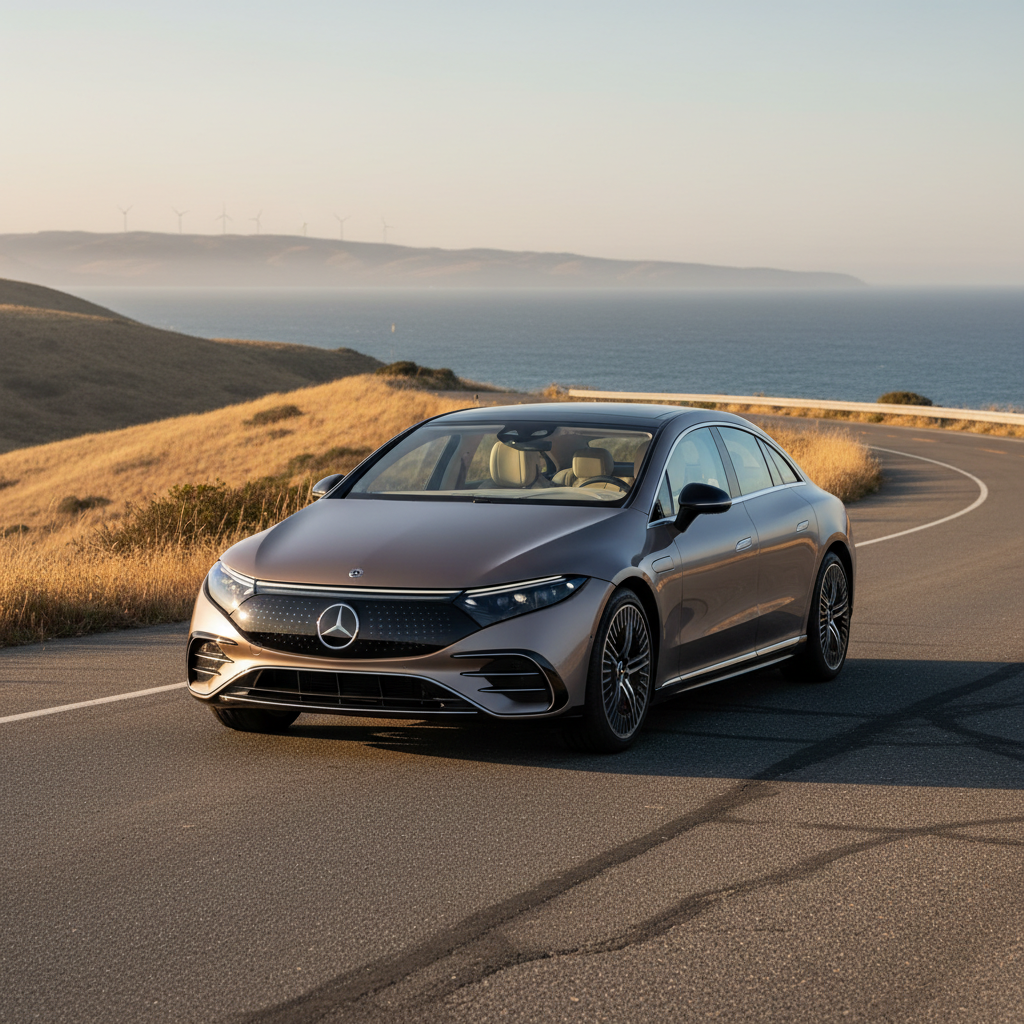
If you want S‑Class levels of comfort without gasoline, a used Mercedes‑Benz EQS is probably on your short list. The big question isn’t whether it’s luxurious, it is. The question is whether a used Mercedes EQS is worth it once you factor in depreciation, battery life, real‑world range, and future resale.
Flagship EV in a buyer’s market
Overview: When Is a Used Mercedes EQS Worth It?
A used EQS can be a fantastic value if you care about comfort, quiet, and long range more than cutting‑edge performance or the latest charging connector standard. The EQS 450+ sedan, for example, pairs a huge battery with ultra‑slippery aerodynamics to deliver genuine 300‑plus‑mile real‑world range, even by independent tests. That puts it right up with the longest‑range EVs on the road today.
- Best fit: Long‑distance drivers and luxury buyers who value comfort, silence, and tech more than track performance.
- Maybe: Urban buyers who want a cocoon and don’t mind a big car, as long as parking and tight streets aren’t daily battles.
- Poor fit: Shoppers who want a small, nimble EV, or who are extremely sensitive to depreciation and future resale risk.
Key trade‑offs to understand
Quick answer: Who should actually buy a used EQS?
Is a used Mercedes EQS worth it for you?
Match your use case to what the EQS does best, and where it struggles.
Great fit
- You drive long highway trips and want 300+ miles of real range.
- You care more about quiet comfort than razor‑sharp handling.
- You want flagship Mercedes tech for a used‑car price.
Depends on you
- You mostly drive short distances but want a prestige EV.
- You’re okay with a hatchback sedan shape and large footprint.
- You can live with CCS1 fast charging for the life of the car.
Likely not worth it
- You want a compact car for tight cities.
- You need 3‑row seating (EQS SUV is only 2 or small optional 3rd row).
- You’re extremely risk‑averse about resale and tech obsolescence.
Think of it as an electric S‑Class
Range and battery: The strongest case for a used EQS
EQS range & battery highlights
The EQS’s calling card is range. Single‑motor 450+ sedans combine a big battery with a very low drag coefficient, and multiple independent tests have comfortably beaten EPA estimates in real‑world driving. Drivers regularly report mid‑300s to even 400‑plus miles between charges on highway runs when conditions are good. That kind of range margin is rare even among today’s newest EVs.
- It masks some degradation. Even if you’ve lost, say, 8–10% of original capacity after years of use, you’re still left with a “normal” long‑range EV.
- It reduces charging stress. You don’t have to DC fast charge as often, which can help long‑term battery health compared with smaller‑pack EVs that live on fast chargers.
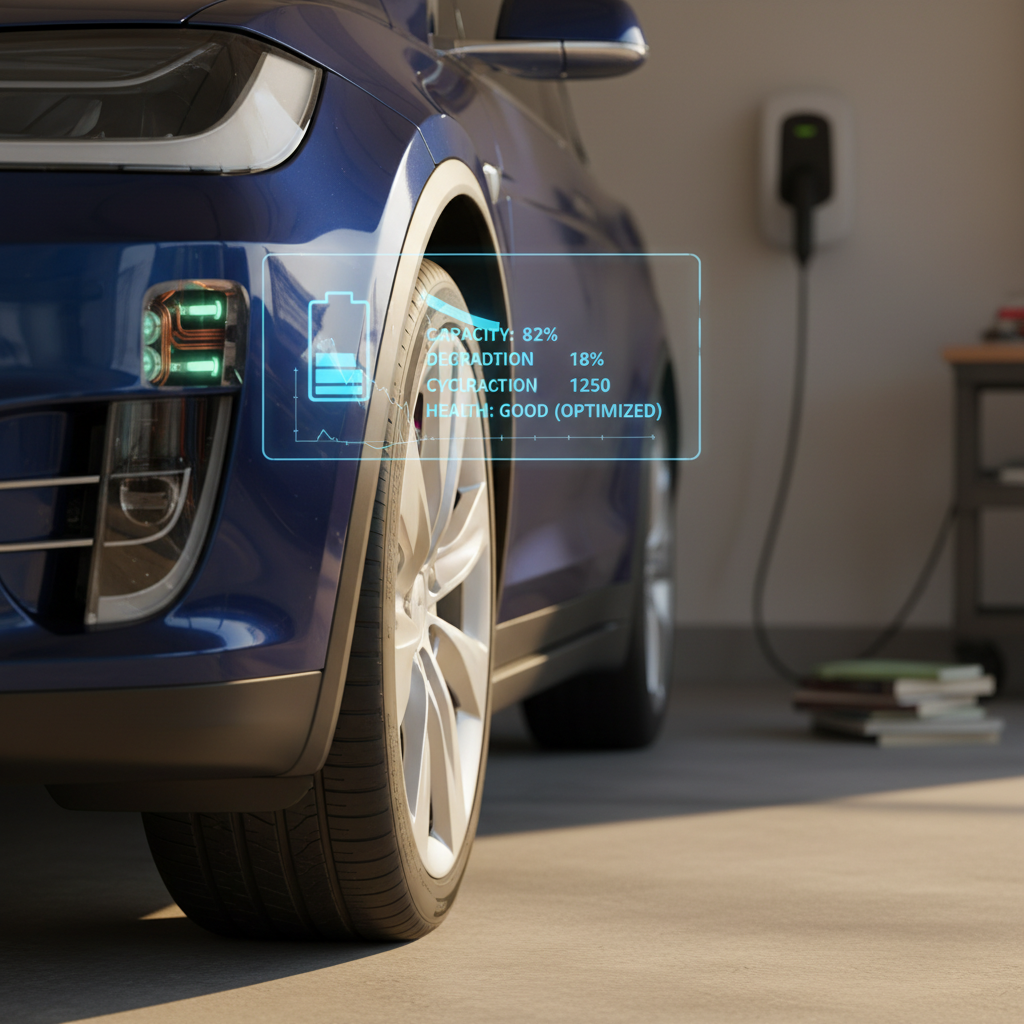
Battery degradation so far looks modest
Depreciation & pricing: How much do you really save?
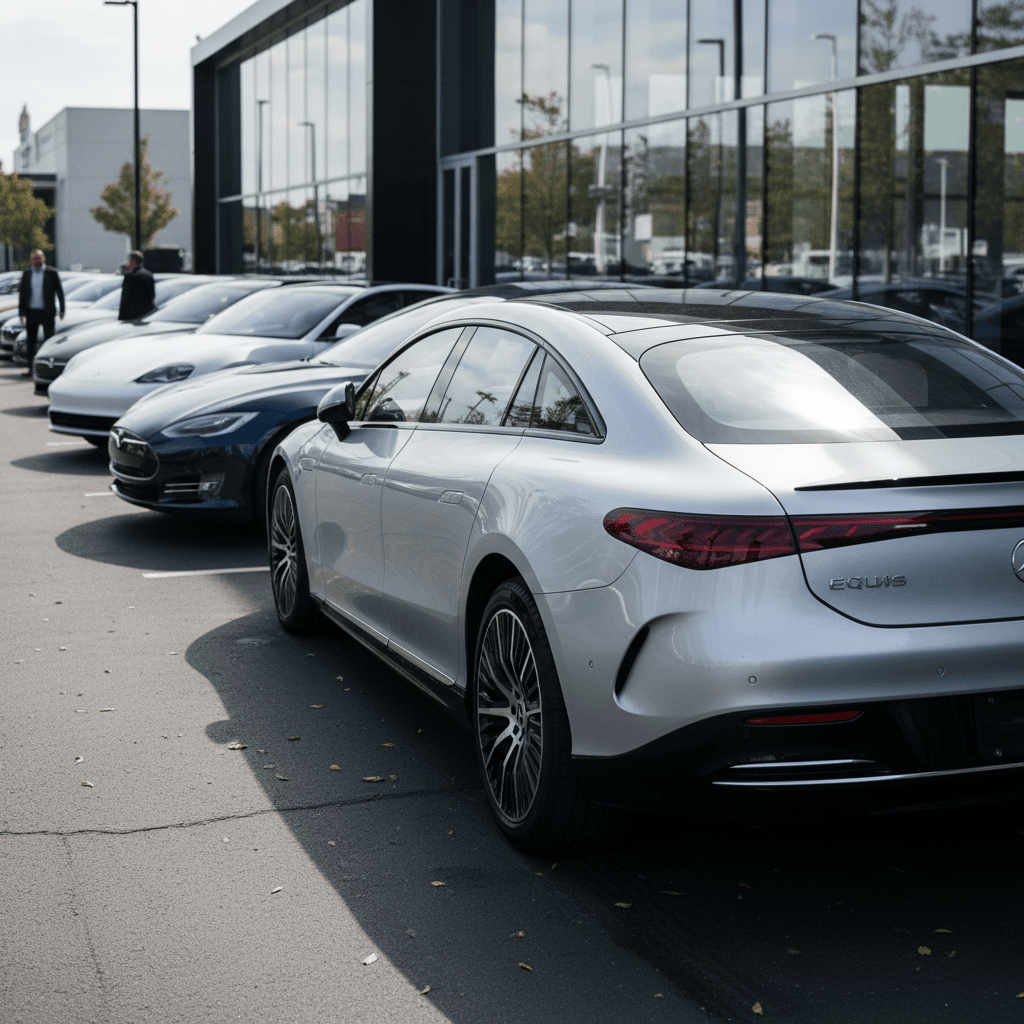
Like most six‑figure luxury EVs, the EQS has taken a serious depreciation hit. Early cars with MSRPs well into the $100,000s are commonly listed used in the $50,000–$70,000 range depending on year, mileage, trim, and condition. Data from large used‑car marketplaces show average used EQS prices hovering in the low‑to‑mid‑$50k range nationwide, with newer model years clustering closer to the high‑$50k range.
Illustrative used Mercedes EQS pricing bands (U.S.)
Approximate retail asking ranges you’ll see in the U.S. market as of early 2025. Actual pricing varies by mileage, trim, options, region, and condition.
| Model year & type | Typical mileage | Indicative used asking range* | Notes |
|---|---|---|---|
| 2022 EQS 450+ sedan | 25k–45k mi | $48,000–$60,000 | Deepest depreciation; strong value if battery and warranty check out. |
| 2023 EQS 450+/450 4Matic sedan | 15k–35k mi | $52,000–$65,000 | Slight price uptick vs. 2022; more warranty runway. |
| 2022–2023 EQS 580 sedan | 20k–40k mi | $55,000–$72,000 | More power and gadgets; similar price to well‑optioned 450+. |
| 2023–2024 EQS SUV | 10k–30k mi | $60,000–$80,000 | Command a bit more due to body style and family appeal. |
Heavily optioned cars and AMG trims can still command a premium, but the days of six‑figure EQS transaction prices are mostly gone, on the used market, at least.
Why depreciation cuts both ways
- Mercedes pausing new EQS orders in the U.S. after 2025, which muddies long‑term parts and support perceptions.
- Shifts from CCS1 to NACS charging plugs on newer EVs.
- Ongoing price cuts on new luxury EVs across brands.
Value snapshot: Used EQS vs new luxury EV
Running costs: Charging, maintenance, and real-world efficiency
On the road, the EQS is impressively efficient for its size. Independent testing of EQS 450+ sedans has shown energy use in the low‑30s kWh/100 miles in mixed driving, with some long‑range runs beating EPA estimates by a healthy margin. That translates to roughly 3.0–3.5 miles per kWh in fair weather, solid numbers for a full‑size luxury flagship.
Charging & efficiency
- AC charging: Most EQS trims support robust Level 2 charging at home. Expect a full charge overnight on a 240V circuit.
- DC fast charging: Peak power typically around 170–210 kW. Plan ~25–35 minutes to go from about 10% to 80% on a strong CCS fast charger.
- Cold weather: Like every large EV, winter can dent efficiency. Owners in very cold climates report consumption spikes on short, un‑preconditioned trips, especially with the EQS SUV.
Maintenance & repairs
- Lower routine maintenance than a gas S‑Class, no oil changes, fewer moving parts.
- High parts and labor costs when something does break; this is still a top‑of‑the‑line Mercedes.
- Consider extended coverage or a certified pre‑owned (CPO) car if you’re risk‑averse about out‑of‑warranty repairs.
CCS1 vs NACS: Future charging reality check
Comfort, tech, and driving experience in a used EQS
If there’s one area where a used EQS still feels absolutely current, it’s comfort. Air suspension, extensive sound insulation, and a very quiet powertrain create the kind of effortless glide that feels closer to a traditional S‑Class than to most other EVs. Acceleration in the 450+ is brisk rather than brutal; dual‑motor 580 and AMG models are properly quick but still tuned for refinement more than theatrics.
What owners tend to love about the EQS
These strengths hold up especially well on the used market.
Serious comfort
Immersive tech
Practical hatchback
Test multiple trim levels
Common complaints and what to watch for
- User interface overload: The Hyperscreen looks stunning, but menu complexity and touch‑heavy controls put some buyers off. Make sure you’re comfortable with it before you commit.
- Styling and proportions: The teardrop shape that helps range also makes the EQS look a bit like a high‑end jellybean. If you don’t love the design now, it probably won’t grow on you.
- Back‑seat ergonomics: There’s lots of legroom, but the sloping roof and high floor can make the rear seat feel slightly knees‑up for tall passengers.
- Winter efficiency (SUV especially): EQS SUV owners in very cold regions report steep efficiency drops on short, cold‑soak trips without preconditioning, no worse than some peers, but something to be aware of if you live in harsh winters.
- Software quirks and updates: Like most modern luxury EVs, the EQS relies heavily on software. Verify that recall and software campaigns have been performed and that the car’s features work as advertised.
Don’t skip a thorough diagnostic scan
Sedan vs SUV and trim guide (450+, 450 4Matic, 580, AMG)
EQS sedan vs EQS SUV
- Sedan (EQS 450+, 450 4Matic, 580, AMG): Best range and efficiency, limo‑like ride, hatchback practicality, but polarizing styling.
- SUV (EQS SUV 450, 450 4Matic, 580): Higher seating position, available 3rd row in some trims, easier ingress/egress, but noticeably less efficient, especially in cold climates.
- If you want maximum range per dollar, the 450+ sedan is the sweet spot in the used market.
Trim cheat sheet
- 450+ (RWD sedan): Single‑motor, long‑range champion. Ideal for efficiency‑minded buyers who still want comfort and status.
- 450 4Matic (sedan or SUV): Dual‑motor all‑wheel drive with more traction and punch, at the cost of some efficiency.
- 580 4Matic: Serious power, more standard luxury features. Great if you want the full flagship feel and don’t mind extra complexity and consumption.
- AMG EQS: High‑performance flagship; fantastic if you truly value speed, but likely overkill for many and potentially higher long‑term running costs.
Decide on body and trim before you shop
How to inspect a used Mercedes EQS before you buy
Essential checks for any used EQS
1. Verify battery health with data, not guesses
Ask for a recent <strong>battery health report</strong> showing remaining capacity and fast‑charge history. Avoid cars that have lived exclusively on DC fast charging or show unusually high degradation for their age.
2. Confirm warranty timelines
The high‑voltage battery warranty clock starts at the original in‑service date, not the model year. Confirm exactly how many years and miles of coverage remain for both the battery and general vehicle warranty.
3. Scan for software faults and recalls
Have the car checked for <strong>stored fault codes</strong>, open recalls, and outstanding software campaigns. Confirm that driver‑assist systems, adaptive suspension, and the Hyperscreen all function properly.
4. Inspect wheels, tires, and brakes
Large, low‑profile wheels look great but can be expensive to replace. Check for curb rash, uneven tire wear, and brake rotor condition, especially on low‑mileage cars that may have seen lots of short trips.
5. Test charging at Level 2 and DC fast
If possible, plug into both a home‑style Level 2 station and a DC fast charger. Confirm that the car handshakes quickly, charges at expected speeds, and doesn’t throw charging‑system warnings.
6. Drive it like you’ll actually use it
On your test drive, include <strong>highway cruising, bad pavement, and stop‑and‑go</strong>. Listen for rattles, test regen modes, and pay attention to how natural (or not) the driver‑assist tech feels to you.
Why a third‑party inspection is smart
How Recharged helps you shop used EQS with less risk
Flagship EVs like the EQS are exactly where transparency matters most. At Recharged, every used EV comes with a Recharged Score Report that includes verified battery health, pricing analysis, and condition details so you’re not guessing about the most expensive component in the car.
What you get when you buy a used EQS through Recharged
Built to take the anxiety out of complex used EVs.
Battery health, quantified
Fair market pricing
EV‑specialist support
Ready to find your next EV?
Browse VehiclesYou can finance, arrange trade‑ins, and schedule nationwide delivery entirely online, or visit the Recharged Experience Center in Richmond, VA to experience different EVs back‑to‑back before you decide. If you’re on the fence between, say, an EQS and a more mainstream long‑range EV, that kind of side‑by‑side test often clarifies things quickly.
FAQ: Used Mercedes EQS worth it?
Frequently asked questions about buying a used Mercedes EQS
Bottom line: Is a used Mercedes EQS worth it for you?
A used Mercedes‑Benz EQS is worth it if you’re buying with your head and your heart. Rationally, you’re taking advantage of steep depreciation on a still‑modern flagship EV with outstanding range and comfort. Emotionally, you’re getting the full electric‑S‑Class experience every time you merge onto the highway or glide through city traffic in near silence.
Where it’s less compelling is for shoppers who demand the very latest charging standard, razor‑sharp handling, or bulletproof resale value. If that’s you, you might be happier in a newer, smaller luxury EV. But if your priorities are long‑distance comfort, real‑world range, and a genuine sense of occasion every time you drive, a carefully vetted used Mercedes EQS can be one of the most satisfying purchases in today’s used EV market.