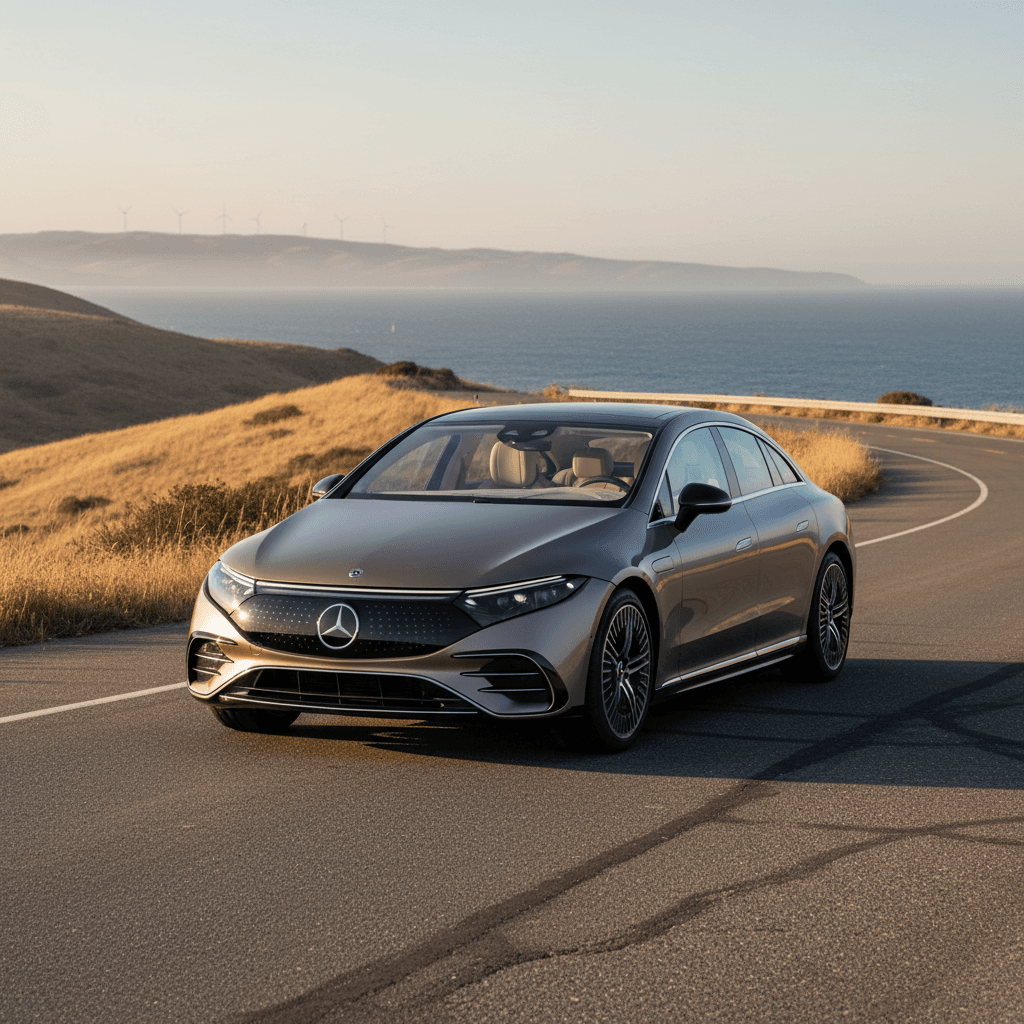
If you’re eyeing a Mercedes EQE, sedan or SUV, as your highway companion, you’re probably wondering how it really behaves once you’re 300 miles from home with the battery ticking down. On paper the EQE promises luxury, quiet comfort, and solid range; this Mercedes EQE road trip review focuses on what actually happens when you leave the spec sheet behind and live with it on long drives.
Sedan vs SUV: what this review covers
Mercedes EQE on a road trip: the big picture
Mercedes EQE highway road trip snapshot
On a long highway day, the EQE’s personality is all about competence: stable, quiet, and relaxing. It’s not the most playful luxury EV, nor the fastest charger at the rest stop, but it tends to deliver what it promises, with a few quirks around the infotainment and brakes you’ll want to know about before you commit to a 500‑mile day.
Who will love the EQE on road trips
Real-world road trip range in the Mercedes EQE
Official numbers first. Depending on year and configuration, the EQE sedan and EQE SUV sit in the mid‑200s to just over 300 miles of EPA range. Rear‑drive sedans get the best ratings, while heavier all‑wheel‑drive SUVs sit lower. That’s the brochure story. The road trip story is more nuanced.
- On mixed highway driving at 65–75 mph, many EQE sedan and SUV owners report real‑world legs in the 250–280 mile range before they get nervous about finding a charger.
- Drive 80 mph into a headwind and you’re more likely looking at around 220–240 miles, similar to other mid‑size luxury EVs.
- In independent testing, an EQE SUV has covered around 270–285 miles of continuous highway driving before hitting a low state of charge, roughly matching its EPA rating.
- Cold weather knocks the same 15–30% off range that it does in other EVs, especially at freeway speeds. Heat pumps and preconditioning help, but winter road trips will still require closer planning.
Winter road trip reality check
EQE sedan highway range feel
The sedan’s sleeker shape and lower ride height help it stretch a bit farther on the highway than the SUV. If you’re a frequent long‑distance driver, especially in flat country, you’ll notice the extra efficiency over the course of a multi‑day trip. It’s the better choice if max range per stop is your top priority.
EQE SUV highway range feel
The EQE SUV trades a little range for a higher seating position and roomier cabin. Owners commonly see 250–280 miles per full charge in normal highway use, which is competitive for a midsize luxury EV SUV, but not a runaway leader. For families, that compromise often makes sense.
How the EQE estimates range
Charging the EQE on the road: how fast is it really?
Both the EQE sedan and EQE SUV use a battery pack in the mid‑80 kWh usable range and share similar charging hardware. On paper, they can accept up to 170 kW on a DC fast charger, which should take the battery from 10–80% in just over 30 minutes. That’s solid, though newer rivals are pushing well beyond 200 kW.
Mercedes EQE charging basics for road trips
How the EQE’s charging profile translates into real‑world road trip stops.
| Scenario | State of charge | Typical time | Highway miles added* |
|---|---|---|---|
| Quick splash-and-dash | 20% → 60% | ~18–22 min | 140–170 mi |
| Standard stop | 10% → 80% | ~30–35 min | 200–230 mi |
| Deep charge on trip | 10% → 100% | ~55–65 min | Full usable range |
| Level 2 overnight | 10% → 100% | 9.5–11 hours | Full usable range |
Numbers are approximate and assume a healthy battery and a strong charger.
Don’t chase 100% at fast chargers
In practice, many drivers see peak DC fast‑charge rates below that 170 kW headline, especially once the pack warms up after a couple of stops. That’s not unique to Mercedes, but it’s worth knowing so you’re not surprised when your third stop of the day tops out in the 120–140 kW range instead of the big number on the spec sheet.
Tools that make EQE road trip charging easier
Mercedes has quietly built a decent ecosystem around public charging.
Mercedes-Benz charging partnerships
The EQE taps into a consolidated network of major DC fast‑charging providers through Mercedes’ own charging program. You can find and activate chargers directly from the car, without juggling multiple apps and RFID cards.
Plug & Charge at supported stations
On newer EQE models and compatible stations, you can enable Plug & Charge: plug in, walk away, and let the car handle authentication and payment behind the scenes.
Built-in charger search & filters
From the MBUX screen, you can filter for DC fast chargers, power level and availability, then let the navigation system route you with automatic charging stops.
Plan with a backup charger in mind
Seat comfort, noise and ride quality over long days
This is where the EQE earns its luxury badge. On a road trip, you spend far more time in the seat than at the charger, and Mercedes still understands how to make seats you can live in for hours.
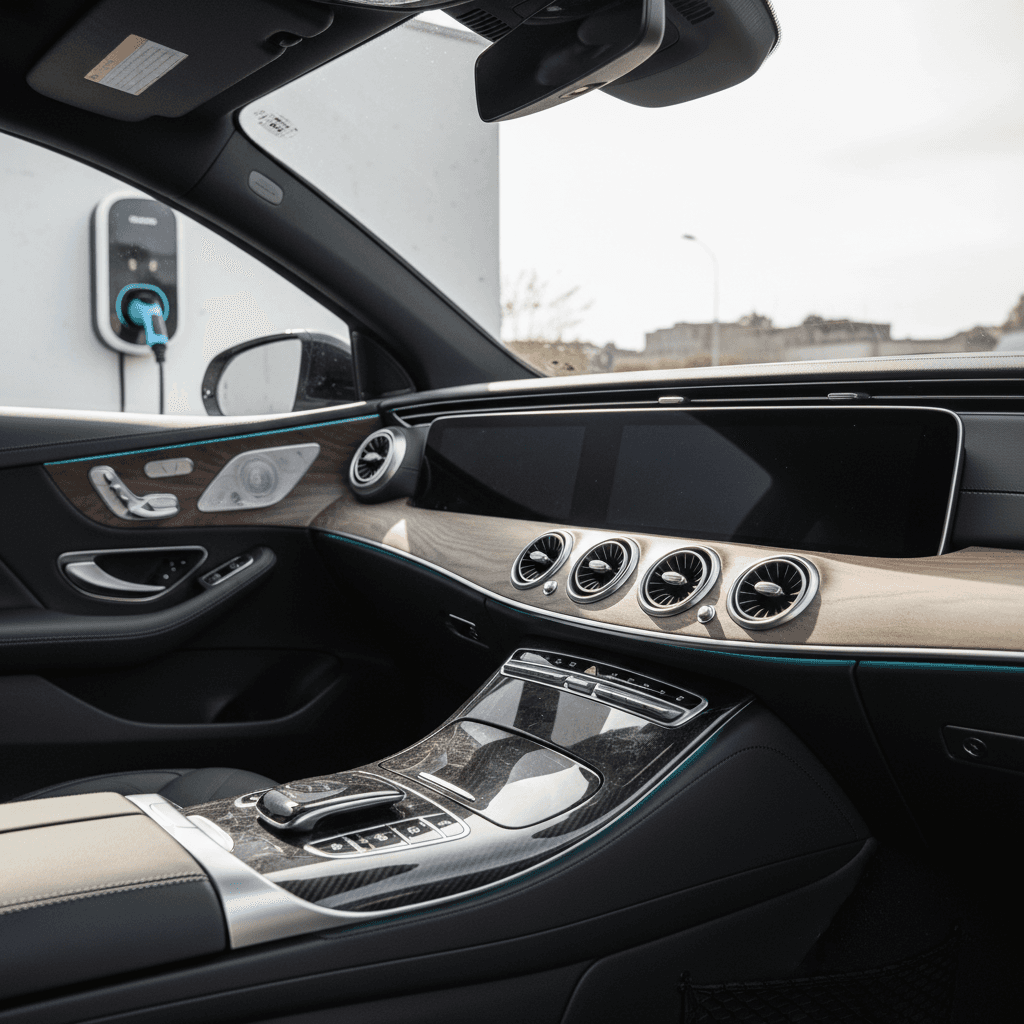
- Front seats in both sedan and SUV offer excellent adjustability, supportive cushions, and available massage functions that genuinely reduce fatigue on 6‑ to 8‑hour days.
- Acoustic glazing, good aero, and the absence of an engine give the EQE a very calm cabin at highway speeds, though you may still hear tire slap on rough concrete and some wind noise around the mirrors at higher speeds.
- Air suspension (where equipped) and the EQE’s tuning skew toward comfort rather than sharp handling. On broken pavement or long sections of expansion joints, the car stays composed and unflustered.
- Rear passengers in the SUV get a slightly more upright, airy seating position without feeling perched on top of the battery, which families tend to appreciate on cross‑country runs.
Overnight reset matters
MBUX, navigation and driver assists on long drives
The EQE’s MBUX infotainment and driver‑assist suite are some of its biggest selling points and its biggest learning curve. Once you’re used to them, they can take a lot of the friction out of distance driving, route planning, lane‑keeping, speed changes, even seat adjustments.
How EQE tech helps (and sometimes annoys) on trips
The good, the great, and the slightly fussy.
MBUX navigation with charging logic
The built‑in nav understands your state of charge, terrain and weather and will route you with appropriate charging stops on long legs. It also preconditions the battery for faster charging when you approach a DC fast charger you picked in the nav.
Driver assistance in traffic
Adaptive cruise and lane‑centering work smoothly on highways, taking the sting out of traffic jams and long, straight stretches. The tuning is conservative rather than aggressive, which suits the EQE’s calm personality.
Touch controls & learning curve
The steering‑wheel touchpads and extensive screen menus can be fiddly until muscle memory kicks in. Plan to spend time learning the layout at home so you’re not hunting for basic settings at 70 mph.
Brake feel takes adjustment
Luggage, passengers and practicality: sedan vs EQE SUV
For road trips, what you can bring (and how easily you can pack it) matters almost as much as range. The EQE sedan and EQE SUV share a cabin design language, but they don’t play the same role when it’s time to load up for a week away.
EQE sedan: sleek but less flexible
- Traditional trunk rather than a hatchback means less vertical space for bulky items.
- Perfectly fine for two adults plus luggage, or a small family that packs light.
- Rear seats fold, but the opening is more limited than a hatch or SUV, which can make strollers and camping gear a puzzle.
EQE SUV: the road trip pack mule
- With the rear seats up, you get family‑friendly space for suitcases, a stroller and soft bags.
- Fold the seats and the cargo bay is flat and generous, ideal for sports gear or a long weekend for four adults.
- The high load floor (battery underfoot) is typical of EVs but the tailgate opening is wide and square, so loading is easy.
Traveling with pets or kids?
Road trip tips to get the best from your EQE
Prep your Mercedes EQE for a smooth road trip
1. Update maps and software before you leave
Make sure your MBUX maps and vehicle software are current so you have the latest charging locations, routing logic and bug fixes. It’s much easier to do this on home Wi‑Fi than in a hotel parking lot.
2. Learn your preferred drive mode
Eco, Comfort and Sport change throttle response and climate behavior. For most drivers, <strong>Comfort mode</strong> hits the sweet spot between easy passing power and efficiency on an all‑day drive.
3. Precondition before fast charging
When you select a DC fast charger as a destination in the nav, the EQE can warm or cool the battery pack for faster charging. Make a habit of doing this 20–30 minutes before you arrive at the station.
4. Aim for 10–80% charging windows
On most routes, you’ll make better progress by planning <strong>more frequent, shorter stops</strong> between 10–80% than by trying to stretch each leg to 100% SOC.
5. Watch your speed (for range and comfort)
Jumping from 70 to 80 mph can easily shave 30–40 miles off your usable range in any EV, including the EQE. If you’re tight on chargers, set the cruise a little lower and let the car’s quiet cabin make it feel effortless.
6. Use built-in charging filters plus a backup app
The EQE’s built‑in search is your first stop; back it up with a third‑party app on your phone so you can see real‑time user check‑ins and photos before committing to an off‑ramp.
Leaning on public charging vs home base
Thinking about a used Mercedes EQE for road trips?
A used EQE can be a smart way to get into a high‑end, road‑trip‑ready EV without taking the original owner’s depreciation hit. But buying any used EV, especially as a highway car, adds a few items to your checklist beyond the usual inspection.
Key questions before you choose a used EQE for road trips
Battery health, charging history and software matter more when you leave town.
How healthy is the battery?
Range is your road‑trip lifeline. Ask for verified battery health data rather than guessing from a dash estimate. Tools like a Recharged Score Report dig into usable capacity and charging behavior so you know how much of that original range you still have.
DC fast‑charging history
Frequent DC fast charging isn’t disastrous on its own, but it’s useful context. A car that lived its life on road trips will have a different battery story than one that mostly charged gently at home.
Software, recalls and service
For tech‑heavy EVs like the EQE, software updates and completed recalls are just as important as tire tread. Make sure the car’s digital life is as up‑to‑date as its oil changes would have been in a gas car.
How Recharged helps with used EQE road-trip confidence
Ready to find your next EV?
Browse VehiclesBecause Mercedes has already updated the EQE lineup over the years, tweaking trims, renaming models, and adding features like standardized North American Charging Standard (NACS) adapters, it’s worth talking through which model years and powertrains best fit your needs. A rear‑wheel‑drive sedan that goes farther per charge might be perfect for solo highway drives, while an all‑wheel‑drive SUV with slightly less range might be the better long‑term match for family trips in bad weather.
Mercedes EQE road trip FAQ
Frequently asked questions about EQE road trips
Bottom line: Is the Mercedes EQE a good road trip car?
If your idea of the perfect road trip car is one that shrugs off hours of interstate with a quiet cabin, soft ride and tech that quietly handles the details, the Mercedes EQE makes a strong case for itself. It won’t set records at the fast charger or thrill drivers who crave razor‑sharp handling, but it delivers honest, usable range, excellent comfort and thoughtful charging tools that make real‑world travel feel almost effortless.
Whether you’re considering a new EQE or shopping used, take the time to learn how it plans routes and manages energy, then pair that with a clear view of battery health. With that foundation, and a bit of smart planning, the EQE sedan or SUV can be a refined, relaxing partner for everything from weekend escapes to cross‑country adventures. And if you’re exploring a used EQE, Recharged’s battery‑health‑focused approach is designed to make sure the car you fall for on a test drive is one you’ll still trust on your longest trips.