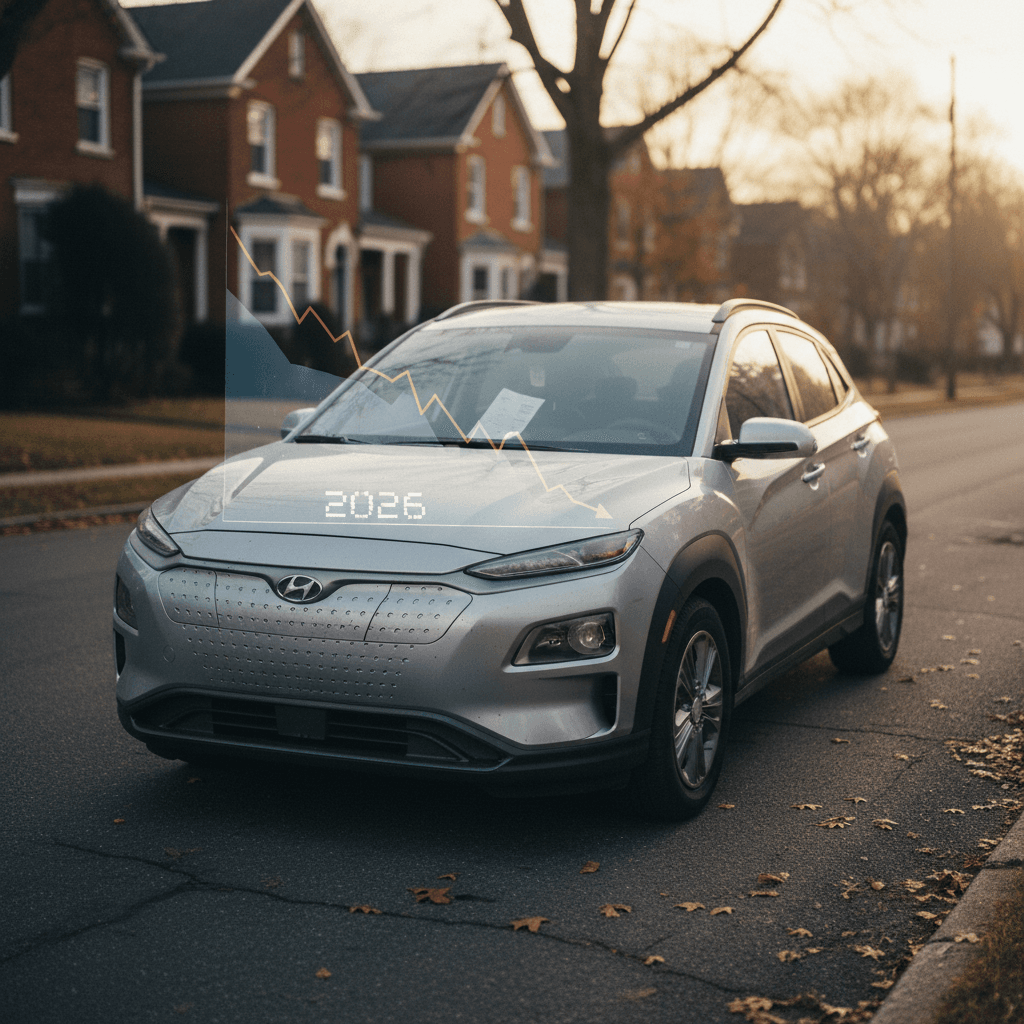
If you’re eyeing a Hyundai Kona Electric in 2026, whether as a used buy, a lease buyout, or a trade-in, depreciation is front and center. The good news: the Hyundai Kona Electric depreciation rate in 2026 is better than many EV rivals, and in some studies it ranks among the top value-holders in the battery‑electric class.
At-a-glance verdict
Hyundai Kona Electric depreciation rate in 2026: quick overview
Kona Electric depreciation snapshot for 2026
Those numbers won’t make the Kona Electric a resale hero on the level of certain hybrids, or the Tesla Model 3, but they do mean it’s less punishing to own than many early EVs that hemorrhaged value. For a shopper in 2026, that translates into two things: relatively affordable used pricing today and a more predictable exit three to five years down the road.
How to read these percentages
How fast does a Hyundai Kona Electric depreciate?
By 2026, we have real‑world data from multiple model years of the first‑generation Kona Electric (2019–2023) plus early numbers on the redesigned 2024–2025 models. Here’s how the depreciation curve looks for a typical U.S. owner driving 12,000–15,000 miles per year and keeping the car in good condition:
Typical Hyundai Kona Electric depreciation curve (used market view, 2026)
Illustrative averages for a well‑equipped Kona Electric that originally sold around $38,000 including destination. Real‑world values vary by trim, region, incentives, and mileage.
| Age of vehicle | Odometer (approx.) | Typical value retained | Approx. market value |
|---|---|---|---|
| 1 year (2025→2026) | 12,000–15,000 miles | ≈75–80% of original price | $28,500–$30,500 |
| 3 years | 36,000–45,000 miles | ≈55–60% of original price | $20,500–$23,000 |
| 5 years | 60,000–75,000 miles | ≈40–45% of original price | $15,000–$18,000 |
| 7 years | 85,000–105,000 miles | ≈30–35% of original price | $11,000–$14,000 |
Approximate depreciation pattern for U.S.-market Hyundai Kona Electric models entering 2026.
Several national analyses of 5‑year EV depreciation in 2024–2025 place the Kona Electric right around that 58–60% loss at five years, slightly better than the EV average but still behind popular gas crossovers and long‑running hybrids. The picture is even a bit rosier for low‑mileage and Limited‑trim examples, which tend to attract more demand in the used market.
Don’t over‑interpret any single number
2026 Hyundai Kona Electric values by model year
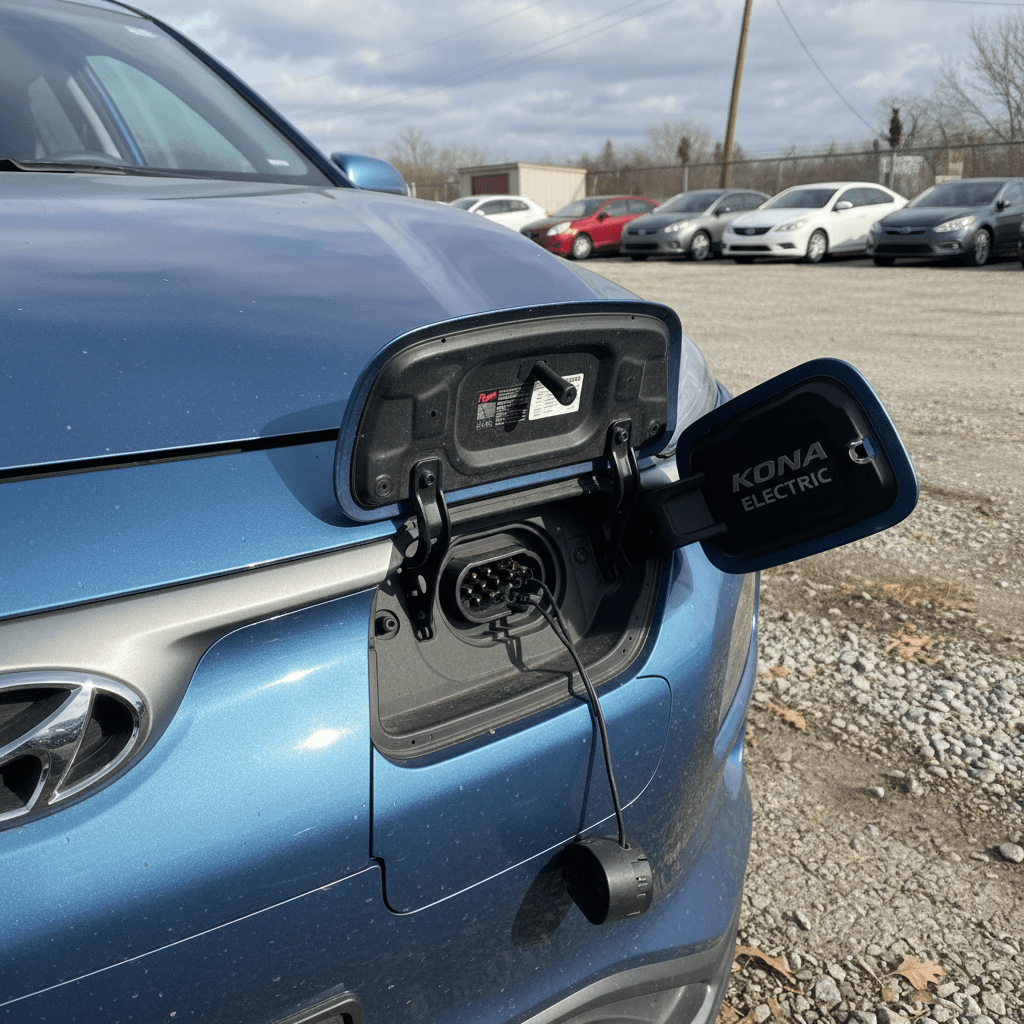
Because 2026 sits in an interesting spot, early cars are now 6–7 years old while the redesigned 2024+ models are just hitting the used market, it helps to break things down by model year. Below are broad, directional ranges you might see in spring 2026 for typical U.S. retail transactions (not fire‑sale auctions or outlier deals):
What different Kona Electric model years look like in 2026
Approximate U.S. retail asking ranges for clean‑title, average‑mileage examples.
2019–2020 Kona Electric
Age: 6–7 years
Mileage: ~60k–90k miles
Typical asking: roughly $13,000–$17,000 depending on trim and region.
These early cars saw the steepest early‑EV price drops, but solid range and efficiency keep them attractive as budget commuter EVs.
2021–2022 Kona Electric
Age: 4–5 years
Mileage: ~45k–75k miles
Typical asking: roughly $16,000–$21,000.
Sweet spot for many used shoppers: modern features, good remaining warranty, and much lower cost than new.
2023–2025 Kona Electric
Age: 1–3 years
Mileage: ~10k–40k miles
Typical asking: roughly $22,000–$30,000 depending on trim and whether it’s the 2024+ redesign.
These overlap directly with lease buyouts and off‑lease vehicles; condition and battery health matter most here.
Why Recharged ranges are tighter than classifieds
Why the Kona Electric holds value better than many EVs
For years, EV shoppers have worried, rightly, about buying a car today that could be “obsolete” tomorrow. The Kona Electric has sidestepped some of the worst of that, and that shows up in its depreciation rate in 2026. A few ingredients explain why:
- Efficient and right‑sized. With real‑world efficiency around the mid‑4 mi/kWh range, the Kona Electric squeezes more miles out of each kilowatt‑hour than many larger crossovers. That keeps running costs low and appeal high as electricity prices fluctuate.
- Solid range for the price. Even early cars deliver usable highway range for most Americans, which separates the Kona from older short‑range EVs that are now relegated to city duty.
- Long factory warranty. Hyundai’s 8–10‑year battery warranty (depending on market) reassures second and even third owners, which props up resale values.
- Conservative pricing new. The Kona Electric was often discounted aggressively when new in states with strong EV incentives. That means a smaller gap between transaction price and used value than some luxury‑branded EVs that were heavily marked up early on.
- Positive long‑term reliability story. While no car is perfect, the Kona Electric has built a reputation as a durable, low‑drama commuter, exactly what many used‑EV buyers want.
Among mainstream EVs, Kona Electric and Tesla Model 3 are two of the small handful that consistently land above the segment average in 5‑year value retention.
Six factors that can hurt your Kona Electric’s value
Even a model with decent fundamentals can turn into a depreciation disappointment if you overlook a few key variables. When we look at real‑world Kona Electric trade‑ins and private‑party sales, these six factors come up again and again:
Common Kona Electric depreciation traps
1. High mileage for its age
An older EV with 90,000 miles can still be a good buy, but if your Kona Electric is running far above the typical 12,000–15,000 miles per year, expect steeper offers from dealers and more negotiation from private buyers.
2. No proof of battery health
Buyers in 2026 are much more educated. A simple dash photo won’t cut it. A documented battery health report, like the <strong>Recharged Score</strong> you get with every car on Recharged, can easily swing value by thousands of dollars.
3. Heavy DC fast‑charging usage
Occasional road‑trip fast charging is fine. But a car that’s lived on DC fast chargers every day may show more battery degradation. Savvy buyers will either walk away or bid accordingly.
4. Accident history & poor repairs
A clean Carfax doesn’t guarantee a perfect car, but multiple accidents, or shoddy repairs you can see from 10 feet away, will crush your buyer pool and your resale price.
5. Neglected tires, brakes, and cosmetics
Used‑car shoppers judge a vehicle in the first 30 seconds. Worn tires, curb‑rashed wheels, a dinged bumper, or a filthy interior all signal “this car wasn’t loved,” and that shows up in the offers.
6. Outdated or missing charging equipment
In 2026, more buyers expect an at‑home Level 2 solution or at least the original portable EVSE. Missing cables, broken charge‑port doors, or hacked‑together adapters are all red flags.
Battery abuse is the new “sludge motor”
Kona Electric vs Chevy Bolt vs Nissan Leaf depreciation
If you’re cross‑shopping used EVs, it helps to see where the Kona Electric slots in against direct competitors. By 2026, the three most common alternatives in the affordable EV hatchback/crossover space are the Chevrolet Bolt EV/EUV and the Nissan Leaf.
How Hyundai Kona Electric depreciation compares to key rivals (5‑year snapshot)
Directional comparison for mainstream EVs as they enter 2026, assuming similar original MSRPs and usage patterns.
| Model | Typical 5‑year depreciation | 5‑year value profile | Key resale strengths | Key resale weaknesses |
|---|---|---|---|---|
| Hyundai Kona Electric | ≈58–60% loss | One of the better value‑holders among non‑Tesla EVs. | Strong efficiency; usable range; long warranty; practical form factor. | Not a household name like Tesla; slower DC fast charging; limited inventory in some regions. |
| Chevrolet Bolt EV/EUV | ≈60–65% loss | Historically steeper drops than Kona, though bargains attract budget buyers. | Very efficient; plentiful supply; attractive pricing on used market. | Battery recall shadow; GM has discontinued it, raising questions with some buyers. |
| Nissan Leaf | ≈65–70% loss | One of the sharpest‑depreciating modern EVs, especially early short‑range cars. | Low entry price; solid around‑town commuter. | Shorter range in older models; air‑cooled battery (early cars) with well‑publicized degradation concerns. |
The Kona Electric tends to sit between the best and worst performers in the affordable EV segment.
In plain English: the Kona Electric is not the absolute depreciation champ, but it’s closer to the top of the EV pack than the bottom. That makes it a compelling middle‑ground choice if you’re nervous about buying an EV that collapses in value the moment you drive it home.
Lease residuals & buyout decisions in 2026
Because EV incentives have often been passed through leases, there are a lot of 2022–2025 Kona Electric models rolling around on attractive lease deals. In 2026, many of those drivers will face a familiar question: Should I buy out my Kona Electric at lease‑end or walk away?
How lease residuals work on the Kona Electric
Hyundai and its lending partners baked in aggressive residual values on some Kona Electric leases when new. That means your buyout price in 2026 could be:
- Higher than what similar cars are selling for retail
- About even with market value, or
- In some lucky cases, lower than current market pricing
Your lease contract spells out the residual in dollars, not percentages, for your specific car.
When buying out your lease makes sense
- Your buyout price is at or below what comparable Konas are advertised for in your area.
- Your car has lower mileage than average and is in excellent condition.
- You know the history and have kept up with maintenance and charging best practices.
- State or federal used‑EV incentives apply when you purchase the car from the leasing company or a dealer.
Simple rule of thumb for 2026 lease buyouts
7 ways to protect your Kona Electric’s resale value
You can’t control the entire market, but you have enormous influence over where your specific Kona Electric lands within the typical price range. Here are seven moves that tend to pay off when it’s time to sell or trade:
Owner checklist: Keeping Kona Electric depreciation in check
1. Keep charging habits battery‑friendly
Favor Level 2 charging at home or work. Use DC fast charging mainly for road trips, avoid repeated 100% fast‑charges in hot weather, and don’t store the car at full charge for long periods if you can avoid it.
2. Document everything
Save service invoices, tire receipts, and any battery health reports. When you sell on a platform like <strong>Recharged</strong>, those documents make it easy for a buyer to see they’re not gambling.
3. Fix small cosmetic issues early
A $300–$500 professional detail and paintless dent repair can return more than its cost at resale time. Headlight restoration, wheel touch‑ups, and a cleaned interior make your car stand out in listings.
4. Stay on top of software updates
Software updates can improve range estimates, charging performance, and driver‑assistance features. Being able to say the car is <strong>up to date</strong> is another trust builder for buyers.
5. Replace cheap wear items before selling
Fresh wiper blades, a new cabin air filter, and healthy tires are small money versus the psychological effect on a shopper comparing your Kona to a similar but neglected one.
6. Time your sale or trade strategically
Selling just before a wave of new incentives or a major model update can help. In 2026, that often means not waiting until the very end of the calendar year when dealers are discounting new inventory aggressively.
7. Consider selling through a curated EV marketplace
A platform like <strong>Recharged</strong> can surface your car to buyers specifically looking for used EVs. The included <strong>Recharged Score battery‑health report</strong> and nationwide reach can help you capture the right price instead of taking a low one‑size‑fits‑all trade number.
Is a used Hyundai Kona Electric a smart buy in 2026?
Viewed purely through the depreciation lens, a used Hyundai Kona Electric in 2026 can be a very rational play. Early adopters ate the steepest part of the curve back in 2020–2022. As a 2026 shopper, you’re stepping in once prices have come down to a level that reflects the market’s real demand for a practical, efficient EV.
Why buying used helps you “beat” depreciation
- A 3–5‑year‑old Kona Electric has already taken most of its value hit.
- You pay much less up front, but still enjoy many years of remaining battery warranty.
- Compared with a new gas crossover, total 5‑year cost of ownership can be very competitive once you factor in fuel savings.
You’re essentially letting the first owner subsidize a big chunk of the car’s original price.
When you should be cautious
- The seller can’t provide any credible battery‑health documentation.
- The car shows heavy fast‑charging use and above‑average mileage.
- You live in a region with sparse public charging and no home charging.
- You’re comparing it to a similarly priced used hybrid with a stellar depreciation record.
In those situations, the Kona Electric can still be a solid choice, but you’ll want to negotiate price and terms more carefully.
How Recharged fits in
Ready to find your next EV?
Browse VehiclesFrequently asked questions about Kona Electric depreciation in 2026
Kona Electric depreciation & resale: FAQ
Key takeaways for 2026 Kona Electric buyers and owners
Depreciation is the price of admission for any new vehicle, and EVs have worn that scarlet letter more than most. In 2026, the Hyundai Kona Electric depreciation rate tells a mixed but ultimately encouraging story: it is not immune to the aggressive price swings of the EV market, but it has proven more resilient than many peers thanks to its efficiency, usable range, and long battery warranty.
If you already own a Kona Electric, you can tilt the odds further in your favor through smart charging habits, meticulous documentation, and careful timing of a sale or lease buyout. If you’re shopping used, you’re in a sweet spot: earlier owners absorbed most of the hit, leaving you with a practical EV at a more grounded price, especially if you buy through a marketplace like Recharged that backs each vehicle with a Recharged Score battery‑health report and fair‑market pricing analysis.
However you choose to enter or exit Kona Electric ownership in 2026, treat depreciation as a tool, not a threat. Understand the curve, verify battery health, and you’ll be far better positioned to make an electric move that pencils out not just emotionally, but financially.