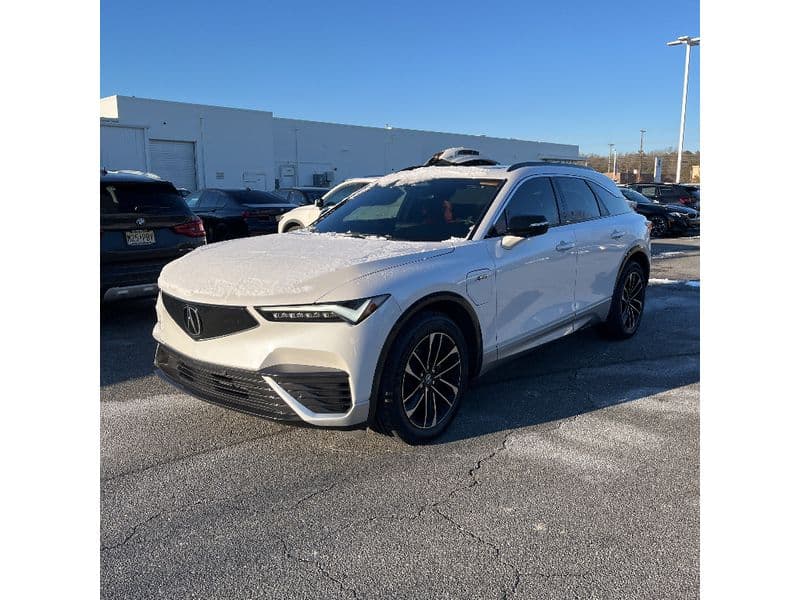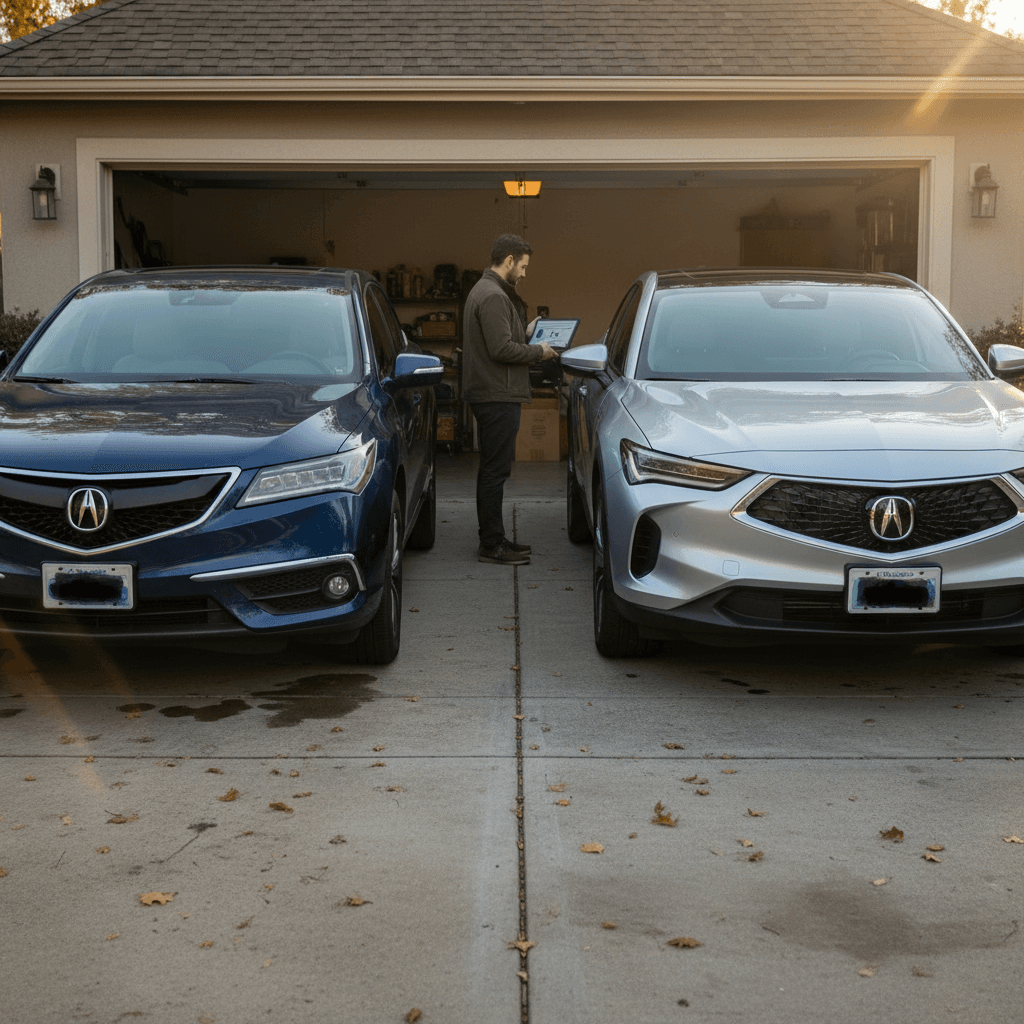
You know the Acura RDX: a quick, well-dressed compact crossover that’s also, if we’re honest, prone to the odd cabin rattle and a slightly thirsty turbo. The new Acura ZDX is something else entirely: all‑electric, Ultium‑based, heavier, quieter, and pitched as the future of the brand. If you’re an Acura RDX owner looking to switch to an Acura ZDX, this review is written squarely for you.
Context: the RDX you’re coming from
Acura RDX vs Acura ZDX at a glance
Key numbers RDX owners care about
Acura RDX vs Acura ZDX: spec snapshot
A high‑level look at how a typical recent‑gen RDX compares with the new all‑electric ZDX for everyday use.
| Spec | Recent Acura RDX (gas) | Acura ZDX A‑Spec (EV) | Acura ZDX Type S (EV) |
|---|---|---|---|
| Power | 272 hp turbo 4‑cyl | ~340 hp single‑motor RWD | Up to ~500 hp dual‑motor AWD |
| 0–60 mph | ~6.5 sec | ~5.5–6.0 sec (est.) | As quick as low‑4‑second range |
| Drivetrain | FWD or SH‑AWD | RWD | AWD |
| Fuel / Energy | Gasoline, 17–19 gal tank | 102 kWh battery (usable slightly lower) | Same 102 kWh pack |
| Rated range | N/A (depends on driving) | Low 300s miles (single‑motor est.) | Around 270–280 miles |
| Refuel / Charge | 5 min gas station | ~10–11 hrs on 11.5 kW Level 2 (0–100%) | 190 kW peak DC fast charge, 10–80% in ~35–40 min |
| Towing | Up to 1,500–1,500+ lbs (varies by year) | Up to 3,500 lbs | Up to 3,500 lbs |
Numbers are representative, not exhaustive. Exact specs vary by model year and trim.
One big shift: weight and size
Driving feel: how the ZDX changes your daily commute
What you’re used to in the RDX
- Light, eager nose thanks to a compact turbo four up front.
- A willingness to change direction quickly; the RDX has always traded a bit of ride isolation for agility.
- Traditional gear changes and engine noise that rise and fall with your right foot.
- SH‑AWD that can feel playful in bad weather and on ramps.
What the ZDX feels like instead
- Immediate torque and no gear changes. Mash the pedal and it simply goes, especially the Type S.
- A noticeably heavier, more planted feel. Turn‑in is lazier than a light RDX, but mid‑corner stability is excellent.
- Very little powertrain noise; instead you notice tire roar and wind first.
- Ultium‑based AWD that prioritizes traction and smoothness over playfulness.
If the RDX is a lively compact doing its best sports‑sedan impression, the Acura ZDX is the quiet bruiser. Even the single‑motor A‑Spec has ample shove for American speeds. Step into the Type S and it’s borderline comical: near‑instant, shove‑you‑into‑the‑seat acceleration in an SUV that still wears a sensible Acura badge.
Test‑drive tip for RDX owners
The trade‑off is physics. The ZDX’s big Ultium pack and hardware mean you’re hauling around far more mass than in your RDX. You feel it in quick lane changes and tight back roads. Acura’s tuning keeps the ZDX polished, ride quality is composed and premium, but if you love the RDX precisely because it feels small and tossable, the ZDX will read as a calmer, heavier instrument.
Comfort, noise, and space: from RDX cabin rattles to EV quiet
Where ZDX improves on typical RDX pain points
Especially for 2019–2023 RDX owners who have lived with cabin noise and minor rattles.
Cabin quiet
Ride quality
Space and seating
One interesting quirk: because EVs are so quiet, any remaining squeaks and plastics that move against each other are more noticeable. Acura has improved materials and structure versus the RDX, but if you’re especially sensitive to NVH, insist on an extended test drive over your worst local pavement.
Watch the wheels you choose
Range, charging, and road trips when you’re used to a gas tank
Here is where the Acura RDX owner’s switch to Acura ZDX stops being an ordinary model change and becomes a lifestyle update. Instead of a 5‑minute fill‑up every 300 miles, your default behavior becomes topping up at home while you sleep and using fast chargers for longer trips.
Living with range: RDX gas tank vs ZDX battery
How daily driving and road trips change when you trade a fuel door for a charge port.
| Scenario | RDX (gas) experience | ZDX A‑Spec (EV) experience | ZDX Type S (EV) experience |
|---|---|---|---|
| Daily commute, 30–50 miles | Fill once every 1–2 weeks | Plug in every 2–3 nights at Level 2; you rarely think about range | Similar to A‑Spec, but you’ll notice range drop faster in cold weather and at higher speeds |
| Weekend errands | Random short hops, low stress, gas stations are everywhere | You treat your driveway as your gas station; battery barely dips if you start from 80–90% | Same behavior, but efficiency can be a bit lower on the performance tune |
| Cross‑country road trip | Plan by gas stations, no real planning needed | Use apps to map DC fast chargers; expect 30–40‑minute stops every 2–3 hours of highway driving | Same stop pattern, slightly shorter legs if you drive fast or load the car heavily |
Assumes typical mixed driving and healthy tires. Your range will vary with speed, temperature, hills and load.
Charging realities for new ZDX owners
1. Install (or access) Level 2 charging
If you own a home, budget for a 240V Level 2 charger and professional installation. If you rent, confirm you’ll have dependable overnight charging where you live or work, this is the single biggest determinant of EV happiness.
2. Learn the DC fast‑charging curve
The ZDX can fast charge at up to around 190 kW when the battery is low and warm. Above ~60–70% state of charge, speed tapers. On road trips it’s faster to charge <strong>from 10% to ~65%</strong> repeatedly than to sit from 65% to 100%.
3. Get comfortable with multiple networks
Unlike your RDX, where every gas station works, you’ll juggle Electrify America, EVgo, regional networks and increasingly Tesla Superchargers via an adapter. Set up accounts and apps before your first long trip, not on the shoulder in a rainstorm.
4. Expect winter range loss
Cold weather affects EVs more than gas cars. In winter you could see 20–30% less range than the brochure number, especially on short trips. Pre‑conditioning the battery and cabin while plugged in helps a lot.
5. Recalibrate your trip planning
In the RDX, you can ignore the fuel gauge until the low warning light. In the ZDX you’ll think in terms of <strong>charging hubs</strong> every 120–180 miles on a long drive, depending on your comfort level.
Home charging vs public charging
Costs and value: fuel, service, and resale
The monthly‑payment line on the ZDX will likely be steeper than your RDX, but the operating costs move in your favor. Electricity is typically cheaper per mile than premium gas, and EVs generally need less routine maintenance.
Where you save, and where you don’t
Moving from Acura RDX to Acura ZDX through a total‑cost‑of‑ownership lens.
Fuel vs electricity
Maintenance
Depreciation and resale
Insurance can surprise you
If you’re stepping into a used ZDX a year or two from now, this math gets more interesting. A gently‑used ZDX that’s already taken its first depreciation hit can cost similar money to a new RDX while delivering far lower fuel and maintenance costs, provided the battery is healthy and you buy carefully.
Ownership experience: tech, UX, and learning curve
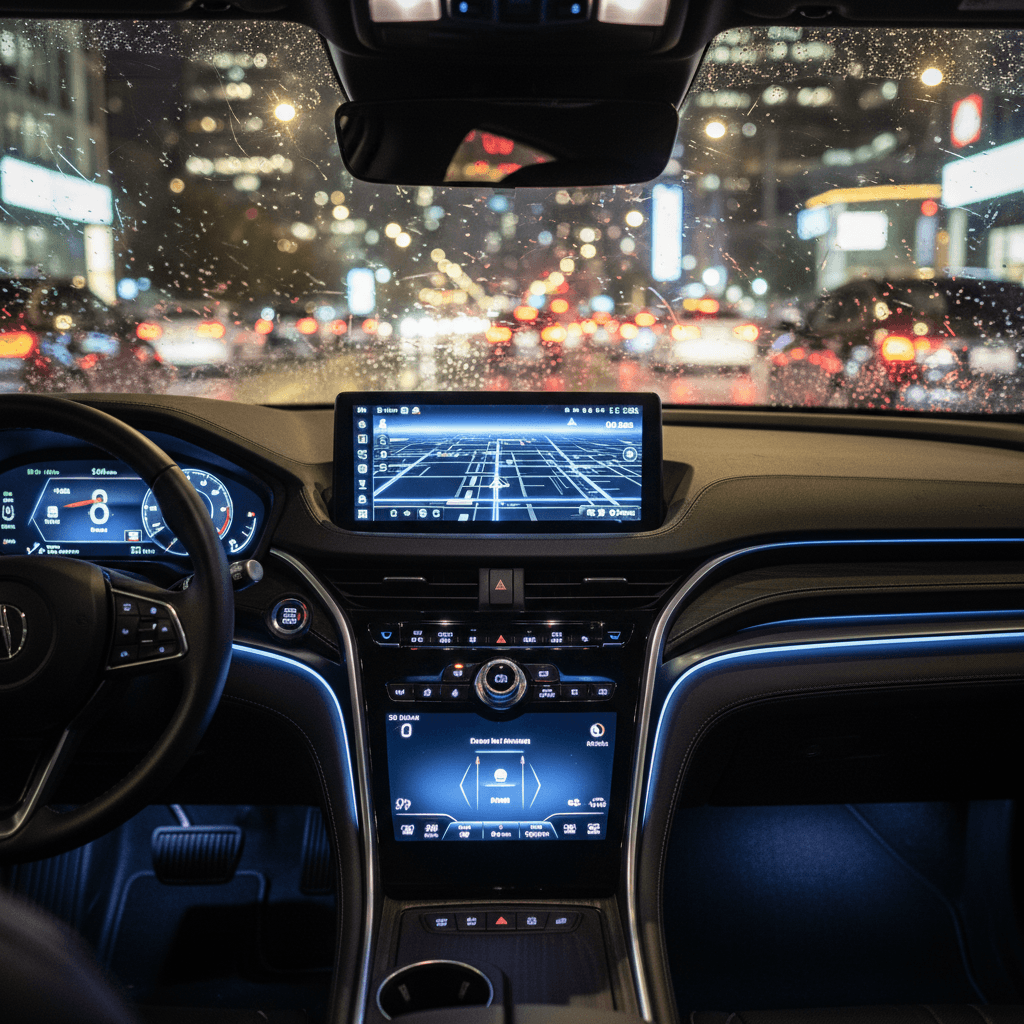
The ZDX’s cabin is where you’ll feel Acura trying to live in two centuries at once. On the one hand: big modern screens, EV‑specific info, a cleaner shifter solution. On the other: familiar Acura steering‑wheel logic, a recognizable cluster, and an overall layout that won’t make an RDX owner feel like they’ve sat down in a spaceship.
- Google‑built‑in style infotainment and wireless smartphone integration replace the RDX’s touchpad‑heavy interface, good riddance if you’ve ever fought the cursor.
- EV‑specific readouts like real‑time energy usage, range prediction and charging controls become part of your daily vocabulary.
- Over‑the‑air updates can tweak behavior and add features, something your RDX could never really do.
Spend an hour with the apps before delivery
The biggest UX difference is that planning and energy awareness are baked into the experience. Instead of passively watching a fuel gauge, you’ll think in percentages, charging windows and arrival‑with‑buffer. RDX owners who enjoy gadgets and data usually love this. Drivers who just want to turn the key and forget the car entirely may find it fussy at first.
Is the Acura ZDX a good upgrade for RDX owners?
Who should, and shouldn’t, switch from RDX to ZDX
Not every RDX owner is a natural EV convert.
Great fit if…
- You can install or reliably access Level 2 home or workplace charging.
- You value quiet, instant torque, and tech more than pure flickable handling.
- Your driving is mostly commuting and regional trips under 250 miles.
- You’re ready for a bit of planning on big road trips in exchange for lower running costs.
Think twice if…
- You street‑park or can’t count on overnight charging.
- Your favorite thing about the RDX is its small‑SUV agility and light feel.
- You routinely tow near the 3,500‑lb limit across mountains.
- You live in an area with sparse public fast‑charging today.
Viewed through an owner’s lens, the Acura ZDX isn’t simply “RDX, but electric.” It’s a calmer, heavier, more refined thing, quieter, quicker in a straight line, and vastly more efficient, but also more demanding when it comes to charging access and trip planning. For the right RDX owner, it feels like graduating from a fun compact to a proper luxury EV, without abandoning the Acura design language you already like.
How Recharged can help RDX owners move into a used EV
If you love the idea of an electric Acura but worry about first‑generation pricing or long‑term battery life, a well‑vetted used EV SUV can be an intelligent middle step between your RDX and a brand‑new ZDX.
Making the jump from RDX to a used EV easier
What Recharged brings to the table when you’re ready to experiment with electric.
Battery health transparency
Trade‑in & instant offers
Expert EV guidance & delivery
Try the EV life before you commit to a new ZDX
Ready to find your next EV?
Browse Vehicles