If you’re trying to time a Hyundai Kona Electric purchase or sale, 2026 is shaping up to be a pivotal year. The refreshed Kona Electric is still one of the most space‑efficient small EVs on the market, used prices have dropped sharply from early‑EV highs, and a wave of new budget EVs is arriving to put additional pressure on pricing. In this guide, we’ll walk through a realistic Hyundai Kona Electric price forecast for 2026 so you know what’s a fair deal and what to avoid.
How to read this forecast
Why Kona Electric pricing in 2026 matters
The Hyundai Kona Electric sits in a sweet spot: it’s a subcompact SUV with real‑world range competitive with larger EVs, and its early model years have already done most of their depreciation. That makes it a prime candidate if you’re looking for a value EV in 2026, or trying to decide whether to keep or sell yours before the next big wave of models arrives.
Where the Kona Electric fits in 2026
Small footprint, grown‑up EV capability
Efficient commuter
The Kona Electric delivers 200+ miles of usable range even in earlier model years, which is more than enough for most daily driving and regional trips.
Depreciation already done
2019–2022 examples have absorbed the steepest depreciation, so 2026 buyers can step into a well‑equipped EV at compact-gas money in many markets.
Warranty advantage
Hyundai’s long battery and powertrain warranties mean many 2020+ Kona Electrics will still have warranty coverage in 2026, which props up values versus rivals.
Don’t assume all EV prices move together
Where Hyundai Kona Electric prices are today
To understand a meaningful 2026 Kona Electric price forecast, you have to anchor it in where pricing sits in 2024–2025.
Kona Electric pricing snapshot (early 2025)
Hyundai lowered Kona Electric MSRPs for the current generation compared with early U.S. cars, and aggressive factory incentives plus dealer discounts have been common. On the used side, a mix of off‑lease vehicles and ex‑fleet units has pushed prices down faster than many owners expected, especially once the refreshed 2024 model arrived and made pre‑refresh cars look dated overnight.
Use today’s prices as a ceiling, not a floor
2026 Hyundai Kona Electric new MSRP outlook
Hyundai has already signaled that for the U.S. it plans to simplify the Kona Electric lineup by 2026, effectively centering the range around a value‑oriented SE‑grade model rather than a full spread of trims. At the same time, the 2026 model year will see direct competition from new budget‑minded EVs like the next‑generation Nissan Leaf crossover and smaller Hyundai Group models positioned under the Ioniq 5.
2026 Hyundai Kona Electric new‑car price forecast (U.S.)
Illustrative forecast for U.S. MSRP and real‑world transaction pricing, assuming no major policy shock.
| Trim / configuration | 2025 MSRP (est.) | 2026 MSRP forecast | Likely 2026 transaction price | What this means for you |
|---|---|---|---|---|
| SE / base battery | $34,000 | $33,000–$34,000 | $29,000–$32,000 after incentives & discounts | Base Kona Electric likely stays in the low‑$30Ks MSRP but often transacts under $32K with discounts. |
| SE / long‑range (if offered) | $36,000–$37,000 | $35,000–$36,000 | $31,000–$34,000 | Long‑range versions should remain several thousand below compact EVs like Ioniq 5 or Model Y. |
| Feature‑rich trims (if retained) | $39,000–$41,000 | $38,000–$40,000 | $34,000–$37,000 | If Hyundai keeps upper trims, expect them to be niche and heavily incentivized in competitive markets. |
All numbers are forward‑looking estimates based on current pricing, competitive announcements, and typical automaker behavior.
The bigger story for 2026 buyers isn’t list price, it’s effective price after incentives. Federal tax‑credit rules have become more complex and supply‑chain‑dependent, so rather than counting on a $7,500 tax refund yourself, you’re more likely to see that value show up as subvented leases or factory rebates that lower the monthly payment on a new Kona Electric. That support helps hold up used values by putting a soft floor under what new cars can realistically transact for.
Used Hyundai Kona Electric price forecast for 2026
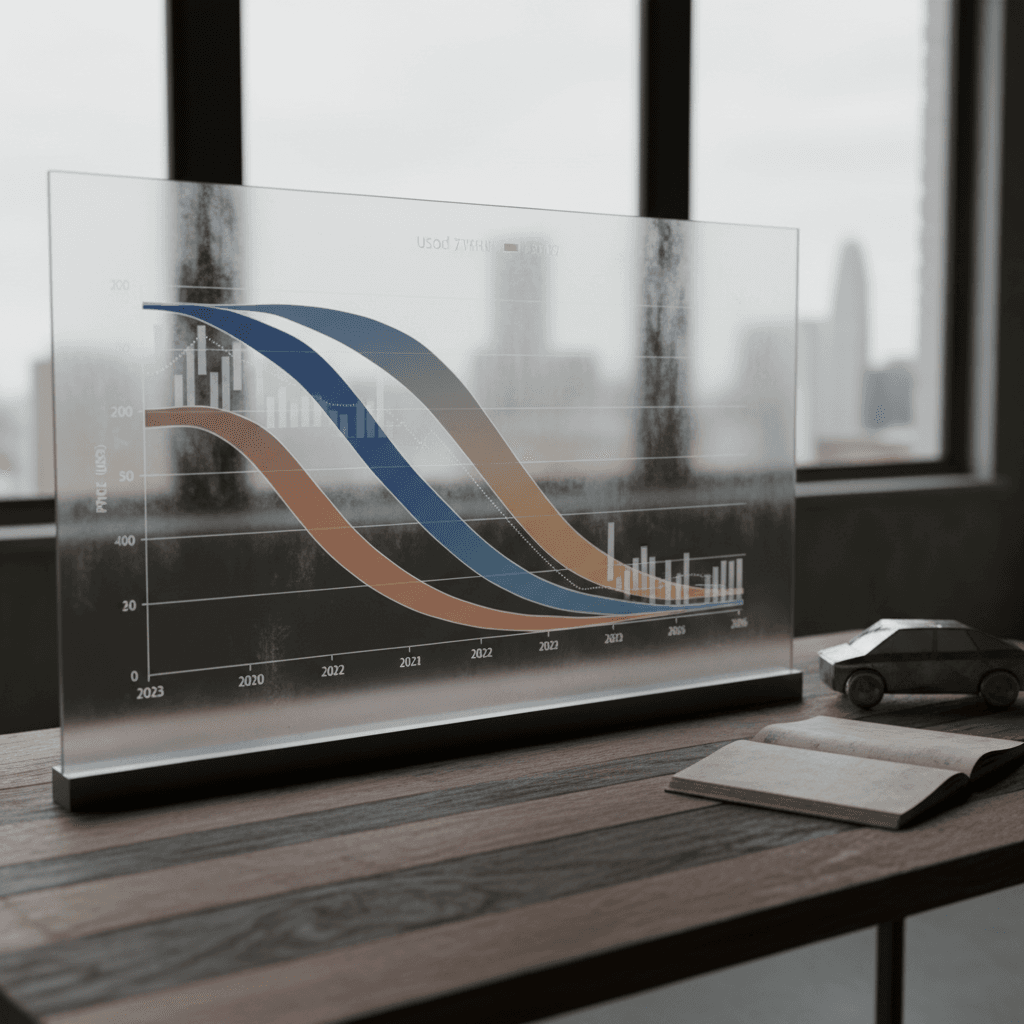
For most shoppers reading a Hyundai Kona Electric price forecast for 2026, the real opportunity is on the used side. Earlier model years will be out of basic bumper‑to‑bumper warranty by then but still comfortably inside their battery and powertrain coverage, and they’ll be priced against cheap gas crossovers, not Tesla Model Ys.
Forecast: Used Hyundai Kona Electric price bands in 2026 (U.S.)
Estimated retail asking‑price ranges in late 2026 for average‑mile, clean‑condition Kona Electrics at franchised or reputable independent dealers.
| Model years | Typical mileage in 2026 | Expected 2026 asking range | Who this tier fits best |
|---|---|---|---|
| 2024–2025 (1–2 years old) | 10,000–35,000 miles | $24,000–$30,000 | Shoppers who want the latest styling and tech, and are willing to pay for remaining bumper‑to‑bumper warranty. |
| 2022–2023 (3–4 years old) | 25,000–55,000 miles | $19,000–$24,000 | Value hunters who still want a modern‑feeling cabin, decent DC fast‑charging, and plenty of warranty runway. |
| 2020–2021 (5–6 years old) | 40,000–80,000 miles | $15,000–$20,000 | Budget‑conscious buyers prioritizing total cost of ownership over the latest driver‑assist toys. |
| 2019 (7+ years old) | 60,000–100,000+ miles | $12,000–$17,000 | Higher‑risk, higher‑reward play: prioritize a clean history and strong battery health report over saving the last thousand dollars. |
Actual pricing will vary by region, mileage, equipment, and battery health; think of these as realistic shopping brackets, not promises.
Where the sweet spot likely lands
Key forces that will shape Kona Electric prices
1. New budget EV competition
By 2026, the Kona Electric won’t be the only small, relatively affordable EV crossover. A new Leaf‑branded crossover, sub‑Ioniq models from Hyundai and Kia, and Chinese‑sourced budget EVs (depending on trade policy) will all chase the same buyer. That competition tends to pull down used prices on older models to maintain a clear value gap.
2. Policy and incentives volatility
Federal and state incentives for new EVs have shifted from simple tax credits to more complex rules about battery sourcing and point‑of‑sale rebates. If 2026 brings richer support for new EVs, used prices may face more pressure; if support tightens, used EVs like the Kona Electric become relatively more attractive, helping to stabilize values.
3. Used‑EV supply boom
A wave of 2022–2024 EVs is already rolling off lease and coming out of fleet service. Industry data shows used EV sales growing faster than the overall used market, but inventory is growing too. For the Kona Electric, that likely means plenty of choice and strong buyer leverage by 2026, great if you’re shopping, more challenging if you’re selling.
4. Gas prices and charging build‑out
When gas prices spike and public charging gets easier, demand for used EVs jumps. When gas is cheap and charging horror stories dominate the news, shoppers retreat. Expect some short‑term swings, but over a multi‑year view the trend is toward better charging access and more EV‑curious used‑car buyers, both of which are mildly supportive of Kona Electric values.
Depreciation: EVs are normalizing
How battery health will impact what you should pay
On a used Kona Electric, the single biggest swing factor in what you *should* pay isn’t the trim name, it’s the actual state of its high‑voltage battery. A car that’s been fast‑charged hard in hot climates and lives at 100% state of charge is a very different proposition from one that’s lived an easy suburban life on Level 2 charging, even if the odometers match.
Price with your eyes open, not just off the odometer
Battery data turns a guess into a decision
Capacity loss matters
A Kona Electric that’s lost 10% of its usable capacity still works fine; one that’s lost 25% might change your road‑trip calculus. In 2026, expect buyers and lenders to put real dollar value on that difference.
Range vs. use case
If your daily driving is 30 miles round‑trip, a car that’s down from 258 to 220 miles of range is still more than you need, but it should be priced accordingly.
Transparent reports win
Independent diagnostics like the Recharged Score battery health report will increasingly separate the best used Konas from the pack, justifying higher prices for cars with verified strong packs.
Leverage third‑party diagnostics
Forecast scenarios for buyers and sellers
Nobody can tell you today what a specific VIN will be worth on October 1, 2026. What we can do is bracket realistic scenarios based on how aggressive new‑EV pricing gets and how quickly used‑EV demand deepens. Here’s how that could play out for the Kona Electric.
2026 scenario planning: What if things break your way, or don’t?
If new‑EV prices fall further than expected
New budget EVs undercut Kona Electric with MSRPs in the high‑$20Ks and rich incentives.
Kona Electric leases get cheaper, and some buyers shift from used to new.
Used 2019–2021 Konas slip toward the lower end of our bands (e.g., $12,000–$15,000).
2022–2023 cars cluster more tightly around $18,000–$21,000 instead of mid‑$20Ks.
Sellers need spotless condition and strong battery reports to command top‑of‑market pricing.
If new‑EV pricing stabilizes or rises
Supply‑chain costs or weaker incentives keep new‑EV prices in the low‑ to mid‑$30Ks.
Used‑EV demand rises as shoppers look for relief below new‑car price points.
2019–2021 cars hold closer to $15,000–$18,000 with good equipment.
2022–2023 examples commonly transact in the $20,000–$24,000 range.
Clean‑title, one‑owner Konas with full records and strong batteries earn meaningful price premiums.
The upside and downside risk
How to get a fair price on a Kona Electric in 2026
Playbook for 2026 Kona Electric buyers and sellers
1. Start with data, not vibes
Before you engage a seller or list your car, look up recent transaction ranges for the same model year, trim, and rough mileage. Tools like Recharged’s pricing benchmarks roll in auction data, retail listings, and battery‑health adjustments.
2. Normalize battery‑health discussions
Ask explicitly for battery‑health documentation, or be prepared to provide it. A Recharged Score Report or equivalent lets both sides price the car off objective capacity data rather than hand‑waving about “seems fine.”
3. Adjust for equipment and history
Two 2021 Kona Electrics can differ by several thousand dollars based on accident history, winter‑tire wear, DC‑fast‑charge use, and option content. Pull full history reports and photos, then widen or narrow your price expectations accordingly.
4. Factor in remaining warranty
A 2023 Kona Electric with several years of battery and powertrain warranty remaining is simply worth more, both emotionally and to lenders, than a car that’s about to age out. Don’t ignore that in your target price range.
5. Watch local inventory and incentives
In 2026, regional inventory and local incentives will still move prices more than national headlines. A glut of ex‑rental Konas in one metro can chop a couple thousand dollars off asking prices compared with tighter markets.
6. Consider marketplace support
Buying and selling through an EV‑specialist platform like Recharged streamlines more than pricing. You get expert guidance, financing options, trade‑in support, and nationwide delivery, which all matter more as the used‑EV market matures.
How Recharged can help in 2026
Ready to find your next EV?
Browse VehiclesFAQ: Hyundai Kona Electric price forecast 2026
Frequently asked questions about Kona Electric pricing in 2026
Bottom line: Should you buy or sell a Kona Electric in 2026?
By 2026, the Hyundai Kona Electric will have transitioned from “early‑adopter EV” to something more like a known quantity: a compact, efficient electric crossover with transparent real‑world range and a deep track record. That maturity is good news for you, whether you’re buying or selling. Pricing should be more rational, battery‑health data more accessible, and choices more abundant.
If you’re shopping used, focus on 2022–2023 cars in the high‑teens to low‑$20Ks with clean histories and strong battery reports, and treat 2019–2021 cars in the low‑ to mid‑teens as budget commuters that live or die on condition. If you’re selling, invest in documentation and battery testing to keep your car at the top of its price band rather than racing to the bottom.
And if navigating all of that feels like a full‑time job, that’s where Recharged comes in. From Recharged Score battery diagnostics to fair‑market pricing, financing, trade‑ins, instant offers or consignment, and nationwide delivery, Recharged is built to make buying or selling a used Kona Electric in 2026 simpler, more transparent, and more confidence‑inspiring than the old‑school dealer shuffle.