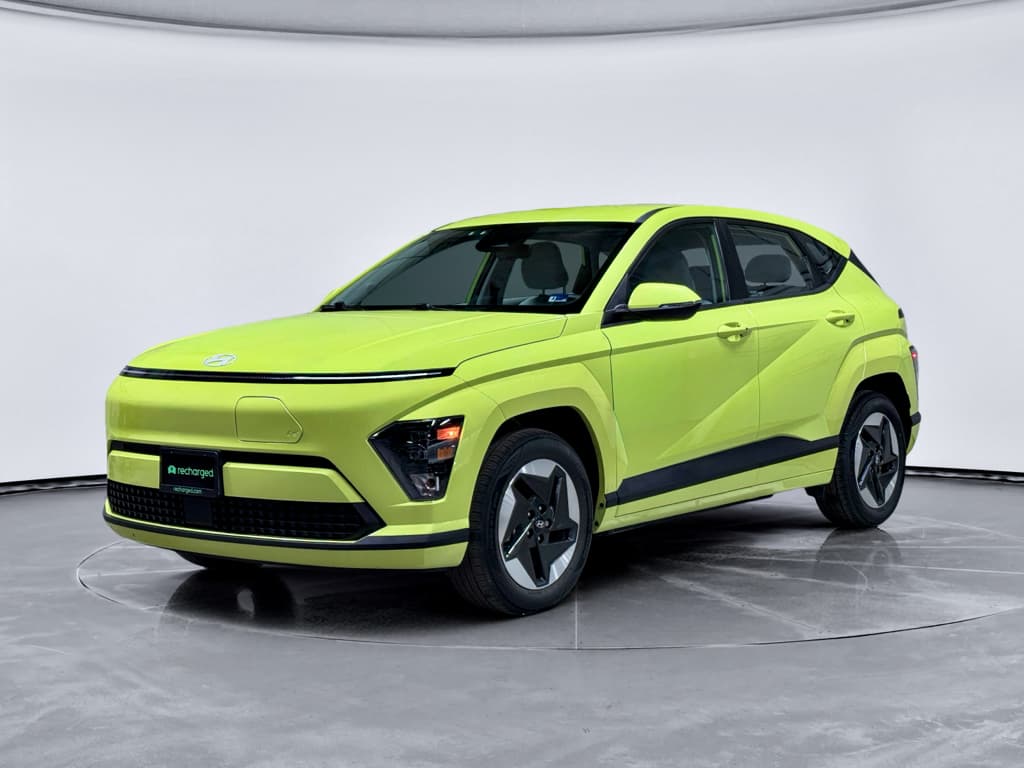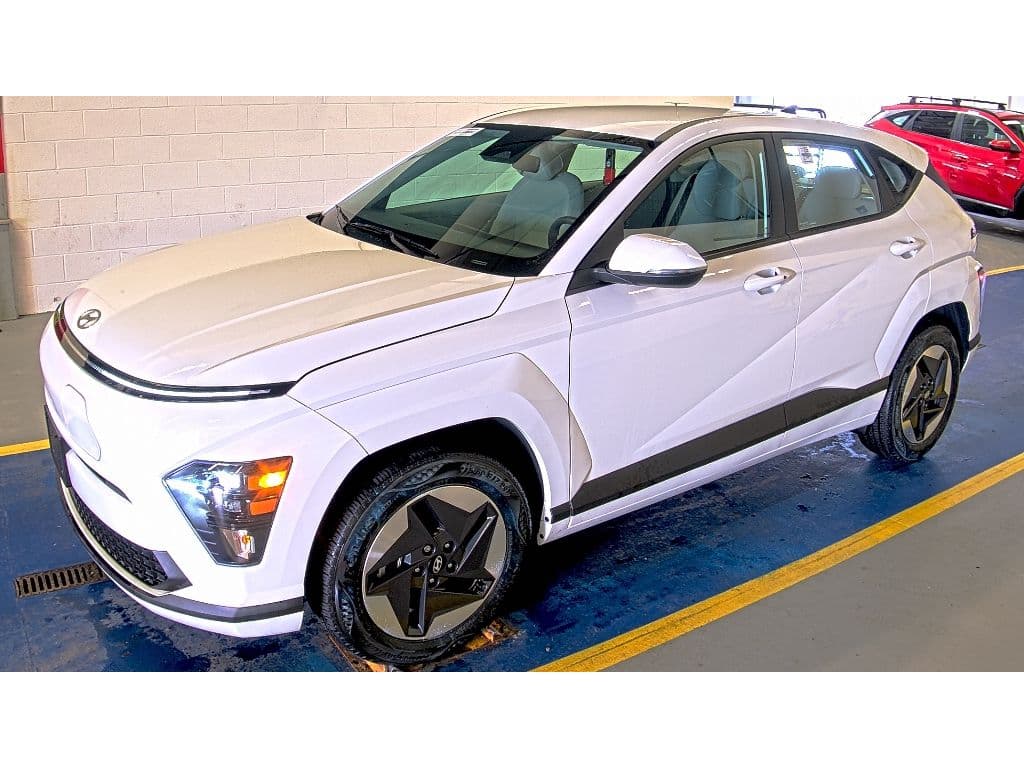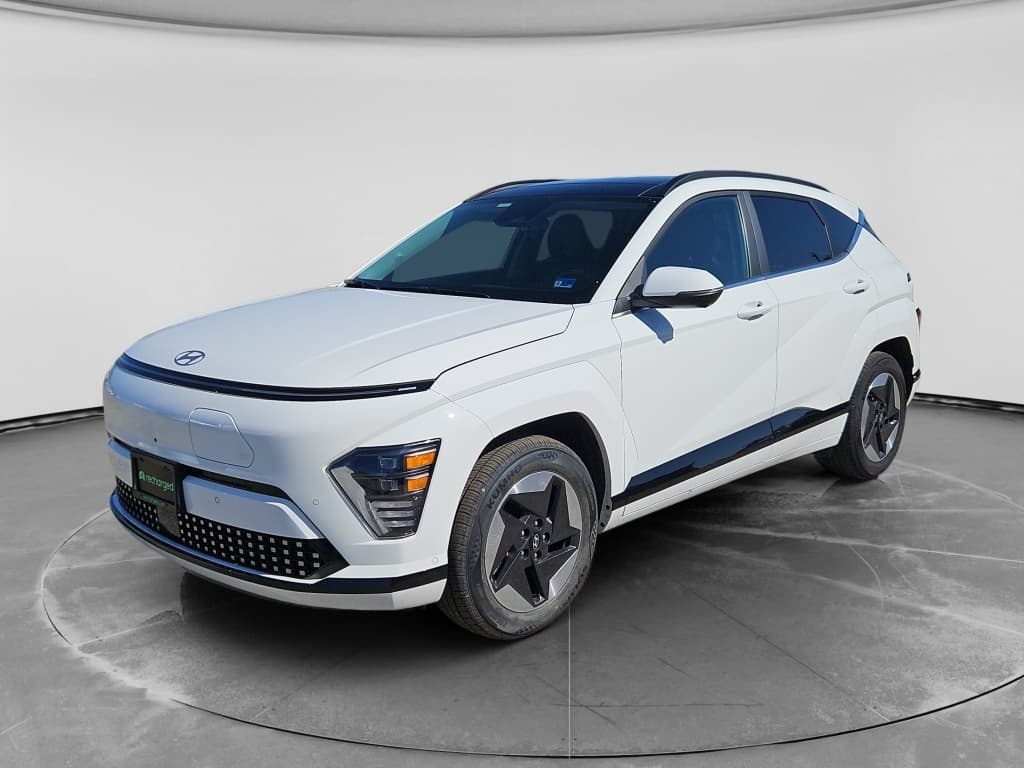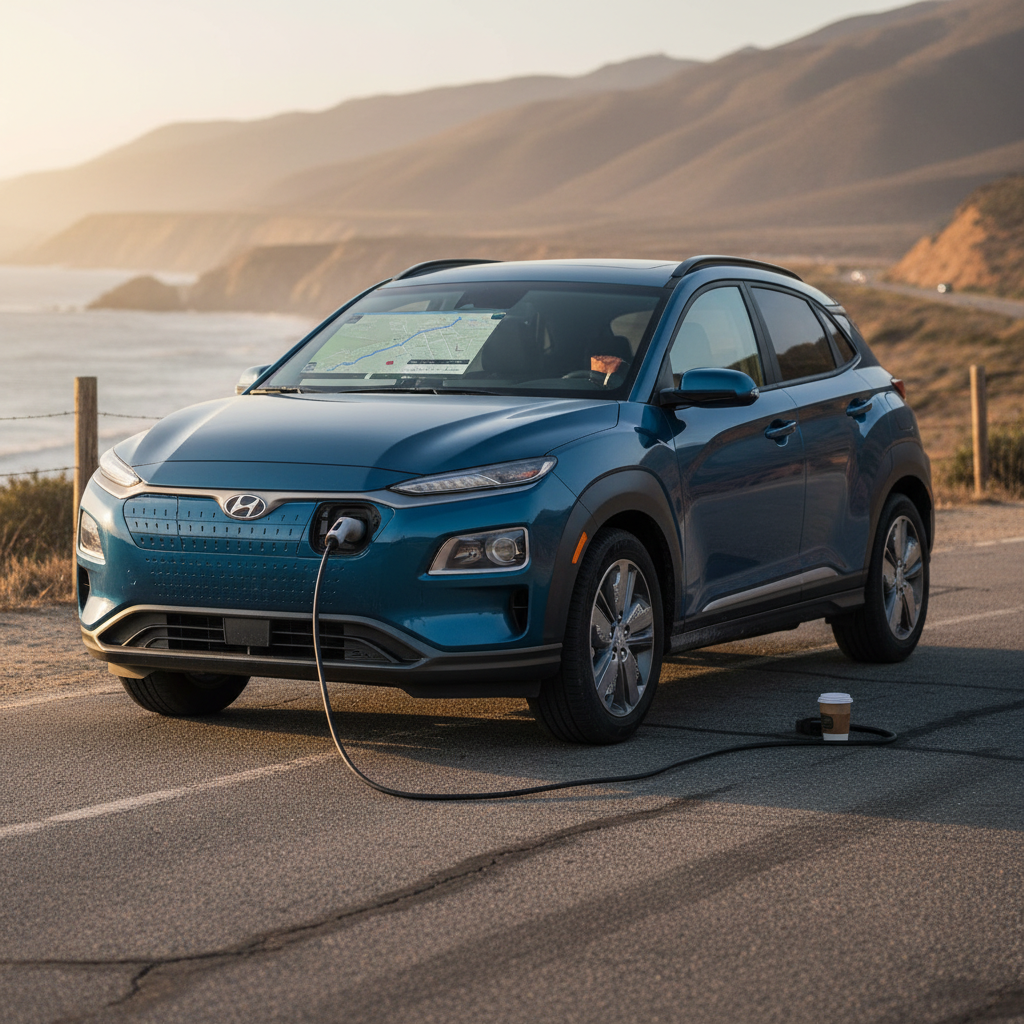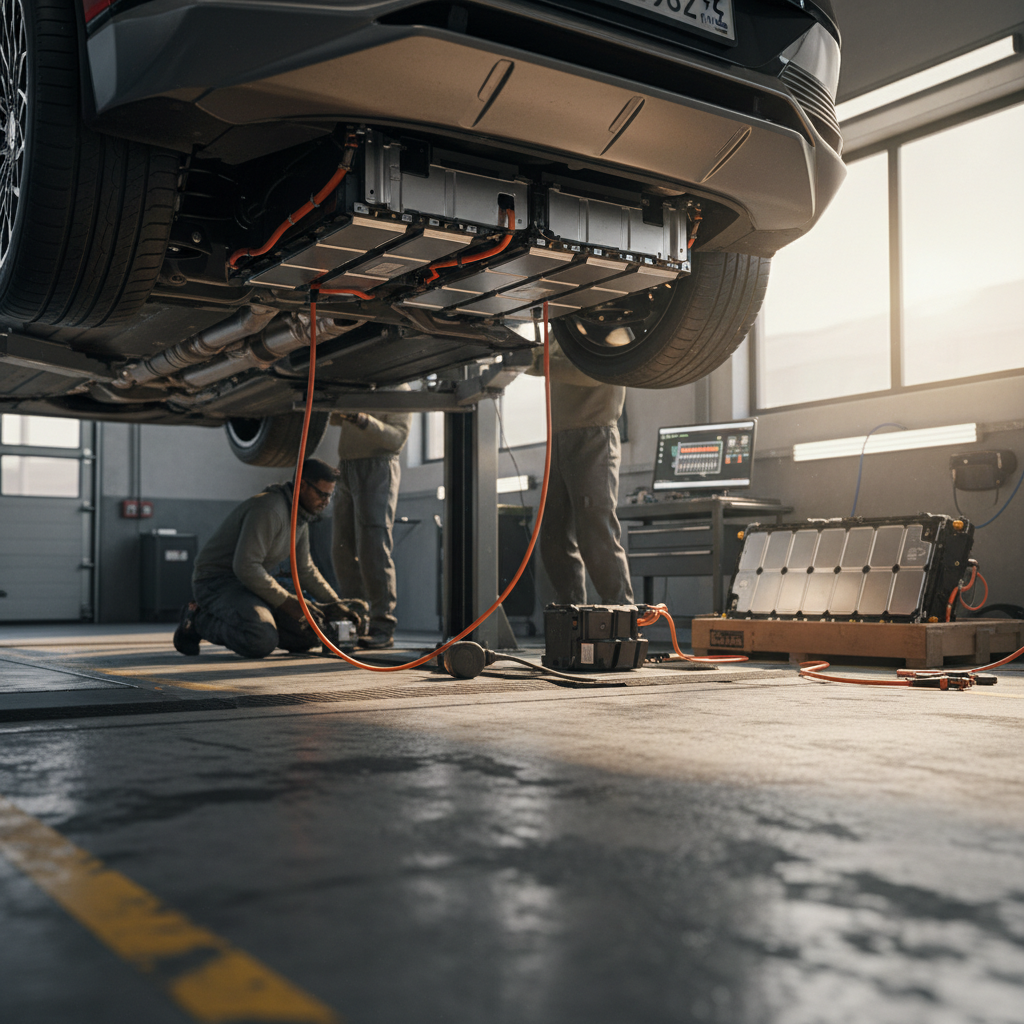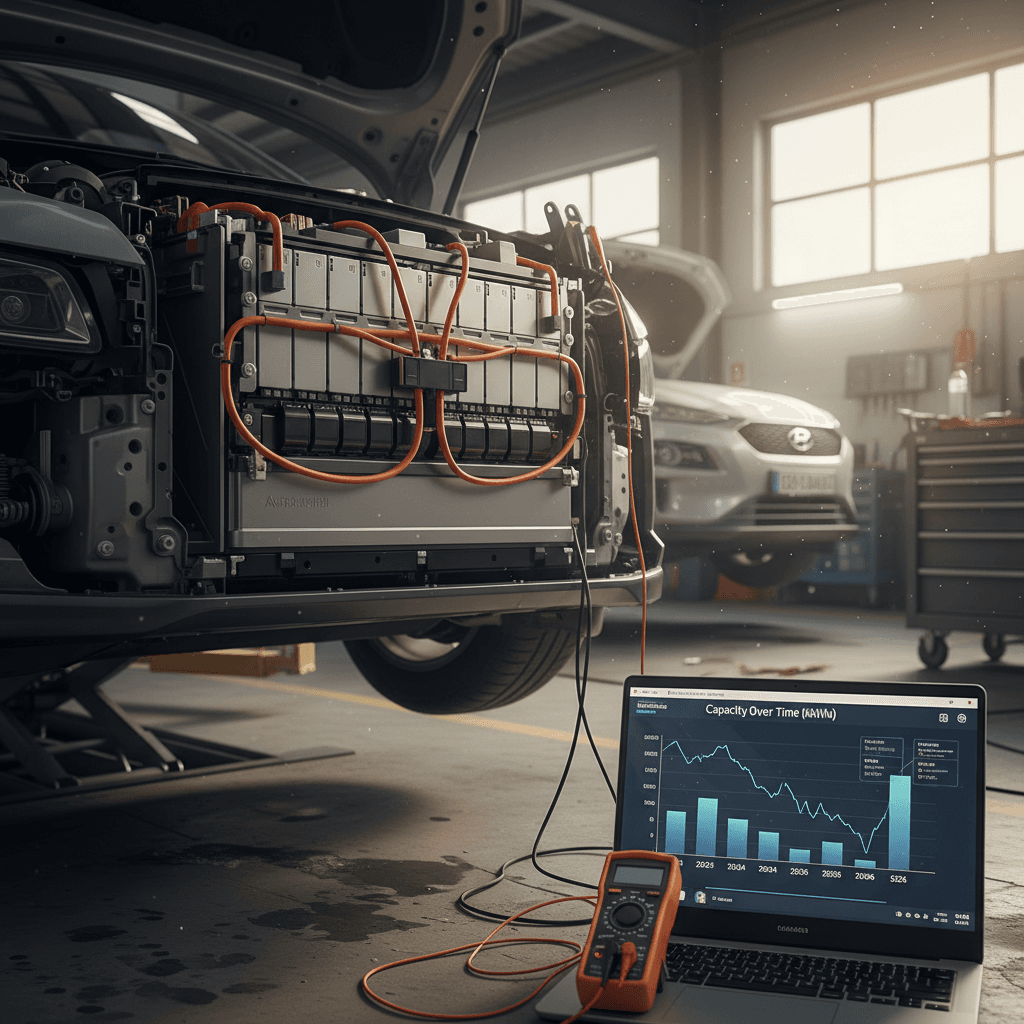
If you’re shopping for a Hyundai Kona Electric, or already own one, the big question is: how much does the battery degrade per year? You’ll see scary takes online about dying packs, but real‑world data paints a calmer picture. The Kona’s pack is proving to be one of the more robust batteries on the road, especially compared with early EVs.
Key takeaway
Hyundai Kona Electric battery degradation per year: overview
Kona Electric battery life at a glance
Across big telematics datasets, modern EVs are losing around 2.3% of capacity per year on average, with somewhat faster loss if they’re hammered on DC fast charging and kept full or empty all the time. The Kona Electric’s liquid‑cooled NMC pack and conservative battery management tend to keep it on the healthier side of those numbers.
In simple terms, if you treat the car normally, charge mostly at home, use fast charging when you need it, avoid leaving it full or empty for days, your Hyundai Kona Electric battery degradation per year will likely land closer to 1% than 3%. That’s why there are high‑mileage Konas out there still showing 90%+ state of health after four or more years and six‑figure odometer readings.
How much range will you actually lose per year?
The number that matters to you isn’t “state of health” in an app, it’s how much usable driving range you’ll have left after a few years. Let’s translate the abstract percentages into Kona‑specific miles.
Typical Hyundai Kona Electric range loss over time
These are ballpark examples for the 64 kWh pack using typical real‑world degradation scenarios. Your results will vary with climate, driving style, and charging habits.
| Years in service | Approx. annual degradation | Remaining capacity | Est. real‑world range* |
|---|---|---|---|
| New | 0% | 100% | ~250 mi |
| 3 years | 1%/yr | ~97% | ~242–245 mi |
| 5 years | 1.5%/yr | ~92–93% | ~230–235 mi |
| 8 years (warranty horizon) | 2%/yr | ~84% | ~210 mi |
| 10 years | 2–2.5%/yr | ~80% | ~200 mi |
Approximate range loss assumes mostly home charging, moderate climate, and mixed driving.
*Those range estimates assume a 64 kWh Kona Electric driven at roughly 3.9–4.0 mi/kWh in mixed conditions. Many drivers will see higher or lower numbers depending on speed, temperature, tires, and load.
How to sanity‑check range on a test drive
What Hyundai promises in the Kona battery warranty
Hyundai’s battery warranty language can read like it was drafted by three attorneys in a trench coat. Here’s the practical version for the Kona Electric:
- Most U.S.‑market Kona Electrics carry an 8 year / 100,000 mile high‑voltage battery warranty (some markets or early model years advertised 10 years or different mileage caps).
- The warranty covers manufacturing defects in the battery pack and, crucially, excessive loss of usable capacity.
- Hyundai’s trigger point is typically framed as the pack not dropping below about 70% of its original capacity during the warranty period. If it does, you may qualify for repair or replacement.
- The warranty is generally transferable to subsequent owners, which matters a lot if you’re considering a used Kona EV. Always confirm coverage by VIN with a Hyundai dealer.
Don’t confuse “normal” with “warranty‑worthy”
In practice, we’re seeing more Kona packs replaced because of isolated cell faults or the earlier recall campaigns than because they gradually drifted under 70% capacity. For most owners, the warranty is a safety net that never needs to be used, reassuring if you’re buying a 4–6‑year‑old Kona today and planning to keep it past 150,000 miles.
Why Kona Electric degradation is often lower than average
If you spend time in Kona Electric owner forums, a pattern emerges: a lot of cars with surprisingly healthy batteries. It isn’t magic; it’s conservative engineering and chemistry.
Why the Kona Electric battery ages gracefully
Several design choices put it on the right side of the degradation curve.
Liquid‑cooled NMC cells
Usable vs. gross buffer
Conservative BMS tuning
Put together, those choices mean that a 5‑year‑old Kona Electric with 60,000–80,000 miles can still be sitting at something like 90–95% of its original capacity, especially if it’s lived in a mild climate and mostly fed on Level 2 charging.
Real‑world Kona Electric owner experiences
Data is one thing; lived experience is another. Owners of 2019–2022 Kona Electrics have now racked up serious mileage, and their reports line up closely with the idea of ~1%–1.5% loss per year under normal conditions.
- Drivers with 3–4‑year‑old Konas around 50,000–80,000 miles frequently report state‑of‑health readings in the mid‑ to high‑90s when scanned with third‑party tools, and no noticeable range loss in daily use.
- Anecdotal posts of 100,000–150,000‑mile cars still showing 90%+ SOH are increasingly common, especially from owners who mostly charge at home and don’t live in desert heat.
- When owners do see large range drops, it’s often tied to BMS software quirks, cold weather, or a failing module triggering a warranty replacement, rather than steady, linear degradation across the whole pack.
Don’t treat SOH numbers like gospel
6 factors that speed up or slow down Kona battery degradation
Your Kona Electric’s chemistry doesn’t know brand loyalty. It obeys the same physics as every other lithium‑ion pack. The way you use the car can move you closer to 1% per year, or nudge you toward the wrong side of 3%.
What actually changes your Kona’s degradation rate
Think of these as levers you can push in the right, or wrong, direction.
Climate & heat
DC fast charging share
Time spent full or empty
High mileage vs. calendar age
Driving style
Home vs. public charging
How to check battery health on a used Hyundai Kona Electric
Battery health is the single biggest wild card in the value of a used Kona Electric. The good news: you can get a reasonably clear picture before you buy, if you know what to look for.
Used Kona Electric battery‑health checklist
1. Start with the odometer and build date
A 4‑year‑old Kona with 70,000 miles and healthy range is usually a good sign; a similar‑age car with only 15,000 miles that’s lived in Phoenix and sat fully charged outside might be worse off. Consider both <strong>age</strong> and <strong>use pattern</strong>, not just miles.
2. Confirm Hyundai battery warranty status
Use the VIN at a Hyundai dealer to verify remaining high‑voltage battery warranty and whether any battery recalls or service campaigns have been completed. That coverage is a major part of the car’s value.
3. Drive at least 20–30 miles
A short hop around the block tells you nothing. Watch how quickly the % charge and estimated range fall over a decent test route. Big, sudden drops or wildly swinging estimates are red flags.
4. Compare real‑world range to expectations
In mild weather, a healthy 64 kWh Kona should realistically deliver ~220–260 miles on a full charge, depending on speed. If you’re seeing dramatically less with normal driving, dig deeper.
5. Scan SOH with a capable tool
Apps and dongles that can read the Kona’s BMS will show state of health and sometimes per‑cell voltages. You’re looking for an SOH roughly in line with age (for example, ~90–95% after 4–5 years) and no obviously weak cells.
6. Look for DC fast‑charge history
Heavy road‑trip use is fine. Daily DC fast charging as a lifestyle can add wear. Telematics reports or dealer records may hint at past charging behavior.
How Recharged handles used Kona batteries
Ready to find your next EV?
Browse Vehicles
Driving and charging habits that slow Kona battery degradation
If you’re already in a Kona Electric, or about to be, there are a few easy habits that keep your annual degradation closer to that ~1% ideal. None of them are difficult; they’re just the EV equivalent of changing your oil on time.
- Use scheduled charging so the car finishes charging close to your departure time instead of sitting at 100% all night.
- For daily use, aim for 20–80% state of charge. Save 100% charges for long trips or when you actually need the range.
- On road trips, fast charge when the pack is warm and low (10–50%) and don’t bother topping to 100% at a DC fast charger; the last 20% is slow and stressful.
- Whenever possible, park in the shade or a garage, especially in hot climates. Lower average pack temperature over years pays off.
- Avoid letting the car sit near empty for days. If you arrive home with under 10%, plug in soon, even if it’s just Level 1 overnight.
- Keep your software updated. Battery management improvements and range‑estimation tweaks often arrive via firmware updates.
What actually hurts the pack
Is a used Kona Electric a safe bet in 2026?
Short answer: yes, if you verify the pack and price it correctly. The Kona Electric has quietly built a reputation as one of the least troublesome EVs when it comes to everyday degradation. You’re far more likely to encounter a one‑off bad module (handled under warranty) than a pack that’s simply faded into uselessness in eight years.
Why the Kona Electric is a strong used buy
- Slow, predictable degradation when reasonably cared for, often near 1%/year.
- Long battery warranty that typically transfers to you as the next owner.
- Compact size and efficiency keep running costs low compared with larger EVs.
- Plenty of real‑world data now; this isn’t an unproven first‑generation science project.
Where you still need to be careful
- Very early build years that may have been part of recall campaigns, confirm all work is completed.
- Cars from extreme‑heat regions that spent their life outside and constantly charged to 100%.
- Unusually low‑mileage garage queens that lived at full charge; calendar aging can still bite.
- Vehicles with spotty service histories or no proof of remaining Hyundai battery warranty.
From a total‑cost‑of‑ownership angle, a used Kona Electric with a healthy battery can make more sense than a similarly priced hybrid or compact gas crossover. You skip oil changes entirely, spend less on “fuel,” and, if the pack stays strong, you dodge the big‑ticket replacement that EV skeptics love to warn you about.
So where does that leave you on Hyundai Kona Electric battery degradation per year? In most real‑world cases, we’re seeing roughly 1–2% capacity loss annually, often trending toward the low end if the car isn’t abused. The warranty is there as a backstop, but the engineering is quietly doing the heavy lifting. If you pair a careful battery‑health check with transparent data, like the Recharged Score Report on every car we list, you can shop for a used Kona Electric with confidence that its battery is likely to outlast your patience, not the other way around.
Hyundai Kona Electric battery degradation per year: FAQ
Frequently asked questions
If you’re cross‑shopping used EVs, the Hyundai Kona Electric belongs on your short list precisely because of how boring its battery story is. It just…holds up. And if you’d rather not gamble, shopping through Recharged means every Kona comes with a verified battery health report and expert EV support from first click to delivery.