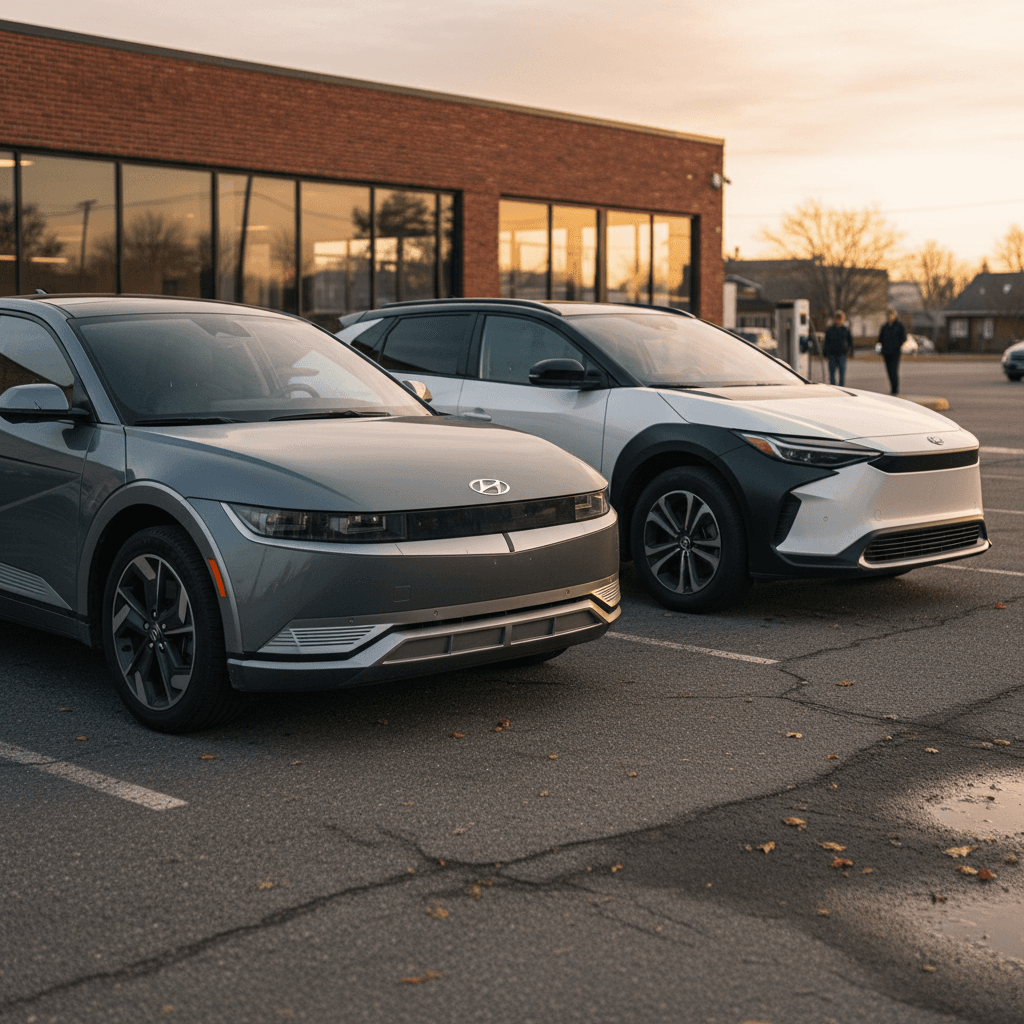
If you’re shopping for a used electric SUV in 2026, the Hyundai Ioniq 5 and Toyota bZ4X will show up on a lot of shortlists. Both are compact crossovers from blue‑chip brands, both launched in the early 2020s, and both now populate the used market in meaningful numbers. But they’re far from equal when you look at range, charging performance, reliability record, and how much value you get for your money.
Who this guide is for
Overview: used Ioniq 5 vs bZ4X in 2026
Ioniq 5: the fast‑charging all‑rounder
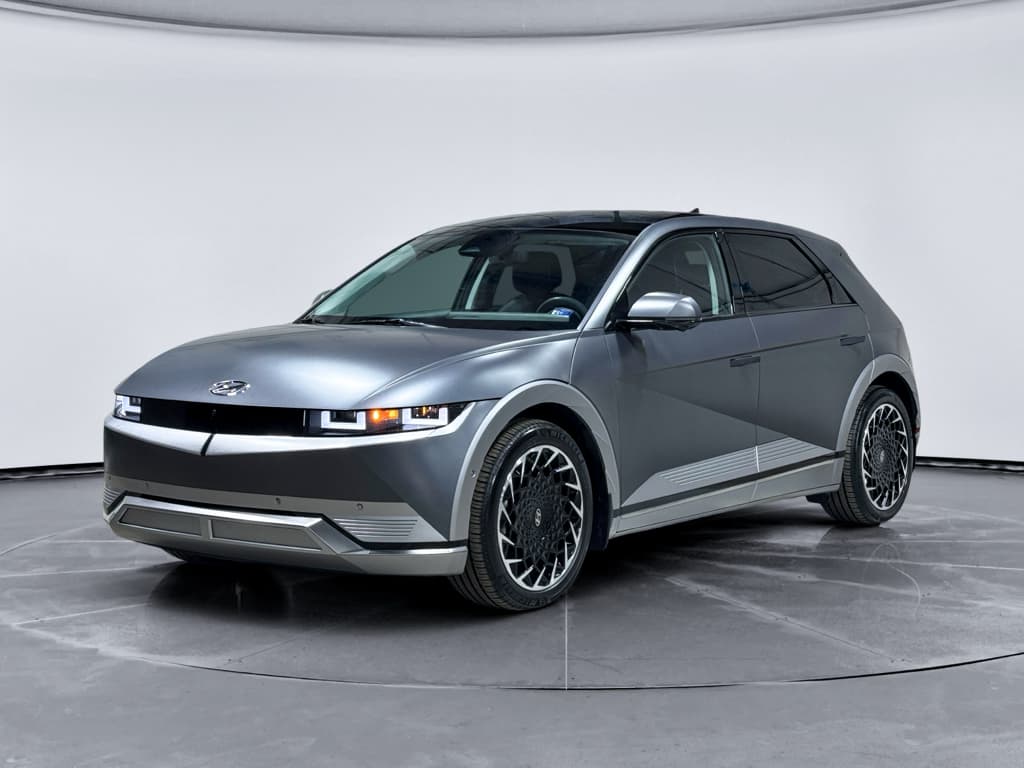
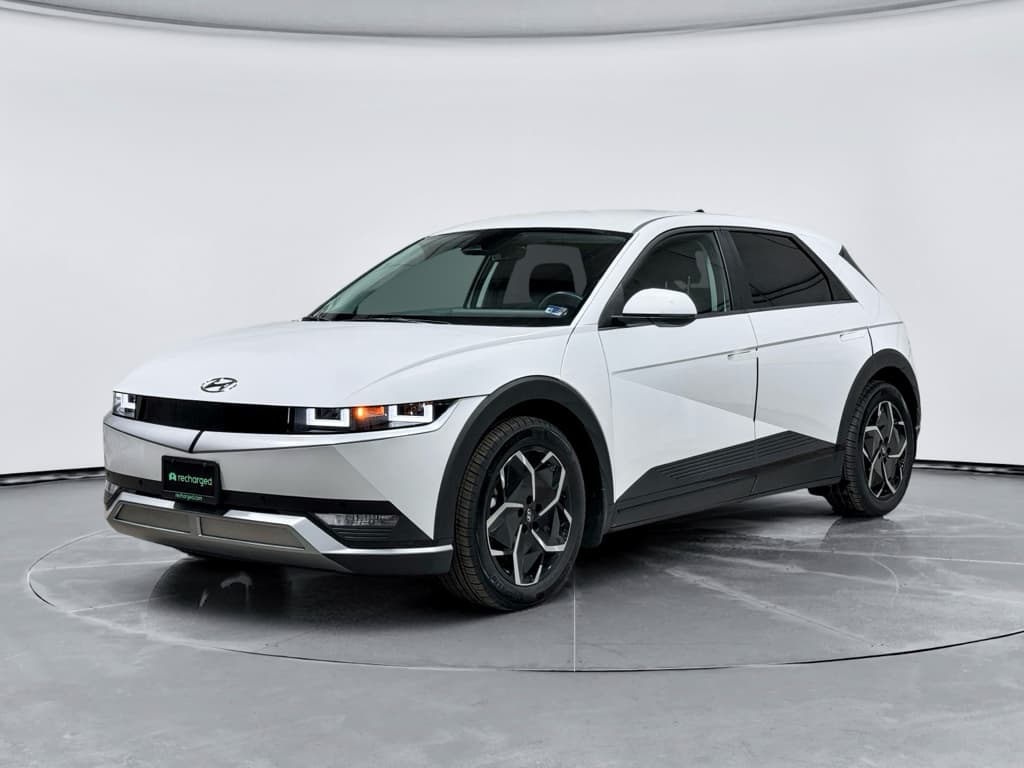
The Hyundai Ioniq 5 is built on Hyundai’s E‑GMP platform with an 800‑volt electrical architecture. In practical terms, that means excellent DC fast‑charging speeds, solid range (up to around 300 miles EPA on long‑range RWD trims), and a roomy, cleverly packaged interior. By 2025–2026, U.S.‑built Ioniq 5s also gain a native NACS (Tesla) charge port, improving access to Superchargers.
bZ4X: conservative but improving
The Toyota bZ4X launched with modest range and conservative DC charging, plus some early cold‑weather charging complaints and a high‑profile wheel‑hub bolt recall. Toyota has since improved charging performance and cold‑weather consistency through hardware and software tweaks, especially in later model years, but on paper and in most real‑world tests it still trails the Ioniq 5 on speed and range.
Bottom line up front
Key specs at a glance
Used Hyundai Ioniq 5 vs Toyota bZ4X: core specs (typical U.S. trims)
Representative specs for 2022–2025 model‑year vehicles you’re likely to see on the U.S. used market. Always confirm exact specs on the specific VIN you’re considering.
| Spec | Hyundai Ioniq 5 (long‑range RWD) | Toyota bZ4X (FWD) |
|---|---|---|
| Battery capacity (gross) | ~77–84 kWh (market and year dependent) | ~71 kWh |
| EPA range (best trims) | Up to ~303 miles | Up to ~252 miles |
| EPA range (typical AWD) | High‑200s to mid‑200s miles | Low‑ to mid‑200s miles |
| Architecture | 800‑volt E‑GMP platform | 400‑volt platform |
| Max DC fast charge (claimed) | Up to ~230 kW, 10–80% in ~18–20 min | ~150 kW peak on latest tune, 10–80% closer to 30+ min |
| Onboard AC charging | ~10.5–11 kW | ~6.6 kW |
| Drive options | RWD or AWD | FWD or AWD |
| Notable features | Vehicle‑to‑load (V2L), battery pre‑conditioning, sliding rear bench | Standard heat pump, Toyota Safety Sense, available all‑weather charging improvements |
Specs vary by model year, trim and wheels; treat this as a directional comparison when shopping used.
Specs vs used reality
Range and efficiency in the real world
On paper, the Ioniq 5 usually wins the range battle. Long‑range rear‑wheel‑drive trims are rated around 300 miles EPA, with many AWD versions still comfortably in the mid‑200s. The bZ4X’s front‑drive trims top out around the low‑250‑mile mark, and AWD models dip into the low‑200s. That gap matters if you regularly do longer drives or live in a cold climate where EV range shrinks in winter.
How range feels day‑to‑day
Typical owner experience on 2022–2025 used models
Hyundai Ioniq 5
Feels generous for the class. Many owners report comfortably covering 200+ highway miles between stops in mild weather on long‑range trims. Battery pre‑conditioning helps preserve charging performance on road trips.
Toyota bZ4X
Feels adequate but conservative. FWD models are fine for suburban commuting and moderate road trips with planning, but AWD trims can feel range‑limited, especially in cold climates or at 75+ mph highway speeds.
Cold‑weather behavior
Later bZ4X models improve here. Toyota added a robust heat pump and better battery temperature management. The Ioniq 5 also uses active thermal management and pre‑conditioning, but very cold weather still reduces range on both.
Used‑EV range rule of thumb
Charging experience and NACS access in 2026
Charging is where the Ioniq 5 separates itself from the bZ4X most clearly. Thanks to its 800‑volt E‑GMP platform, the Ioniq 5 can hold high DC fast‑charge power across a wide state‑of‑charge window, routinely moving from 10–80% in under 25 minutes on a healthy pack using a strong charger. The bZ4X’s revised charging curve is better than early builds, especially with a pre‑heated battery, but it’s still more conservative, and on a road trip, that translates into longer stops.
Charging realities on the used market
NACS and Tesla Supercharger access
By 2025, U.S.‑built Ioniq 5s start shipping with a native NACS (Tesla) port, and earlier CCS‑equipped cars will rely on adapters as networks transition. In 2026, that means many used Ioniq 5s will either:
- Already have a NACS port from the factory, or
- Be compatible with a manufacturer‑approved NACS adapter.
That combination of fast charging and broad network access is a real advantage if you regularly road‑trip.
bZ4X public charging reality
The bZ4X uses the older CCS/J1772 combo on used examples you’ll see in 2026. Adapters and network changes are expanding access, but the bZ4X’s slower charging curve means you spend longer on the plug either way. If your driving is mostly local and you charge overnight at home, that’s less of a concern. For frequent DC fast‑charging, it’s a bigger deal.
How Recharged simplifies charging questions
Comfort, space and tech for daily life
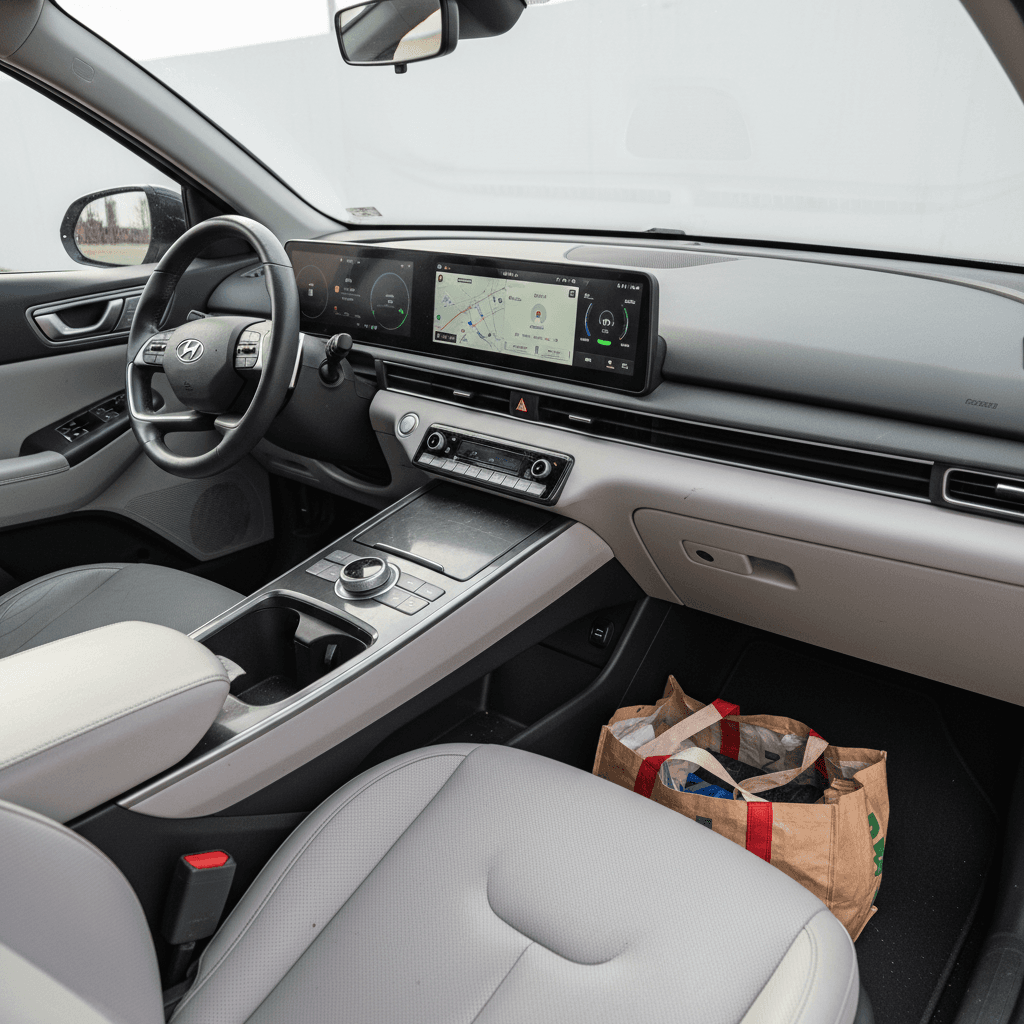
The Ioniq 5 leans hard into its role as a design statement. Its long wheelbase, flat floor and sliding rear bench create a genuinely roomy cabin with lots of clever storage, especially in the second row. The front seats can recline deeply with leg rests on some trims, and the overall vibe is more lounge than traditional SUV. If you routinely haul adults in the back or install bulky child seats, this extra space matters.
Interior and tech: how they differ
Both are comfortable; one feels more forward‑thinking
Space & seating
Ioniq 5: Long wheelbase creates near‑mid‑size cabin space in a compact footprint. Sliding rear bench gives you flexibility between cargo and legroom.
bZ4X: More conventional compact‑SUV space. Adequate for families, but feels tighter in the second row and cargo area.
Infotainment & UX
Ioniq 5: Dual widescreens, clean UI, solid CarPlay/Android Auto support. Later models gain improved software and over‑the‑air update capability.
bZ4X: Toyota’s latest infotainment with large center screen and strong voice control, but a more traditional layout. Integration with the Toyota app is a plus for remote features.
Driver assistance
Both offer robust active‑safety suites, Hyundai’s Highway Driving Assist and Toyota Safety Sense, with adaptive cruise control and lane‑centering. On the used market, the key is to verify which packages the specific VIN has, as not every car carries the same options.
Reliability, issues and recalls to know about
Toyota built its reputation on conservative engineering and bulletproof reliability, so it’s ironic that the bZ4X stumbled out of the gate. Early builds had a high‑profile recall for wheel‑hub bolts that could loosen, plus charging issues in cold weather and a cautious DC‑charging profile. Toyota has addressed these with mechanical fixes and software updates, but if you’re shopping a 2023 or early‑2024 bZ4X used, you need to make sure all campaigns have been completed.
- bZ4X: Verify recall completion (especially early wheel‑hub issues), confirm latest software for charging and thermal management, and test DC charging at least once before you finalize a purchase if possible.
- Ioniq 5: Fewer headline‑grabbing issues, but as with many first‑wave EVs, software updates have improved charging behavior and driver‑assistance performance over time. You’ll want evidence of regular software updates and routine maintenance.
Never skip recall checks on a used EV
Depreciation and used pricing trends
By 2026, both the Ioniq 5 and bZ4X have been on the U.S. market for several years, and EV price corrections plus aggressive new‑car incentives have pushed used values down. That’s painful for first owners but great for you as a used buyer. The patterns, though, are different between these two SUVs.
How value shakes out on the used market
What you tend to see in real‑world 2022–2025 listings
Hyundai Ioniq 5 value story
The Ioniq 5 has been widely praised and often in demand, which helped support residuals early on. But as more lease returns hit the market and new EVs get steeper discounts, used prices have softened. You often pay a bit more than an equivalent bZ4X, but you’re getting stronger charging, longer range, and a more desirable cabin, which can pay you back at resale time.
Toyota bZ4X value story
The bZ4X launched into a tougher narrative, shorter range, slower charging, and early recalls. To counter that, Toyota and dealers leaned on heavy incentives and lease deals. That pressure flows through to the used market; bZ4X listings often undercut Ioniq 5 pricing for similar age and mileage. If you don’t need maximum range or charging speed, you can get a lot of basic EV utility for less money.
Think total cost of ownership, not just sticker
Which used EV SUV is right for you?
Choose your match: Ioniq 5 vs bZ4X by use case
Daily commuter with occasional trips
If your drives are mostly under 60–80 miles a day and you’ll charge at home, either model works.
The Ioniq 5 gives you more buffer for unplanned detours and bad weather; it’s the more future‑proof choice.
A discounted bZ4X can be a strong value play if you’re price‑sensitive and not relying on fast chargers.
Frequent highway road‑tripper
Prioritize the <strong>Ioniq 5</strong>. Its fast‑charging capability and better range significantly reduce trip times.
Look for trims with battery pre‑conditioning and, ideally, a NACS port or approved adapter for better Supercharger access.
Use tools like A Better Routeplanner and PlugShare to simulate your typical trips with each model before deciding.
Cold‑climate owner
Both models lose range in cold weather; the Ioniq 5’s larger battery is a safety margin.
Later bZ4X models with improved heat‑pump and battery‑pre‑heat logic are much better than early builds, verify model year and updates.
If you don’t have a garage, factor in more conservative winter range estimates for either EV.
Long‑term keeper who hates surprises
Toyota’s brand reputation and simple, conservative engineering are still compelling if you plan to keep a car well past 100,000 miles.
That said, the bZ4X is Toyota’s first modern BEV, while Hyundai has accumulated more real‑world E‑GMP experience.
Regardless of badge, insist on a detailed battery‑health report, like Recharged’s Score Report, before you commit.
Checklist for shopping a used Ioniq 5 or bZ4X
Essential checks before you buy used
1. Confirm battery health and DC charging behavior
Ask for a recent battery‑health report and, ideally, evidence of at least one DC fast‑charge session with normal speeds. On Recharged, this is built into the Recharged Score so you can compare vehicles at a glance.
2. Verify recall and software‑update history
For the bZ4X, confirm all hub‑bolt and charging‑related recalls are closed. For the Ioniq 5, check that major software updates (charging, infotainment, ADAS) have been applied. Ask for service records or have the seller pull them from a dealer.
3. Understand charging hardware and cables
Make sure you know exactly what’s included: Level 1 cord, any portable Level 2 equipment, and whether a previous owner is including a wallbox. Clarify whether the car has a native NACS port or still uses CCS, and what adapters you’ll need.
4. Match the trim to your driving pattern
A long‑range RWD Ioniq 5 behaves very differently from a base AWD bZ4X in winter. Map your typical week, commute, errands, weekend trips, and make sure the <strong>usable</strong> range (not just EPA) is comfortable with 20–30% buffer.
5. Inspect tires, brakes and suspension
EVs are heavy and hard on consumables. Check for uneven tire wear (especially on AWD), ask when tires were last replaced, and inspect brakes for rust or glazing from light use.
6. Test all driver‑assistance and infotainment features
On a test drive, engage adaptive cruise and lane‑centering on a divided highway, confirm camera quality, and connect your phone to ensure CarPlay/Android Auto behave as expected.
7. Plan home charging before you sign
A Level 2 charger makes ownership of either EV dramatically better. If you don’t already have a 240‑volt circuit, price out installation. Recharged can help you understand charging options and what’s realistic in your home or apartment.
FAQ: used Hyundai Ioniq 5 vs Toyota bZ4X
Frequently asked questions
If you strip away the badges and spec‑sheet hype, the logic of this matchup is straightforward. The Hyundai Ioniq 5 is the right choice for most used‑EV buyers who care about range, road‑trip charging, and a forward‑thinking interior. The Toyota bZ4X makes sense if you find a significantly better price, drive mostly locally, and value Toyota’s conservative engineering approach. Either way, the used EV market in 2026 finally lets you buy these first‑wave electric crossovers at prices that reflect reality, not early‑adopter hype, and with tools like the Recharged Score report, you can make that decision with your eyes wide open.