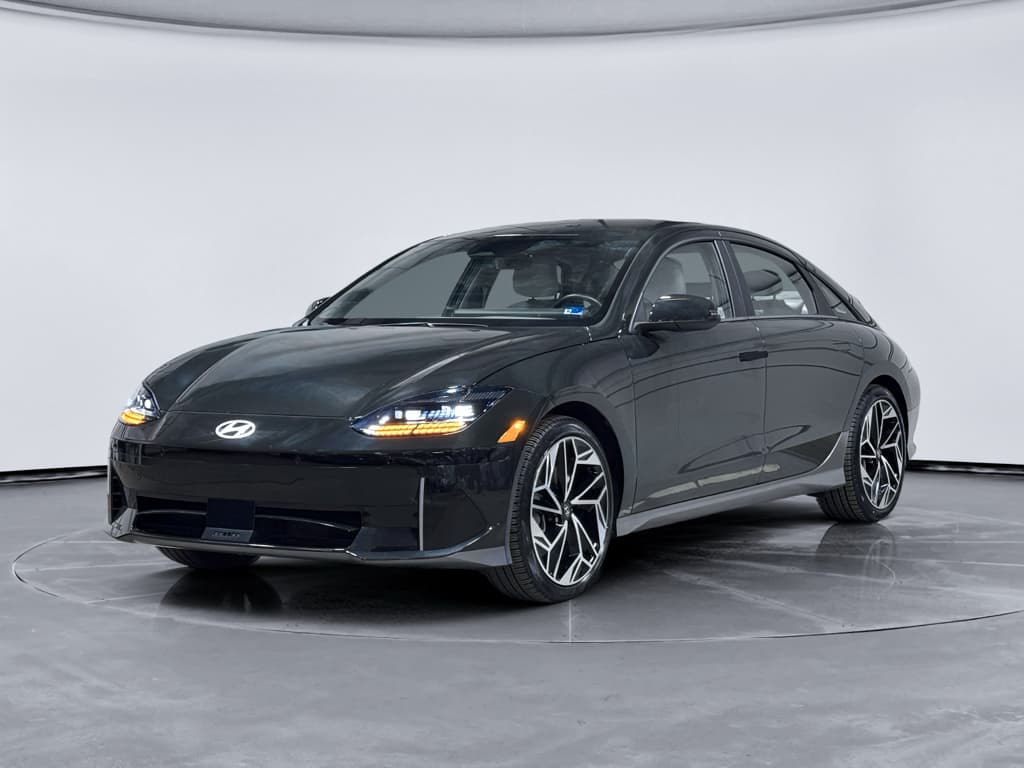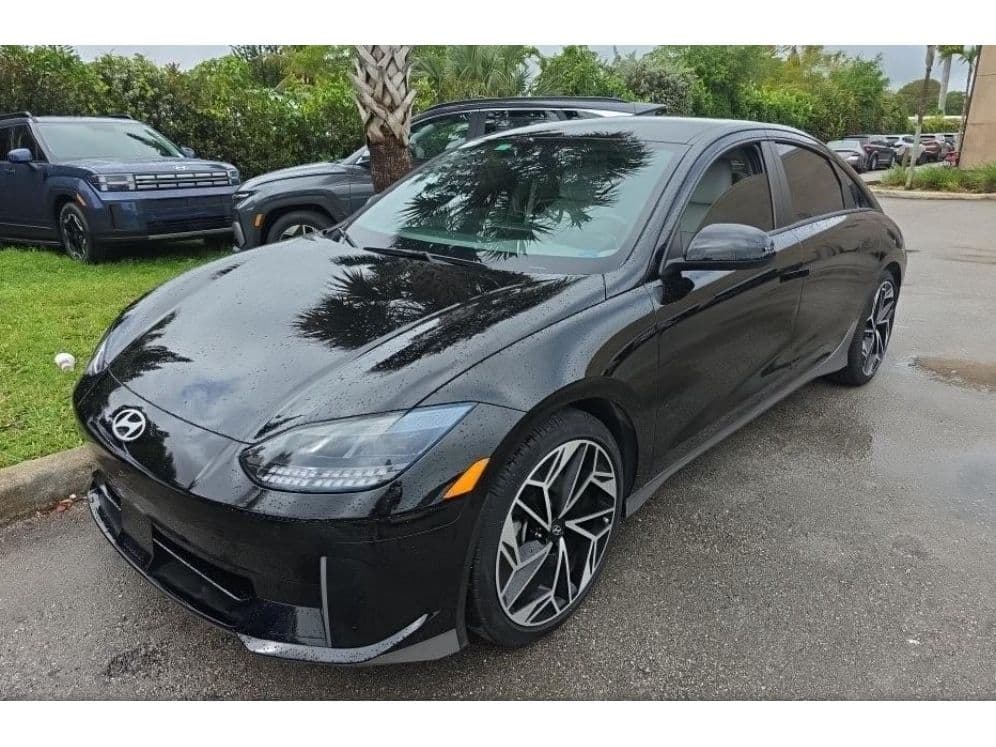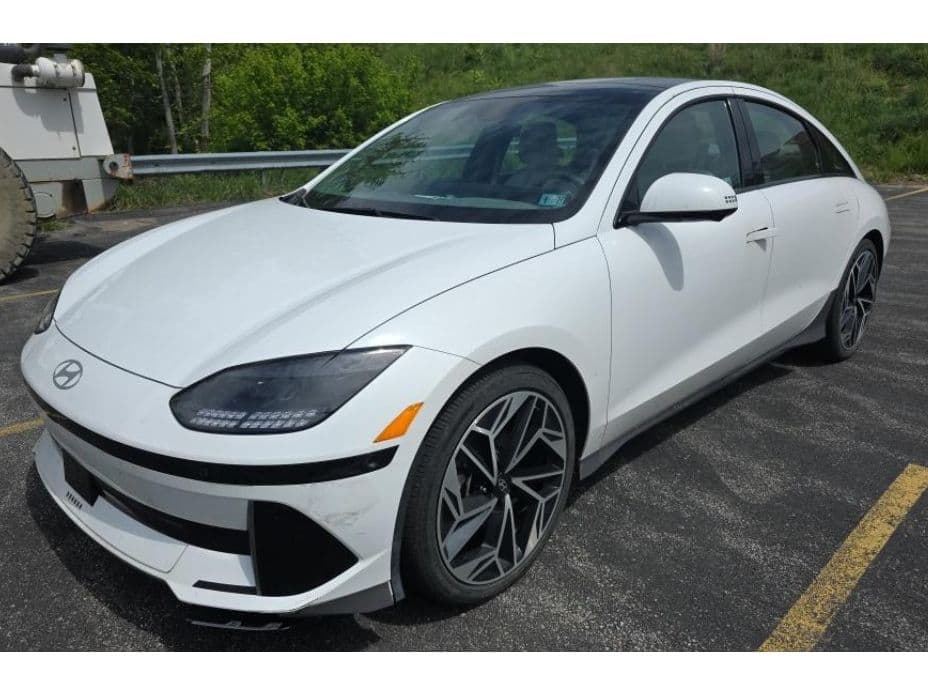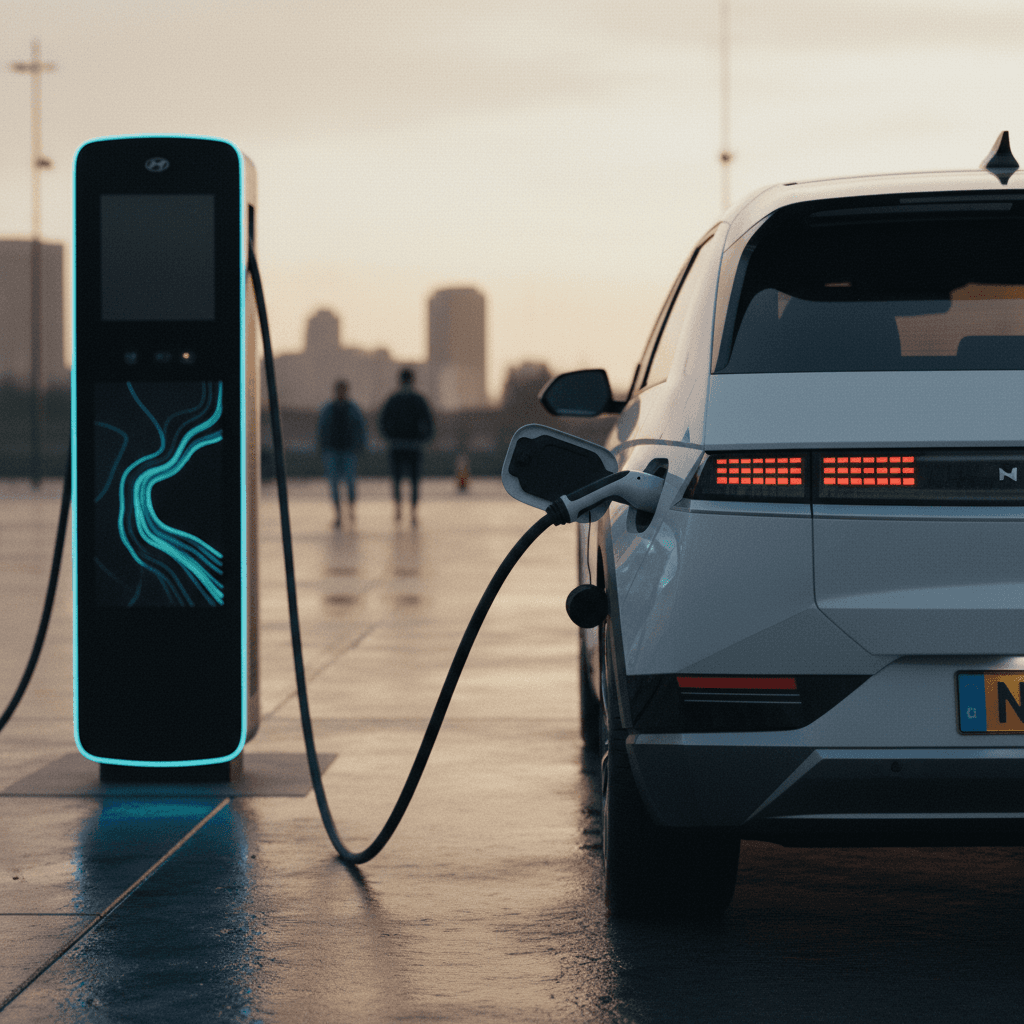
If you care about how long you’re stuck at a charger on a road trip, the Hyundai IONIQ 6 charging speed test is where this sleek sedan really earns its keep. On paper, Hyundai promises 10–80% in about 18 minutes on a 350 kW DC fast charger. In independent tests, the IONIQ 6 doesn’t just hit those numbers, it often leads the entire EV pack.
Headline: one of the fastest-charging EVs you can buy
Why the Hyundai IONIQ 6’s charging speed matters
Hyundai built the IONIQ 6 on its 800‑volt E‑GMP platform, the same architecture that underpins the IONIQ 5, Kia EV6, and Genesis GV60. That 800‑volt backbone is the secret sauce behind its ultra‑fast DC charging. You’re not just buying a slippery, efficient sedan; you’re buying the ability to grab serious range in the time it takes to use the restroom and refill your coffee.
- Less downtime on road trips: 10–80% in under 20 minutes means shorter charging stops and more miles covered in a day.
- Smaller battery, big capability: Instead of oversizing the battery, Hyundai leans on fast charging to keep you moving.
- Used buyers win too: This charging hardware is baked into every IONIQ 6, so pre-owned shoppers still get near‑new performance if the battery is healthy.
Think beyond range numbers
Hyundai IONIQ 6 battery and charging basics
Before we zoom into the charging speed tests, it helps to know which IONIQ 6 you’re looking at. Battery size doesn’t change the 800‑volt magic, but it does affect how many miles you gain per minute at the plug.
IONIQ 6 battery packs, trims, and range (U.S.)
Key battery and range specs that frame how charging speed feels in the real world.
| Trim / layout | Battery capacity | Drivetrain | EPA range (approx.) | Max AC charge rate |
|---|---|---|---|---|
| SE Standard Range | 53 kWh | RWD | ~240 miles | Up to 10.9 kW |
| SE Long Range | 77.4–84 kWh class | RWD | ~342–361 miles (depending on year/wheels) | Up to 10.9 kW |
| SEL / Limited Long Range | 77.4–84 kWh class | RWD or AWD | ~270–291 miles | Up to 10.9 kW |
Figures are approximate EPA estimates for 2024–2025 U.S. models; always check the window sticker for your specific car.
All versions use the same basic charging hardware: CCS (Combo) fast‑charging today and, in North America, growing access to the Electrify America network plus other high‑power DC stations. Hyundai quotes 10–80% in about 18 minutes on a 350 kW unit when conditions are ideal, battery warm, charger healthy, and no power sharing.
IONIQ 6 fast charging at a glance
DC fast charging speed test: what we know
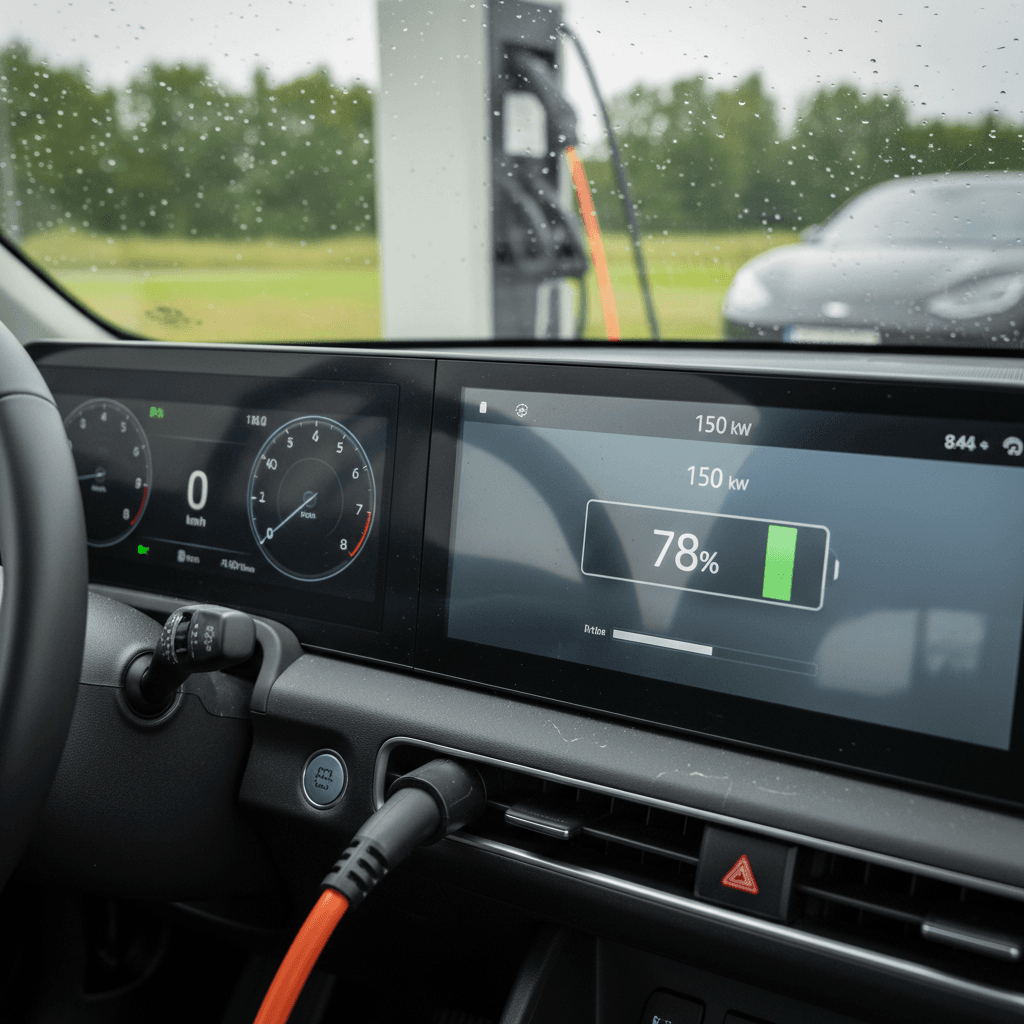
Let’s talk about what actually happens when you plug an IONIQ 6 into a high‑power DC fast charger. Hyundai cites 10–80% in about 18 minutes on a 350 kW unit, and independent instrumented tests have largely backed that up, sometimes even exceeding expectations.
What shapes your IONIQ 6 charging speed
Why one "18‑minute" stop might take 25 minutes the next day
Battery temperature
The pack needs to be in its sweet spot, usually warm but not hot, to pull full power. After some highway driving, you’ll typically see the best numbers.
Charger capability
A 350 kW station gives the IONIQ 6 room to stretch. On a 150 kW unit, it still charges quickly, but total time ticks up a few minutes.
Site limitations
Shared cabinets, derating, or worn hardware can cut available power. The car is fast; the station sometimes isn’t. It’s not always the Hyundai’s fault.
In a well‑run DC fast‑charging test, a single‑motor long‑range IONIQ 6 has been seen hitting a peak around 240+ kW and holding more than 200 kW through a big chunk of the session. That’s why it tops many “fastest‑charging EV” rankings: not just because of the peak, but because the average power from 10–80% is so high.
Don’t chase the last 20%
Real-world 10–80% times and charging curve
Automaker marketing loves a single headline number. What you feel at the plug is a whole curve: a surge to peak power, a strong plateau, then a gentle taper as the battery fills. The IONIQ 6’s curve is one of the flattest and most road‑trip‑friendly on the market right now.
Typical DC fast charging times for Hyundai IONIQ 6
Approximate real‑world times assuming a long‑range IONIQ 6 on a good station, mild temperatures, and highway‑speed consumption.
| From / to | 350 kW charger | 150 kW charger | Highway range added* |
|---|---|---|---|
| 10% → 80% | ≈18–22 minutes | ≈23–28 minutes | ~180–220 miles |
| 10% → 60% | ≈10–13 minutes | ≈14–17 minutes | ~120–150 miles |
| 20% → 70% | ≈13–16 minutes | ≈18–22 minutes | ~150–190 miles |
| Add ~100 miles | ≈6–7 minutes | ≈8–10 minutes | ~100 miles |
Your times will vary with temperature, state of charge, elevation, wind, and driving speed. Use these as ballpark planning numbers, not promises.
The magic is that middle band, roughly 20–60%, where the IONIQ 6 stays at very high power. That’s the sweet spot for fast, efficient road‑tripping: arrive low, leave in the 60–70% range, and let the car’s efficiency do the rest.
What a "good" charging session looks like
- Arrive between 5–20% state of charge.
- Battery already warm from at least 20–30 minutes of driving.
- Plug into a 350 kW or 150 kW unit with no power sharing.
- Watch power spike above 200 kW, then settle into a strong plateau.
What a "slower" session looks like
- Arrive at 40–50% or higher state of charge.
- Cold battery after a short hop from home.
- Charger cabinet shared with another car or derated.
- Power stays well below 150 kW, time stretches 5–10 minutes.
Home charging speed test: Level 1 vs. Level 2
Not every day is a road trip. Most IONIQ 6 owners will do nearly all of their charging at home, where the question isn’t “How fast can it spike?” but “Will it be full by morning?” Here, it’s all about volts, amps, and your electrical panel.
Hyundai IONIQ 6 home charging speed comparison
Approximate charging times for the IONIQ 6 from typical home charging setups in the U.S.
| Charging method | Power | 10–80% time | 0–100% time | Miles of range per hour |
|---|---|---|---|---|
| Level 1 – 120V wall outlet | ~1.4–1.8 kW | ≈29–39 hours | ≈42–56 hours | ≈5–6 miles/hr |
| Level 2 – 240V, 20–32A | ~3.8–7.7 kW | ≈7–10 hours | ≈9–13 hours | ≈15–30 miles/hr |
| Level 2 – 240V, 40–48A (recommended) | ~9.6–11 kW (car max ~10.9 kW) | ≈5.5–7.5 hours | ≈7–10 hours | ≈30–40 miles/hr |
Times shown are for a long‑range battery; the smaller pack will charge faster. Always consult a licensed electrician before upgrading your home wiring.
Right-size your home charger
Quick checklist: setting up home charging for an IONIQ 6
1. Confirm your panel capacity
Have an electrician check how much spare capacity you have. A 40A Level 2 charger typically needs a 50A breaker and dedicated circuit.
2. Choose plug‑in vs. hardwired
Hardwired units are cleaner and more weather‑resistant. Plug‑in units offer flexibility if you move. Either can fully support the IONIQ 6’s AC speed if sized correctly.
3. Plan cable length and mounting
The IONIQ 6’s charge port is on the right rear. Make sure your cable comfortably reaches without stretching across walkways.
4. Use scheduled charging
Take advantage of off‑peak utility rates. Many IONIQ 6 owners simply plug in at night and let the car finish before sunrise.
Road-trip strategy: using the IONIQ 6’s fast-charge advantage
On the highway, the IONIQ 6’s combination of efficiency and charging speed is its calling card. Many owners discover that they can stop more often, but for less time, and arrive less wrung out than they did in gas cars.
Fast-charging playbook for IONIQ 6 drivers
A few tweaks to your planning make this car shine
Aim for 10–70% hops
Instead of driving down to 0% and then charging to 100%, string together stops that take you from about 10% up to 60–70%. That’s where charging is fastest.
Prioritize 350 kW sites
The IONIQ 6 can’t always use the full 350 kW, but having extra headroom lets it sustain higher power. When choices are equal, pick the higher‑rated station.
Pre‑warm the battery
Drive at least 20–30 minutes before your first DC fast charge, especially in cold weather. A warm pack accepts more power and keeps your stops short.
Good news for Electrify America users
Charging speed and battery health on a used IONIQ 6
Here’s where things get interesting for used shoppers: the IONIQ 6’s charging hardware is outstanding, but how it performs today depends on how its battery has been treated. Fast charging itself doesn’t automatically ruin packs, but relentless high‑power DC charging, constant 100% topping, or letting the car sit full for long periods can all accelerate wear.
Why a fast charger test alone isn’t enough
How to evaluate a used IONIQ 6’s charging and battery health
1. Review DC fast‑charging history
Ask the owner how often they fast‑charged. Occasional highway use is perfectly normal; daily DC charging on a short commute is less ideal.
2. Compare indicated range to EPA numbers
On a full charge, the estimate should be in the same ballpark as the car’s original rating for that trim and wheel size, adjusted for your climate and driving style.
3. Look for consistent charging behavior
On a test DC session, watch for stable power through the middle of the charge. Wild swings or unusually low power on a healthy station are red flags.
4. Get an objective battery health report
This is where a third‑party diagnostic shines. Every EV sold through <strong>Recharged</strong> includes a <strong>Recharged Score</strong> with verified battery health and detailed charging performance, so you’re not guessing at how the last owner treated the pack.
How Recharged helps used IONIQ 6 buyers
IONIQ 6 charging speed vs. competitors
In independent fast‑charging benchmarks, the Hyundai IONIQ 6 consistently lands near the top of the leaderboard, and often at the very top. Its 800‑volt architecture allows both high peak power and a strong plateau, which is what really matters when you’re staring at a charger screen and eyeing the miles left to your destination.
Charging speed comparison: IONIQ 6 vs. key rivals
Approximate real‑world DC fast‑charging performance for popular EVs on high‑power chargers.
| Model | Battery architecture | Peak DC power (approx.) | 10–80% time (approx.) | Charging character |
|---|---|---|---|---|
| Hyundai IONIQ 6 (RWD LR) | 800V | ≈230–245 kW | ≈18–22 min | Very strong plateau, class‑leading efficiency |
| Kia EV6 (RWD LR) | 800V | ≈230 kW | ≈18–22 min | Similar curve, slightly different aero and range |
| Tesla Model 3 RWD | 400V | ≈170–180 kW | ≈25–30 min | Good speed, smaller battery, strong network |
| Ford Mustang Mach‑E (ER) | 400V | ≈150 kW | ≈32–40 min | Decent peak, more aggressive taper |
| Chevy Bolt EUV | 400V | ≈55 kW | ≈60+ min | Slow peak and shallow curve |
Numbers reflect typical independent test results, not factory claims. Individual sessions will vary with conditions.
Think in miles per minute, not kW numbers
FAQ: Hyundai IONIQ 6 charging speeds
Frequently asked questions about IONIQ 6 charging speed
Should you buy a Hyundai IONIQ 6 for its charging speed?
If you’re the kind of driver who dreads long charging stops, the Hyundai IONIQ 6 charging speed test results should put you at ease. This is one of the quickest‑charging EVs on the road today, not just in marketing slides, but in independent real‑world testing. Combine that with excellent efficiency, a comfortable highway ride, and handsome sedan styling, and you’ve got a serious alternative to the usual crossover crowd.
For new buyers, that means you can confidently plan cross‑country drives around a series of short, predictable DC fast‑charging stops. For used‑EV shoppers, it means there’s huge upside in finding an IONIQ 6 with a well‑cared‑for battery and documented charging behavior. That’s exactly where Recharged comes in: with verified battery health, transparent pricing, financing and trade‑in support, and nationwide delivery, we make it simpler to find an IONIQ 6 that still charges like the road‑trip champ it was when it left the factory.