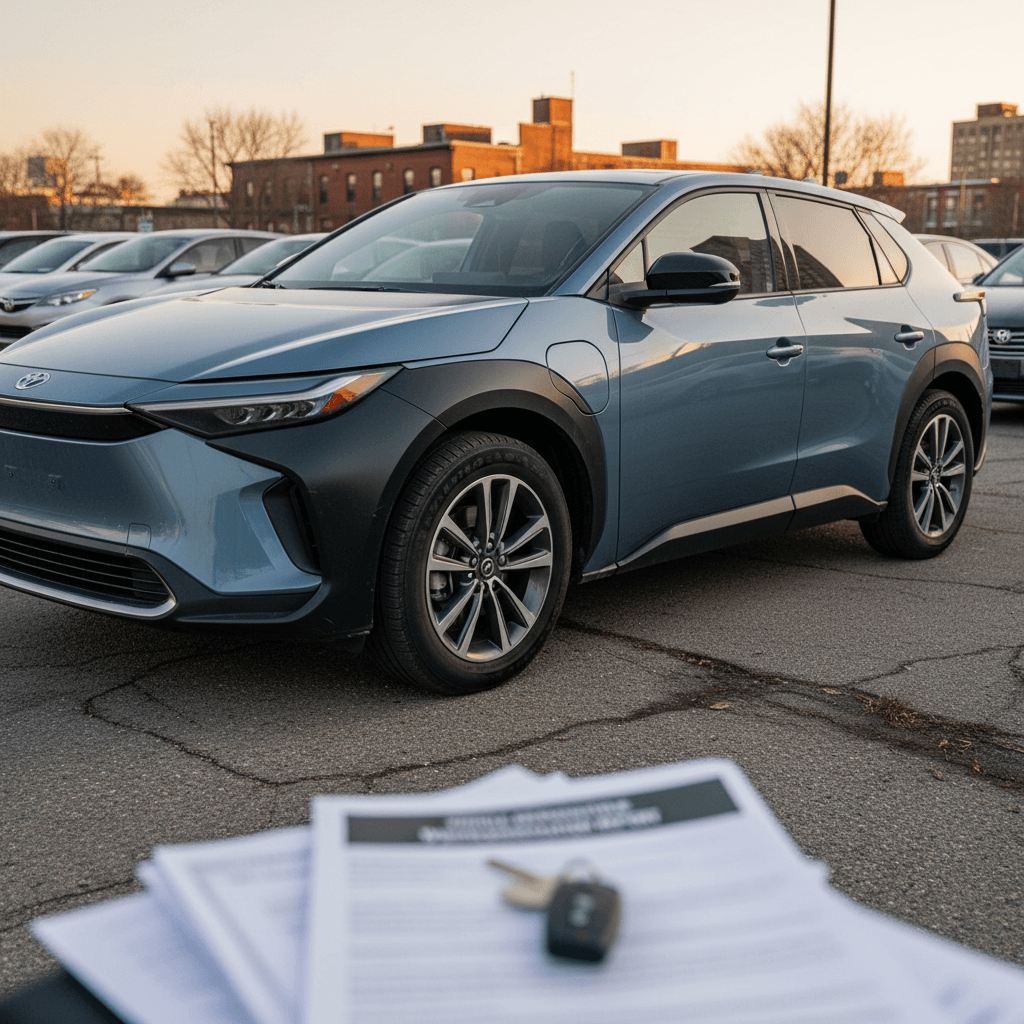
If you’re wondering how fast the Toyota bZ4X depreciates, you’re really asking two questions: did this quirky electric SUV stumble out of the gate, and has the market forgiven it yet? The answers are “yes” and “mostly.” Depreciation on the bZ4X was steeper than Toyota’s usual greatest‑hits, RAV4, Highlander, but that also means there are opportunities in the used market if you know what you’re looking at, especially around battery health and real‑world range.
Quick answer
Toyota bZ4X depreciation at a glance
Toyota bZ4X depreciation snapshot (U.S. market, 2025)
The headline: the bZ4X loses value faster than a gas RAV4, but it’s not the catastrophe some early hot‑takes suggested. The model launched into a weird, over‑stimulated EV market: high incentives, fast‑moving competitors, and then a recall that yanked early cars off the road. All of that shows up in resale values.
- Year 1: Big hit as early adopters move on and the recall story is still fresh.
- Years 2–3: Depreciation slows as Toyota fixes issues and buyers recalibrate expectations.
- Years 4–6: bZ4X should behave more like a normal compact SUV, with EV‑typical caveats about battery health and real‑world range.

Why early Toyota bZ4X values dropped faster than expected
On paper, a Toyota EV should depreciate like a marble countertop: slowly, predictably, and with a faint air of smugness. The bZ4X didn’t get that memo. Its early years were messy, and the used market punished it accordingly.
Four forces that pushed early bZ4X prices down
None of them were "the batteries are dying"
1. Wheel‑off recall drama
2. Underwhelming range & efficiency
3. Incentive whiplash
4. Tough competition
The good news for used buyers
Year‑by‑year Toyota bZ4X depreciation estimates
Exact resale numbers will depend on trim, mileage, region, incentives and interest‑rate climate. But you can think of bZ4X depreciation in broad, realistic bands rather than wishful thinking. Below is a simplified model that assumes a $46,000 new transaction price (typical for a decently optioned AWD bZ4X) and normal driving of about 12,000 miles per year.
Illustrative Toyota bZ4X depreciation curve
Approximate U.S. market values for a mainstream AWD bZ4X relative to a $46,000 new price
| Age | Odometer | Typical depreciation from new | Illustrative resale price |
|---|---|---|---|
| 1 year | ≈12,000 mi | 20–25% | $34,500–$36,500 |
| 2 years | ≈24,000 mi | 30–35% | $30,000–$32,000 |
| 3 years | ≈36,000 mi | 40–45% | $25,500–$27,500 |
| 5 years | ≈60,000 mi | 50–55% | $20,500–$23,000 |
| 7 years | ≈84,000 mi | 60–65% | $16,000–$18,500 |
These are directional, not promises, local inventory, incentives, and interest rates can move real‑world prices up or down.
Depreciation isn’t a straight line
How bZ4X depreciation compares with other EVs and Toyotas
Compared with gas Toyotas
- RAV4 / Highlander: Historically among the best‑retaining mainstream SUVs in America. Three‑year depreciation more like 30–35% in many markets.
- bZ4X: Usually sitting closer to 40–45% at year 3, thanks to EV market volatility and lower demand for first‑gen Toyota EVs.
- Result: If you bought the bZ4X new to "save money like a Toyota," you probably lost more to depreciation than a gas RAV4 owner. If you’re buying used, that extra drop becomes your opportunity.
Compared with other compact EV SUVs
- Tesla Model Y: Once a depreciation darling, but big price cuts on new cars slammed used values. Depending on build year, the bZ4X now plays in a similar value neighborhood.
- Hyundai Ioniq 5 / Kia EV6: Stronger brand heat and styling sizzle, but also heavy leasing and incentive activity. Their used prices are often similar to, or slightly higher than, comparable bZ4X models.
- VW ID.4, Subaru Solterra: The bZ4X’s closest cousins; they all live in the same resale cul‑de‑sac. Region and incentives often matter more than the badge on the hatch.
Who "wins" the depreciation game?
Battery health vs. depreciation: what actually matters
Depreciation is an accounting concept. What you care about is: "Will this bZ4X still feel like a usable EV in five or eight years?" That’s where battery health enters the story. The good news: early bZ4X data suggests modest degradation when the pack is treated with basic respect, no chronic 100% fast‑charging, no years of baking in Phoenix sun, etc.
- By year 3–4, many well‑cared‑for packs are showing only single‑digit percentage loss in usable range.
- Toyota was conservative with charging speeds and pack thermal management, less headline‑grabbing performance, but gentler wear.
- Real‑world range disappointment in the bZ4X has more to do with its original EPA rating vs highway reality than with rapid degradation.
Where Recharged fits in
Factors that speed up or slow down bZ4X depreciation
Two bZ4X SUVs can have the same model year and mileage yet be tens of thousands of dollars apart over a decade. Depreciation is not destiny; it’s behavior, geography, and luck.
Key levers that affect your bZ4X’s resale value
Some you control, some you absolutely don’t
1. Region & climate
2. Mileage & use pattern
3. Charging habits
4. Accident & title history
5. Policy & incentives
6. Software & feature set
Tips for buying a used Toyota bZ4X at the right price
If you’re shopping for a used bZ4X, you’re walking into a buyer’s market with a calculator in one hand and an extension cord in the other. Here’s how to make that work in your favor.
Used Toyota bZ4X buying checklist
1. Start with battery health, not paint color
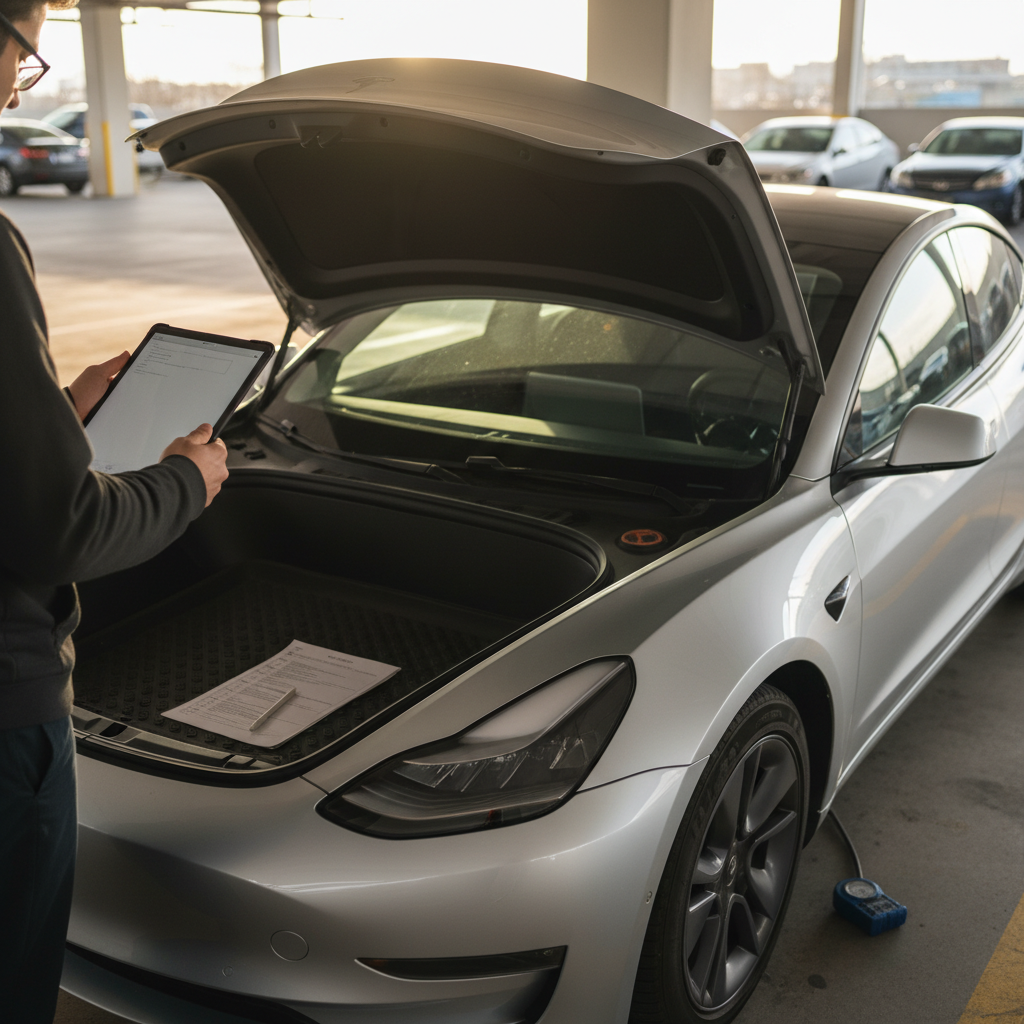
Ask for <strong>objective battery diagnostics</strong>, not just a screenshot of the range estimate. With Recharged, every car comes with a Recharged Score battery health report so you can see how this bZ4X stacks up against similar‑age EVs.
2. Cross‑check price against age and miles
Take the depreciation table above as a sanity check. If a 3‑year‑old bZ4X is still priced like it just rolled out of the showroom, walk away, or negotiate as if you’re the only adult in the room.
3. Look carefully at wheels, tires, and underbody
Early wheel‑off recall work should already be completed, but verify recall status with a VIN check. While you’re at it, inspect for curb rash, suspension damage, or underbody knocks from rough roads.
4. Verify charging hardware and adapter situation
Make sure the original Level 1 or Level 2 charging cable is included, check the condition of the charge port, and confirm there’s no corrosion around high‑voltage components. If you’ll use public fast chargers heavily, test a session before signing anything.
5. Test real‑world range on your routes
A short highway loop at your typical speed will tell you more than any window‑sticker rating. See how the bZ4X behaves at 65–75 mph, with climate control running, before you buy.
6. Consider financing and total cost of ownership
Depreciation is just one line item. Look at insurance, electricity vs gas, maintenance, and financing. Recharged can help you <strong>pre‑qualify for financing</strong> and see your full estimated monthly ownership cost.
Buying through Recharged
Ready to find your next EV?
Browse VehiclesExample used bZ4X value scenarios
To make all this more concrete, here are a few realistic scenarios you might encounter while scrolling listings. The exact dollar figures will move with the market, but the relationships between them tend to hold.
Scenario 1: Low‑miles sweetheart
2023 bZ4X XLE AWD
12,000 miles, one owner, clean history, complete service records, mostly home‑charged.
- Expect pricing: around 20–25% below original MSRP.
- What makes it attractive: warranty remaining, gentle early life, solid battery readings.
- How to play it: pay a slight premium over rougher examples; you’re buying future peace of mind.
Scenario 2: Highway workhorse
2022 bZ4X Limited AWD
48,000 miles, corporate fleet use, frequent DC fast charging, spotless cosmetic condition.
- Expect pricing: closer to 30–40% below MSRP, depending on region.
- Red flags: high DC‑fast‑charge count, pack degradation edging into the teens, warranty clock ticking.
- How to play it: only bite if you get excellent battery diagnostics and a meaningfully lower price than lower‑miles cars.
Scenario 3: Bargain with a story
2022 bZ4X FWD
32,000 miles, minor accident on record, repaired at a non‑EV specialist shop.
- Expect pricing: well below market for similar mileage, sometimes another 10–15% off.
- Risks: imperfect structural repair, unknown impact on high‑voltage systems, future insurance headaches.
- How to play it: only consider if you fully understand the repair work and it passes a thorough EV‑savvy inspection.
Frequently asked questions about Toyota bZ4X depreciation
Toyota bZ4X depreciation FAQ
Is the Toyota bZ4X a good used EV buy?
The Toyota bZ4X’s depreciation story is not a Greek tragedy; it’s a slightly awkward first album. The car arrived late, into a hyper‑competitive class, with a recall and a spec sheet that didn’t blow any doors off. The market marked it down accordingly. But that very markdown is what makes the used bZ4X surprisingly compelling: you get Toyota’s build discipline, an efficient if unexciting EV platform, and a big chunk of early depreciation already behind you.
If you’re shopping new and plan to flip in a few years, the bZ4X is not a depreciation champion. If you’re shopping used and you care about battery health, fair pricing, and real‑world range more than showroom bragging rights, it can be a quietly excellent choice. Look for a clean‑history example, insist on hard data about the pack, and buy at a price that reflects the model’s real‑world standing, not Toyota’s halo from its hybrids. And if you’d rather have someone else do that homework, browsing verified used bZ4X listings on Recharged puts all of those answers, battery diagnostics, value, financing, and delivery, in one place.