You’re down to two smart electric SUV choices: the Hyundai Ioniq 5 and the Volkswagen ID.4. On paper they look similar, compact crossovers with decent range, family-friendly cabins, and attractive pricing on the used market. But once you look closer at charging speed, interior space, software, and ownership experience, the Hyundai Ioniq 5 vs Volkswagen ID.4 comparison gets a lot more interesting.
Model years this comparison covers
Hyundai Ioniq 5 vs Volkswagen ID.4: quick overview
Ioniq 5 vs ID.4 at a glance
How the Ioniq 5 and ID.4 “feel” on the road
Same mission, very different personalities
Hyundai Ioniq 5: the quick, high-tech one
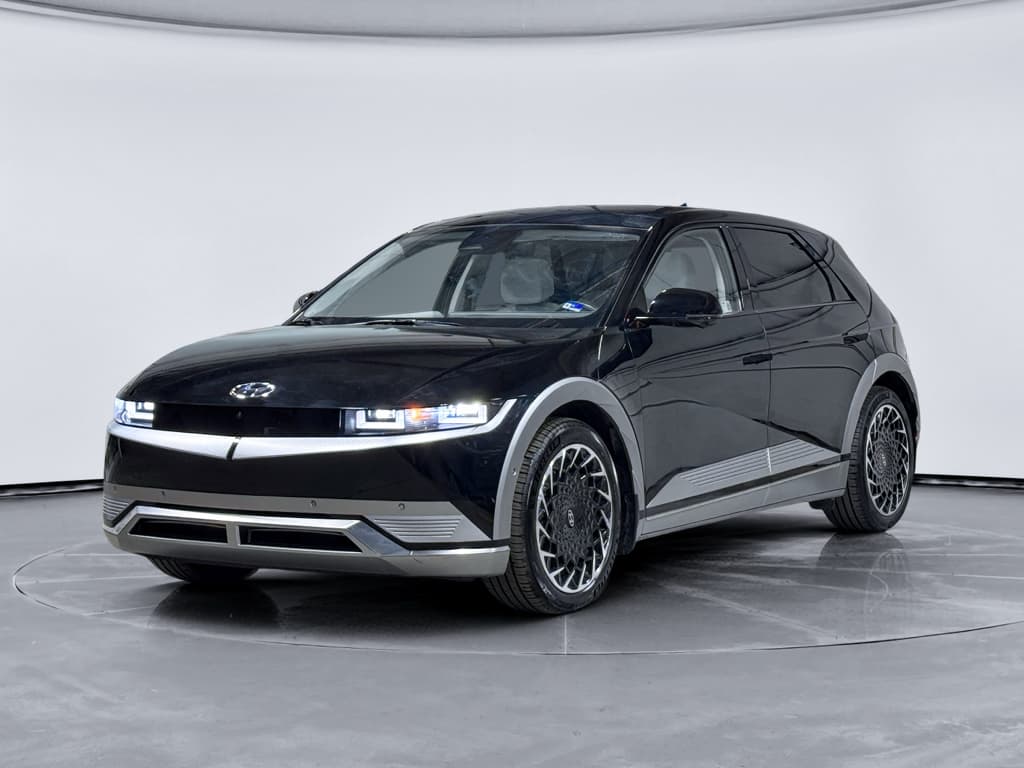
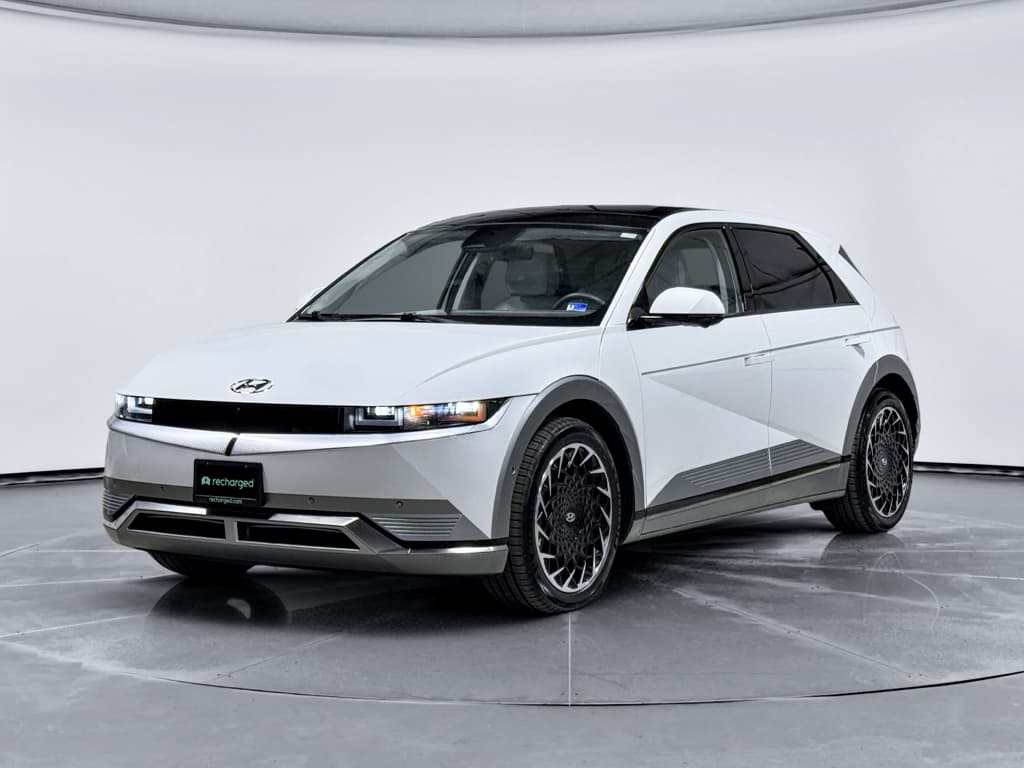
The Ioniq 5 feels more like a concept car that escaped the auto show: pixel graphics, sharp lines, and a lounge-like interior. Thanks to its 800‑volt architecture, it’s also one of the quickest-charging EVs you can buy and offers strong acceleration, especially in dual‑motor trims.
Volkswagen ID.4: the laid-back daily driver
The ID.4 takes a calmer, more traditional approach. It looks and drives like a conventional compact SUV that just happens to be electric. Ride quality is comfortable, the steering is light, and the whole package is tuned for relaxed commuting rather than back‑road antics.
Shortcut decision
Power, battery, and real-world range
Typical powertrain and range specs (U.S. market, 2022–2025)
Exact numbers vary by model year and trim, but this gives you a realistic comparison of what you’ll see while shopping.
| Model | Battery options (gross) | Drive | Approx. horsepower | EPA range (mi) |
|---|---|---|---|---|
| Hyundai Ioniq 5 Standard Range | ≈58 kWh | RWD | ≈168 hp | 220 |
| Hyundai Ioniq 5 Long Range RWD | ≈77–77.4 kWh | RWD | ≈225 hp | 303 |
| Hyundai Ioniq 5 Long Range AWD | ≈77–77.4 kWh | AWD | ≈320 hp | 256–269 |
| Volkswagen ID.4 Standard Battery | ≈62 kWh | RWD | ≈201 hp | ~209–220 |
| Volkswagen ID.4 Pro / Larger Battery | ≈82 kWh | RWD | ≈201–282 hp (newer motors) | ~275–291 |
| Volkswagen ID.4 Pro / AWD | ≈82 kWh | AWD | ≈295–335 hp (newer motors) | ~255–275 |
Always double‑check the window sticker or listing details for the exact battery size, motor configuration, and EPA range of the specific vehicle you’re considering.
In everyday driving, both the Ioniq 5 and ID.4 offer more than enough range for a typical American commute. Long‑range Ioniq 5 RWD trims can comfortably exceed 250 miles in mixed driving, and many owners see around 3–3.5 miles per kWh when driven sensibly. The ID.4 with its larger pack often lands in a similar real‑world ballpark, especially with the more efficient newer motors, though earlier model years were a bit less efficient at highway speeds.
Ioniq 5 performance character
- Quicker 0–60 mph in dual‑motor trims; it feels punchy when you merge or pass.
- RWD versions are smooth and eager but not brutal, they’re tuned for confident daily use.
- Low center of gravity and long wheelbase give it a stable, planted feel on the highway.
ID.4 performance character
- RWD models emphasize smoothness over speed; acceleration is adequate, not thrilling.
- AWD trims add useful power, but the character is still more relaxed than the Hyundai.
- Shorter overall length and tight turning radius make it easy to maneuver in cities.
Don’t shop by range rating alone
Charging: speed, networks, and home setup
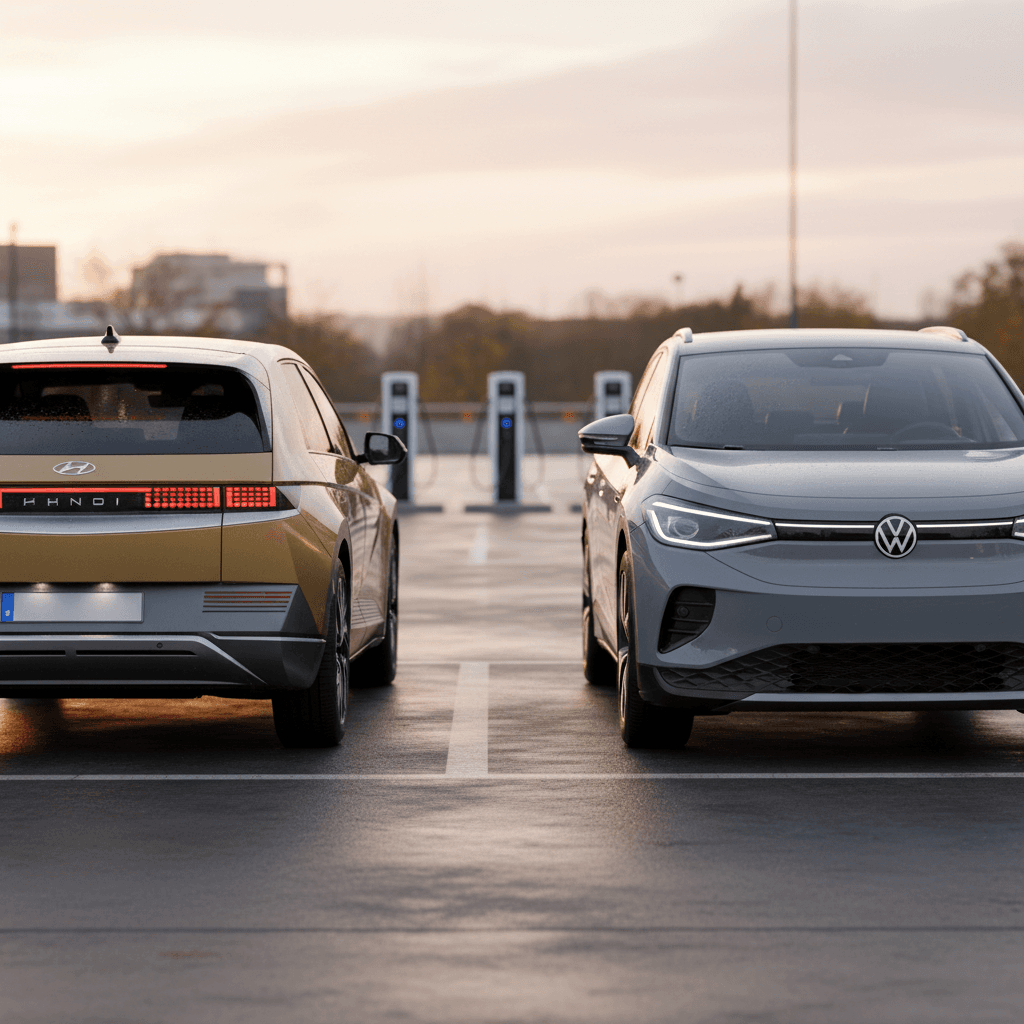
This is where the Hyundai Ioniq 5 really separates itself. Built on Hyundai’s 800‑volt E‑GMP platform, the Ioniq 5 can jump from roughly 10% to 80% charge in under 20 minutes on a powerful DC fast charger in good conditions. The ID.4, with its 400‑volt architecture, typically lands closer to 30–36 minutes for the same 10–80% window on a high‑power charger.
Charging specs comparison (typical trims)
Charging times assume a healthy battery, moderate temperatures, and a capable charger; real‑world times vary with conditions.
| Model | Max DC fast-charge power | Typical 10–80% time* | On‑board AC charger |
|---|---|---|---|
| Hyundai Ioniq 5 | Up to ~230 kW (long‑range pack) | ≈18–20 minutes | 10.5–11 kW Level 2 |
| Volkswagen ID.4 (larger pack) | ≈135–170 kW depending on pack/year | ≈30–36 minutes | ≈11 kW Level 2 |
Check the exact year and battery pack for precise DC fast‑charging limits, Volkswagen in particular has updated hardware and software over time.
Supercharger and NACS support
Home charging: what’s different between them?
1. Level 2 charging speeds are similar
Both the Ioniq 5 and ID.4 include an 11 kW‑class on‑board AC charger. On a 40–48 amp Level 2 home charger, you’re typically looking at <strong>7–9 hours from near empty to full</strong>, depending on battery size.
2. Plan your circuit and outlet
Either EV will want a dedicated 240 V circuit for best results. Talk with a licensed electrician about a 40–60 amp line and where you want the wallbox or receptacle located.
3. Consider battery size vs nightly use
If you drive 40–60 miles per day, even the smaller‑battery trims of either model will easily recharge overnight on a properly sized Level 2 charger.
4. Factor in public charging in your area
If your region is rich with high‑power DC stations, the Ioniq 5’s faster peak charging is a real advantage. If stations are sparse but you charge mostly at home, peak DC speed matters less.
Interior space, comfort, and practicality
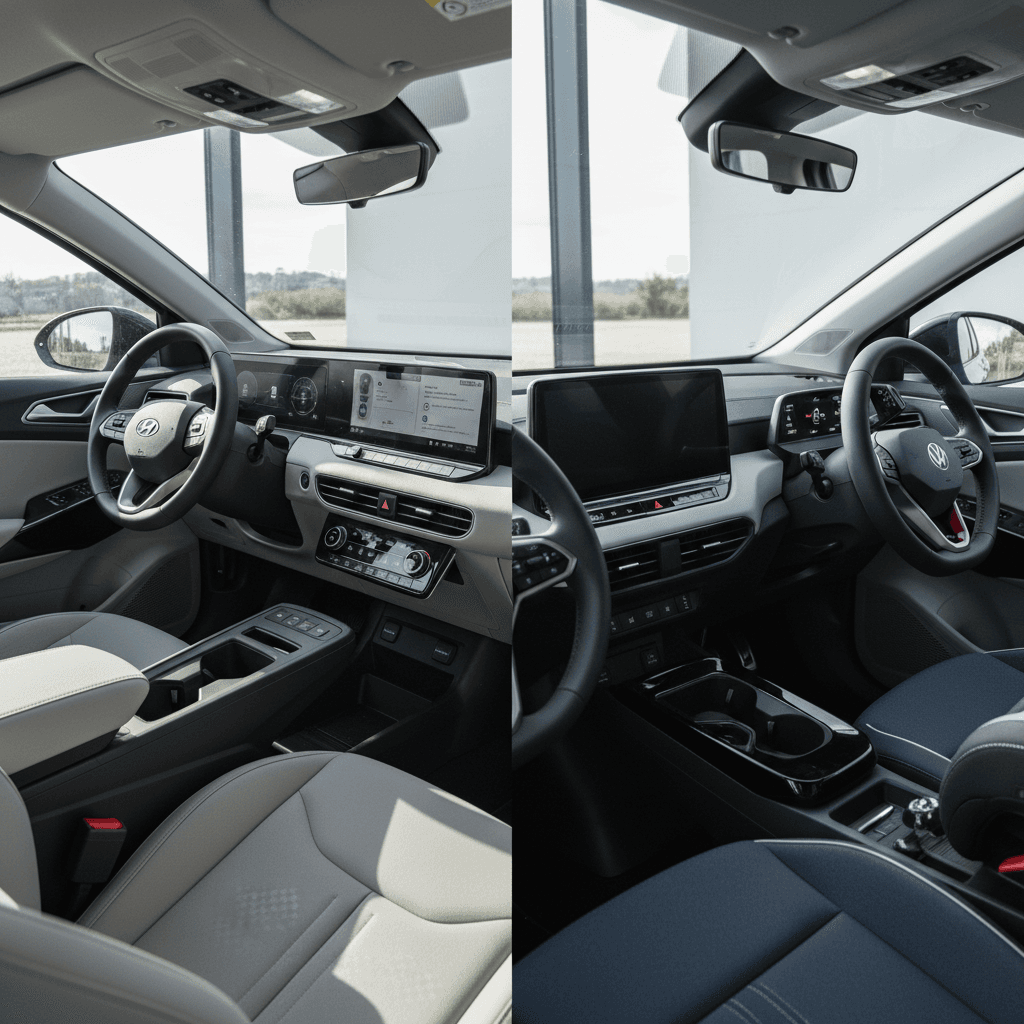
Slide into the Ioniq 5 and you’ll feel like you’re in a modern loft. The flat floor, long wheelbase, and sliding center console create a genuinely airy cabin. The ID.4, by contrast, feels more like a conventional compact SUV, still spacious, but with a more traditional cockpit layout and fewer design flourishes.
Everyday practicality: Ioniq 5 vs ID.4
How they handle kids, cargo, and Costco runs
Passenger space
Ioniq 5: Long wheelbase translates to excellent rear legroom. The flat floor makes the middle rear seat more usable for adults on short trips.
ID.4: Also comfortable, with slightly tighter legroom but good headroom. Conventional seating position will feel familiar if you’re coming from a gas SUV.
Cargo space
Both offer enough room for family duty and road trips, with split‑folding rear seats. The ID.4’s more squared‑off rear end can make it a bit easier to stack bulky items.
Family friendliness
Child seats fit well in both. The Ioniq 5’s sliding rear bench and wide‑opening doors are a plus. The ID.4’s smaller footprint and tight turning radius make daycare parking lots and city garages less stressful.
Car seats and strollers
Infotainment, software, and driving assistance
Tech is where preferences can get personal. The Ioniq 5’s twin 12.3‑inch screens and clean UI feel modern, with responsive menus and familiar controls. The ID.4’s software has improved since launch but still earns mixed reviews for menu complexity and touch‑sensitive sliders. Both support Apple CarPlay and Android Auto (wired or wireless, depending on trim and year), and both offer over‑the‑air software updates on newer builds.
Ioniq 5 driver-assist highlights
- Highway driving assist systems that combine adaptive cruise and lane centering for low‑stress highway miles.
- Available 360‑degree surround‑view camera, excellent for tight parking maneuvers.
- Clear, logical button layout for climate and core functions, less diving into screens.
ID.4 driver-assist highlights
- VW’s Travel Assist (where equipped) provides similar semi‑automated highway support.
- Good lane‑keeping and adaptive cruise once you learn the interface.
- Interior updates in later model years address some early software complaints, but it’s still not the most intuitive system on the market.
Test the software before you sign
Safety ratings and driver-assist features
Safety is a strong point for both crossovers. The Hyundai Ioniq 5 has earned top scores from major safety organizations, including a Top Safety Pick+ rating in recent model years when properly equipped. The ID.4 has also tested well globally, with strong crash performance and a full suite of modern driver‑assist features available.
- Both offer automatic emergency braking with pedestrian detection on most trims.
- Lane‑keeping assist and adaptive cruise control are widely available and often standard.
- Blind‑spot monitoring and rear cross‑traffic alert are available on common trims.
- Multiple camera views and parking sensors make these relatively easy to place in tight spaces.
Used EV safety check
Warranty, reliability reputation, and ownership costs
Hyundai and Volkswagen take very different approaches to warranty coverage in the U.S., and that matters a lot when you’re buying used. Hyundai remains one of the warranty leaders, while VW sits closer to the industry norm.
Typical factory warranty coverage (U.S., original owner)
Always verify warranty details by model year, manufacturers can (and do) adjust coverage over time.
| Brand / model | Basic warranty | Powertrain warranty | EV battery warranty |
|---|---|---|---|
| Hyundai Ioniq 5 | 5 yr / 60,000 mi | 10 yr / 100,000 mi | Typically 10 yr / 100,000 mi for defects and capacity beyond set threshold |
| Volkswagen ID.4 | 4 yr / 50,000 mi | 4 yr / 50,000 mi | Typically 8 yr / 100,000 mi for defects and capacity beyond set threshold |
Battery warranties are especially important with EVs. Most cover at least 8 years or 100,000 miles against excessive degradation.
Hyundai’s longer basic and powertrain coverage is a real perk if you’re buying a relatively young used Ioniq 5, there’s a good chance you’ll still be within factory protection. The ID.4’s shorter bumper‑to‑bumper term means you’ll age out sooner, though the high‑voltage battery remains covered on a similar 8‑year / 100,000‑mile timeline.
How Recharged helps with long-term costs
Ready to find your next EV?
Browse VehiclesUsed Ioniq 5 vs used ID.4: what to look for
In the used market, the Hyundai Ioniq 5 typically commands a bit more money than a similarly aged ID.4, thanks to stronger fast‑charging, eye‑catching design, and Hyundai’s long warranty. The ID.4, however, often undercuts the Ioniq 5 on price, making it attractive if you’re value‑hunting and don’t mind a calmer personality.
Checklist for comparing used Ioniq 5 and ID.4 listings
1. Battery health and real-world range
Ask for a <strong>battery health report</strong> or, at minimum, evidence of recent range on a full charge. This is where Recharged’s battery diagnostics and Recharged Score give you a big leg up over traditional used‑car shopping.
2. Charging history and patterns
Frequent fast‑charging at high states of charge can age batteries faster. Look for previous owners who primarily charged at home and used DC fast‑charging for trips.
3. Software and recall status
Both Hyundai and VW have pushed important software updates for charging and infotainment. Confirm that recalls and major updates have been completed. A reputable seller or marketplace should provide documentation.
4. Remaining factory warranty
A newer Ioniq 5 may still have years of basic and powertrain coverage left. A slightly older but cheaper ID.4 might still be within its battery warranty but out of bumper‑to‑bumper coverage.
5. Tires and brakes
EVs are heavy. Check for uneven tire wear and budget for higher‑quality replacements. Regenerative braking helps rotors and pads last longer, but they can still corrode if the car sits often.
6. Charging equipment included
Confirm whether the car includes a portable Level 1/Level 2 cord set and whether the previous owner is including any wallbox or adapters. That can save you a few hundred dollars right away.
Who should choose the Ioniq 5 vs the ID.4?
Choose the Hyundai Ioniq 5 if you:
- Do frequent road trips and care about shorter DC fast‑charging stops.
- Love standout design and a more futuristic, airy interior.
- Want stronger acceleration, especially in dual‑motor trims.
- Value Hyundai’s longer basic and powertrain warranty coverage.
- Plan to keep the car for many years and want an architecture that still feels “next‑gen” in 2030.
Choose the Volkswagen ID.4 if you:
- Want a comfortable, easygoing daily driver that feels familiar.
- Prioritize value and often see lower prices on the used market in your area.
- Spend most of your time in the city and appreciate the smaller footprint and tight turning circle.
- Prefer more traditional SUV styling inside and out.
- Are comfortable trading some charging speed and flash for a calmer, simpler vibe.
Try living with each, before you buy
Frequently asked questions: Ioniq 5 vs ID.4
Hyundai Ioniq 5 vs Volkswagen ID.4 FAQ
Bottom line: which EV SUV is right for you?
If you crave futuristic design, ultra‑fast road‑trip charging, and a cabin that feels more like a lounge than a legacy SUV, the Hyundai Ioniq 5 is your EV. If you’d rather blend in, value a calm drive and a smaller footprint, and you’re hunting the sharpest deal on a practical electric crossover, the Volkswagen ID.4 makes a lot of sense, especially on the used market.
Either way, the spec sheet is only half the story. Battery health, software updates, and prior owner behavior matter just as much as factory horsepower and range. That’s why Recharged includes a Recharged Score Report with every EV we sell, combining verified battery diagnostics, fair‑market pricing, and expert guidance from first click to delivery. When you’re ready to decide between Ioniq 5 vs ID.4, or explore other electric SUVs entirely, you can shop, finance, trade‑in, and arrange nationwide delivery with confidence, all in one place.