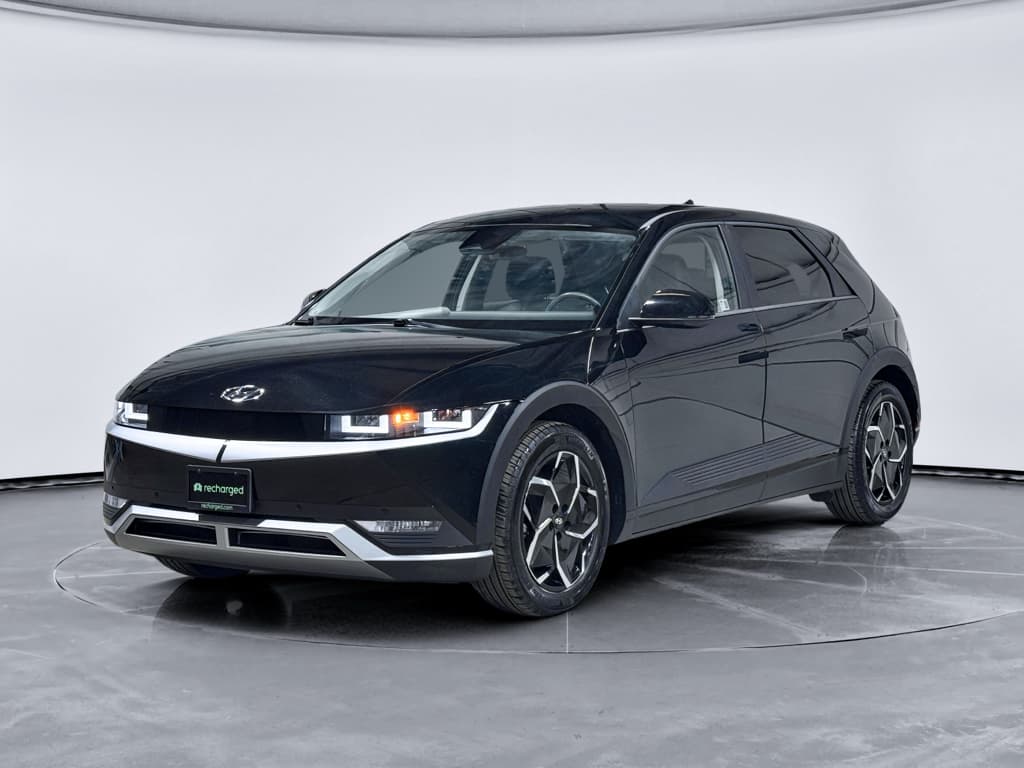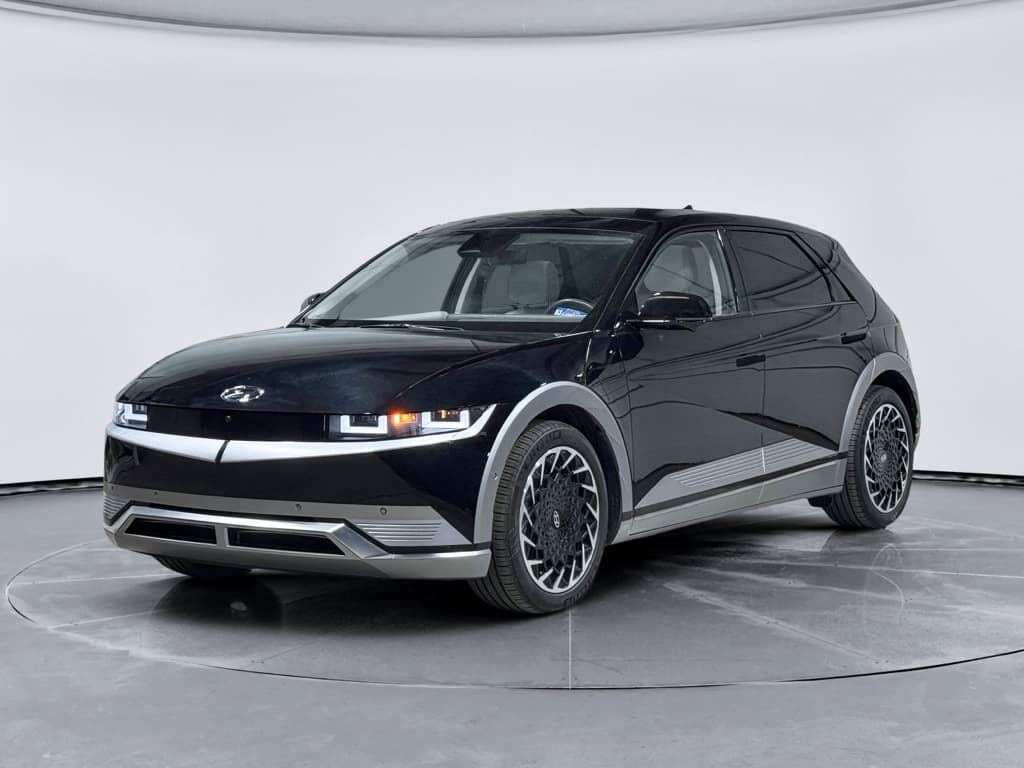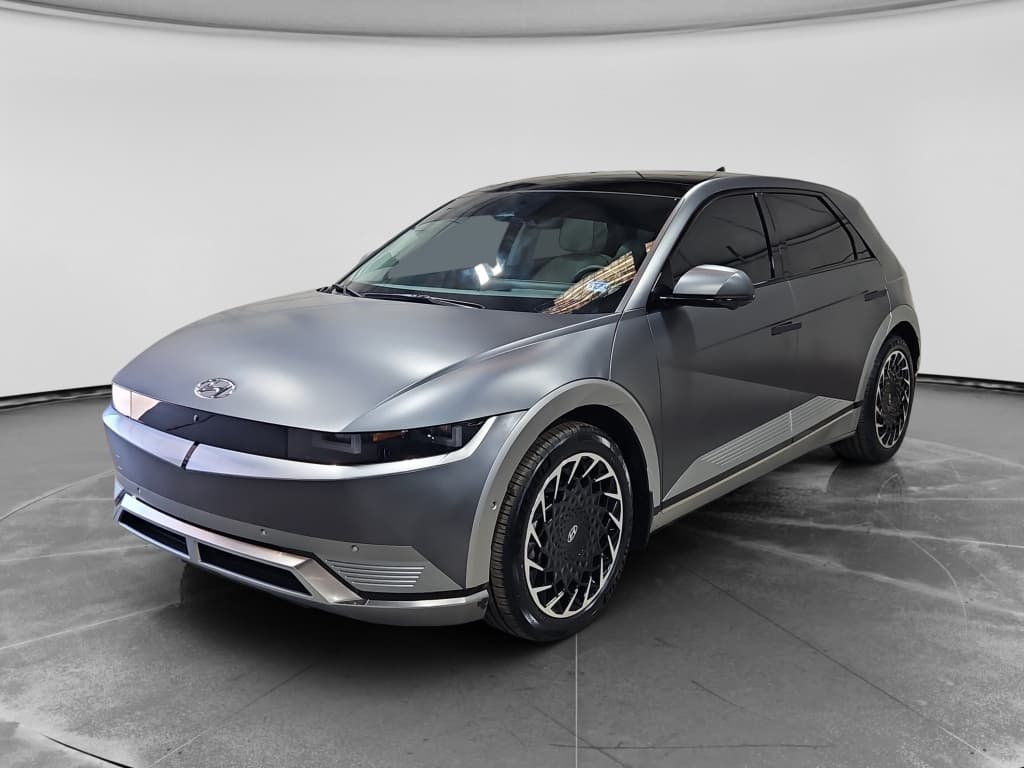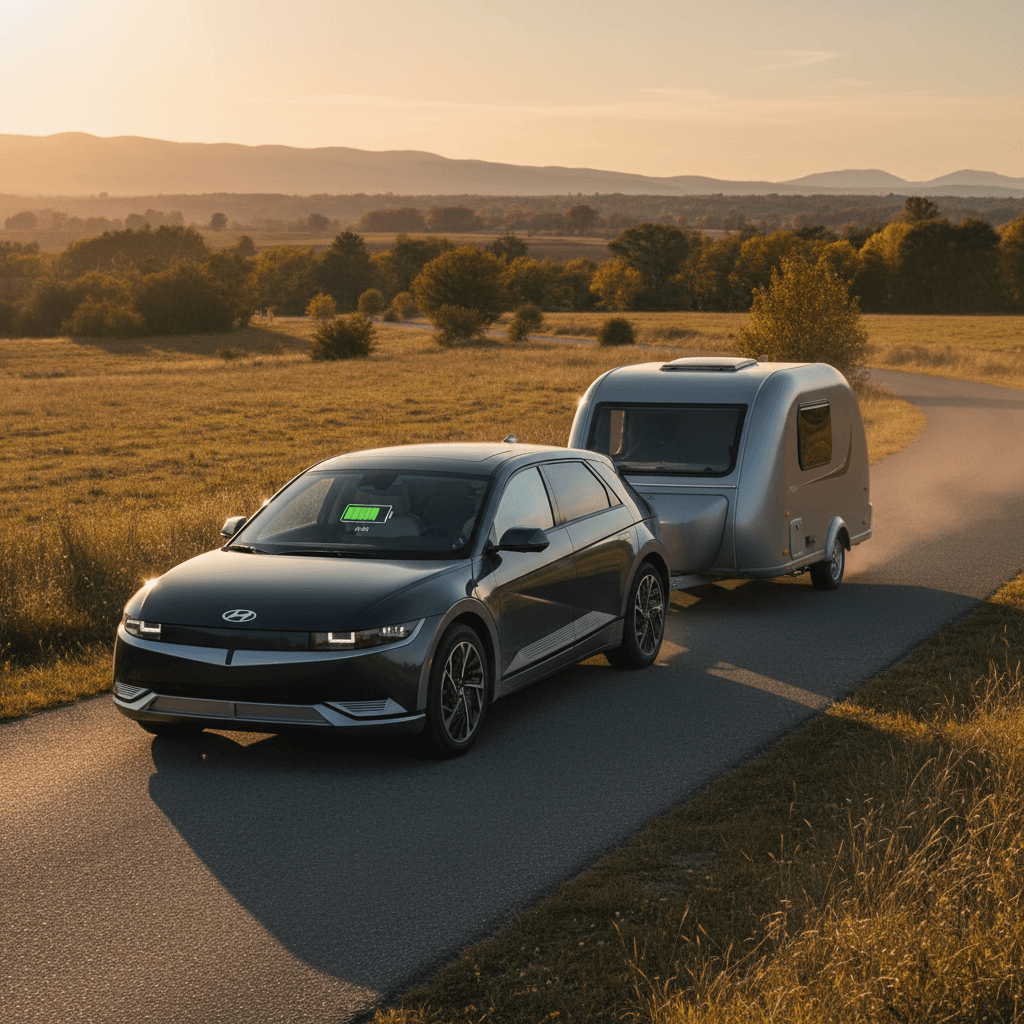
Hooking a trailer to a Hyundai Ioniq 5 can turn a sleek electric crossover into a surprisingly useful tow rig, but only if you understand its towing capacity and how much range loss you’ll see with a camper or cargo in tow. This guide walks you through the numbers, the fine print, and the real‑world stories so you know exactly what to expect before you hit the road.
Quick answer
Hyundai Ioniq 5 towing overview
Hyundai built the Ioniq 5 on an EV‑first platform with a long wheelbase, low center of gravity and strong instant torque, traits that actually make it feel very composed with a small trailer. The catch is that not every Ioniq 5 is rated to tow, and even the tow‑approved trims have limits that are usually lower in the U.S. than in Europe or Australia.
- Standard Range RWD models in many markets are generally not recommended for towing.
- Most U.S. Long Range models that are tow‑approved top out around 2,000–2,300 lbs braked and about 1,650–1,700 lbs unbraked.
- In Europe and some other regions, certain Long Range Ioniq 5 variants are rated up to 1,600 kg (3,527 lbs) braked, but tongue‑weight and axle limits keep North American ratings lower.
- Your door‑jamb sticker and owner’s manual always win, never exceed those numbers, even if you see a higher figure online.
Check your specific car
Towing capacity by trim, battery and market
To make sense of Hyundai Ioniq 5 towing capacity, you have to separate U.S.‑market Long Range models from global specifications you’ll see in press releases and spec sheets. Here’s a simplified view of what most owners will encounter.
Typical Hyundai Ioniq 5 tow ratings (overview, not a substitute for your manual)
Approximate ratings for common Ioniq 5 configurations. Always verify the exact numbers for your own vehicle.
| Configuration | Market example | Battery | Drive | Braked tow rating | Unbraked tow rating | Notes |
|---|---|---|---|---|---|---|
| Standard Range RWD | U.S. early models | 58 kWh | RWD | Not recommended | Not recommended | Often listed as not tow‑approved; check your manual. |
| Long Range RWD | U.S./Canada | 77.4 kWh | RWD | ~2,000–2,300 lbs | ~1,650–1,700 lbs | Dealer‑added hitches must still respect these limits. |
| Long Range AWD | U.S./Canada | 77.4 kWh | AWD | ~2,000–2,300 lbs | ~1,650–1,700 lbs | Similar limit; payload and tongue weight are the real constraints. |
| Long Range AWD | Europe/UK | 77.4 kWh | AWD | 1,600 kg (3,527 lbs) | 750 kg (1,653 lbs) | Higher rating, but typically with 100 kg tongue‑weight cap. |
| 2025 Ioniq 5 updates | Global | increased capacity | RWD/AWD | Similar ballpark | Similar ballpark | Refresh focuses more on range and tech than big tow‑rating changes. |
Ioniq 5 tow ratings vary by battery, drive type, model year and country.
Don’t ignore payload
Hyundai Ioniq 5 towing numbers at a glance
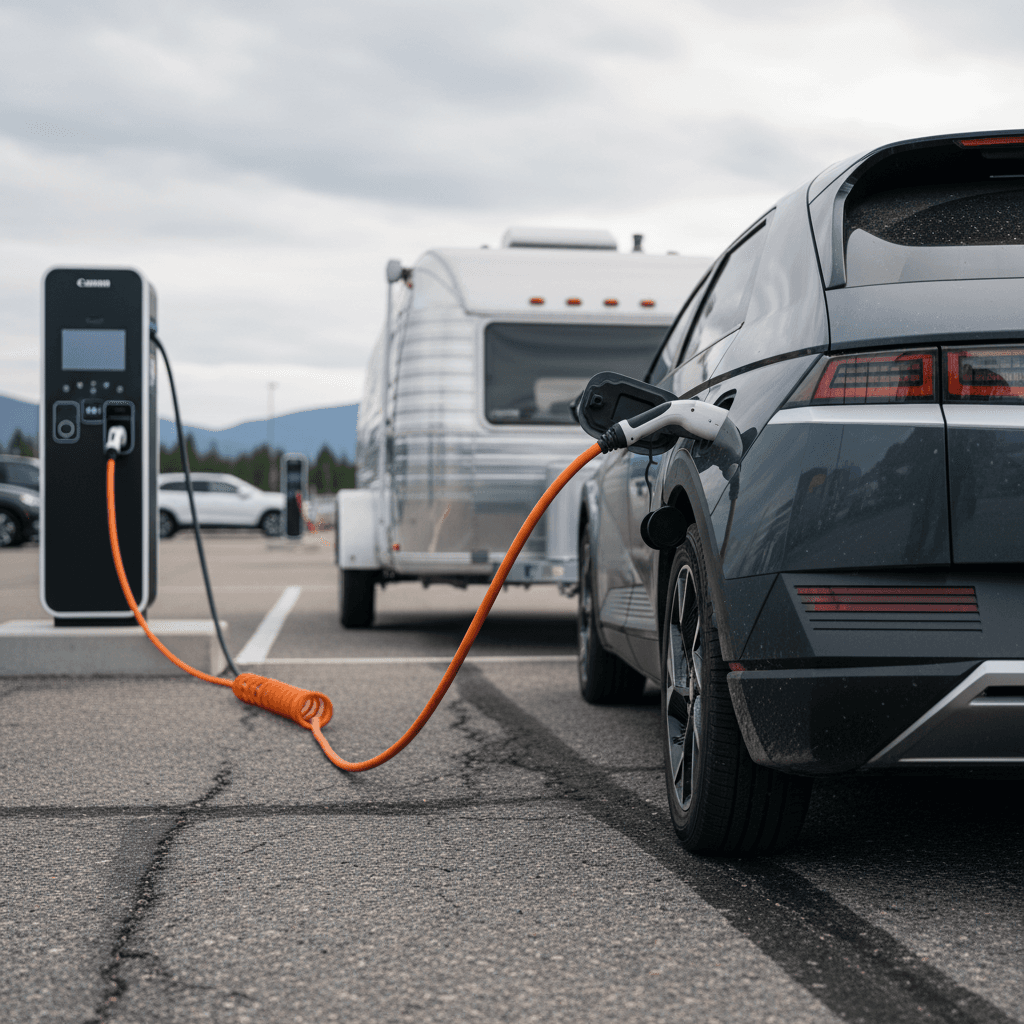
How towing impacts Hyundai Ioniq 5 range
If you’re used to gas SUVs, you probably think in terms of “miles per gallon when towing.” With an EV like the Ioniq 5, it’s the same story with different units: towing simply takes more energy to push that extra weight and frontal area through the air, so your miles per kWh drop sharply.
Why range loss feels so dramatic in an EV
The physics are familiar, but the numbers stare you in the face on a battery gauge.
Aerodynamic drag
A tall camper or boxy cargo trailer can more than double the Ioniq 5’s frontal area. Above about 50 mph, aero drag matters more than weight, which is why small teardrops tow so much more efficiently than big travel trailers.
Rolling resistance & weight
Every extra pound the car and trailer carry adds tire and bearing friction. That hurts efficiency most in stop‑and‑go and on hills, where you’re constantly adding and shedding momentum.
Highway speeds
Run 75 mph with a big trailer and you’ll see the worst range. Drop back to 55–60 mph and you may save 10–20% of your remaining range without changing anything else.
Light loads: bikes, tiny utility trailers
Owners who add a hitch bike rack or a very small, low trailer often report 10–25% range loss, especially if they keep speeds under 65 mph. The frontal area doesn’t change much, so you’re mostly paying a small penalty for added weight and rolling resistance.
Serious towing: campers and tall cargo
Hook up a full‑height camper or a tall cargo box and the story changes fast. Many EV drivers, including Ioniq 5 owners, see roughly 40–60% less range on the highway with a trailer that’s close to the vehicle’s max tow rating.
Think in halves
Real‑world Ioniq 5 towing and range loss examples
Lab tests are thin on EV towing, but real‑world owner stories and mixed‑driving data point in the same direction. Here’s how Hyundai Ioniq 5 towing capacity and range loss play out once you’re on the road.
Illustrative Ioniq 5 towing scenarios
Approximate examples based on owner reports and mixed EV towing data. Your results will vary with weather, terrain, speed and trailer shape.
| Scenario | Trailer type & weight | Driving style | Estimated range vs. solo driving | What owners report |
|---|---|---|---|---|
| Weekend bikes & gear | Hitch rack with 2 e‑bikes (~120 lbs added) | Mostly highway 65–70 mph | ~10–20% range loss | Highway range drops from about 260 mi to ~210–230 mi on a long‑range RWD car. |
| Utility trailer, home projects | 5×8 utility trailer, ~1,000–1,200 lbs | Mixed backroads 45–60 mph | ~25–35% range loss | Range per kWh drops notably, but 150–180 highway miles per charge is still realistic in good weather. |
| Compact camper | Low‑profile teardrop, ~1,500 lbs | Highway 60 mph | ~35–45% range loss | Owners often see usable highway range in the 130–170‑mile window between DC fast‑charge stops. |
| Full‑height small camper | Taller travel trailer near 2,000–2,300 lbs | Highway 65–70 mph | ~40–60% range loss | Range can fall toward 120–150 miles, and fast chargers become your new favorite roadside attraction. |
The shape of what you tow can matter as much as the weight.
“I tow a 12‑ft cargo trailer and get about half my normal highway range in summer at 60 mph. Still totally usable, just need to plan charges.”
Respect the limits, especially downhill
Trip planning when your range drops by 40–60%
Once you accept that towing will eat into your range, the Hyundai Ioniq 5 becomes a terrific road‑trip partner, as long as you plan with that reduced range in mind. Here’s how to make the math work without turning every weekend trip into a spreadsheet.
Practical planning checklist for towing with an Ioniq 5
1. Start with your real solo range
Use the range you actually see on an empty‑car road trip at your normal speeds, not the brochure number. If you get 250 miles at 70 mph in summer, that’s your baseline, not 300+ from the window sticker.
2. Cut that number in half for worst‑case
For max‑weight or tall campers at highway speeds, assume <strong>50% of that baseline</strong>. In our 250‑mile example, plan around 120–140 miles between fast charges so you’re not sweating the last 5% of the battery.
3. Map fast chargers along your trailer‑friendly route
Use apps that can factor in towing or manual waypoints. Avoid chargers with tight parking lots or steep driveways, getting stuck with a trailer in a cramped station is no fun.
4. Target 10–80% state of charge
The Ioniq 5 charges fastest in the middle of the battery. Quick 10–80% sessions are usually the sweet spot; that’s especially true when you’re stopping more often because of towing.
5. Adjust speed and stops to weather
Cold temps, headwinds and heavy rain all chip away at range. If the forecast looks ugly, either build in an extra charging stop or dial back your cruising speed a bit to save energy.
6. Have a “plan B” charger
When you’re towing, detours are costly. For each stop, mark a backup charger within 20–30 miles in case your first choice is busy or out of order.
Good news for weekend warriors
Setting up your Ioniq 5 for safe, efficient towing
The Ioniq 5 doesn’t roll out of the factory with a big chrome hitch and a seven‑pin plug the way a body‑on‑frame SUV might. Getting it ready to tow takes a bit of forethought, and a careful eye on specs.
Key setup decisions before you tow
These are the spots where attention to detail pays off in safety and range.
Hitch & wiring
- Use a hitch rated at or above Hyundai’s tow rating for your trim.
- Make sure wiring supports trailer brakes (often a 7‑pin connector plus brake controller).
- A professional installer familiar with EVs is worth the money.
Tongue weight & loading
- Aim for 10–15% of trailer weight on the tongue for stability.
- Keep heavy cargo low and between the trailer axles.
- Don’t exceed the Ioniq 5’s rear‑axle or payload limits.
Tires, pressures & mode
- Set tire pressures to the towing side of the spec if Hyundai lists one.
- Consider “Eco” or a normal drive mode for smoother throttle response.
- Check trailer tire age and pressure, blowouts waste time and range.
Charging‑station maneuvering
- Practice backing and tight turns before your first DC fast‑charge stop.
- Favor pull‑through stations or spots where you can line up straight with the charger.
- Carry a wheel chock for peace of mind on sloped pads.
Avoid bumper‑level accessories that drag
Protecting battery health when you tow
Towing asks more of the Ioniq 5’s battery and power electronics, but if you use common sense you’re not going to “ruin” the pack by taking the occasional camping trip. The same habits that are good for EV longevity generally apply here, just with more urgency because you’re pulling more load.
- Avoid running the pack all the way to 0% or sitting at 100% for long periods, especially in very hot or very cold weather.
- If the Ioniq 5 has pre‑conditioning for the battery and you know you’ll be fast‑charging, use it so you arrive at chargers with the pack in its ideal temperature window.
- On steep grades, let the drivetrain cool when you stop, popping the hood isn’t necessary, but giving the car a few minutes before plugging in after a hard climb is kind to the hardware.
- Use cabin pre‑conditioning while plugged in at campgrounds so you’re not burning as much energy on HVAC while towing the next morning.
Watch temp warnings, not myths
Is the Ioniq 5 right for your towing needs?
The Hyundai Ioniq 5 sits in a sweet spot: it’s not a heavy‑duty tow rig, but it’s far more capable than many shoppers assume. The trick is matching what you want to tow to what the car is truly built for.
What the Ioniq 5 tows well, and where it’s the wrong tool
Use these examples as a sniff test before you buy a trailer.
Great Ioniq 5 towing use cases
- Lightweight teardrop or pop‑up campers under the rated tow limit.
- Small boats, jet skis and utility trailers under ~2,000 lbs.
- Bikes, cargo platforms and gear on a hitch rack.
- Occasional regional road trips with frequent DC fast‑charging.
Situations to think twice about
- Full‑size travel trailers with large frontal area and high tongue weight.
- Regular cross‑country towing at 75–80 mph, especially in harsh weather.
- Heavy work trailers that push against payload and axle limits.
- Off‑grid boondocking where charging access is scarce.
If you routinely need to haul a larger camper or equipment trailer, you may be better served by a bigger EV SUV or pickup with higher tow ratings. But if your towing life is mostly weekend escapes and home‑improvement runs, an Ioniq 5 can absolutely pull its weight, quietly, smoothly, and with a lot less fuel‑stop drama than a gas truck.
Shopping for a used Ioniq 5 to tow with
Buying used is one of the smartest ways to get into an Ioniq 5 that’s already proven itself in the real world. If towing is on your wish list, though, you’ll want to look a little closer at the fine print and at how the previous owner used the car.
Used Ioniq 5 towing buyer’s checklist
Confirm your trim is tow‑approved
Not all Ioniq 5s are created equal. Verify in the owner’s manual or Hyundai documentation that your specific trim and battery combo is rated to tow, and note the exact braked, unbraked and tongue‑weight limits.
Inspect hitch quality and installation
If the car already has a hitch, check for rust, bent hardware, janky wiring or evidence of DIY bumper cutting. A clean, vehicle‑specific hitch with tidy wiring is a good sign; a hacked‑up rear bumper is not.
Look for signs of heavy towing use
Uneven tire wear, sagging rear suspension or a scarred hitch receiver may suggest the car spent a lot of time hauling near its limits. That’s not a dealbreaker by itself, but it’s a reason to look more closely at service records.
Ask for battery health documentation
A healthy pack is even more important when you’re towing, because you’re relying on every kWh for range. A report that goes beyond a simple dash‑display bar graph can give you much better insight into real remaining capacity.
Plan your charging strategy early
Before you buy, sketch out a few of your favorite trips with the trailer you have in mind. If the charging gaps look uncomfortable even with conservative range assumptions, you may want a different EV, or a different trailer.
How Recharged helps towing‑curious shoppers
Hyundai Ioniq 5 towing capacity & range loss FAQ
Frequently asked questions
Towing with a Hyundai Ioniq 5 isn’t about pretending your EV is a half‑ton pickup. It’s about understanding the real tow ratings, accepting that you’ll burn through more electrons with a trailer behind you, and planning your trips accordingly. If you match the right trailer to the right trim, and build your route around that 40–60% range loss, the Ioniq 5 can quietly tow campers, boats and utility trailers in a way that feels modern, effortless and surprisingly fun. And if you’re ready to find a used Ioniq 5 that fits your towing plans, Recharged can help you zero in on the right car, with verified battery health and expert guidance from first search to first campsite.