The Ford Mustang Mach‑E is one of the most interesting EVs on the road: fast, stylish, and genuinely fun to hustle. It’s also one of the most complained‑about electric SUVs, especially in its early model years. If you’re looking up the Ford Mustang Mach‑E’s biggest complaints before buying new or used, you’re doing your homework, and that’s where this guide comes in.
What this article covers
Why the Mach‑E Draws Such Strong Opinions
On paper, the Mach‑E lands right in the EV sweet spot: crossover practicality, sports‑car branding, strong acceleration, competitive range, and a price that undercuts many premium rivals when new. In practice, early adopters became unpaid beta testers for Ford’s first serious modern EV platform. Software bugs, high‑profile recalls and some head‑scratching packaging decisions (like making the frunk a paid option on 2026 models) have fueled a narrative that the Mach‑E is flawed. The truth is more nuanced: later model years are much better, and many issues are fixable, if you know what to look for.
Quick take: Should these complaints scare you off?
Mach‑E at a glance: Pros vs. Cons
Why owners love it, and why some swear it off
What owners love
- Instant torque and strong acceleration, especially GT and Performance Edition.
- Distinctive styling that doesn’t look like an appliance.
- Spacious cabin, big infotainment screen, modern tech.
- Competitive used pricing compared with Tesla Model Y and Hyundai Ioniq 5.
What owners complain about
- Real‑world range that falls short of EPA estimates for many drivers.
- Charging curve quirks and dependence on non‑Tesla public networks.
- Software gremlins in Sync 4 and BlueCruise; over‑the‑air updates that sometimes get "stuck."
- Multiple recalls for battery contactors, door latches and rear camera software.
Used‑buyer angle
Complaint 1: Real‑world range vs. EPA sticker
On the spec sheet, the Mach‑E looks great: depending on year, trim and battery, Ford quoted well north of 200 miles and up to around 300 miles of range. Many owners, however, discover that the real‑world range can be 15–30% lower, especially in cold weather or at highway speeds. That’s not unique to Ford, every EV loses range in those conditions, but the gap between expectation and reality is a major source of complaint.
- Highway driving at 70–80 mph can eat into range rapidly compared with gentle mixed driving.
- Cold weather hits the Mach‑E’s range hard, especially for short trips where the battery never fully warms up.
- Big wheels and performance trims (like GT) sacrifice efficiency for grip and looks.
- Many buyers came from gas vehicles and took EPA numbers as promises, not lab‑test estimates.
Cold‑weather reality check
Range complaints in context
How to live happily with Mach‑E range
Complaint 2: Charging experience and infrastructure
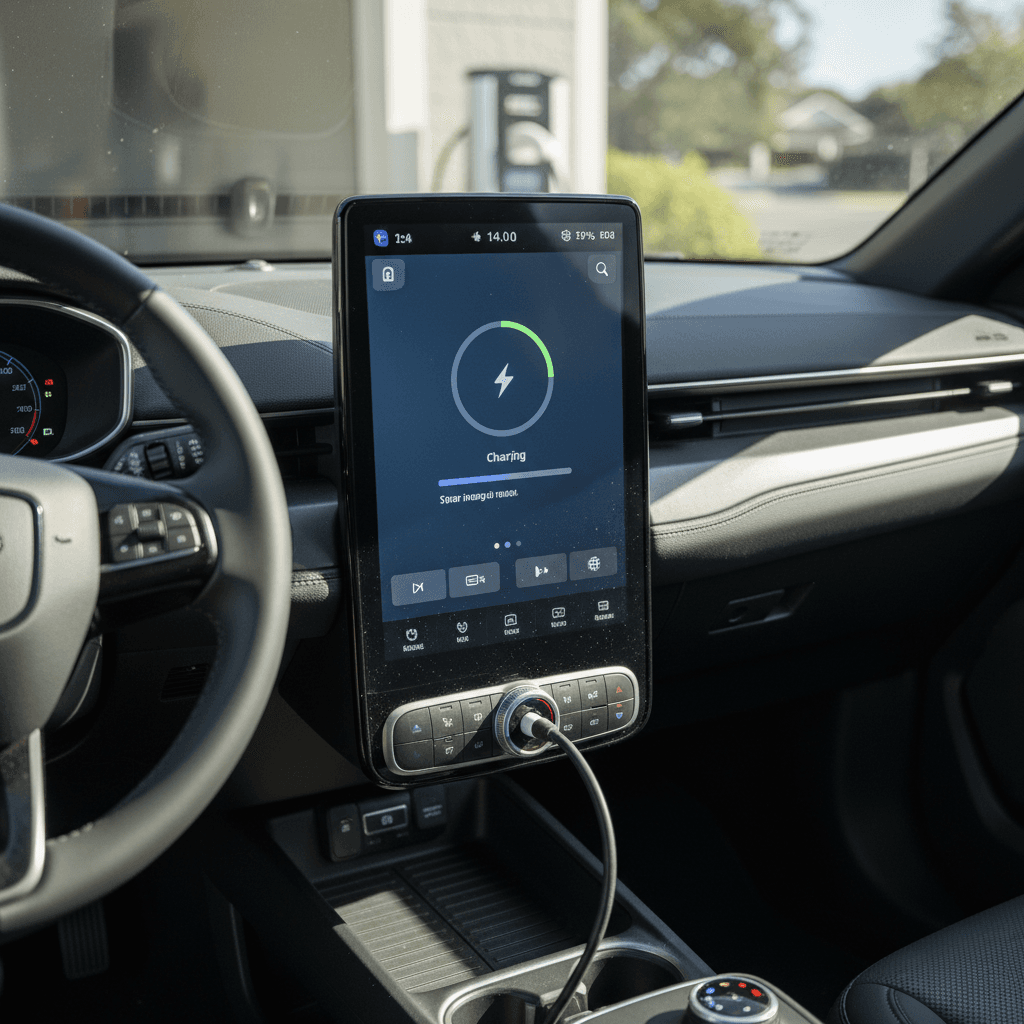
On DC fast chargers, Mach‑E owners frequently complain that charging is slower than expected and less predictable than on some rivals. The problem is a cocktail of factors: a conservative charging curve to protect the pack, station reliability (especially on older non‑Tesla networks), and early software that was not always great at preconditioning the battery before a stop.
What owners report
- Peak DC fast‑charge speeds that don’t last long, especially above ~60–70% state of charge.
- Significant differences between stations, even of the same brand.
- Occasional failures to initiate a charging session without unplugging and trying again.
- Road‑trip planning anxiety due to inconsistent infrastructure, not just the car.
What’s actually the car vs. the charger
- The Mach‑E’s charging curve is conservative compared with a Hyundai Ioniq 5 or Kia EV6; it protects the battery but irritates impatient drivers.
- Poorly maintained third‑party stations cause as many headaches as the vehicle hardware.
- Recent software updates have improved battery preconditioning and charge‑curve behavior on later model years.
Road‑trip charging strategy
Complaint 3: Software glitches, Sync 4 and BlueCruise
The Mach‑E is as much rolling software as rolling sheetmetal, and that’s where a lot of owner frustration lives. Early cars were plagued by Sync 4 bugs, frozen screens, laggy responses, navigation errors, Bluetooth gremlins, and occasional full‑system reboots. Add Ford’s BlueCruise hands‑free driving system to the mix and you get subscription confusion, camera errors and features that work beautifully one day and throw cryptic warnings the next.
- BlueCruise that refuses to engage on mapped highways despite an active subscription and correct settings.
- "Driver‑facing camera fault" errors on long trips, forcing a restart or disabling hands‑free until the next key cycle.
- Over‑the‑air updates that download but never install, leaving cars on outdated software until a dealer performs a hard reset.
- FordPass app data that doesn’t match the car’s status, especially for charge level and update history, until the 12‑volt system is power‑cycled.
The double‑edged sword of OTA updates
Common software issues and how they’re usually fixed
Frozen / black screen
BlueCruise won’t engage
Stuck OTA updates
Buyer beware on test drives
Complaint 4: Recalls – battery contactors, doors and cameras
The Mach‑E’s early years were recall‑heavy, and that understandably spooks used‑car shoppers. The headlines sound dire: loss of motive power, trapped rear passengers, frozen rear‑view cameras. The details matter.
High‑profile Mustang Mach‑E recalls to know about
Always run a VIN check at purchase time to confirm these have been addressed.
| Issue | Model years | What happens | Typical fix |
|---|---|---|---|
| High‑voltage battery contactor overheating | 2021–2022 (extended‑range, some GT) | Multiple DC fast‑charge sessions and heavy acceleration can overheat contactors and cause loss of drive power or failure to start. | Replace high‑voltage battery junction box and update powertrain and battery‑control software. |
| 12‑volt / door latch behavior | 2021–2025 | Low 12‑volt conditions can keep rear doors from opening from inside; some campaigns targeted electronic door‑latch logic that might trap rear passengers. | Software update for powertrain and diagnostic modules; in some cases revised latch logic. |
| Rear‑view camera software | 2021–2025 | Camera image may freeze, delay or fail in reverse, reducing visibility. | Over‑the‑air or dealer software update to the SYNC 4 infotainment system. |
Non‑negotiable for used buyers
Complaint 5: Build quality and ride comfort
The Mach‑E is a stylish crossover with some genuine Mustang flavor, but it isn’t built like a German luxury car, and some owners remind the internet of this daily. The most common build‑quality complaints revolve around panel alignment, paint blemishes, interior plastics that feel thin for the price, and the occasional rattle from the cargo area or panoramic roof.
What bothers owners the most
Fit, finish and noise
- Inconsistent panel gaps from car to car; some look tight, others have obvious variance.
- Wind noise around the mirror or A‑pillar at highway speeds.
- Suspension thumps and cargo‑area rattles on rough pavement.
Seats and ride
- Front seats that some drivers find too flat or firm on long drives.
- Ride quality that can feel busy on broken concrete, especially with larger wheels.
- GT models in particular skew toward "sporty" rather than relaxed.
Simple test on a test drive
Complaint 6: Ownership costs and depreciation
Like many early‑wave EVs, the Mach‑E has seen steeper depreciation than comparable gas SUVs. That stings if you bought new, but it’s excellent news if you’re entering the market now as a used buyer. Insurance can be higher than for a conventional Escape‑class crossover, and Ford service departments are still climbing the learning curve on EV‑specific repairs, which can mean longer stays for complex issues.
- New‑car buyers saw values slide as EV prices softened and competitors piled in.
- Battery and high‑voltage repairs, while rare, are expensive out of warranty, one reason recalls and extended coverage matter.
- On the plus side, routine maintenance is minimal: no oil changes, fewer moving parts, and regenerative braking that sips at the friction brakes.
Where Recharged fits in
Newer model years: What’s actually improved?
If you only read horror stories from early 2021–2022 owners, you’d think the Mach‑E was a rolling catastrophe. In reality, Ford has chipped away at the issues with hardware tweaks and a long list of software updates. Later‑build cars tend to be quieter, more refined, and less glitch‑prone.
Broad trend lines by model year
Details vary by trim and build date, but this is the general arc.
2021–2022 (early)
2023–2024
2025+
Shopping a used Mach‑E: How to avoid the worst issues
If the Mach‑E’s complaints haven’t scared you off, and they shouldn’t, if you’re realistic, the next step is learning how to separate a problem car from a good one. A well‑sorted Mach‑E is a terrific daily driver; a neglected early‑build with unfinished recall work is someone else’s science experiment.
Used Mustang Mach‑E buying checklist
1. Run a full recall and software check
Use the VIN on Ford’s recall site and confirm all campaigns, especially high‑voltage battery, door‑latch, and rear‑camera fixes, show as completed. Ask the seller or dealer for service records that list software updates and module reflashes.
2. Inspect battery health, not just range
On a test drive, compare the displayed full‑charge estimate to the original EPA rating and ask for documentation of battery diagnostics. With Recharged, the battery’s health is verified and summarized in an easy‑to‑read Recharged Score Report.
3. Stress‑test the tech
Spend 15–20 minutes living in the infotainment system: navigation, Bluetooth, CarPlay/Android Auto, drive‑mode changes, camera views. Try BlueCruise on a mapped highway if equipped. Any freezes, warnings or missing features deserve answers.
4. Check charging behavior
If possible, plug into a Level 2 charger and a DC fast charger. Confirm the car starts charging promptly, reports realistic times, and doesn’t throw errors. Slow charging is one thing; unreliable charging is a deal‑breaker.
5. Listen for rattles and inspect panels
Walk the car and look down the sides for wavy panel gaps or mismatched paint. On the road, listen for wind noise and rattles from the hatch, seats, or roof. These aren’t fatal flaws, but they tell you a lot about how the car was built and cared for.
6. Consider warranty and support
Know how much factory battery and EV‑component warranty remains. Factor in the convenience of working with an EV‑savvy retailer: Recharged offers EV‑specialist support, financing, trade‑in, and nationwide delivery if you decide a Mach‑E fits your life.
FAQ: Ford Mustang Mach‑E biggest complaints
Common questions about Mach‑E complaints
Bottom line: Is the Mustang Mach‑E worth it used?
Every interesting car has a split personality, and the Ford Mustang Mach‑E is no exception. On one side, you have a quick, handsome electric crossover that’s genuinely fun to drive, with a practical cabin and increasingly smart software. On the other, you have a first‑generation EV from a legacy brand still learning the dark arts of over‑the‑air updates and high‑voltage customer support, and that’s where most of the biggest complaints live.
If you go in expecting perfection, the Mach‑E will disappoint you. If you go in with clear eyes, armed with recall checks, a battery‑health report, and a deliberate test drive, it can be one of the best values in the used‑EV market. That’s especially true when you shop through an EV‑focused retailer like Recharged, where the homework on battery health, pricing and history is already done. In that light, the Mach‑E’s rough edges look less like deal‑breakers and more like bargaining chips.