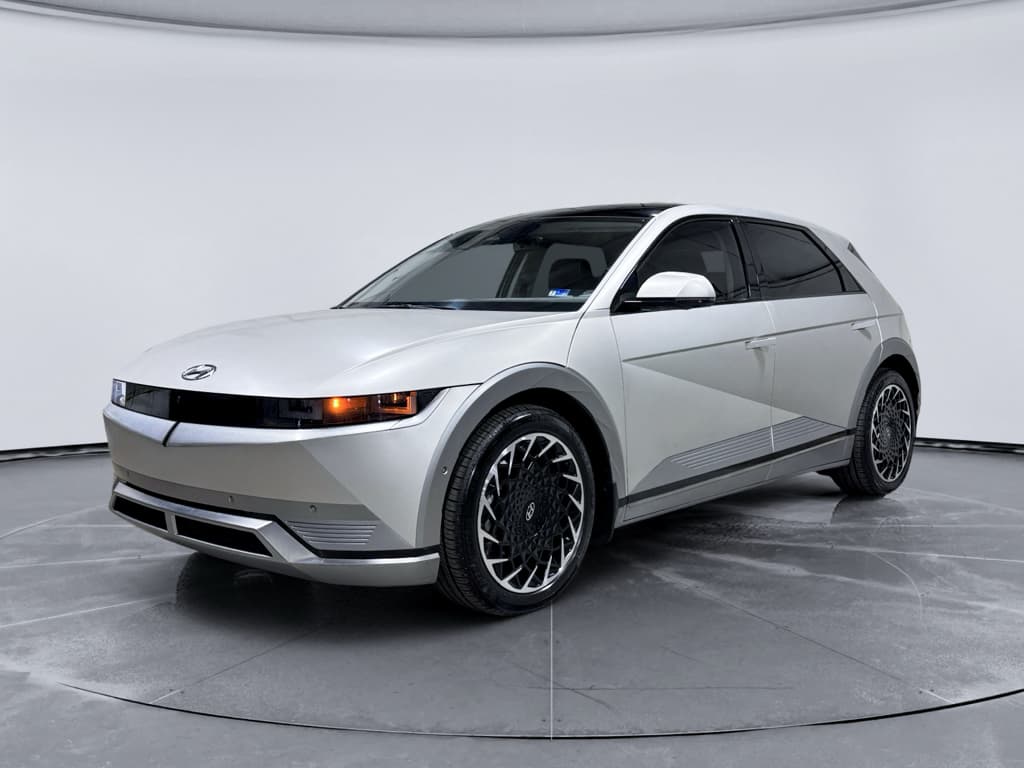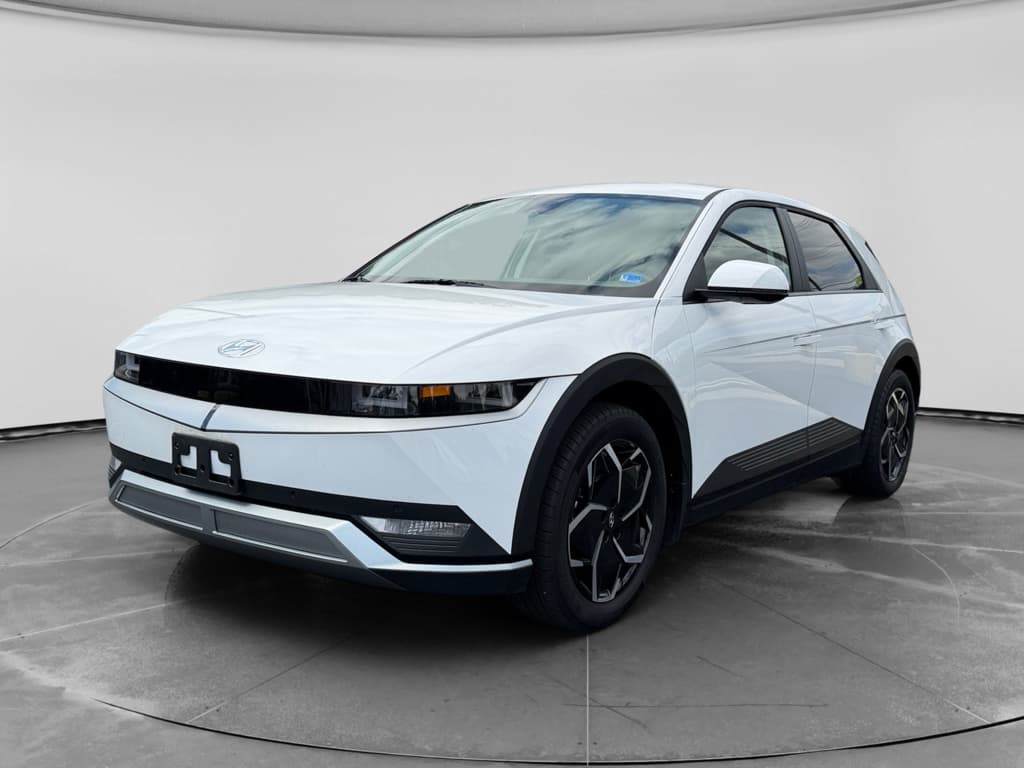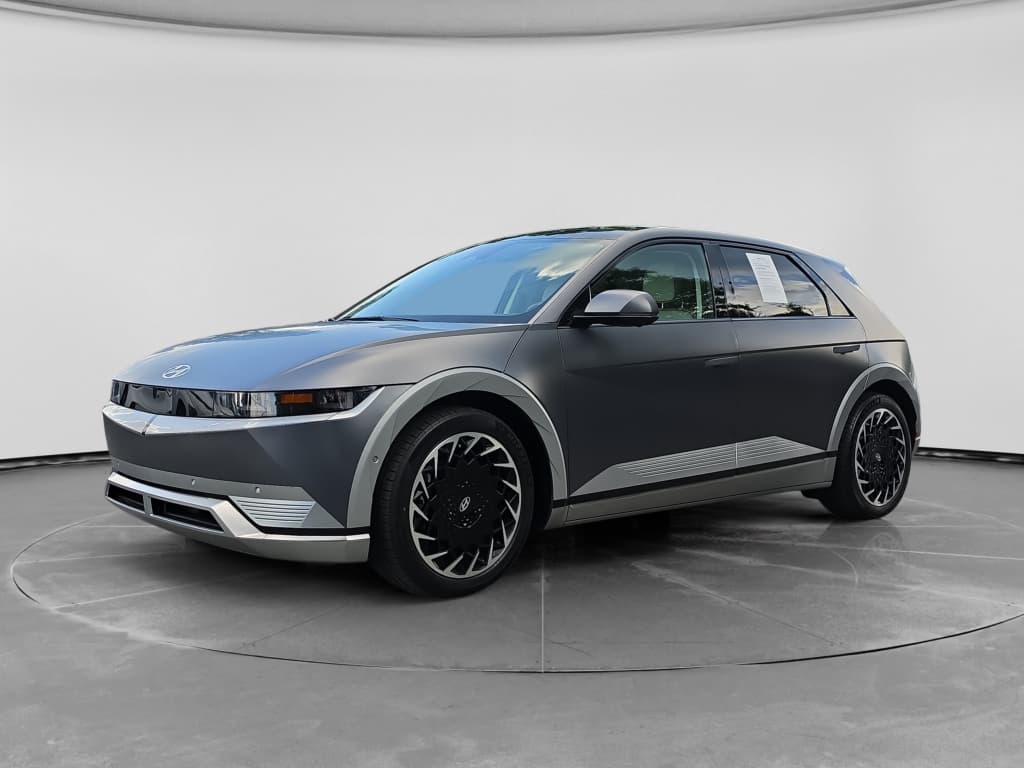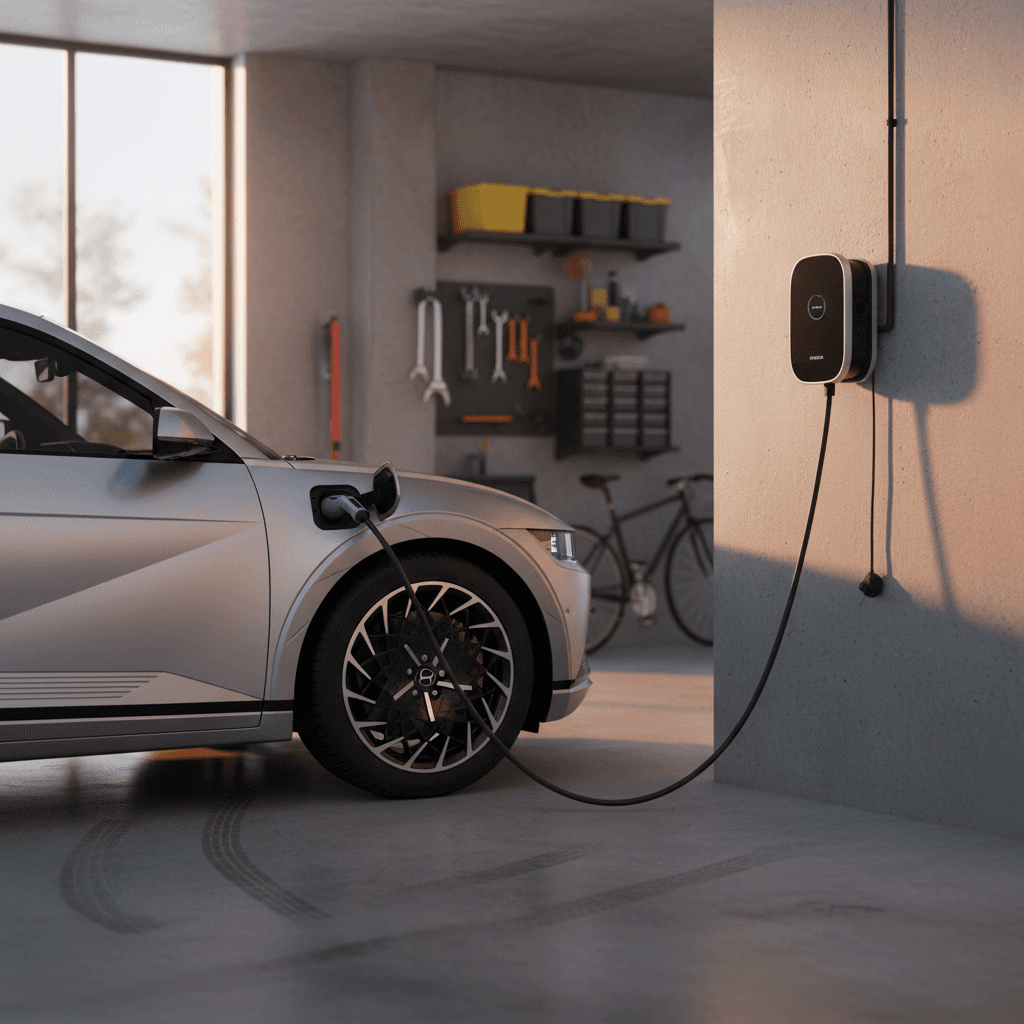
If you’ve just brought home a Hyundai Ioniq 5, or you’re shopping for one, the next big question is, “What’s the best home charger for my Ioniq 5?” The right Level 2 setup turns your driveway into your own personal “gas station,” so you leave every morning with a full battery instead of hunting for public fast chargers.
Quick answer
Why home charging matters for the Hyundai Ioniq 5
The Ioniq 5 is built for DC fast charging, 10–80% in around 18 minutes on a strong 800‑volt DC charger, but that’s not how you want to treat your battery every day. For daily use, Level 2 home charging is quieter, cheaper, and easier on the pack. You plug in when you get home and wake up to a full battery, without planning your life around charging stops.
Hyundai Ioniq 5 home charging at a glance
Think about lifestyle, not just kilowatts
Ioniq 5 charging basics: what your car can actually use
Before you pick a wall box, you need to know what the car itself can accept. The Ioniq 5’s onboard AC charger is what limits home charging speed, buying a monster 80‑amp EVSE doesn’t help if the car can only use part of it.
- Most North American Hyundai Ioniq 5 models support roughly 11–11.5 kW AC charging on Level 2 (about 48 amps at 240V).
- The included Level 1 cable (standard household outlet) is fine for emergencies but only adds a few miles per hour.
- Level 2 (240V) charging is the sweet spot for daily use: fast enough to refill overnight, gentle enough for battery health.
- DC fast charging (public stations) is great for road trips, but not what you’ll install at home.
Don’t overbuy on amperage alone
NACS vs. J1772: which connector does your Ioniq 5 have?
Hyundai has been in the middle of the connector transition that’s sweeping North America, and the Ioniq 5 sits right on that fault line. Your model year determines which plug you need at home.
Hyundai Ioniq 5 connectors by model year (North America)
Use your model year to decide whether you want a NACS‑native charger or a J1772 unit with adapter.
| Model years | AC home charging connector | DC fast charging connector | What to buy for home |
|---|---|---|---|
| 2022–2024 | J1772 | CCS | J1772 Level 2 charger (or NACS with a J1772 adapter) |
| 2025+ | NACS | NACS | NACS Level 2 charger is the cleanest solution |
| Imported or early builds | Varies | Varies | Physically inspect the port or check your window sticker |
Check your charge port door before ordering a charger if you’re unsure which connector you have.
Adapters are an option, but simpler is better
How fast will my Ioniq 5 charge at home?
Real‑world charging speed depends on your battery size, how low you arrive, and the size of your home circuit. But you can get in the right ballpark pretty quickly.
Typical Ioniq 5 home charging speeds
Assumes roughly 11 kW onboard AC charger and healthy home wiring
32A Level 2 (7.7 kW)
Good for commuters who drive 30–60 miles a day.
- Range added: ~25–30 miles per hour
- 10–80% top‑up: overnight
- Works on many existing 40A circuits
40A Level 2 (9.6 kW)
Sweet spot for most Ioniq 5 owners.
- Range added: ~32–38 miles per hour
- 10–80%: roughly 6–7 hours
- Often enough to refill from low by morning
48A Level 2 (11.5 kW)
Maximizes what the Ioniq 5 can use.
- Range added: ~40–45 miles per hour
- 10–80%: closer to 4–5 hours
- Requires a 60A circuit and solid electrical service
Let the car do the work overnight
Best home chargers for Hyundai Ioniq 5: our shortlist
There’s no single “winner” that fits every garage. Instead, think in terms of best‑for‑you. Below are popular, well‑reviewed chargers that pair especially well with the Ioniq 5, based on 2026 pricing and availability.
Top home chargers for the Hyundai Ioniq 5
Sorted by common use case, not just specs
ChargePoint Home Flex
Best all‑around smart charger for most Ioniq 5 owners.
- Adjustable up to 50A (hardwired) with 240V
- Excellent app, scheduling, usage tracking
- Offered or rebadged by Hyundai in some programs
- Available in J1772 and NACS versions
Great choice if you want a polished app experience and utility rebates.
Tesla Wall Connector (NACS)
Best for 2025+ NACS Ioniq 5 households, especially if you also own a Tesla.
- Up to 48A on a 60A circuit
- Slim, elegant hardware with integrated cable management
- Clean NACS connection, no adapter on newer Ioniq 5s
- Strong value for the price if you’re NACS‑only
Emporia Level 2 EV Charger
Best value smart charger with deep energy insights.
- Up to 48A, Wi‑Fi connected
- Excellent for solar homes; can prioritize excess solar
- Robust app with detailed energy data
- Often priced below many “big name” smart chargers
Grizzl‑E Classic or Ultimate
Best tough, no‑nonsense workhorse.
- Typically 40A (Classic) or up to 80A (Ultimate models)
- Rugged, metal case, great for harsh climates
- No app required; set‑and‑forget operation
- Ideal if you just want a brick that charges every time
A simple rule of thumb
Comparison table: top Ioniq 5 home chargers
Popular Level 2 home chargers for Hyundai Ioniq 5
High‑level comparison to help you narrow your shopping list before you dig into individual reviews and local pricing.
| Charger | Max amps | Connector(s) | Smart features | Approx. price (USD) | Best for |
|---|---|---|---|---|---|
| ChargePoint Home Flex | 50A | J1772 or NACS | Full app, Wi‑Fi, scheduling, energy use | ≈ $500–$600 | All‑around choice with strong app |
| Tesla Wall Connector | 48A | NACS | App integration in Tesla ecosystem | ≈ $450–$550 | 2025+ NACS Ioniq 5 & Tesla households |
| Emporia Level 2 | 48A | J1772 (adapter for NACS) | Advanced app, solar‑aware charging | ≈ $400–$480 | Value‑minded, data‑driven owners |
| Grizzl‑E Classic | 40A | J1772 | No app; simple DIP‑switch setup | ≈ $380–$430 | Cold climates, outdoor installs, simplicity |
Pricing is approximate and varies by retailer, rebates, and utility programs.
How to size your home charger: amps, volts, and circuits
Picking the right home charger for your Hyundai Ioniq 5 isn’t just about the box, it’s about what your electrical panel can safely support. Here’s how to think through the numbers without needing an engineering degree.
Right‑sizing your Ioniq 5 home charger
1. Confirm your service and panel space
Most modern U.S. homes have 200A service; older homes may have 100A. An electrician can confirm whether you have enough capacity for a new 40–60A 240V circuit and whether there’s room for a double‑pole breaker.
2. Choose your target charger current
For Ioniq 5 owners, a 40A or 48A charger hits the sweet spot. A 32A unit is fine for lighter drivers or constrained panels. Remember, the car maxes out around 48A on AC.
3. Apply the 80% rule
Continuous loads like EV charging should be limited to 80% of circuit rating. A 40A charger needs a 50A breaker; a 48A charger needs a 60A breaker. This is where an electrician really earns their keep.
4. Decide on hardwired vs. plug‑in
Hardwired chargers are usually required above 40A and often recommended for outdoor installs. Plug‑in units (e.g., NEMA 14‑50) are flexible and easier to replace later but still need a properly installed outlet.
5. Think about cable length and mounting
Measure the distance from your panel to your parking spot and from the charger to your charge port, especially if you back in. A 23–25 ft cable is ideal for most Ioniq 5 setups.
Don’t DIY high‑power circuits unless you’re qualified
Installation options and safety
Use an existing 240V outlet (if you have one)
If you already have a NEMA 14‑50 or similar 240V outlet in the garage, for a previous EV, RV, or electric range, you may be able to plug a suitable charger straight in.
- Verify the outlet’s condition and circuit rating.
- Make sure nothing else high‑draw is on that circuit.
- Match the charger’s max amps to the circuit and 80% rule.
This is often the lowest‑cost path to Level 2 charging.
Install a dedicated EV circuit
If you’re starting from scratch, most electricians will recommend a dedicated 240V circuit sized for your intended charger (for example, a 60A circuit for a 48A EVSE).
- Cleaner, safer, and easier to troubleshoot.
- Future‑proofs your home for additional EVs.
- May qualify for local utility or state rebates.
Ask for a quote on both the panel work and charger mounting so there are no surprises.
Ask about rebates and tax credits
Smart features vs. simple box: what do you really need?
Once you know your connector type and circuit size, the last big question is whether you want a smart charger or a “dumb” one. Both will fill your Ioniq 5 just fine, it’s about control, data, and price.
Smart vs. simple chargers for the Ioniq 5
Choose the personality that matches yours
Smart chargers (ChargePoint, Emporia, Wallbox, etc.)
- Wi‑Fi or Ethernet connection
- App‑based scheduling and energy tracking
- Can align charging with off‑peak utility rates
- Some integrate with solar or home energy monitoring
- Often required for certain rebates
Best if you love data, have time‑of‑use rates, or plan to manage multiple EVs.
Simple chargers (Grizzl‑E, basic wall boxes)
- No app, no Wi‑Fi, usually lower cost
- Rely on the car’s built‑in scheduling (which the Ioniq 5 supports)
- Fewer things to break or misconfigure
- Great for harsh climates and outdoor mounting
Best if you just want to plug in, walk away, and never think about software updates.
Step-by-step: choosing the right home charger for your Ioniq 5
Practical decision checklist for Ioniq 5 owners
1. Confirm your model year and connector
Check whether your Ioniq 5 uses J1772 (2022–2024) or NACS (2025+ in North America). This alone narrows the playing field and determines whether you can use a Tesla Wall Connector directly.
2. Estimate your daily driving
If you typically drive under 50 miles a day, a 32A or 40A charger is plenty. Road‑warrior commute or frequent same‑day top‑ups? Lean toward 48A on a 60A circuit if your panel supports it.
3. Decide on smart vs. simple
If you want energy reports, off‑peak scheduling, or solar integration, shortlist smart chargers like ChargePoint Home Flex or Emporia. If you prefer a set‑and‑forget brick, put Grizzl‑E near the top of your list.
4. Get an electrician quote early
Before you order the charger, get at least one estimate for the wiring work. Sometimes the difference between a 40A and 60A circuit is small; in older homes, it may be the limiting factor.
5. Order the charger that fits your plan
Match amperage, connector, and features to your lifestyle and budget. Don’t forget to check for utility‑approved models if you’re counting on a rebate.
6. Set up schedules and test a full charge
Once installed, program your Ioniq 5 or charger to use off‑peak hours, then run a full overnight session. Confirm start/stop times, charging speed, and that the cable comfortably reaches your preferred parking spot.
How Recharged helps Ioniq 5 owners
If you’re still deciding whether the Hyundai Ioniq 5 is right for you, or you’re hunting for a well‑cared‑for used example, Recharged is built to take the guesswork out of EV ownership. Every vehicle on our marketplace comes with a Recharged Score Report that includes verified battery health, pricing transparency, and expert guidance, so you know exactly what you’re buying.
Our EV specialists talk through real‑world charging needs before you ever sign paperwork. We’ll help you think through home charging options, whether that’s a modest 32A Level 2 setup in an older home or a more robust 48A install paired with solar. With nationwide delivery and an Experience Center in Richmond, VA, you can shop digitally and still get human, EV‑savvy support.
Planning ahead pays off
Ready to find your next EV?
Browse VehiclesHyundai Ioniq 5 home charger FAQ
Frequently asked questions about Ioniq 5 home charging
A good home charger won’t make your Hyundai Ioniq 5 any prettier or faster, but it will quietly determine how easy it is to live with every single day. Once you sort out connector type, circuit size, and whether you want smart features, choosing the “best” charger becomes a lot less mysterious. Focus on a safe, properly installed Level 2 unit from a trusted brand, and your Ioniq 5 will be ready to go every morning while you barely think about kilowatts at all.