If you’re wondering how to sell a Genesis GV60, you’re not alone. The GV60 is a sharp, fast‑charging luxury EV, but like many electric SUVs, it has taken a heavy depreciation hit in its first few years. That’s bad news if you guess on price, but good news if you understand the market and use tools like battery health reports to stand out. This guide walks you through timing, pricing, prep, and the best ways to sell your GV60 without leaving thousands on the table.
Quick takeaway
Why selling a Genesis GV60 is different from other SUVs
Genesis GV60 used-market snapshot (2025–2026)
Those numbers explain why GV60 owners feel the depreciation sting so acutely, and why buyers see it as a bargain luxury EV. Your job as a seller is to bridge that gap: show why your particular GV60 is worth more than the bare numbers by proving battery health, charging performance, and overall condition.
Depreciation reality check
Step 1: Decide when to sell your Genesis GV60
- Before the warranty clock scares buyers. Shoppers get more comfortable when there’s time left on the 10‑year/100,000‑mile EV battery warranty and 5‑year basic warranty. Selling with healthy warranty runway usually boosts demand.
- Before the next redesign or big battery upgrade. Major updates to related E‑GMP models (like bigger batteries or new interiors) can put additional pressure on older GV60 pricing.
- Before you add a lot more miles. Luxury EV buyers are sensitive to mileage. If you know you’ll add 12,000–15,000 miles this year, selling sooner can net more than waiting.
Timing tip
Step 2: Choose how to sell – trade-in vs private sale vs marketplace
Three main ways to sell a Genesis GV60
Balance speed, price, and hassle to decide what fits you.
1. Traditional trade‑in
Best for: Speed and convenience when buying another car from a dealer.
- One‑stop transaction and minimal paperwork.
- Sales‑tax advantage in many states when trading vs. selling outright.
- Usually the lowest dollar amount, dealers price in risk on EV values.
2. Private‑party sale
Best for: Maximizing price if you’re willing to do the work.
- List on sites like Cars.com, Autotrader, Facebook Marketplace, local classifieds.
- Requires screening buyers, scheduling test drives, handling paperwork and payoff.
- Can bring several thousand dollars more than trade‑in if priced correctly.
3. EV‑focused marketplace
Best for: Higher price than a typical dealer with less hassle than private sale.
- Specialized in EVs, so they understand battery health and fast charging.
- Often offer instant offers, consignment, or trade‑in options.
- Recharged, for example, can buy your GV60, list it for you, or take it on consignment, and manages nationwide buyers, paperwork, and delivery.
Where Recharged fits in
Step 3: Price your Genesis GV60 realistically
With the GV60, getting the price wrong by even a few thousand dollars can mean no calls, or a line of bargain hunters. Use a data‑driven approach and adjust for your car’s unique story, especially battery health and options.
Pricing checkpoints for your GV60
Use multiple data points, then adjust for trim, mileage, battery health, and local demand.
| Source | What it Tells You | How to Use It |
|---|---|---|
| KBB / Edmunds values | Traditional trade‑in and private‑party ranges based on national data. | Start here for a baseline, then compare against real listings. |
| EV marketplaces (like Recharged) | Actual asking and transaction prices for similar GV60s. | See what well‑presented cars with battery reports are really fetching. |
| Local dealer offers | What dealers in your area are willing to pay today. | Good reality check, and can set your absolute floor price. |
| Comparable listings | Active listings with same year, trim, mileage, and options. | Aim to be competitive, not the highest price for your spec. |
These aren’t price guarantees, but a framework to sanity‑check your asking or reserve price.
How to adjust your asking price
Price band factors that push value up
- Under ~30,000 miles with clean history.
- Advanced or Performance trim with desirable options (Bang & Olufsen audio, Driver Assistance, etc.).
- Documented DC fast‑charging performance and healthy battery metrics.
- Original tires with good tread or recent quality replacements.
- Clean Carfax, no accidents or buyback history.
Price band factors that push value down
- High mileage for age (40,000+ miles in the first few years).
- Accident history, buyback title, or incomplete service records.
- Noticeable battery degradation or charging issues.
- Cosmetic damage, curb rash on 21‑inch wheels, or worn interior.
- Outdated software or ignored recalls and TSBs.
Step 4: Get your GV60 ready – detail, photos, and records
Pre‑sale prep checklist for a Genesis GV60
1. Deep clean inside and out
Have the GV60 professionally detailed if you can, especially the light‑colored Genesis interiors that show dirt. Clean the frunk, trunk, underfloor storage, and charging port. A sparkling EV photographs and shows better, which directly affects perceived value.
2. Address minor cosmetic issues
Touch up small paint chips, repair obvious curb rash on the wheels, and replace missing caps or trim pieces. You don’t have to make it perfect, but obvious, cheap‑to‑fix issues invite lowball offers.
3. Gather service and charging records
Pull digital service history from your Genesis dealer account, save receipts for tire rotations and alignments, and export any charging or battery‑health data you’ve tracked. Buyers love organized paperwork on a relatively new EV.
4. Update software and handle recalls
Make sure the vehicle is on current software, and ask your Genesis dealer to perform any open recalls or campaigns. A fully up‑to‑date GV60 feels less risky to the next owner.
5. Photograph it like a dealer
Shoot in good natural light with a clean background. Capture all four corners, front and rear 3/4 views, interior, screens powered on, frunk and trunk open, wheels, and any wear spots. Include photos of included accessories: key fobs, charge cord, mats, etc.
6. Be transparent about flaws
Document scratches, wheel rash, or interior wear in your photos and description. Serious buyers will find them anyway, and honesty up front builds trust and reduces haggling later.
Step 5: Highlight battery health and charging performance
For EV shoppers, the question behind every message is the same: “How healthy is the battery?” The Genesis GV60 uses a single 77.4‑kWh pack across trims, so buyers focus less on size and more on how well it’s aging and how quickly it charges.
How to tell a convincing battery story
Go beyond the dashboard’s state‑of‑charge bar.
Real‑world range notes
Share your actual highway and mixed‑driving range with the climate control set as you normally use it.
- Example: “On my 45‑mile mixed commute, I typically use 20–22% from 80% charge.”
- Avoid exaggerated claims, savvy EV buyers can spot them instantly.
Fast‑charge performance
Buyers want to know the GV60 still pulls strong kW at DC fast chargers.
- Mention your typical 10–80% charge time at a 150+ kW charger.
- If you’ve road‑tripped it, briefly describe your charging experience.
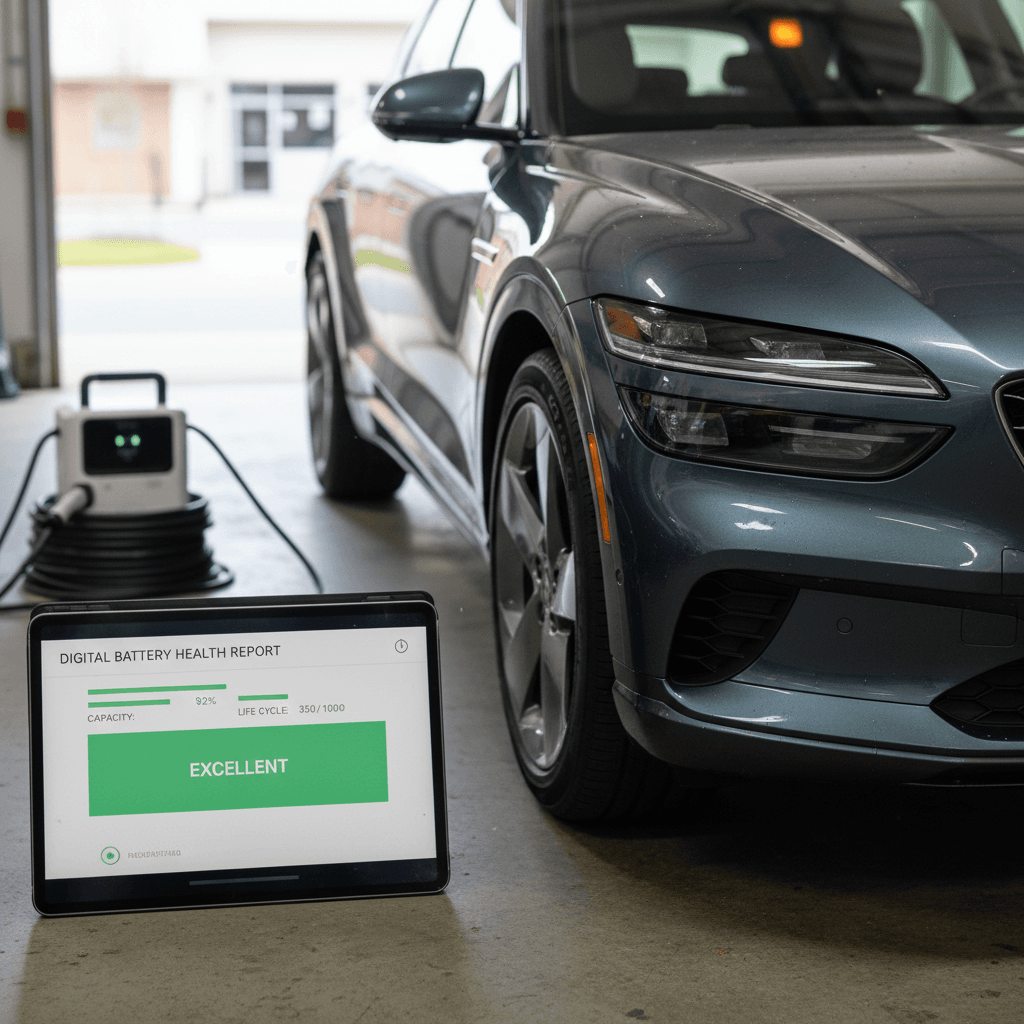
Independent battery health report
On‑board readings can be vague. A third‑party diagnostic gives buyers something concrete.
- Recharged’s Score Report uses verified battery health data and DC‑fast‑charging tests to benchmark your GV60.
- Including that report in your listing differentiates you from nearly every private seller.
How Recharged handles battery health
Step 6: Write a GV60 listing that actually sells
Most listings read like a copy‑and‑paste from the window sticker. A good Genesis GV60 listing does three things: hits the must‑have facts, addresses EV‑specific concerns, and explains why your particular car is a safe bet.
Anatomy of a strong Genesis GV60 listing
1. Lead with trim, mileage, and condition
Example: “2024 Genesis GV60 Advanced AWD – 18,400 miles – excellent condition, clean title, no accidents.” Trim names matter; Advanced and Performance buyers know what they’re looking for.
2. Call out the battery and charging story
In the first few lines, mention real‑world range and any battery health reporting: “77.4‑kWh pack with consistent 240–260 mile range in mixed driving; recent third‑party battery health report available.”
3. List standout options and features
Mention features shoppers search for: pano roof, B&O sound, 20" or 21" wheels, Highway Driving Assist, head‑up display, facial recognition, etc. Don’t bury them in a wall of text, use short, scannable bullets.
4. Be upfront about imperfections
Briefly note any non‑structural issues: “One curb rash spot on rear wheel, light scratch on rear bumper, see photos.” You’ll come across as more trustworthy and cut down on back‑and‑forth about surprises.
5. Explain why you’re selling
A simple, plausible reason calms buyer nerves: “Upsizing to a 3‑row SUV,” or “Moving somewhere with no home charging.” Avoid anything that sounds like you’re running from a problem.
6. Clarify what’s included
Spell out extras: both key fobs, mobile charge cable, manuals, all‑weather mats, charging adapters, and any extended warranty or prepaid maintenance that transfers.
Copy‑and‑adapt listing template
Step 7: Handle test drives and negotiate like a pro
Safe, smooth test drives
- Meet in a public place during daylight, ideally near a bank or police‑station lot.
- Verify the buyer’s driver’s license and, if possible, snap a picture of it and their plate.
- Ride along on the test drive so you can answer questions and protect your car.
- Let them experience key EV moments: one‑pedal driving, quiet acceleration, and a quick DC fast‑charge stop if reasonable.
- Have the title, payoff information, and any warranty documents handy so serious buyers can see there are no hidden complications.
Negotiating on a depreciated EV
- Expect buyers to bring up GV60 depreciation headlines. Acknowledge it; then focus on your specific car’s strengths, battery health, options, maintenance.
- Have your walk‑away number ready, based on trade‑in offers and marketplace data.
- Use your battery report and clean inspection to justify why you’re firmer on price than a basic, unknown‑history listing.
- Be flexible on small requests, like including floor mats or a full charge at pickup, to close a reasonable deal.
- If someone is far off your price and focused only on undercutting dealers, politely thank them and move on.
Payment safety rules
Should you sell your GV60 to Recharged?
Selling a used EV isn’t just about price; it’s about how much of your time and risk you’re willing to take on. That’s where a specialized EV retailer like Recharged can be useful, especially with a model like the GV60, where battery health and fast‑charging behavior are front‑and‑center questions.
How Recharged can help you sell a Genesis GV60
Options whether you want speed, maximum value, or something in between.
Instant offer or trade‑in
Get a data‑driven offer for your GV60 without visiting a dealership.
- Online, EV‑specific valuation built around current GV60 market data.
- Fast decision, clear numbers, and options for nationwide pick‑up.
- Apply the value toward another EV on Recharged, or simply cash out.
Consignment with national reach
If you want more than an instant offer, Recharged can list your GV60 on consignment.
- Professional photos, listing copy, and pricing guidance based on live market intel.
- A Recharged Score Report that showcases verified battery health and charging performance.
- We handle leads, test‑drive logistics at our Experience Center, and paperwork.
Local support, digital process
Recharged operates a physical Experience Center in Richmond, VA, but the buying and selling process is fully digital.
- Upload your GV60 details, get expert help from EV specialists, and sign paperwork online.
- We can arrange nationwide delivery to the buyer, so you’re not limited to your local market.
Ready to find your next EV?
Browse VehiclesIf you want to squeeze every last dollar out of a Genesis GV60 and you’re comfortable managing listings, test drives, and paperwork, a private sale may still be your best route. But if you’d rather lean on EV specialists, verified battery diagnostics, and a nationwide buyer pool, selling your GV60 to, or through, Recharged can strike a compelling balance between value and convenience.
FAQ: How to sell a Genesis GV60
Frequently asked questions about selling a Genesis GV60
Selling a Genesis GV60 is ultimately about turning a complex EV story into a simple, trustworthy one for the next owner: a clean, well‑cared‑for luxury crossover with a healthy battery and transparent history. Combine realistic pricing with smart prep, clear documentation, and the right sales channel, whether that’s a private listing or a partner like Recharged, and you can move on from your GV60 without feeling like depreciation wrote the entire script.