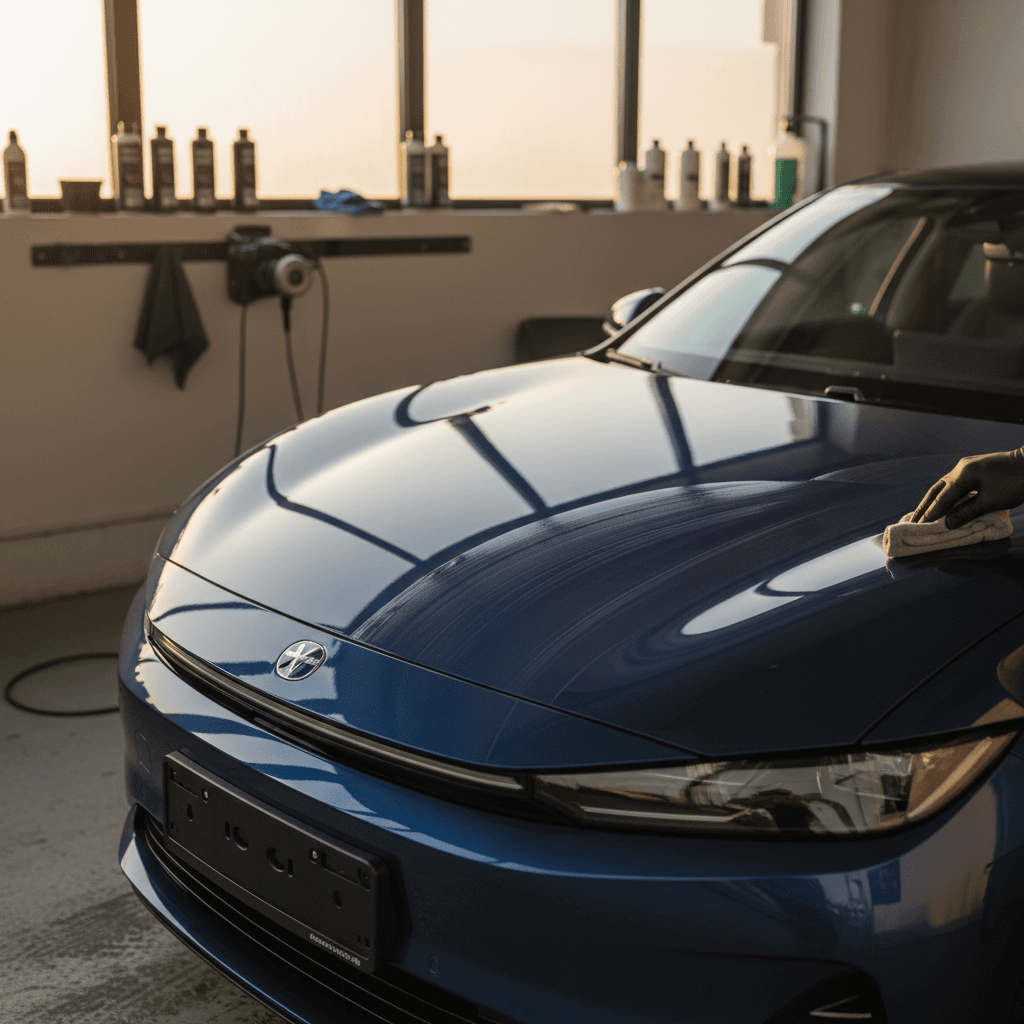
Your electric vehicle’s paint has a harder life than you think. Instant torque means more road grit on the rocker panels, big battery packs kick up heat and grime around the rear, and glossy aero shapes show every swirl mark. Learning how to protect EV paint with ceramic coating is one of the smartest, lowest‑effort upgrades you can make if you care how your car looks in year five as much as day one.
Quick definition
Why EV paint needs extra care
More miles, more exposure
EVs tend to rack up high annual mileage because they’re cheap to run. More miles means more rock chips, bug splatter, and UV exposure. The paint on a commuter Model 3 or Ioniq 5 can age faster than a weekend-only sports car.
Designs that show everything
Modern EVs have sharp creases and big flat panels. Those glossy, sculpted doors on a Hyundai Ioniq 6 or Tesla Model Y look fantastic until you see spider‑web swirls under streetlights. A slick ceramic layer helps dirt slide off and makes defects less obvious.
EV ownership also skews toward tech‑minded drivers who keep cars longer and obsess over efficiency. Clean, smooth paint isn’t just vanity; it can slightly reduce drag, and for used EV shoppers on Recharged, a well‑kept exterior signals that the previous owner cared about the rest of the car too.
Ceramic coating vs wax and PPF
Three main ways to protect EV paint
Understand where ceramic fits before you invest
Traditional wax or sealant
- Lasts weeks to a few months
- Good shine, limited protection
- Cheap, easy DIY
Fine if you hand‑wash monthly and don’t mind frequent reapplication.
Ceramic coating
- Lasts 2–5 years when maintained
- Excellent chemical & UV resistance
- Makes washing dramatically easier
Sweet spot for most EV owners who want "always‑on" protection.
Paint protection film (PPF)
- Physical layer absorbs rock chips
- Self‑healing on premium films
- Higher cost, pro install only
Best for high‑impact zones or expensive performance EVs.
Smart combo for EVs
Choosing the right ceramic coating for your EV
Not all ceramic products are created equal. You’ll see everything from $30 “ceramic sprays” on an auto‑parts end cap to multi‑layer professional systems that cost four figures installed. Deciding what’s right for your EV comes down to three things: budget, how long you’ll keep the car, and your tolerance for DIY detailing.
Types of ceramic coatings for EV owners
Compare the main categories you’ll encounter when shopping for ceramic protection.
| Type | Typical Longevity | Skill Level | Best For |
|---|---|---|---|
| Ceramic detail spray | 2–4 weeks | Very easy | Quick gloss boost between washes |
| Consumer ceramic kit (single layer) | 1–3 years | Moderate DIY | Most hands‑on EV owners |
| Consumer multi-layer kit | 3–5 years | Advanced DIY | Experienced hobbyists with a garage |
| Professional-grade coating | 3–7 years+ | Pro only | Drivers who want maximum durability & warranty |
Use this as a starting point; always follow the specific product’s instructions.
Be wary of marketing hype
Checklist: How to choose a ceramic for your EV
Match durability to how long you’ll keep the car
If you lease your EV for three years, a 2–3 year consumer coating is perfect. There’s no need to pay for a seven‑year pro system you’ll hand to the next driver.
Consider your parking situation
Outdoor‑parked EVs benefit most from ceramics with strong <strong>UV and chemical resistance</strong>. If your car sleeps in a garage, you can prioritize ease of use and gloss.
Check compatibility with existing protection
If your EV already has <strong>PPF</strong> in some areas, confirm the ceramic you choose is safe to use over film and plastic trim.
Read real‑world reviews, not just labels
Look for reviews from owners with similar climates and use patterns. Desert sun, coastal salt, and snowy road salt are very different tests.
Decide on DIY vs pro install
Pros bring better lighting, dust‑free bays, and experience correcting paint before coating. If you’re uncomfortable polishing paint, pro install may be money well spent.
Prep your EV before ceramic coating
Ceramic coating is brutally honest. Whatever is in the paint, water spots, faint scratches, bonded iron, gets locked in under a glossy, semi‑permanent layer. That’s why prep is 80% of the job. Even if you pay a pro, it helps to understand what should happen before the bottle ever opens.
- Pre‑wash and contact wash: Start with a high‑pressure rinse, then a pH‑neutral car shampoo using the two‑bucket method and clean wash mitts.
- Decontamination: Use an iron remover to dissolve embedded brake dust, then clay the paint (traditional clay or synthetic mitt) to remove bonded contaminants.
- Paint inspection: Under bright LED or sun, inspect for swirls, scratches, and water spots, EVs with soft clear coats (like many Teslas) often need correction even when new.
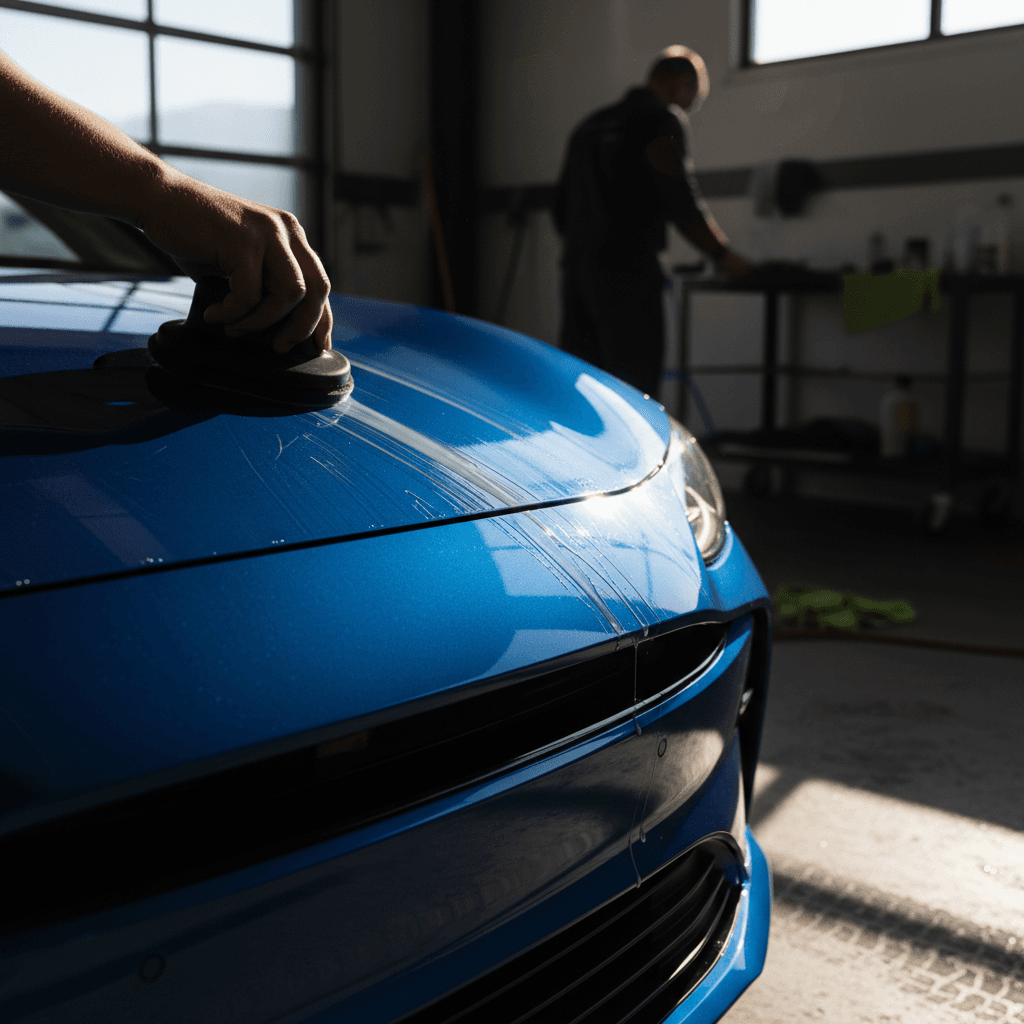
- Paint correction: Machine polish to remove or reduce defects. This step demands patience and the right pads and compounds; skip it, and you’ll seal in the problem.
- Panel wipe: Use an isopropyl alcohol (IPA) or dedicated panel prep solution to strip polishing oils so the ceramic can bond directly to the clear coat.
Don’t coat over damage
How to apply ceramic coating step by step
Every product has its own rhythm, but most share the same DNA: apply a small amount, level it evenly, then buff off within a specific time window. Here’s a high‑level walkthrough so you know what to expect, whether you’re tackling a weekend DIY or sanity‑checking a shop’s process.
Step‑by‑step: Applying ceramic coating to an EV
1. Work indoors on cool panels
Aim for a closed garage, 60–75°F, and low humidity. Sun‑baked panels make the coating flash too quickly and become grabby and streaky.
2. Mask sensitive areas
Use painter’s tape to protect rubber trim, unpainted plastics, and badges if your product isn’t rated for those materials.
3. Apply in small sections
Work a 2' x 2' area at a time. Apply a few drops to the applicator and spread in overlapping cross‑hatch patterns until the entire section is evenly coated.
4. Watch for the flash window
Most coatings "flash", they rainbow or haze slightly, before they’re ready to level. This can be 30 seconds or several minutes depending on the product and temperature. Follow the instructions religiously.
5. Level and buff with clean towels
Use one microfiber to gently level the coating, then a second, dry towel to buff to a streak‑free finish. Flip towels frequently; saturated towels can cause high spots.
6. Repeat methodically around the car
Move panel by panel, hood, fenders, doors, hatch, overlapping edges slightly so you don’t miss any real estate. On an EV with large panels, budget a full afternoon.
7. Respect cure time
Most coatings need 12–24 hours indoors before seeing water, and up to a week before harsh chemicals. During this cure window, avoid rain, sprinklers, or aggressive washing.
Photograph your work
Maintaining a ceramic-coated EV
Once the coating is on, the game changes from heavy labor to light discipline. Ceramic isn’t a force field; it’s more like a high‑tech raincoat. Treat it well and it will treat your EV well.
Core habits to keep your ceramic coating performing
Think "gentle and regular," not "aggressive and occasional"
Gentle, frequent washing
Wash every 1–3 weeks with a pH‑neutral shampoo and soft mitts. Let the coating do the work, dirt should slide off with minimal pressure.
Avoid harsh chemicals
Skip strong degreasers and drive‑through washes with aggressive detergents. They can weaken the coating and strip its hydrophobic behavior prematurely.
No more brush washes
Automatic washes with spinning brushes create micro‑marring that defeats the whole purpose of ceramic. If you must use an automated wash, pick a touchless option.
- Use dedicated ceramic‑safe spray sealants every few months to top up slickness and hydrophobics.
- Deal with bird droppings, tree sap, and bug guts quickly; even coated paint can etch if contaminants sit for days in hot sun.
- Inspect beading and sheeting behavior after each wash, when water stops behaving "strangely good," it may be time for a decontamination wash or topper.
The payoff
Common mistakes that ruin ceramic coatings
Most coating failures aren’t product failures, they’re user errors. Avoid these traps and your EV’s paint will keep its liquid‑metal sheen for years.
Mistakes to avoid
Skipping proper paint prep
Applying ceramic over swirled, contaminated paint locks the ugliness in. Always decontaminate and, ideally, polish before coating.
Coating too much at once
If you coat huge areas before wiping, you risk streaks and high spots that are visible from space. Work small and wipe on schedule.
Ignoring cure time
Taking your freshly coated EV through a car wash two days later is asking for trouble. Respect the full cure window before exposing it to harsh conditions.
Cheap towels and dirty lighting
Low‑quality microfibers can mar soft EV clear coats. Poor lighting hides high spots until it’s too late. Invest in good towels and bright LED lighting.
Expecting rock‑chip protection
Ceramic is chemical and UV armor, not body armor. For stone chips and sandblasting, you still need <strong>PPF or mud flaps</strong>.
When to call a professional
Used EVs, ceramic coating, and resale value
The EV market is maturing fast. A well‑kept exterior is starting to separate the forgettable used cars from the ones that command serious attention, and fair prices.
Why appearance matters more on EVs
Unlike gas cars, EV drivetrains often age gracefully. There’s no exhaust stink, no misfires, fewer fluids. So buyers look harder at visible clues, paint condition, wheel rash, trim fade, to judge how a car was treated.
How ceramic plays into the story
An EV with glossy, swirl‑free paint and documented ceramic or PPF work looks like a car that’s been cared for mechanically as well. When you list a used EV on a marketplace like Recharged, that visual first impression supports the Recharged Score’s battery health data and your asking price.
Show your receipts
FAQ: Protecting EV paint with ceramic coating
Frequently asked questions
Key takeaways for protecting your EV’s paint
Protecting an EV’s paint with ceramic coating isn’t about building a show car; it’s about respecting the machine you rely on every day. A well‑prepped, properly coated EV shrugs off grime, laughs at bad weather, and still looks eager and modern when the factory warranty expires.
- Ceramic coating is the sweet spot between simple wax and expensive PPF, especially for daily‑driven EVs.
- Prep is everything: wash, decontaminate, inspect, and correct before you coat, or you’ll lock in problems.
- Maintenance is light but consistent: gentle washes, ceramic‑safe products, and no brush tunnels.
- For highway and harsh‑climate cars, consider PPF plus ceramic on high‑impact areas.
- If you’re buying or selling a used EV, documented paint protection is one more data point that supports the story your Recharged Score and service history already tell.
Whether you’re protecting a brand‑new EV or refreshing a used one you found through Recharged, ceramic coating is a rare win‑win: easier ownership today and a cleaner, more desirable car tomorrow.