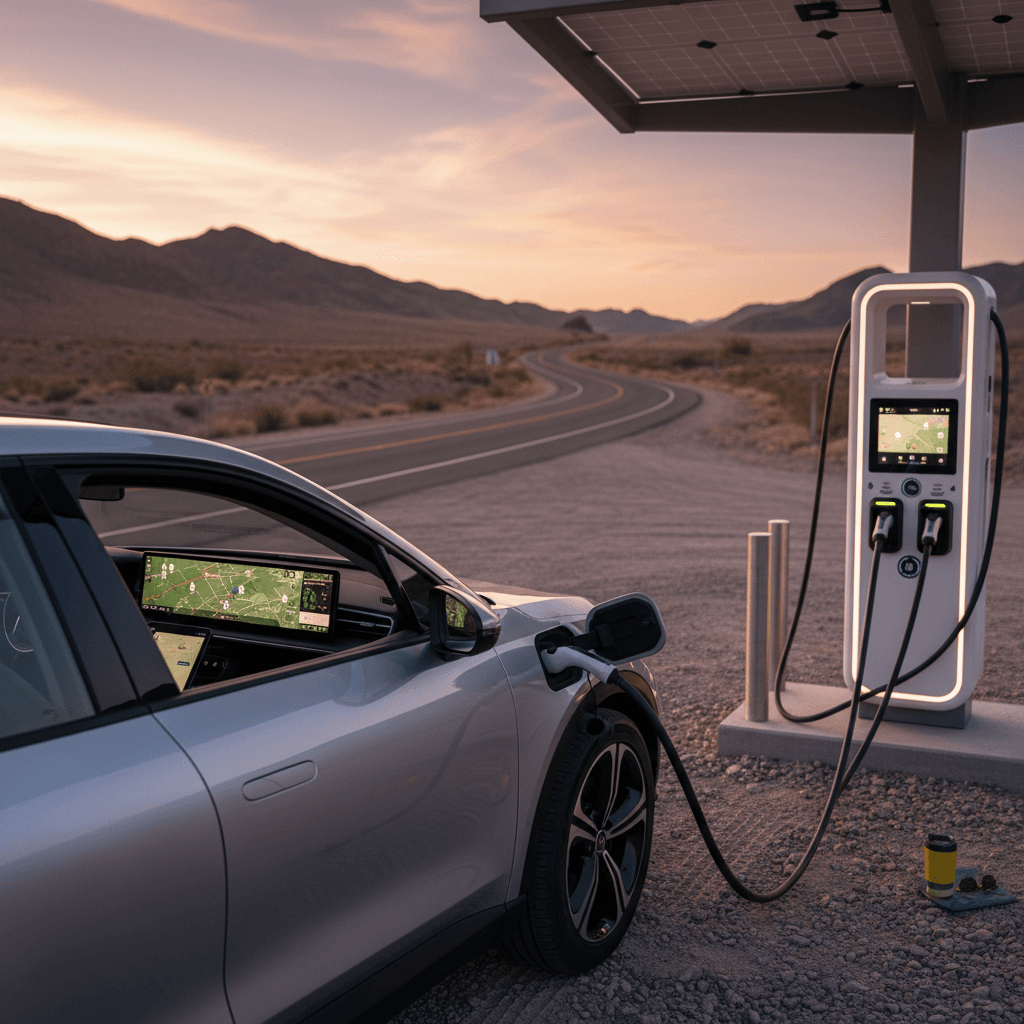
Planning an EV road trip isn’t hard, but it is different from planning a gas‑car drive. You don’t just search for “gas stations near me” and wing it. A smooth electric road trip starts with realistic range estimates, the right apps, and a charging strategy that matches your car and your route.
Big picture
Why EV road trips need a different plan
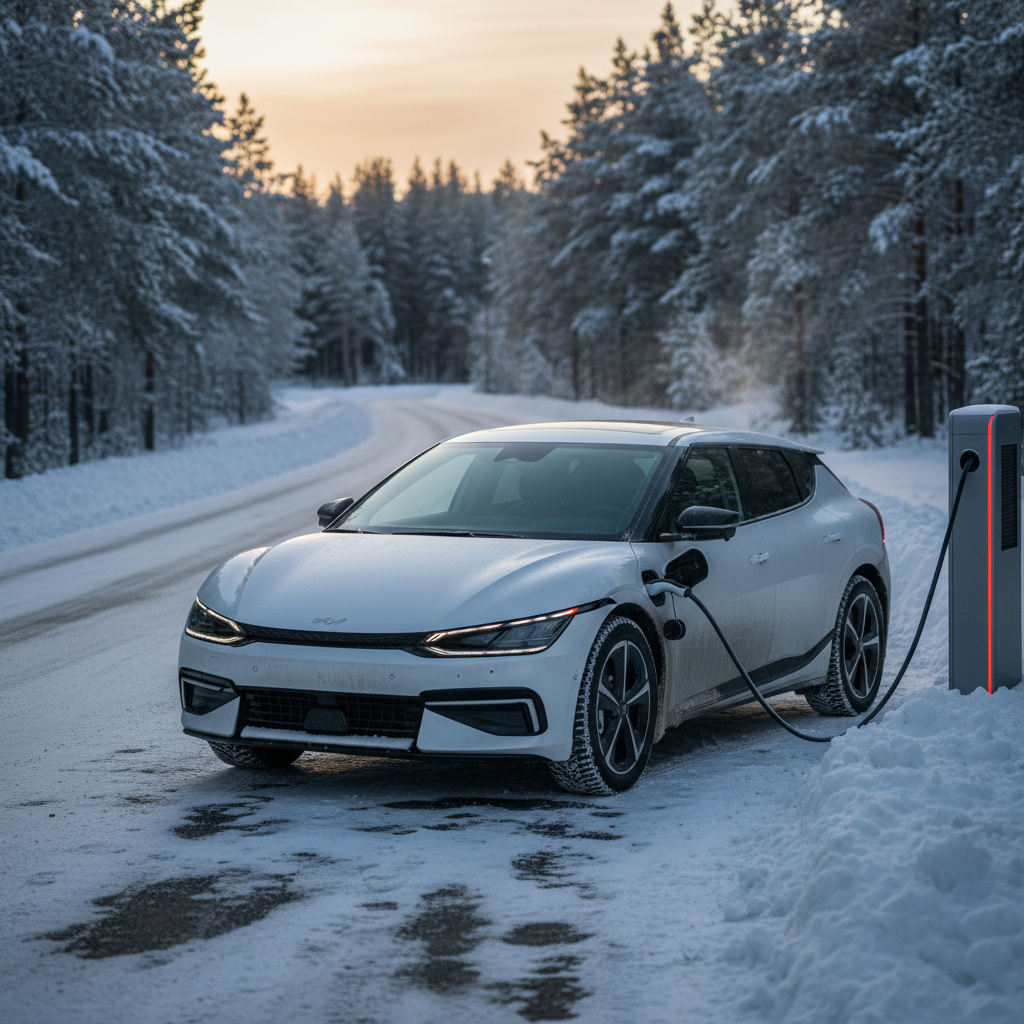
On a long highway drive, your EV’s range and charging curve matter more than the EPA rating on the window sticker. High speeds, cold weather, headwinds, and extra cargo can easily trim 20–40% from the number on paper. Public chargers are also less dense than gas stations, and not every site is reliable. That’s why taking time up front to plan your EV road trip pays off in fewer surprises and more time actually enjoying the drive.
EV road‑trip realities to plan around
Use this guide like a checklist
Step 1: Know your EV’s real‑world range
Start by figuring out how far you can comfortably go between fast‑charging stops at highway speeds. Don’t use the EPA number alone, use what your car actually does in conditions similar to your trip.
- Look at your long‑term efficiency (mi/kWh or kWh/100 mi) in the car’s trip computer.
- Multiply your battery’s usable capacity by that efficiency to get practical range. For example, 70 kWh × 3 mi/kWh ≈ 210 miles.
- Now apply a safety margin, plan around using 60–70% of that range between chargers so you’re not running the battery to near‑empty.
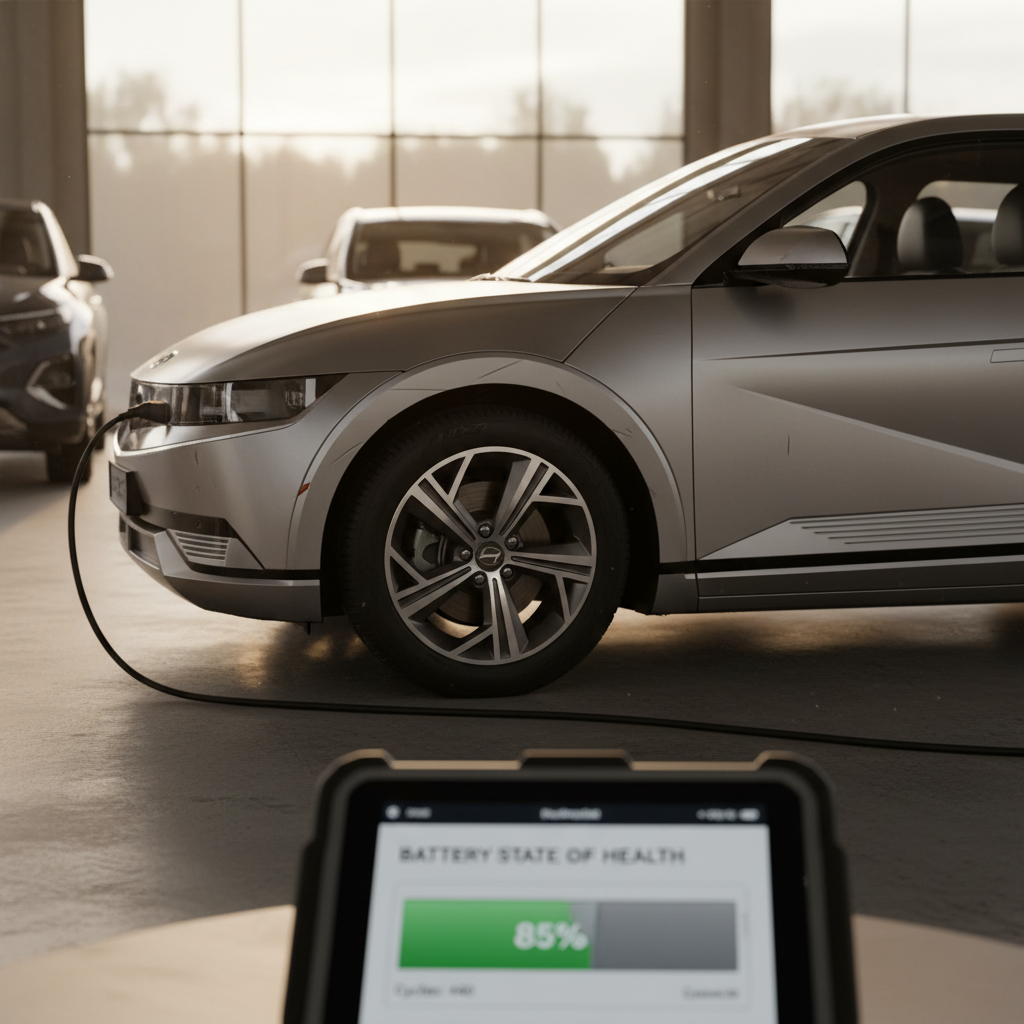
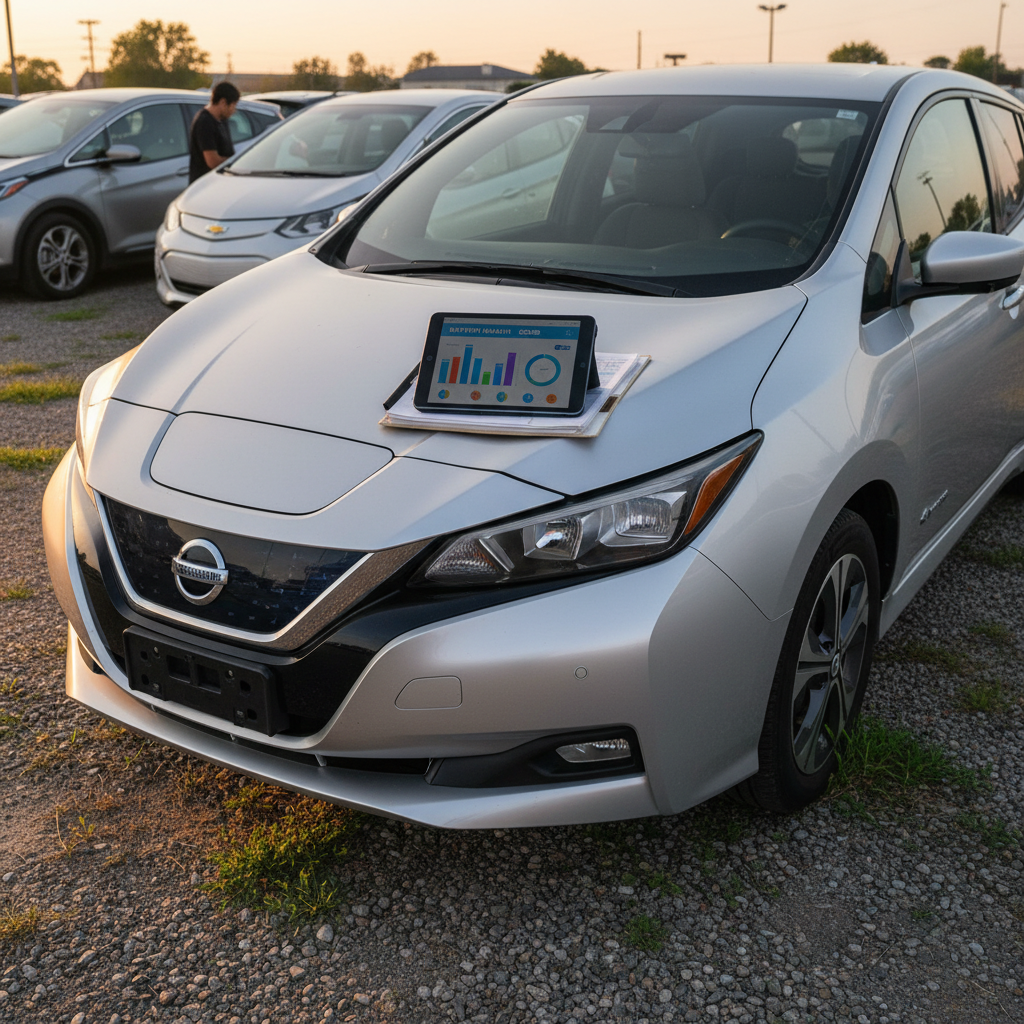
- If you’re buying a used EV for road‑trip duty, ask for a battery health report so you know how much capacity you really have. Recharged includes this in its Recharged Score on every vehicle.
Don’t plan to zero
Step 2: Choose the right route and chargers
Once you know your usable highway range, you can sketch a route that strings together reliable fast‑charging sites. For EVs, it’s almost always better to follow the chargers and accept a slightly longer route than to chase the shortest line on a map with sketchy coverage.
Which chargers to target on an EV road trip
Level 2 is for overnight; DC fast charging keeps you moving during the day.
DC fast charging (Level 3)
Primary road‑trip fuel. Power ranges from ~50 kW up to 350–500 kW at newer sites.
- Use for en‑route stops.
- Plan legs between these stations.
- Check max DC rate your EV can accept.
Level 2 public charging
Great for overnight stays at hotels or vacation rentals.
- Typically 6–11 kW.
- Adds ~20–40 miles of range per hour.
- Can replace an entire DC stop if you plug in overnight.
Level 1 / outlets
Standard 120V household outlets are slow but useful in a pinch.
- 2–5 miles of range per hour.
- Good as a backup at relatives’ houses or remote cabins.
Best apps to plan an EV road trip
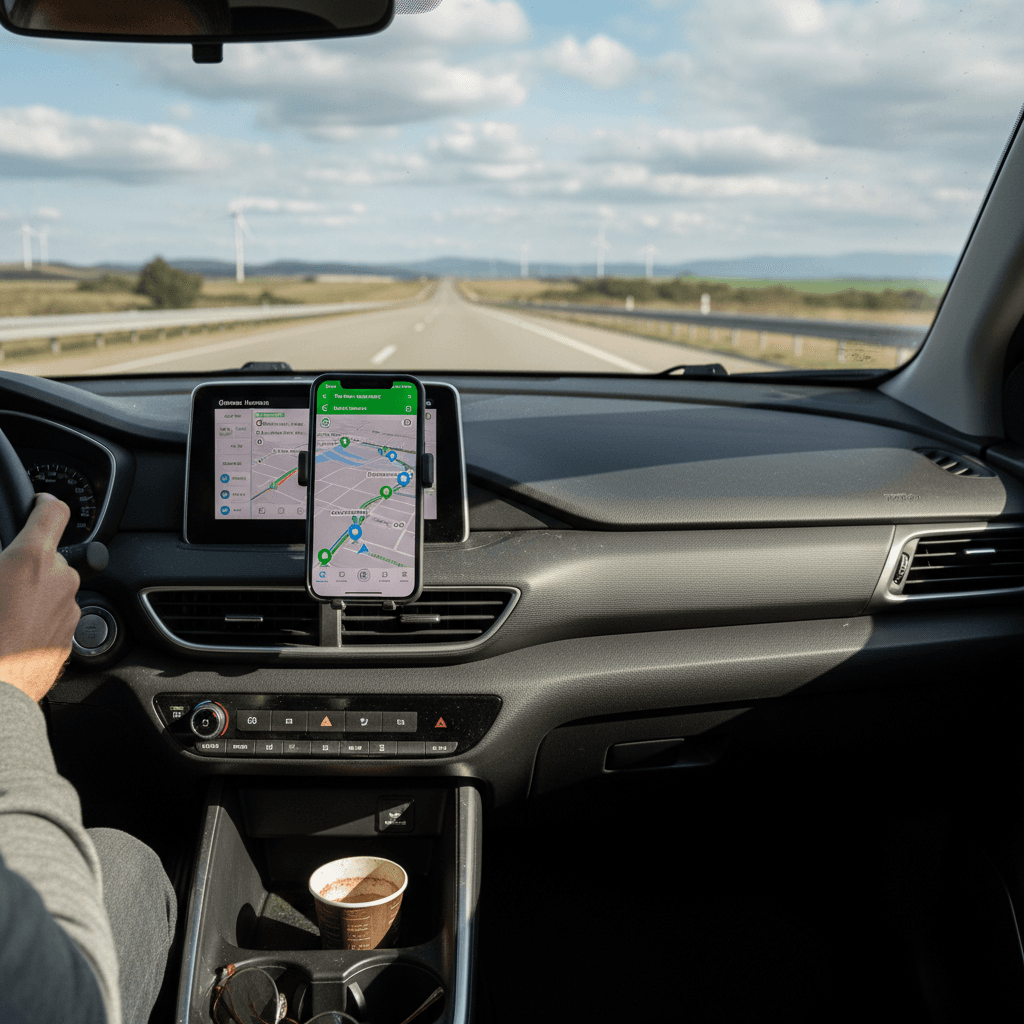
Modern apps make EV trip planning much easier. Most let you enter your exact EV, weather, speed, and desired arrival state of charge, then build a route with specific charging stops and durations.
Popular EV route‑planning tools
Use more than one app when you plan. If two or three tools agree on charger locations and timing, you can be more confident in the plan.
| Tool | Best for | Key strengths | Things to watch |
|---|---|---|---|
| A Better Routeplanner (ABRP) | Detailed planning | Vehicle‑specific consumption models, weather and elevation, supports almost every EV | Takes a few minutes to learn; advanced settings can be overwhelming at first. |
| PlugShare | Charger reliability | Crowdsourced check‑ins, photos, real‑world reviews of stations | Trip planning is more basic; use it to verify chargers from other apps. |
| Google Maps / Apple Maps | General navigation | Increasingly show live charger availability and speeds on many networks | Not all chargers appear; EV‑specific features still vary by model. |
| OEM in‑car planner | Turn‑by‑turn integration | Preconditions the battery for faster DC charging; adjusts on the fly as you drive | May favor the manufacturer’s partner networks or miss some third‑party sites. |
These apps complement your EV’s built‑in planner, don’t be afraid to mix and match.
Cross‑check your route
Step 3: Build a smart charging strategy
The fastest way to road‑trip in an EV is usually not to drive until you’re nearly empty and then charge to 100%. Instead, think in terms of shorter, higher‑power sessions in the middle of the battery’s state‑of‑charge window.
How to structure charging on an EV road trip
1. Aim for 10–20% arrival
Plan each DC stop so you roll in with around 10–20% remaining. Chargers are fastest when the battery is low but not empty.
2. Leave around 60–80%
Most EVs charge quickly up to about 60–80% and then slow down significantly. Leaving earlier keeps your average charging speed high.
3. Stack charging with meals
Time your longest stops with lunch or dinner. A 30–45 minute DC session often matches the time it takes to order, eat, and use the restroom.
4. Use overnight Level 2 when possible
If your hotel or rental has Level 2, plug in when you arrive and you’ll often start the next day at or near 100% without touching a DC charger.
5. Avoid hopping between slow sites
A single reliable 150–250 kW site is usually better than several older 50 kW units that may be shared or unreliable.
6. Re‑evaluate during the drive
Watch actual consumption and weather. If your real‑world range is lower than planned, adjust the next stop earlier in your EV’s trip planner or app.
Pro move
Step 4: Check networks, access, and adapters
In 2026, the U.S. fast‑charging landscape is a patchwork. Tesla’s Supercharger network is still the most extensive, while big players like Electrify America, EVgo, and others cover major interstates. Automakers are rapidly adopting the NACS (Tesla‑style) connector, but many EVs on the road still rely on CCS and adapters.
NACS vs. CCS vs. J1772
- NACS: Tesla’s plug, increasingly standard on new EVs in North America. Many non‑Tesla models now ship with it or include a NACS adapter.
- CCS: The older DC fast‑charging standard most non‑Tesla EVs used through the early 2020s.
- J1772: The common Level 2 AC connector at many hotels and public chargers.
If you drive a used EV with CCS, you’ll likely rely on CCS stations plus a NACS adapter for Superchargers and newer NACS‑only sites.
Know which networks you can use
- Check your automaker’s site or app to confirm whether your EV supports Tesla Superchargers and whether you need a specific adapter.
- Create accounts and payment methods for at least two major networks (for example, Tesla + Electrify America, or EVgo + regional co‑ops).
- Download each network’s app and log in before you leave. Test starting a charge at a local station if possible.
Pre‑trip charging network checklist
Make sure you can activate multiple networks before you leave your driveway.
| Item | Why it matters | Status |
|---|---|---|
| Tesla account / app | Needed to access Superchargers and see live stall status (for Teslas and many newer non‑Teslas). | ☐ Set up ☐ Not needed |
| Primary non‑Tesla network (e.g., Electrify America) | Likely to cover key interstates and metro areas along your route. | ☐ Account created ☐ Payment added |
| Backup network (EVgo, ChargePoint, co‑op) | Gives you alternatives if a main site is busy or down. | ☐ Account created ☐ Payment added |
| Physical NACS or CCS adapter | Expands which stations you can use, especially as NACS rolls out. | ☐ Packed in car |
| RFID cards / key fobs | Sometimes start sessions more reliably than phone apps in weak‑signal areas. | ☐ Packed in wallet/console |
Redundancy is your friend. Don’t rely on a single app or network for a long EV road trip.
Don’t assume every Supercharger works for you
Step 5: Account for weather, speed, and cargo
Two identical EVs can see very different range on the same route if one is towing a trailer in winter and the other is cruising lightly loaded in mild weather. When you plan an EV road trip, build conservative assumptions into your route.
- Cold weather (below ~40°F): expect more energy used to warm the cabin and battery. Precondition while plugged in, and shorten legs slightly.
- High speeds: aerodynamic drag grows quickly above 65–70 mph. Slowing 5–10 mph can add meaningful range and reduce charging stops.
- Towing / roof boxes: trailers and cargo boxes can add 30–50% to your consumption. Use the towing mode in ABRP or your car’s planner if available.
- Mountains and wind: climbing long grades and driving into strong headwinds both eat range. Apps that model elevation and weather help you avoid surprises.
Build a 10–20% buffer
Step 6: Budget your time and charging costs
A well‑planned EV road trip usually adds some time versus a gas car, but the difference is often smaller than people think, especially if you combine charging with meals and rest. Knowing what to expect keeps it from feeling like a surprise surcharge on your vacation.
Time expectations
- Most one‑day EV road trips include 2–4 DC fast‑charging stops, depending on distance, weather, and your battery size.
- Plan roughly 30–45 minutes per major DC stop and 10–20 minutes for shorter top‑ups.
- On a full day (8–10 hours of driving) you might spend 60–120 minutes total actively charging.
On paper that sounds like a lot, but many drivers discover they should have been taking these breaks even in a gas car.
Cost expectations
- DC fast charging is usually billed per kWh or per minute. Per‑kWh tends to be simpler to predict.
- In many regions, fast charging costs more than home charging, but still less than gasoline for similar vehicles.
- Some automakers include free or discounted charging sessions for a period after purchase, check your plan before you go.
Compare your expected trip cost using a planner, then decide whether stopping at a Level 2 charger overnight can reduce your DC fast‑charging spend.
Used EV tip
Step 7: Pack an EV‑specific road trip kit
Most of what you need for an EV road trip is the same as any long drive, snacks, water, emergency kit. A few EV‑specific items can turn minor hiccups into non‑events.
EV road‑trip packing checklist
Charging adapters
Bring any NACS, CCS, or J1772 adapters your EV uses. Store them in a labeled pouch so they’re easy to grab at night or in bad weather.
Portable Level 2 or Level 1 charger
A compact EVSE that can plug into 120V or 240V outlets can rescue a trip if a fast charger goes offline and you have access to a dryer plug or RV outlet.
Extension cord (use carefully)
If your portable charger supports it and the manufacturer allows it, a heavy‑gauge extension cord can reach awkward outlets at cabins or older motels.
Paper backup of key chargers
Print or save offline a list of critical charging locations (addresses and exit numbers) in case of poor cell coverage or app issues.
Warm gear and weather extras
Blankets, gloves, and an ice scraper are cheap insurance if you’re delayed in cold weather while the car is conserving energy.
Basic tools and cleaning wipes
A pair of work gloves, flashlight, and wipes make dealing with shared charge cables and dark parking lots much more pleasant.
Sample EV road trip itinerary
To make this concrete, here’s what a day‑long EV road trip might look like in a mid‑size crossover with about 230 miles of practical highway range, driving roughly 500 miles in a day.
Example one‑day EV road trip schedule
This is an illustration, not a prescription. Your exact times will depend on your EV, route, and driving style.
| Time | Activity | Battery range | Notes |
|---|---|---|---|
| 8:00 a.m. | Depart home at ~95% | ~210 mi usable | Car was charged overnight on Level 2. |
| 10:15 a.m. | DC fast charge + coffee | Arrive ~20%, leave ~75% | ~35 minutes; stretch, coffee, restroom. |
| 12:45 p.m. | Lunch + DC fast charge | Arrive ~15%, leave ~80% | 45 minutes; plug in before ordering food. |
| 3:30 p.m. | Short top‑up | Arrive ~25%, leave ~65% | 20 minutes; quick restroom and snack. |
| 5:45 p.m. | Arrive at hotel | ~20% | Hotel has Level 2; plug in overnight, depart next day at 100%. |
Notice how charging stops line up with meals and natural breaks, not random delays.
Key takeaway
Common EV road trip mistakes to avoid
- Trusting a single app or network: Always have backup chargers identified on a different network or planner.
- Ignoring recent charger reviews: A site with months of “station down” comments is a red flag, plan a fallback nearby.
- Pushing range too hard: Planning to arrive with under 5% repeatedly is stressful and leaves no margin for detours or weather.
- Skipping preconditioning: If your EV supports it, navigating to a DC charger in advance so the pack warms up can significantly improve charging speed.
- Assuming every hotel charger is available: Call ahead or have a backup plan in case the single Level 2 at your lodging is broken or occupied.
Watch out for shared power
FAQ: EV road trip planning
Frequently asked questions about planning an EV road trip
EV road trips are getting easier
Every year, long‑distance travel in an electric car gets simpler. More fast chargers come online, more automakers support NACS and Superchargers, and route‑planning tools get smarter. The key is to plan like an EV driver, not a gas driver: know your real‑world range, build your route around dependable chargers, and carry the right adapters and backup options.
If you’re still shopping for an EV, or wondering whether your current one is up for the job, take a close look at battery health, charging speeds, and highway efficiency. That’s exactly what the Recharged Score is designed to surface when you browse used EVs on Recharged, so you can pick a car that fits both your weekday commute and your next road trip. With the right prep and the right vehicle, an EV road trip can be one of the most relaxed ways to cross the map.