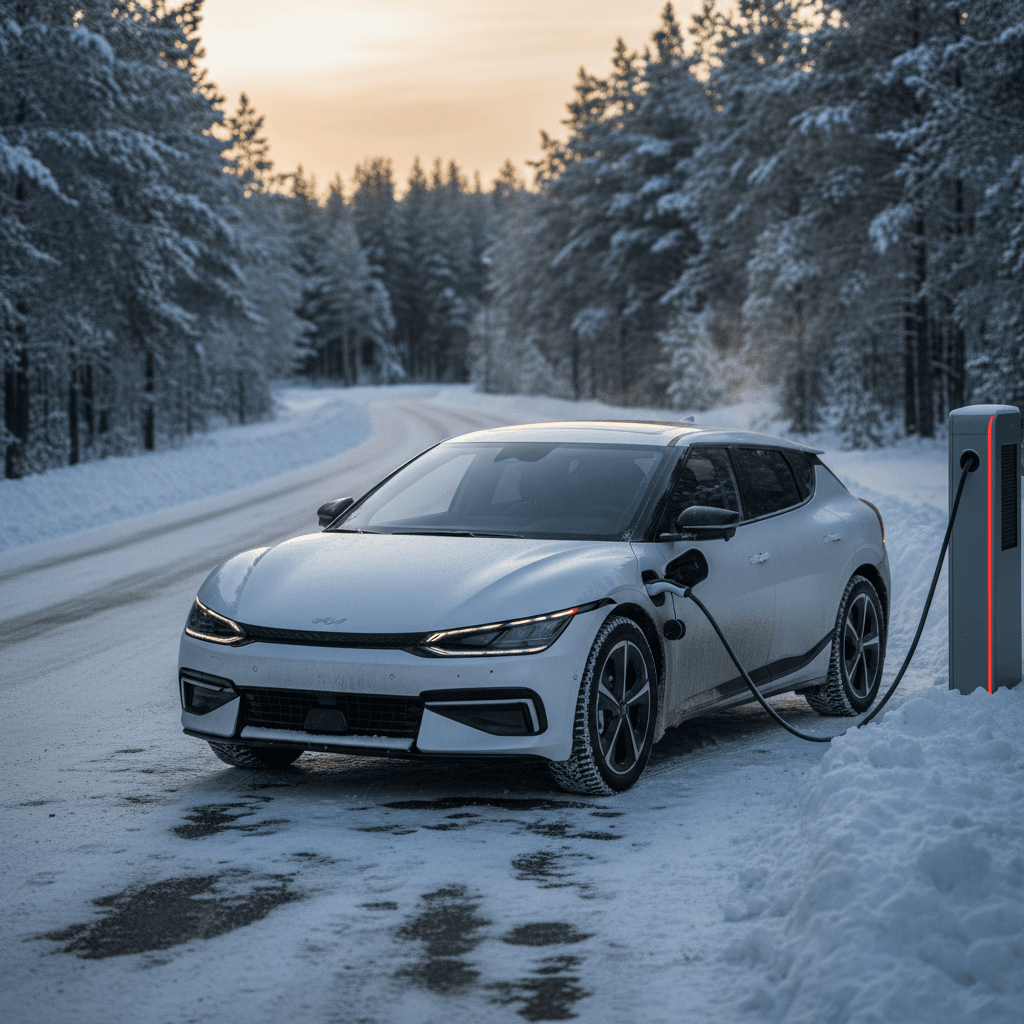
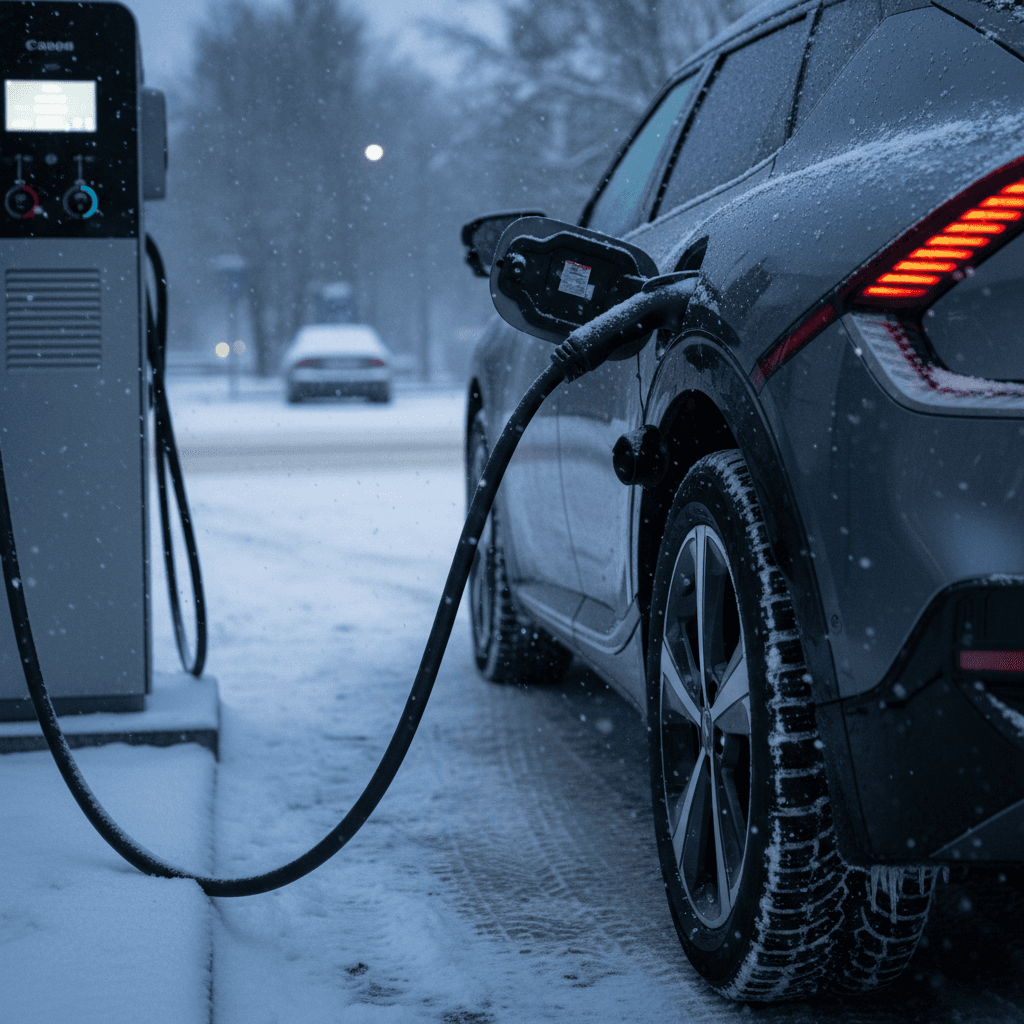
If you’re looking at a Kia EV6 winter range test, you’re probably asking one simple question: how far will it really go when it’s cold, dark and the heater is blasting? Lab numbers are helpful, but what matters is how the EV6 behaves on real winter roads at 20°F, not on a sunny test track at 70°F.
Quick take
Kia EV6 winter range at a glance
Kia EV6 winter range snapshot
Multiple owner logs and winter reviews point in the same direction: the EV6 is one of the better cold‑weather performers among non‑Tesla EVs. One Canadian efficiency study that compared popular EVs found the EV6 losing about 20% of its rated range in winter, roughly in line with average EV behavior and noticeably better than some rivals that lose 30–35%.
EPA range vs. real-world winter results
To understand any Kia EV6 winter range test, you have to start with the official EPA numbers. Then you can mentally discount them for the kind of winter driving you actually do.
2024 Kia EV6 EPA-rated range (for context)
These are approximate EPA ratings for key 2024 EV6 trims. 2025 models with the larger battery are similar or slightly higher on paper, but the winter percentage reductions are broadly comparable.
| Trim (2024) | Drivetrain | Battery | EPA range |
|---|---|---|---|
| Light RWD (Std) | RWD | 58 kWh | ≈232 mi |
| Light LR / Wind / GT-Line RWD | RWD | 77.4 kWh | ≈310 mi |
| Light e-AWD / Wind e-AWD | AWD | 77.4 kWh | ≈282 mi |
| GT-Line e-AWD | AWD | 77.4 kWh | ≈252 mi |
| GT AWD | AWD | 77.4 kWh | ≈218 mi |
Your winter range will usually be a percentage of these official numbers.
Real-world winter testing from owners in Canada, the northern U.S., and Scandinavia consistently shows the EV6 tracking at about 75–85% of these numbers in normal winter conditions, and closer to 60–75% in harsher cold with sustained highway speeds. For example, long‑range RWD drivers often see around 230–260 miles in winter mixed driving, while AWD trims more commonly land in the 190–230‑mile band.
Remember: your winter is not a test lab
Winter range by EV6 trim, battery and drivetrain
Because the EV6 lineup spans standard‑range, long‑range, RWD, AWD and the high‑performance GT, winter range can vary a lot from one car wearing an EV6 badge to another. Here’s what most owners see in the real world when temperatures sit between about 10°F and 32°F (-12°C to 0°C). These are ballpark planning figures, not guarantees.
Approximate real-world EV6 winter ranges
Assumes healthy battery, all‑season tires, mixed driving, heater in normal use.
Long-Range RWD (Wind / GT-Line RWD)
- EPA: ~310 miles
- Mild winter (20s–30s °F): ~240–265 miles
- Deep cold (single digits °F, some highway): ~210–235 miles
- Best for: Maximum winter range if you don’t absolutely need AWD.
Long-Range AWD (Wind / GT-Line e-AWD)
- EPA: ~252–282 miles
- Mild winter: ~210–235 miles
- Deep cold highway: ~180–210 miles
- Best for: Snowbelt drivers who want traction plus solid range.
Standard-Range Light RWD
- EPA: low‑200‑mile range
- Mild winter: ~170–190 miles
- Deep cold highway: ~140–165 miles
- Best for: Shorter commutes or urban use in cold climates.
EV6 GT (Performance AWD)
- EPA: ~218 miles
- Mild winter: ~160–180 miles
- Deep cold highway: as low as ~130–150 miles
- Best for: Performance first, range second. Plan charging stops carefully in winter.
Use percentages, not fixed miles
Why cold weather reduces Kia EV6 range
1. Battery chemistry slows down
Like every modern EV, the Kia EV6 uses a lithium‑ion battery. In cold temperatures, chemical reactions inside the cells slow, which reduces how much energy you can pull out at a given time and increases internal resistance. The result: fewer miles per kWh until the pack warms up.
You’ll notice this most when you first start a trip after the car has sat outside overnight in the teens or single digits. Range estimates look pessimistic and the car restricts the highest DC fast‑charge speeds until the pack is up to temperature.
2. Cabin heat is a big energy draw
Unlike a gas car, the EV6 doesn’t get “free” cabin heat from waste engine heat. Instead it uses electric resistance heating and a heat pump (on most trims). In real winter testing, the heater can easily consume several kilowatts at highway speed – the equivalent of adding 10–20 mph worth of drag.
Crank the cabin to 75°F, add defrosters, seat and wheel heaters, and your efficiency can drop from 3.5–4.0 mi/kWh in mild weather to 2.0–2.5 mi/kWh in a cold snap.
Other winter range thieves
Highway vs. city: winter range test scenarios
The pattern across Kia EV6 winter range tests is remarkably consistent: steady highway speeds in the cold are the harshest use case, while slower suburban driving and stop‑and‑go city traffic tend to be kinder to the battery.
How different winter drives affect EV6 range
Same car, same temperature – very different outcomes.
70 mph highway run
- Temp in teens–20s °F
- Heater set to 70–72°F, normal traffic
- Expect ~60–75% of EPA range
- Plan more frequent DC fast‑charge stops.
Suburban mixed driving
- Speeds 25–55 mph
- Some traffic lights, light congestion
- Battery warms gradually, regen often active
- Expect ~70–85% of EPA range.
Snowy stop‑and‑go
- Slower speeds, poor traction
- Heavier draw from traction control and heater
- Range hit may be similar to highway, but at much lower speed.
- Use Snow Mode and smooth inputs.
How to run your own EV6 winter range test
1. Start with a full, warm battery
If possible, finish a DC fast charge or Level 2 session right before you leave so the pack and cabin are already warm. This gives a more realistic picture of road‑trip behavior.
2. Reset your trip computer
Zero out trip A/B, then track distance, average efficiency (mi/kWh) and temperature for the whole run. That data will be more valuable than watching the guess‑o‑meter.
3. Drive your normal route and speed
A test only helps if it matches how you actually drive. If you normally run 73 mph on the interstate, don’t do your test at 60 mph just to see a bigger number.
4. Log temperature and conditions
Note ambient temperature, wind, precipitation and road surface. Later, you’ll be able to say, “At 20°F, dry roads, I get about X miles from 80–10%.”
5. Plan a safe buffer
Don’t run the battery to 0%. Plan a loop or an out‑and‑back route that brings you near a charger with at least 10–15% remaining.
Heat pump, AWD and other EV6 winter features
Kia didn’t design the EV6 just for Southern California. It bakes in several hardware and software features that show up every time the temperature drops.
Key Kia EV6 winter hardware and software
What helps the EV6 punch above its weight in cold weather.
High-efficiency heat pump
Battery preconditioning & winter mode
AWD with Snow Mode
Seat & steering wheel heaters
EV6 vs other EVs in winter
Planning a winter road trip in a Kia EV6
A well‑planned winter trip in a Kia EV6 can be straightforward, but it requires you to respect the extra variables that cold weather throws at any EV. The good news: the EV6’s fast‑charging capability, big‑picture efficiency and solid winter manners make it a strong road‑trip partner if you plan conservatively.
Winter road-trip checklist for your EV6
Aim to use 60–70% of EPA range
For planning, treat your usable winter range on a leg as roughly <strong>60–70% of the EPA rating</strong> at interstate speeds. On a 310‑mile RWD car, that’s 185–215 miles per leg.
Prefer chargers near services
Choose DC fast chargers near food, restrooms and lodging. In winter, you’re not just waiting for electrons – you and your passengers need to warm up too.
Arrive low, leave warm
Try to reach fast chargers with <strong>10–20% battery</strong> so charging is fastest, and leave once you hit the next safe buffer (often 60–80%), not necessarily 100%.
Use the nav to precondition
Set the charger as a destination in the EV6 nav so the car can warm the battery on the way. That can save minutes at each stop when it’s below freezing.
Watch weather and wind
A strong headwind and wet or snowy pavement can knock another 10–15% off range. Adjust leg lengths and buffers when the forecast looks ugly.
Have a backup plan
Especially in rural areas, always identify a secondary charger or Level 2 alternative near your planned stop. Winter is when redundancy really matters.
Don’t ignore state-of-charge in the cold
Buying a used Kia EV6? Winter range questions to ask
If you’re shopping the used market, winter range isn’t just about the model, it’s about the specific car you’re considering. Battery health, tire choice, and software updates can all move the needle by more than you might think.
Used EV6 winter range due diligence
Four conversations to have before you buy.
1. Ask for recent winter efficiency logs
2. Check battery health, not just mileage
3. Confirm heat pump and winter options
4. Look at tires and wheels
If you’re trying to decide whether an EV6 will work for your winter driving, and you want help comparing real‑world range against your daily routes, an EV‑focused retailer like Recharged can walk through the numbers with you, model by model. Our advisors spend their days living in this data so you don’t have to.
Kia EV6 winter range FAQ
Frequently asked questions about Kia EV6 winter range
Bottom line: Is the Kia EV6 good in winter?
If you go into a Kia EV6 winter range test expecting the full EPA number at 10°F with the heater on high, you’ll be disappointed, and that would be true of any EV on sale today. But if you plan on getting roughly three‑quarters of the rated range in normal cold, and a bit less in extreme cold and high winds, the EV6 proves to be a composed, efficient, and very livable winter partner.
For everyday commuting, most owners barely notice the seasonal difference once they adopt simple habits like pre‑conditioning and using the seat heaters. For road‑trippers, the EV6’s strong fast‑charging performance fills in the gaps. And if you’re shopping used, pairing those strengths with a verified battery health report, like the Recharged Score you get on every EV at Recharged, lets you buy with confidence that your winter range will match your life, not just a spec sheet.