Taking an electric vehicle on a long drive used to feel like a stunt. Today, with better batteries and more fast chargers, it’s just another road trip, as long as you know how to maximize EV range on a road trip. A little planning and a few smart habits can turn range anxiety into quiet confidence.
Good news for modern EV drivers
Why EV road trips feel different (and why that’s changing)
With a gas car, you learn early that you can always find a pump and fill up in five minutes. In an EV, where and how you refuel matters more, and your driving habits have a much bigger impact on range. That unfamiliarity is what most people call range anxiety.
How EV road trips differ from gas road trips
Same highways, different refueling mindset
Refueling takes longer
Route matters more
Speed really counts
Think "trip energy," not just battery size
Plan your route around chargers, not just miles
The single biggest way to maximize EV range on a road trip is to plan your charging before you leave the driveway. You’re not just checking how far you can go on a full charge, you’re designing your day around convenient, reliable stops.
Pre‑trip planning checklist for EV range confidence
1. Use an EV‑aware route planner
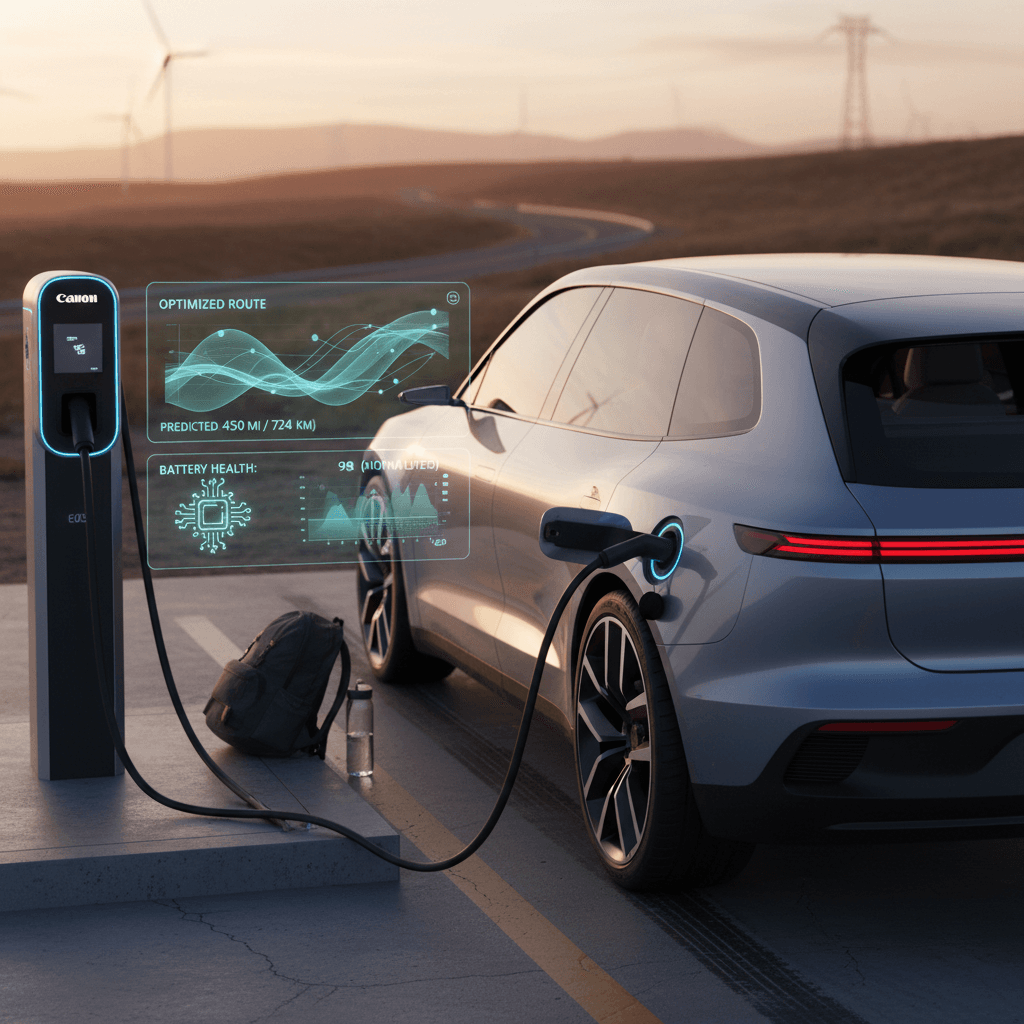
Plan your trip with tools that understand charging, not just distance. Many built‑in navigation systems and third‑party apps can route you via compatible fast chargers and estimate arrival state of charge (SoC).
2. Aim for 10–20% arrival buffer
When you lay out your stops, set each leg so you arrive with at least <strong>10–20% battery</strong>. That gives you room for detours, headwinds, or unexpected closures.
3. Prefer multiple stations in the same area
When possible, choose stops where there are <strong>several stations or networks in the same town</strong>. If one site is busy or offline, you have a backup within a few miles.
4. Check plug type and max power
Confirm that each stop has your connector type (CCS, NACS, CHAdeMO) and that its max kW roughly matches or exceeds your car’s DC fast‑charge capability.
5. Favor stops 120–160 miles apart
On highway trips, a comfortable rhythm for many EVs is stopping every 2–3 hours. That’s often 120–160 miles between fast chargers, well within most EVs’ sweet spot for efficient charging.
6. Verify amenities for longer stops
Look for chargers near food, clean restrooms, or a grocery store. Since you’ll be stopped 20–40 minutes, a pleasant environment makes the trip feel much shorter.
Don’t trust a single charger in the middle of nowhere
Set the car up for maximum range before you leave
Once your route is set, prepare the car itself. Most modern EVs include software features that quietly stretch your range if you use them correctly.
Use preconditioning to save energy
Preconditioning means using grid power, usually while plugged in, to bring the cabin and battery to the right temperature before you drive.
- Cabin pre‑heat or pre‑cool: Set the climate control to reach your comfort temp while still charging. That way, the battery doesn’t have to spend precious energy on big temperature changes once you’re on the road.
- Battery preconditioning for fast charging: Many EVs can warm or cool the battery before a DC fast‑charge stop if you set the charger as your destination. A properly conditioned battery charges faster and can reach a higher peak power.
Optimize your drive settings
- Eco or efficiency mode: Most EVs offer a drive mode that softens throttle response and limits peak power, helping you drive more smoothly and efficiently.
- Maximize regen: Set regenerative braking to a higher setting (or one‑pedal driving, if available) in traffic and rolling terrain. This recovers more energy from slowing down.
- Turn off extreme climate settings: Seat and steering‑wheel heaters use far less energy than blasting hot air. In heat, try moderate A/C and avoid max‑cold if you’re stretching range.
A quick win before you roll
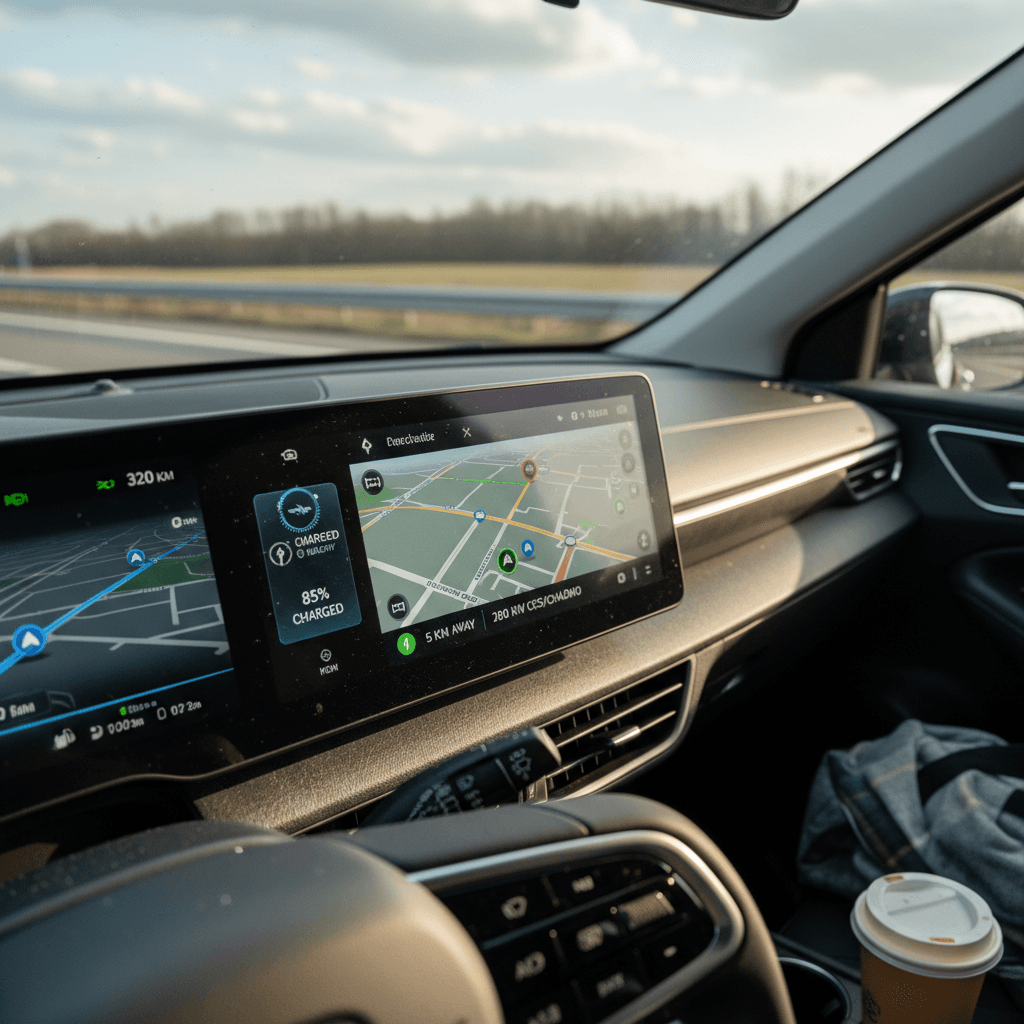
Drive like a pro: how your driving style kills or saves range
Once you’re rolling, your right foot is the biggest determinant of real‑world range. Aerodynamic drag rises rapidly with speed, and sudden acceleration or braking wastes energy you’ve already paid to store in the battery.
How speed and behavior affect EV range
- Keep highway speeds reasonable. Cruising near the flow of traffic in the right lane, often 65–70 mph, usually gives you a better range‑to‑time balance than running with the fastest left‑lane traffic.
- Use cruise control when traffic is light. A steady speed is usually more efficient than constant small changes from your foot.
- Accelerate firmly, not aggressively. EVs are quick, but repeated full‑throttle launches burn range with no benefit on a long drive.
- Look far ahead and coast early. If you see a slowdown or exit coming, lift off the accelerator sooner to let regeneration recapture more energy.
- Avoid unnecessary roof loads. Cargo boxes and bike racks can seriously hurt highway efficiency by increasing drag. Use them only when you must, and remove them once you arrive.
Know when it’s worth slowing down
Use charging strategy to travel faster, not just farther
Maximizing range doesn’t always mean charging to 100%. In fact, on an EV road trip, you often get there faster by charging more often, but only to 60–80%, because DC fast charging slows dramatically above that point.
How much to charge on each stop
Use this as a starting point; always adjust based on your specific EV and charger availability.
| Scenario | Arrival SoC | Target SoC | Why It Works |
|---|---|---|---|
| Healthy charger density | 10–20% | 60–70% | Fastest portion of the charging curve; you’re back on the road quickly. |
| Sparse chargers / long gaps | 15–25% | 80–90% | You need the extra buffer to comfortably reach the next station. |
| Cold weather or strong headwinds | 20–30% | 80–90% | Conditions reduce range, so add margin at each stop. |
| Last leg of the day | 20–40% | 80–100% | Top off more at your final stop so you can arrive with plenty of charge. |
Charging from very low to very high state of charge takes disproportionately longer. Stopping slightly more often in the efficient part of the curve usually gets you there sooner.
Know your car’s fast‑charge curve
Smart charging habits that stretch your effective range
Think like a long‑distance EV driver, not a commuter
Arrive warmed up
Use stops for real breaks
Watch live station status
Manage weather and conditions that shrink range
Temperature, wind, terrain, and even rain can move your real‑world range up or down by a surprising amount. You can’t change the weather, but you can adjust your expectations and tactics.
Cold and hot temperatures
- Cold weather: Batteries are less efficient when cold, and cabin heating uses a lot of energy. In freezing conditions, you might see 20–30% less range than in mild weather.
- Hot weather: Air‑conditioning also uses energy, though typically less than cabin heat at full blast. Park in the shade when possible and use cabin pre‑cooling while plugged in.
- What to do: Shorten your planned legs, arrive with a larger buffer (20–25%), and rely more on preconditioning to reduce in‑drive climate loads.
Wind, rain, and terrain
- Headwinds: A steady headwind acts like higher speed, cutting range. Tailwinds, on the other hand, are a free gift, expect better than usual efficiency.
- Heavy rain or snow: Increased rolling resistance and safety‑minded slower traffic can change consumption. Plan conservative legs in severe conditions.
- Hills and mountains: Climbing consumes more energy, but you regain some on the descent through regeneration. Don’t count on getting all of it back, plan extra margin for long climbs.
Be cautious with first cold‑weather trip
Battery health and used EVs: what to know before a big trip
On a brand‑new EV, the rated range is usually close to what you can expect in mild weather at moderate speeds. On a used EV, battery health and age play a major role. Before you plan a long trip, you’ll want a realistic view of how much usable range you actually have.
Key battery questions before road‑tripping a used EV
Know your starting point so you can plan accurately
What’s the real usable capacity?
How does it charge today?
How Recharged can help
Sample EV road trip playbook
To bring this all together, here’s what a sensible, range‑friendly road trip might look like in a modern EV rated around 260–300 miles of range.
One‑day EV road trip example (~450–500 miles)
Morning: Start fresh
Precondition the cabin and battery while still plugged in at home.
Leave with 90–100% charge and your first fast‑charger set as the navigation destination.
Drive 65–70 mph in Eco mode, using cruise control when traffic allows.
Arrive at the first charger after 150–170 miles with ~25–35% remaining.
Midday: Find your rhythm
Plug into a DC fast charger; battery is already warm from driving, so charging ramps up quickly.
Use the stop for coffee, restroom, or a short walk and charge to about 70–80%, around 20–30 minutes for many EVs.
Reset navigation to the next charger 140–160 miles down the road; verify station status in your app.
Adjust speed slightly if projected arrival SoC dips under 15–20%.
Afternoon & arrival
Repeat one more fast‑charge stop following the same pattern, stopping again around 20–30% and charging to 70–80%.
If the final leg of the day leaves you far from public charging, top off to 90–100% at your last stop.
Arrive at your destination with 20–40% SoC, enough flexibility for local driving without an immediate charge.
If lodging offers Level 2 charging, plug in overnight and wake up to a “full tank” for the next day.
What you’ll notice on a well‑planned trip
FAQ: Maximizing EV range on road trips
Frequently asked questions about EV road trip range
Key takeaways: Make your EV road trip boring, in a good way
The goal of all this isn’t to turn you into a hypermiling scientist. It’s to make your EV road trip so predictable and uneventful that you almost forget you’re driving an electric car. Plan around chargers instead of just miles, use your car’s built‑in tools, drive smoothly at realistic speeds, and give yourself a comfortable buffer on each leg.
If you’re still choosing the right EV, especially a used one, pay attention to real‑world highway range, charging speeds, and verified battery health. That’s exactly why Recharged includes a Recharged Score battery report with every vehicle we sell, along with EV‑specialist support from test‑drive to delivery. The right car and the right habits together mean your next electric road trip can be memorable for the scenery, not the range gauge.