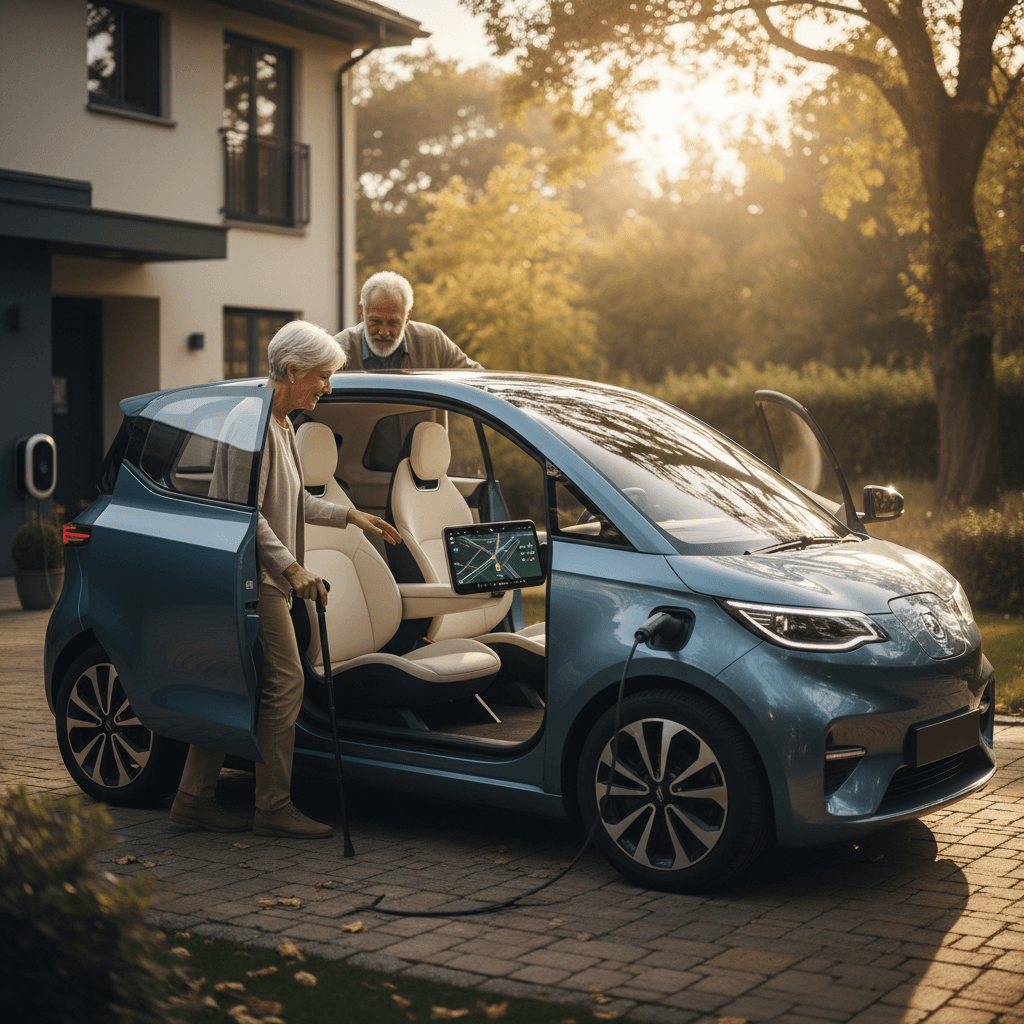
If you’re an older driver, or helping a parent choose their next car, the **best electric car for seniors in 2026** isn’t just the one with the longest range or biggest screen. It’s the one that’s easiest to get in and out of, simplest to operate, and most forgiving if something goes wrong on the road. The good news: today’s EV market finally offers several models that genuinely fit senior drivers, especially if you’re open to a well-chosen used electric SUV or hatchback.
Who this guide is for
Why seniors are switching to EVs in 2026
Why EVs appeal to retirees and older drivers
For seniors on a fixed income, the lower **fuel and maintenance costs** of an EV can be a big relief. There are no oil changes, fewer moving parts, and regenerative braking can extend brake life. Smooth, instant torque also makes merging and left turns less stressful, while modern driver-assistance features can help with fatigue on longer trips, provided they’re simple enough to use.
Think "less fuss," not more tech
What makes an electric car senior-friendly?
- Easy entry and exit: A higher seating position and wide door openings so you don’t have to climb up or drop down into the seat.
- Excellent visibility: Large windows, modest roof pillars, and big mirrors to reduce blind spots.
- Simple controls: Physical knobs for temperature and volume, logical gear selector, and a clean touchscreen layout.
- Comfortable ride: Softer suspension tuning and supportive, adjustable seats, especially lumbar support.
- Advanced safety tech: Automatic emergency braking, blind-spot monitoring, lane-keeping assist and adaptive cruise, tuned in a way that isn’t overly jumpy.
- Right-size range: 180–260 miles is plenty for most retirees who mostly drive in town with periodic regional trips.
- Charging access: The ability to charge overnight at home or at a nearby Level 2 charger without complicated apps.
Watch low-roof sedans and coupes
Best electric cars for seniors in 2026: quick shortlist
There’s no single “best electric car for seniors in 2026” that fits everyone. But a handful of models consistently stand out for visibility, comfort, and usability. Below is a starting point you can use whether you’re shopping new or, often more cost-effectively, used.
Senior-friendly EV picks by use case (2026)
Use this as a roadmap, then narrow down based on budget, size and charging needs.
Best small & simple: Nissan Leaf (used)
Why it works: Upright seating, excellent visibility, simple controls and modest power that’s easy to manage make the Leaf a great “first EV” for many seniors. Newer models (2018+) have more range.
Best for: Short trips, errands, lower-speed suburban driving.
Best compact crossover: Hyundai Kona Electric & Kia Niro EV
Why they work: Small on the outside but easy to step into, with a higher seating position, physical climate knobs, and strong safety scores. Good fit if you want EV simplicity with a crossover feel.
Best for: Everyday mixed driving, downsizing from a gas SUV.
Best room & comfort: Kia EV6, Hyundai Ioniq 5 (used)
Why they work: Spacious cabins, smooth rides, long wheelbases, and strong safety tech. The Ioniq 5 in particular has a near-SUV seating position with a very open interior.
Best for: Road trips, grandkid duty, and taller drivers.
How Recharged can help
Ready to find your next EV?
Browse Vehicles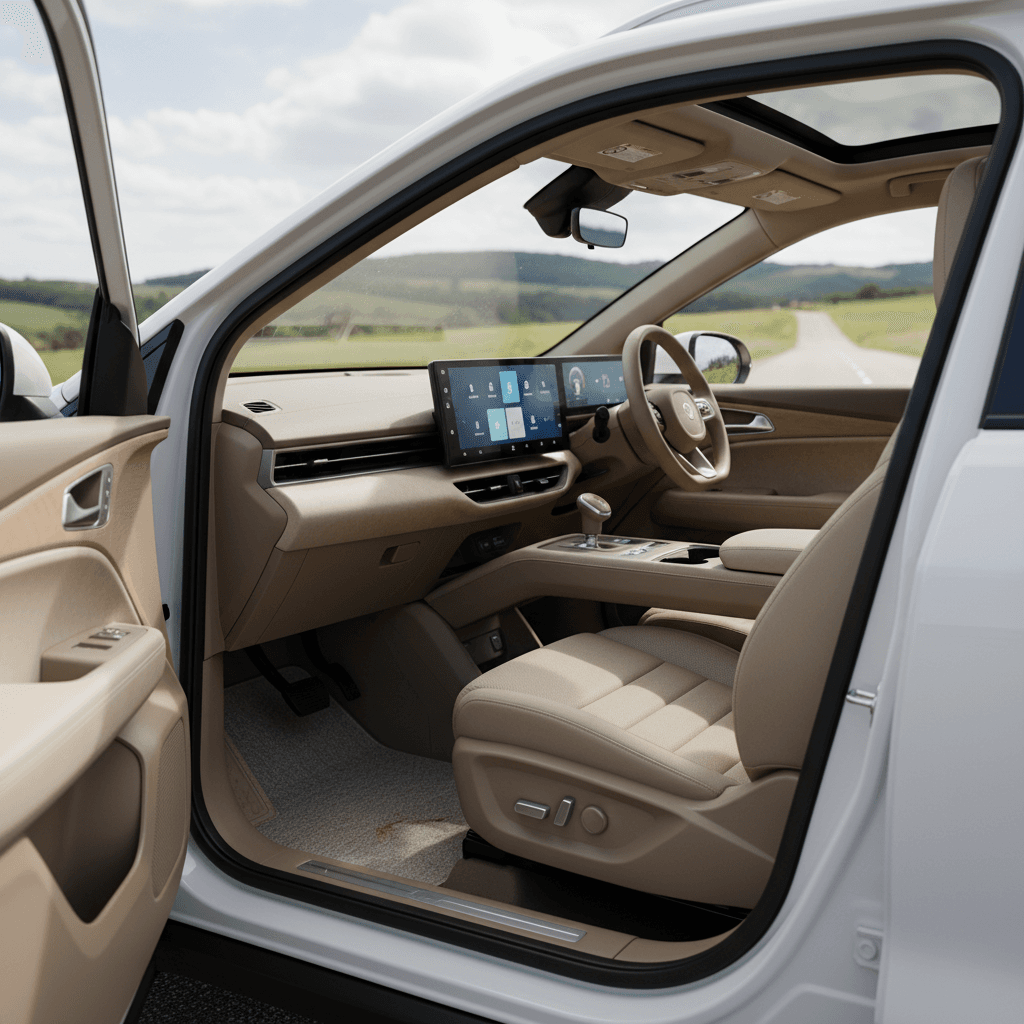
Senior-friendly compact EVs: easy to park, easy to drive
Nissan Leaf (2018–2024)
The Nissan Leaf is one of the most proven electric cars on the road and a smart, affordable used choice for seniors. It offers upright seating, big windows, straightforward controls, and enough range for daily driving in most metro areas.
- Why seniors like it: Easy to see out of, gentle power delivery, simple gear selector and climate knobs.
- Typical real-world range: ~120–150 miles on older 40 kWh models, ~170–200 miles on 62 kWh versions, depending on weather and driving style.
- Watch for: Battery health; early Leafs had more rapid degradation. A battery diagnostic like the Recharged Score is crucial before buying.
Chevrolet Bolt EV / EUV (2020–2023)
The Chevy Bolt and slightly larger Bolt EUV are compact but surprisingly roomy inside, with excellent efficiency and strong crash-test performance.
- Why seniors like it: Easy to park, quiet cabin, long range for the size, and available driver-assistance like Super Cruise on some EUV trims.
- Typical real-world range: ~230–260 miles, enough for multi-day errands without charging.
- Watch for: Recall history and proof that the battery recall work was completed by a dealer.
Important note on CHAdeMO and DC fast charging
Best electric SUVs for seniors in 2026
For many older drivers, a small or midsize electric SUV is the sweet spot: easier to step into, more room for passengers and mobility aids, and better visibility than low sedans. Here are some of the most senior-friendly SUV-style EVs to look at for 2026, especially on the used market.
Senior-friendly electric SUVs: comfort & usability snapshot
These models balance ease of access, visibility, safety features, and everyday comfort. Specific availability may vary by region and model year.
| Model | Best as | Ride / comfort | Visibility & entry | Safety & tech |
|---|---|---|---|---|
| Hyundai Ioniq 5 (used) | All-around family EV | Supple ride, very quiet | High seating, big windows | Strong crash ratings, clear driver-assist interface |
| Kia EV6 (used) | Longer trips, taller drivers | Sporty but comfortable | Slightly lower roof than Ioniq 5 | Excellent safety tech, head-up display on some trims |
| Kia Niro EV (new/used) | City errands & downsizing | Comfort-focused tuning | Easy step-in height | Good safety suite, simple controls |
| Hyundai Kona Electric (new/used) | Tidy, efficient runabout | Firm but composed | Compact, good for smaller drivers | Modern driver-assist, small footprint for easy parking |
| Chevrolet Equinox EV (new) | Value-focused SUV | Well-damped, family-oriented | Traditional SUV stance | Modern GM safety tech, clear physical controls |
Always verify exact safety ratings and features by model year and trim before buying.
Try the “three times in, three times out” test
Comfort, safety and tech features to prioritize
Must-have features for senior-friendly EVs
Checklist items that matter more than 0–60 times.
Seat comfort & support
Look for power-adjustable seats with lumbar support and memory presets. A slightly higher hip point makes entry and exit easier.
Visibility aids
Large side mirrors, a crisp rear-view camera, and, ideally, a 360° camera system make parking and lane changes less stressful.
Safety tech that helps
Automatic emergency braking, blind-spot monitoring, lane-keeping assist, and adaptive cruise can help reduce fatigue when tuned well.
Quiet, calm cabin
Soft-touch materials, good sound insulation, and moderate wheel sizes reduce noise and harshness, important for long drives.
Simple, obvious controls
Physical knobs for volume and temperature, clear gear selector, and a home button on the touchscreen go a long way for usability.
Right-size performance
Single-motor versions are usually plenty fast and easier to modulate smoothly than high-power dual-motor performance trims.
Beware of over-complicated driver assistance
New vs. used: which electric car makes sense for seniors?
By 2026, the used EV market in the U.S. is mature enough that many seniors can save thousands by buying a 2–5-year-old electric car instead of a brand-new model, without sacrificing safety or comfort. But EVs age differently than gas cars: battery health matters more than odometer mileage, and charging standards are evolving.
When a new EV makes sense
- You want the latest driver-assistance and safety features.
- You plan to road-trip often and want the newest fast-charging tech (especially NACS ports as they spread across brands).
- You value a full factory warranty and predictable ownership for 5–8 years.
Just remember: the steepest depreciation is in the first few years, so factor that into how long you plan to keep the car.
When a used EV is the better fit
- You drive modest annual miles and mostly stay within one metro area.
- Your priority is comfort and simplicity more than the latest tech.
- You want to avoid the highest new-car prices and can instead put money toward a home charger.
This is where a marketplace like Recharged shines: you get a Recharged Score Report with verified battery health, fair-market pricing and expert support, key safeguards if you’re new to EVs.
Used EV buying checklist for seniors
Confirm battery health and remaining warranty
Ask for a battery health report, not just an odometer reading. Many EVs still have partial battery warranties past 8 years, which can protect against major degradation issues.
Verify charging connector and marketplace support
Make sure the car uses a connector that will be well-supported where you live (CCS or NACS for most U.S. drivers). Ask how it works with the public charging networks you’re likely to use.
Check easy entry, not just seat comfort
Bring any mobility aids you commonly use (cane, small walker) to the test drive and see how they fit. Don’t assume you can adapt later.
Inspect driver-assistance behavior
On a test drive, see how lane-keeping and adaptive cruise behave. If they feel nervous or overly aggressive, check if settings can be tamed or consider a different model.
Evaluate home charging setup
If you own your home, confirm you can install a Level 2 charger or at least use a 240V outlet. If you rent, map out realistic charging options nearby before buying.
How to test-drive an EV with senior needs in mind
Most shoppers test power and gadgets; seniors should test *comfort and clarity*. A 20-minute loop rarely tells you what you need to know. Here’s how to make the most of a test drive when you’re evaluating the best electric car for seniors in 2026.
Senior-focused EV test-drive routine
1. Practice entry and exit several times
From both front seats, get in and out at least three times. Notice door weight, sill height, and whether you have to duck or twist uncomfortably.
2. Adjust seat, mirrors and screens slowly
Can you clearly see the instrument panel? Are fonts big enough? Are there simple knobs for climate and volume? If you’re still confused after a few minutes, that’s a red flag.
3. Drive in familiar conditions
Include streets similar to your real life: low-speed neighborhood roads, a busy arterial, and (if you’re comfortable) a quick highway stretch to test merging and lane changes.
4. Test visibility and cameras
Check over-the-shoulder blind spots, then try the backup and 360° cameras in a parking lot. Can you easily judge distance to curbs and other cars?
5. Try driver-assistance features
On a straight highway segment, gently test adaptive cruise and lane-keeping. Ensure it’s easy to turn them on and off without diving through menus.
6. Bring a second set of eyes
If possible, bring a spouse, adult child, or trusted friend to catch things you might miss and to verify that the rear seats and cargo area work for your needs.
Cost of ownership: EVs vs gas cars for retirees
For retirees on a fixed income, the long-term math often favors EVs, especially if you can charge at home. You avoid oil changes, timing belts, and many emissions-related repairs, and electricity is usually cheaper per mile than gasoline. But there are tradeoffs: higher upfront price, potential need for a home charger, and the possibility of battery degradation later in life.
Where EVs save seniors money
- Energy costs: Home charging often works out to the equivalent of $1–$1.50 per gallon of gas, depending on local rates and off-peak pricing.
- Routine maintenance: No oil, fewer fluids, and far fewer moving parts reduce service visits.
- Regenerative braking: Brake pads and rotors can last significantly longer than on traditional cars.
Costs to plan for
- Home charging setup: Installing a Level 2 charger can run from a few hundred to a couple thousand dollars, depending on electrical work.
- Insurance: Some EVs can be more expensive to insure; get quotes before you commit.
- Battery life: A well-cared-for EV battery can last many years, but you should understand warranty limits and real-world degradation before buying.
Leasing vs. buying for seniors
FAQ: best electric car for seniors in 2026
Common questions about senior-friendly EVs
Bottom line: picking the best electric car for seniors
The best electric car for seniors in 2026 isn’t the fanciest or fastest, it’s the one that feels effortless every time you climb in, buckle up, and head out. For many older drivers that means a compact EV or small SUV with a higher seating position, great visibility, straightforward controls, and a calm, quiet ride. Models like the Nissan Leaf, Chevy Bolt, Hyundai Kona Electric, Kia Niro EV, and Hyundai Ioniq 5 are all strong candidates depending on your size, budget, and driving patterns.
If you’re just starting the journey, don’t rush. Spend time getting in and out of different models, drive them in real-world conditions, and insist on seeing objective battery-health information before committing to a used EV. A partner like Recharged can help you compare options, understand costs, and buy online with the support of EV specialists, not sales scripts. With the right match, an electric car can make your later-life driving easier, not more complicated, and that’s the real measure of “best” for senior drivers.