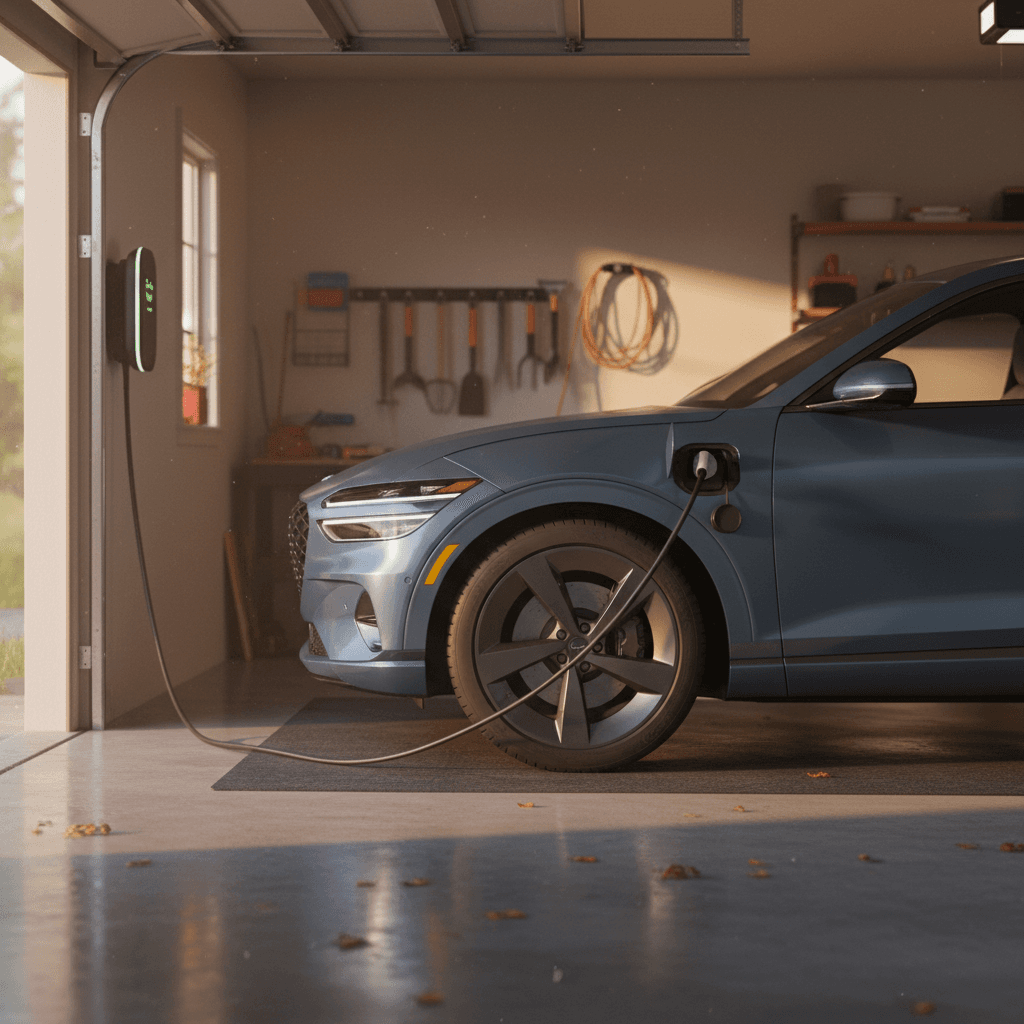
If you’ve just bought a Genesis GV60, or you’re thinking about a used one, the big question is how to charge your Genesis GV60 at home without turning your garage into a science project. The good news: the GV60 supports simple plug‑in charging from a standard wall outlet and much faster Level 2 charging, so you can build a setup that fits your budget, driving habits, and home wiring.
Quick overview
Genesis GV60 home charging basics
Before you plug in, it helps to understand the three pillars of Genesis GV60 home charging: the outlet, the charger, and the car. At home you’ll almost always be using AC charging, either from a 120V household outlet (Level 1) or a 240V circuit (Level 2). The GV60’s onboard charger then converts that AC power into DC to store in the battery. The faster your home charger can safely deliver power, and the more your home wiring can support, the quicker your GV60 will gain range overnight.
- Connector: J1772 for AC home charging (included cable usually has this plug).
- Charging levels: Level 1 (120V) is slow but simple; Level 2 (240V) is the practical long‑term solution for most GV60 owners.
- Onboard charger: The GV60 can accept up to a relatively high AC charging rate, so a robust Level 2 unit lets you take advantage of that capacity.
- Battery size: Larger battery = more range, but also more energy to refill from empty.
Tip for used GV60 shoppers
Understanding GV60 battery size and charging speeds
Most Genesis GV60 trims in North America are built around a roughly 77 kWh usable battery pack. That’s plenty of energy for everyday commuting and longer trips, but it also means refilling from a wall plug will take time. At home you’re limited by two things: your charger’s power output (kW) and your local electrical service.
Genesis GV60 charging numbers (home AC)
Don’t confuse home charging with DC fast charging
Option 1: Charging a Genesis GV60 on a standard 120V outlet
Out of the box, your GV60 should include a portable charging cable (often called an EVSE) that plugs into a regular 120V household outlet. This is the simplest way to charge a Genesis GV60 at home, especially in an older house or rental where adding a 240V circuit is tough.
How to use a 120V outlet with your GV60
1. Pick the right outlet
Use a dedicated, grounded 120V outlet on a modern circuit, ideally in a garage or carport. Avoid daisy‑chained power strips or outdoor extension cords.
2. Check the circuit load
Make sure that outlet isn’t already feeding big power users (space heaters, freezers, tools). Overloading a circuit can trip breakers or overheat wiring.
3. Plug in the portable charger
Connect the EVSE to the wall outlet first. Confirm that its status lights show normal operation before you attach the J1772 connector to your GV60.
4. Connect to the car
Open the GV60 charge port, insert the J1772 handle until it clicks, and confirm charging status on the dash or the charging light near the port.
5. Plan more time
Expect roughly 3–5 miles of range added per hour on Level 1. For short daily commutes, an overnight plug‑in may be all you need.
6. Use charging schedules
If your utility offers off‑peak rates at night, use the GV60’s charge‑time scheduling to start or stop charging automatically during low‑cost hours.
Safety first with 120V charging
Option 2: Upgrading your GV60 to a Level 2 home charger
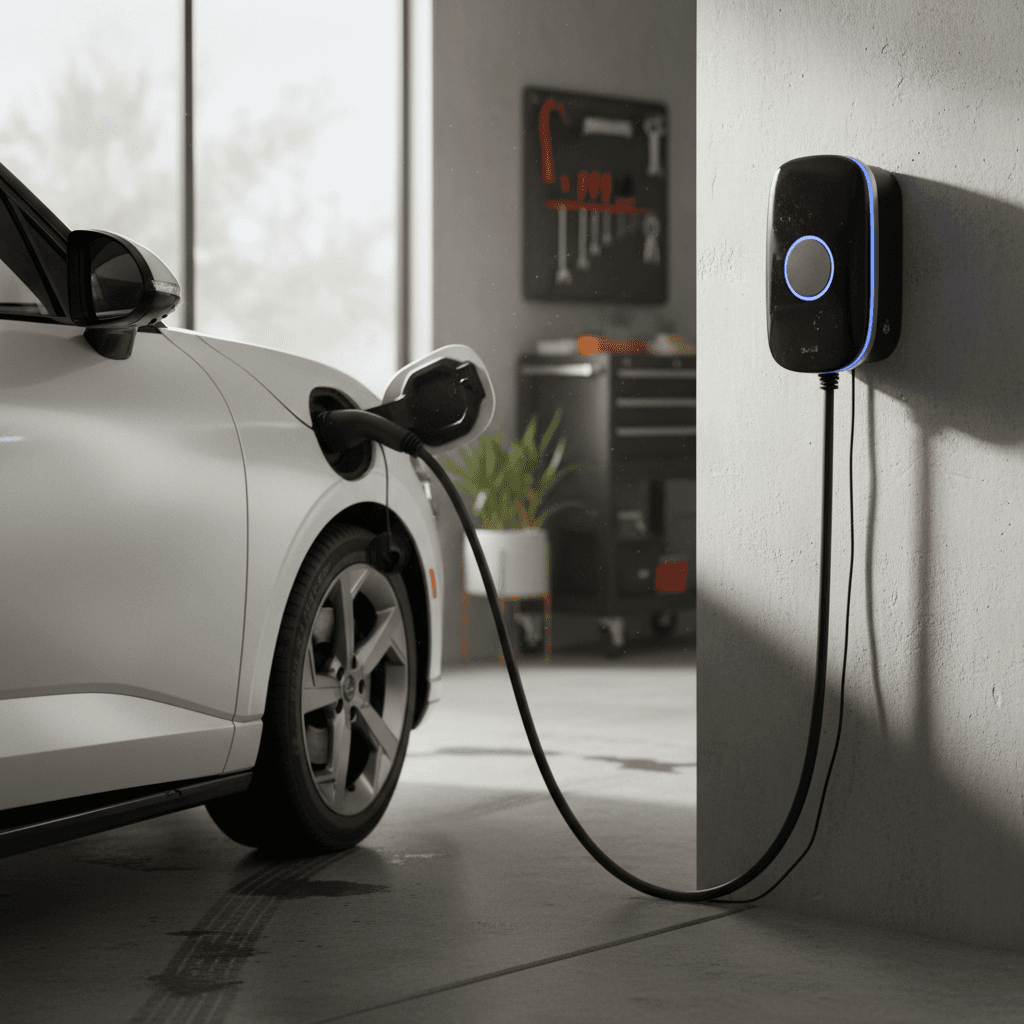
For most Genesis GV60 owners, a Level 2 home charger is the sweet spot. It uses a 240V circuit, similar to what an electric dryer or oven uses, to deliver far more power than a 120V outlet. That cuts charging time dramatically and makes it realistic to arrive home low on range and be full again by morning.
Level 1 vs. Level 2 for a Genesis GV60
Which home charging option fits your driving?
Level 1 (120V)
- Speed: ~3–5 miles of range per hour
- Best for: Light daily driving under ~30–40 miles
- Pros: Uses existing outlet, zero install cost
- Cons: Very slow; challenging if you regularly arrive low on charge
Level 2 (240V)
- Speed: Often 25–40+ miles of range per hour
- Best for: Most GV60 owners, commuters, and families
- Pros: True overnight refills, better use of GV60’s onboard charger
- Cons: Requires 240V circuit and professional installation in many homes
Good news for used‑EV buyers
Ready to find your next EV?
Browse VehiclesStep-by-step: How to set up Genesis GV60 home charging
Whether you stick with 120V or move to Level 2, the process to set up home charging for a Genesis GV60 follows the same basic pattern: assess your needs, check your electrical system, pick the right hardware, and then plug in with a bit of common‑sense safety.
Step-by-step GV60 home charging setup
1. Calculate your daily mileage
Look at a normal week: how many miles do you actually drive per day? If you’re consistently under 30–40 miles, Level 1 might be workable; beyond that, Level 2 becomes much more convenient.
2. Inspect your parking situation
Decide where the GV60 will usually sit while charging, a garage, driveway, carport, or street spot. That determines cable length, weather rating, and whether you’ll need conduit or cable management.
3. Check electrical panel capacity
Find your main service rating (often 100A, 150A, or 200A) and current loads. An electrician can perform a load calculation to see if there’s room for a 40A or 50A EV circuit without upgrading the panel.
4. Choose a Level 2 charger (if upgrading)
Shop for a charger in the 32A–48A range with a J1772 connector, enough cable length (often 20–25 feet), and smart‑charging features if you want app control or energy monitoring.
5. Hire a licensed electrician
For 240V circuits, a professional should pull permits, run wiring, and install breakers to code. This is not a DIY weekend project unless you’re qualified to work on residential electrical systems.
6. Configure charging settings in the GV60
Set your preferred charge limit (often 80–90% for daily use), schedule off‑peak charging if available, and enable lock settings so only you can start or stop a session.
How long does it take to charge a GV60 at home?
Charging time depends on starting state of charge, your charger’s power, and your utility voltage. But you can get close with a few simple rules of thumb when planning how to charge a Genesis GV60 at home.
Approximate Genesis GV60 home charging times
Rough estimates from 10% to 80% state of charge under typical conditions. Real‑world results vary with temperature, battery conditioning, and exact charger output.
| Charging setup | Approx. power | 10% → 80% time | Use case |
|---|---|---|---|
| Level 1 (120V, 12A portable EVSE) | 1.3–1.4 kW | 35–45 hours | Occasional, low‑mileage drivers, backup option |
| Level 2 (240V, 32A) | ~7.5 kW | 7–9 hours | Most GV60 owners, overnight charging from low states of charge |
| Level 2 (240V, 40A) | ~9.6 kW | 5.5–7 hours | Faster refills, helpful if you do multiple long trips per week |
| Level 2 (240V, 48A, where wiring allows) | ~11.5 kW | 4.5–6 hours | Heavy‑use drivers, frequent high‑speed or long‑distance travel |
Use these estimates for planning only, not as exact promises.
You rarely charge from 0%
How much does it cost to charge a GV60 at home?
Home charging costs come down to one formula: energy used × your electricity rate. With a roughly 77 kWh battery in the Genesis GV60, a full 0–100% charge at $0.15 per kWh would cost around $11.55. Most owners will pay less per day because they’re topping up from partial state of charge, not running to empty.
Simple cost estimate
- Battery size: ~77 kWh
- Electricity rate example: $0.12–$0.25 per kWh (typical U.S. residential range)
- Full charge at $0.15/kWh: 77 × $0.15 ≈ $11.55
- Cost per mile (at 3.0 mi/kWh): About $0.05 per mile
Ways to lower your charging bill
- Enroll in time‑of‑use (TOU) rates if your utility offers cheaper overnight electricity.
- Use the GV60’s scheduling to charge only during off‑peak hours.
- Limit charging to 80–90% so you’re not paying for extra energy you don’t need for daily driving.
- Track your kWh use in a smart charger app to see real‑world costs.
Used GV60 + home charging = strong TCO
Battery health best practices for Genesis GV60 home charging
The Genesis GV60’s battery is engineered to handle years of daily charging, but your habits still matter. Home charging is actually easier on the pack than frequent DC fast charging, especially if you avoid high states of charge when you don’t need them.
- For daily use, set a charge limit around 80–90% instead of 100%.
- Avoid leaving the GV60 parked at 0–5% or 100% for long periods; aim for the middle of the pack (20–80%) for storage.
- Use DC ultra‑fast charging mostly for road trips; rely on home AC charging the rest of the time.
- In extreme heat or cold, give the car a few minutes after driving before plugging in so the battery can stabilize.
- Keep the charge port area clean and dry; gently check the J1772 connector for debris before plugging in.
How Recharged evaluates battery health
Troubleshooting common GV60 home charging issues
Most Genesis GV60 home charging sessions are uneventful: you plug in, the car beeps, and the charge indicator lights start pulsing. When something doesn’t look right, a few common culprits are worth checking before you assume the worst about the vehicle or the charger.
Common Genesis GV60 home charging problems and fixes
Start with simple checks before calling for service
Charger won’t start
- Confirm the wall outlet or breaker isn’t tripped.
- Check the EVSE status lights for error codes.
- Unplug from wall and vehicle, then reconnect in wall‑first order.
Charging is very slow
- Make sure you’re actually on a Level 2 charger, not 120V.
- Check if the GV60 is limiting current due to battery temperature.
- Verify cable and connectors are fully seated.
Charging stops unexpectedly
- Look for overheating: warm plugs, hot breaker, or EVSE warning lights.
- Inspect for damage to cable insulation or connectors.
- If you see or smell anything abnormal, stop and call an electrician or service center.
When to call a pro
FAQ: Genesis GV60 home charging
Frequently asked questions about charging a Genesis GV60 at home
Final thoughts: Home charging and the used GV60 market
Once you understand the basics, charging a Genesis GV60 at home is straightforward: start with the portable 120V charger if you must, but plan on a 240V Level 2 setup if you drive more than a short daily commute. The combination of a healthy battery, a right‑sized home charger, and a sensible charge routine turns the GV60 into a crossover you can treat like a smartphone, plug in at night, wake up ready to go.
If you’re exploring a used GV60, it’s worth evaluating home‑charging readiness right alongside price, features, and mileage. That’s where Recharged comes in: every vehicle includes a Recharged Score Report with battery‑health data, fair‑market pricing, and access to EV‑savvy specialists who can talk you through outlet options, panel capacity, and how a GV60 will fit into your daily life. The goal is simple, make EV ownership as transparent and low‑stress as possible, from the driveway to the grid.