If you’re considering a Mercedes EQS, you’re shopping one of the most luxurious electric sedans on the market, an S‑Class–level experience with a massive battery, quiet cabin and serious range. But this is also a complex, expensive EV, and going in without a clear Mercedes EQS buying checklist is an easy way to overpay or overlook something important, especially on a used example.
Who this checklist is for
Why a Mercedes EQS buying checklist matters
The EQS launched as Mercedes’ electric flagship, with a big battery (around 108 kWh usable capacity depending on model year), smooth air suspension and a tech‑heavy interior. That also means high list prices, complex software and feature packages, and repair bills that can match an S‑Class if you pick the wrong car. A systematic checklist helps you: avoid early cars with missing options you’ll wish you had, spot battery or charging issues, understand which trim (450+, 580, AMG) actually fits your needs, and separate a well‑cared‑for used EQS from a depreciated problem child.
Mercedes EQS numbers to keep in mind while you shop
Quick Mercedes EQS buying checklist (at-a-glance)
10 things to verify before you say yes to an EQS
1. Confirm the exact trim and battery
Is it an EQS 450+, EQS 580 4MATIC, or AMG EQS? Each has different power, range and equipment. Check battery size and DC fast‑charge specs in the window sticker or build sheet.
2. Check remaining warranty coverage
Note the in‑service date, basic warranty expiration, and high‑voltage battery warranty (typically around 8 years from first use up to a mileage cap).
3. Review DC fast‑charging history
Heavy fast‑charging isn’t automatically bad, but frequent 0–100% DC charges can accelerate battery wear. Ask for charging habits and verify with any available service records.
4. Inspect for software and screen issues
Cycle through the MBUX screens, navigation and driver‑assist menus. Look for glitches, lag, or error messages, especially on Hyperscreen‑equipped cars.
5. Test all driver‑assistance features
Adaptive cruise, lane‑keeping, blind‑spot monitoring, parking assist and 360‑degree cameras should all work smoothly with no warning lights.
6. Evaluate ride quality
On the test drive, listen for clunks from the air suspension and note how the car rides in Comfort mode, especially over rough pavement or expansion joints.
7. Check wheels, tires and alignment
Inspect for curb rash, uneven tire wear and mismatched brands. Large 21–22" wheels look great but can be more vulnerable to damage and impact ride and range.
8. Verify service history and recalls
Ask for a printout of Mercedes service records. Check that scheduled maintenance, software campaigns and any safety recalls have been completed.
9. Confirm included charging equipment
New, the EQS may come with a portable charger or home‑charging incentives. For a used car, verify what’s still included and budget for a Level 2 home charger if needed.
10. Get a battery health report
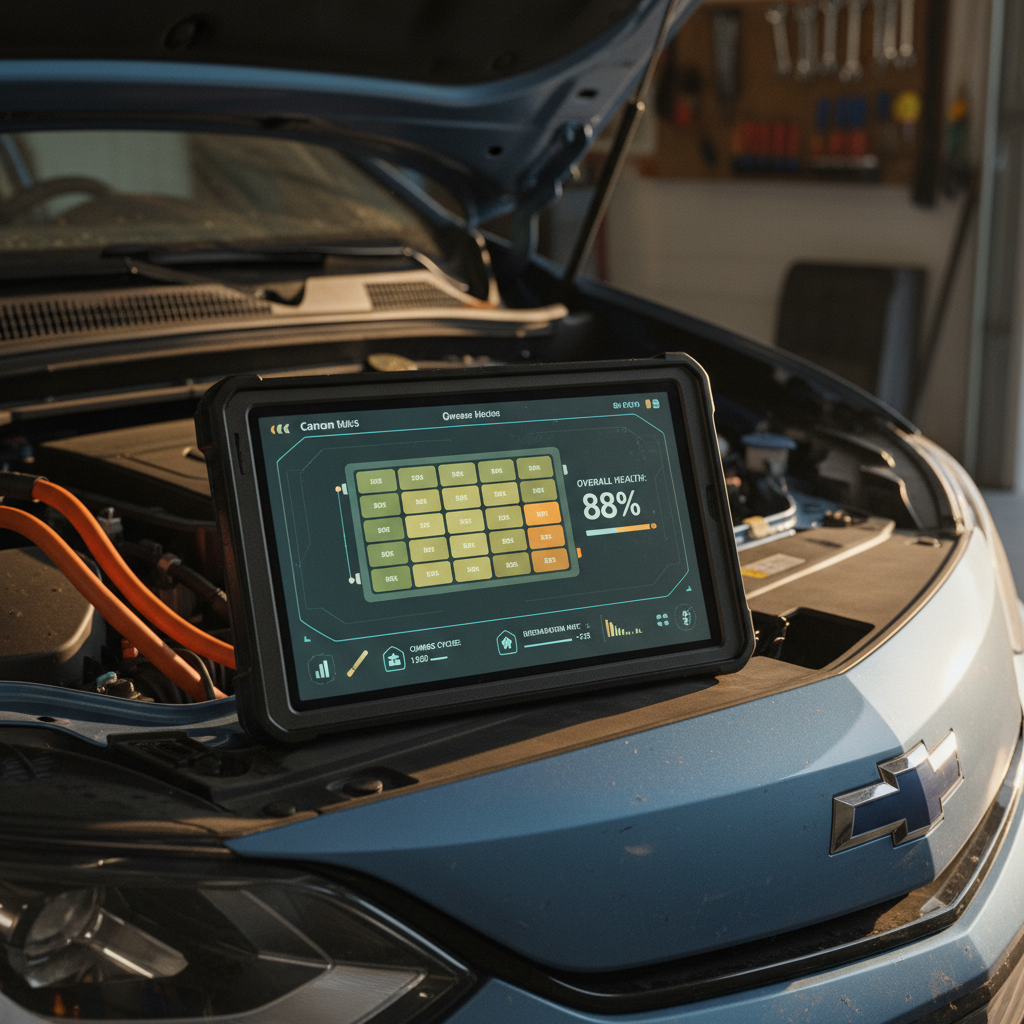
On a used EQS, a professional high‑voltage battery health check is worth it. At Recharged, every vehicle includes a <strong>Recharged Score</strong> with verified battery diagnostics so you’re not guessing.
Step 1: Choose the right EQS model and trim
Before you ever inspect a specific car, get clear on which EQS variant fits your driving. All are quiet and comfortable, but their character and efficiency differ. The most common U.S. sedans are the rear‑drive EQS 450+ and the dual‑motor EQS 580 4MATIC, with the AMG EQS adding serious performance at the expense of some range and tire life.
EQS trims: which one sounds like you?
Use this to narrow your search before you start test‑driving.
EQS 450+ (RWD)
Best for: Range and comfort‑first drivers.
- Single rear motor, smooth and quiet.
- EPA range roughly in the low‑ to mid‑400‑mile range when new.
- Plenty of power for daily use and highway passing.
- Often the best value on the used market.
EQS 580 4MATIC (AWD)
Best for: All‑weather grip and effortless acceleration.
- Dual‑motor all‑wheel drive with significantly more power.
- Range slightly lower than the 450+ due to extra weight and power.
- More standard equipment, but higher purchase price and insurance.
AMG EQS 53
Best for: Enthusiasts who want S‑Class luxury and serious speed.
- High‑output dual motors, performance‑tuned suspension and brakes.
- Sportier ride, larger wheels, and shorter range than efficiency‑focused trims.
- Watch tire wear and brake condition carefully on used cars.
Trim‑shopping tip
Step 2: EQS battery health, range and charging
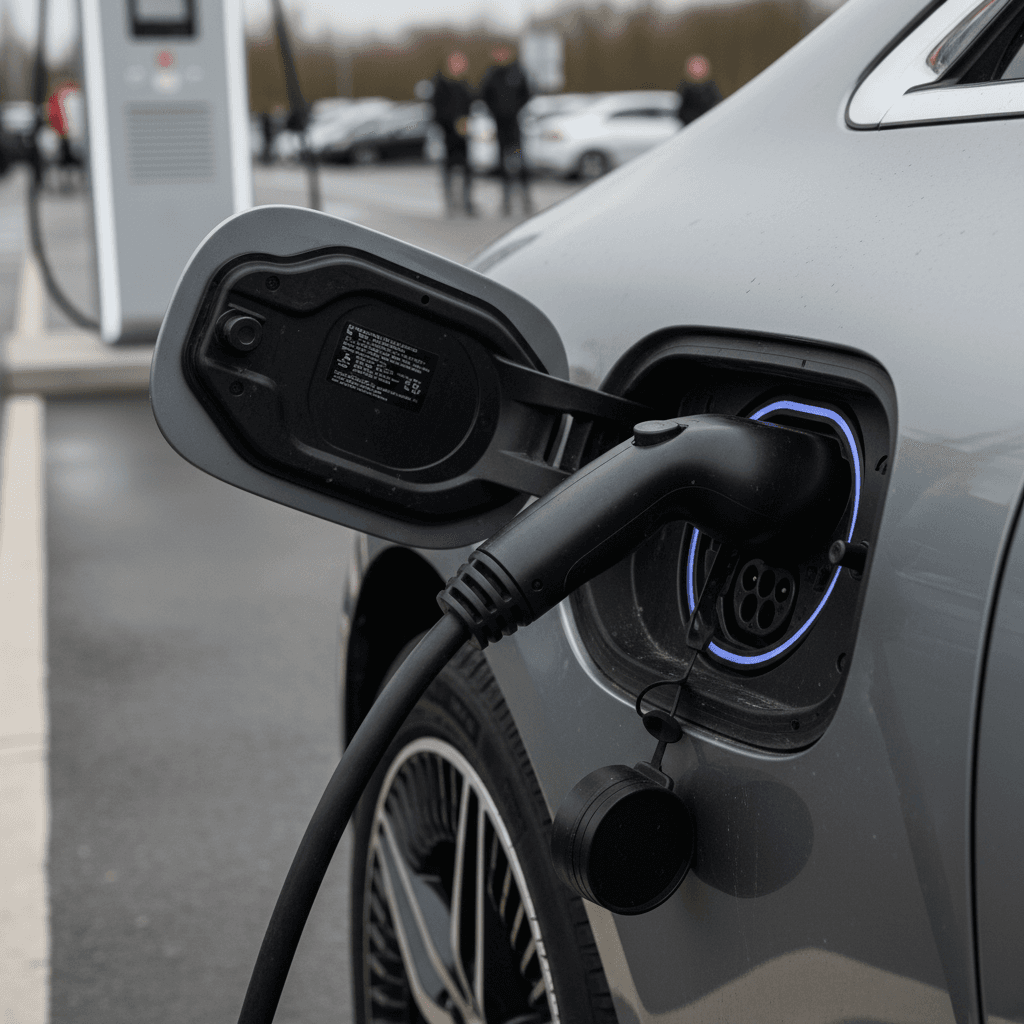
The EQS’s large lithium‑ion pack is central to its appeal, and its long‑term value. Many trims use an approximately 107–108 kWh usable battery, with newer variants and some markets quoting net capacities around 118–120 kWh. On paper that delivers excellent range, and real‑world owners often see strong highway efficiency when driven reasonably. Your checklist here is about confirming the pack is healthy and the charging hardware behaves as it should.
Battery and charging checks for a Mercedes EQS
Use this during a viewing or test drive. You don’t need to be an engineer, just methodical.
| Item | What to look at | What you want to see | Red flags |
|---|---|---|---|
| State of charge & range estimate | With the car at 60–80% charge, compare the estimated range to EPA ratings for that trim. | A range estimate that’s reasonably proportional to charge level (for example, roughly 250–300 miles at ~70% on a healthy 450+). | Shockingly low estimates at moderate charge levels, or wildly fluctuating numbers that don’t stabilize after a few miles. |
| On‑board charger rating | Check the spec sheet or settings for the AC charging power (11 kW, 9.6 kW, or higher depending on equipment). | An AC rating that matches what you expect for the model year and market, typically around 9.6–11 kW for U.S. cars. | AC charging errors, the car refusing to accept Level 2 charge, or dealer unable to explain deviations. |
| DC fast‑charge behavior | If possible, plug into a DC fast charger and watch the charging curve from ~10–60% state of charge. | Stable charging ramping up quickly toward ~200 kW on a low battery, then tapering predictably as state of charge rises. | Repeated charge session drops, error messages at public chargers, or refusal to negotiate more than a very low kW rate without explanation. |
| Battery & charging warnings | Scan the dash and infotainment for any battery or charging‑system warnings. | No persistent high‑voltage, cooling‑system or charger‑related warning messages. | Any orange or red warnings related to ‘Electric drive,’ ‘Battery,’ ‘Cooling’ or ‘Charging system’ that a seller downplays. |
| High‑voltage battery warranty | Confirm the in‑service date and remaining years/miles of high‑voltage battery coverage. | Several years of battery warranty remaining, with no history of repeated pack repairs. | Battery warranty expiring soon on a high‑mileage car, especially without a third‑party battery health report. |
Focus on both the health of the battery and the practicality of charging it where you live and drive.
Don’t skip a battery health report
Step 3: Inspect interior tech and driver-assistance
The EQS lives and dies by its tech story: MBUX infotainment, augmented‑reality navigation, and advanced driver‑assistance. That’s great when everything works, and incredibly frustrating when it doesn’t. Take your time here; a careful in‑car inspection can uncover issues owners occasionally complain about, like laggy software, camera glitches, or finicky hands‑on‑wheel detection.
Infotainment & comfort tech
- Screens: If the car has Hyperscreen, check all three displays for dead pixels, discoloration or flicker. On non‑Hyperscreen cars, confirm the central display is crisp and responsive.
- MBUX system: Test voice commands, Bluetooth pairing, Apple CarPlay/Android Auto and the navigation system. Switch between menus quickly to look for lag.
- Seat functions: Power adjustment, memory, heating, ventilation and massage should all operate quietly and smoothly.
- Climate control: Confirm dual or multi‑zone control works, including rear climate settings where equipped.
Driver‑assistance and safety
- Adaptive cruise control: Engage on a clear road. It should accelerate and brake smoothly, track the set speed, and maintain a consistent following distance.
- Lane‑keeping and lane‑centering: Turn on lane assist and verify the car centers itself without bouncing between lane markers or asking constantly for inputs.
- Parking aids: Test the 360‑degree camera, parking sensors and any automated parking features in a safe lot.
- Alerts & warnings: After a full test drive, there should be no persistent error messages or disabled‑feature notices.
Software updates matter
Step 4: Ride quality, wheels and tires
A big part of the EQS appeal is its air‑suspension ride and quiet cabin. The wrong wheels, worn tires or suspension issues can undermine that luxury feel, and cost you later. During your test drive, focus as much on ride and noise as you do on acceleration.
Ride, noise and wheels: what to check
A few extra minutes spent here can save you thousands in wheels, tires and alignment work.
Air suspension behavior
- Cycle through Comfort, Sport and Eco modes.
- Listen for knocks, clunks or compressor noise over bumps.
- The car should feel composed, not floaty or harsh.
Wheel size & condition
- Note wheel size: larger 21–22" wheels look great but ride firmer and can reduce efficiency.
- Inspect for bends, cracks or heavy curb rash.
- Repair or replacement is expensive on multi‑spoke designs.
Tires, alignment & noise
- Check date codes; EVs are heavy, so older tires on an EQS are a concern.
- Look for uneven wear and listen for humming that might indicate cupping or bearing issues.
- On a straight, flat road, the car shouldn’t pull to one side.
Heavy EV, expensive rubber
Step 5: Warranty, service history and recalls
Luxury EVs like the EQS combine cutting‑edge hardware with intricate software and electronics. That makes warranty coverage and service history especially important, whether you buy new or used. You want to know not just what’s covered, but also how the previous owner treated the car.
- Ask for a full Mercedes‑Benz service printout, not just oil‑change‑style invoices, EVs have fewer fluids, but they still have cooling systems, brakes, and suspension that need attention.
- Confirm that any outstanding recalls or technical campaigns have been completed; if not, ask the seller to handle them before delivery.
- Check the in‑service date to understand how much basic and high‑voltage battery warranty remains.
- Look for repeat visits for the same issue, especially related to charging, infotainment or driver‑assistance systems.
- On a used EQS bought from a third party, consider having an independent EV‑specialist shop or a service like Recharged inspect the car before you sign.
How Recharged can help here
Ready to find your next EV?
Browse VehiclesStep 6: Pricing, financing and resale considerations
The EQS has seen significant price shifts and incentive changes in the U.S., especially as EV tax‑credit rules evolve and Mercedes adjusts strategy for its EQ lineup. That creates opportunity for value‑minded buyers, but only if you factor in total cost of ownership, not just the monthly payment.
What to think about on price
- Original MSRP vs. current market: Many early EQS sedans stickered deep into six‑figure territory. Today, used prices have often come down sharply, particularly for higher‑spec cars.
- Options that actually add value: Desirable features like Hyperscreen, premium audio, rear‑axle steering and certain driver‑assist packages can help resale, while cosmetic packages may not move the needle as much.
- Charging and home‑installation costs: Budget for a 240‑volt Level 2 home charger if you don’t have one. That may involve panel upgrades in older homes.
Financing your EQS
- Term length vs. depreciation: Avoid stretching loan terms far beyond the remaining warranty coverage on a used EQS.
- Rate shopping: Compare dealer financing with outside lenders and EV‑specialist providers.
- Pre‑qualification: Getting pre‑qualified, Recharged offers this with no impact to your credit, gives you a clear budget before you fall in love with a specific car.
Negotiation angle
Used Mercedes EQS buying checklist
Buying a used EQS can deliver a huge amount of car for the money, but you’re inheriting someone else’s decisions about charging, software updates and maintenance. This is where a structured checklist really pays off.
Extra steps for a used Mercedes EQS
1. Scan for accident and flood history
Run a vehicle‑history report and have a trusted body shop inspect for overspray, panel gaps or underbody corrosion. Water damage and poorly repaired collisions are particular concerns on high‑tech EVs.
2. Look for uneven panel gaps and trim issues
Slowly walk around the car and study panel alignment, door seals and trim pieces. Misalignment can hint at prior damage or rushed repairs that may affect weather sealing and wind noise.
3. Inspect underbody and aero panels
If you can, have the car put on a lift. Check plastic aero shields and battery‑area panels for scrapes, cracks or missing fasteners.
4. Verify all keys and digital access
Make sure you receive all physical keys/fobs and that app‑based access or digital keys can be transferred to you without issues.
5. Confirm charging network setup
Ask the seller how they used DC fast‑charging (which networks, how often) and make sure you can set up your own accounts. For some new owners, incentives or complimentary charging periods may not transfer.
6. Get independent EV diagnostics
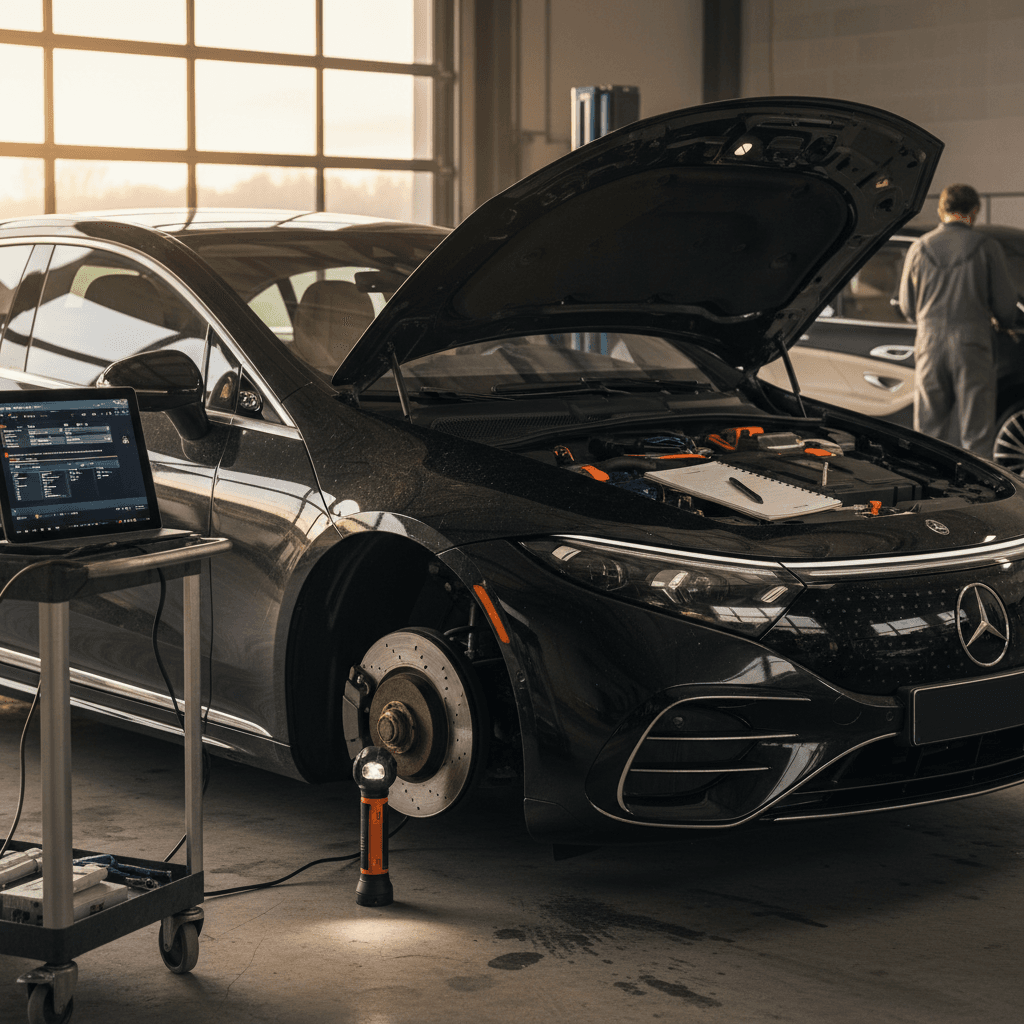
Beyond a standard pre‑purchase inspection, consider an EV‑focused evaluation. Recharged, for example, runs detailed battery diagnostics and checks charging behavior under load before listing a vehicle.
FAQ: Mercedes EQS buying questions
Frequently asked questions about buying a Mercedes EQS
Bottom line: How to buy a Mercedes EQS with confidence
A Mercedes EQS can be an outstanding way to go electric: it’s quiet, quick enough in any trim, and capable of serious road‑trip range when you plan your charging stops. But it’s also a flagship luxury EV with intricate software, a large and expensive battery pack, and repair costs to match that status if you pick poorly.
Treat this Mercedes EQS buying checklist as your step‑by‑step playbook. Decide which trim fits your life, verify battery health and charging behavior, comb through the tech and driver‑assistance features, and let ride quality and service history guide your negotiation. If you’d rather not do all of that alone, shopping through Recharged means every used EV comes with a Recharged Score battery‑health report, transparent pricing, EV‑specialist support and the option to pre‑qualify for financing online with no impact to your credit, so you can enjoy the EQS experience without the guesswork.