If you’re eyeing a Tesla Model S, you’ve probably already heard the warning: **insurance on a Tesla Model S isn’t cheap**. In 2026, most U.S. drivers will see full-coverage premiums somewhere in the mid‑$3,000s to low‑$5,000s per year, depending on the trim, where you live, and your driving profile. Let’s break down how much insurance on a Tesla Model S really costs, why it’s higher than average, and how you can keep that bill under control, especially if you’re shopping used.
Key takeaway
Tesla Model S insurance at a glance
2026 Tesla Model S insurance snapshot (U.S.)
Those headline numbers are built from recent national quote studies on Tesla premiums combined with broader EV insurance research. Across multiple datasets, **the Model S consistently ranks among the more expensive vehicles to insure in the U.S.**, driven by parts prices, repair complexity, and its status as a high‑end performance EV.
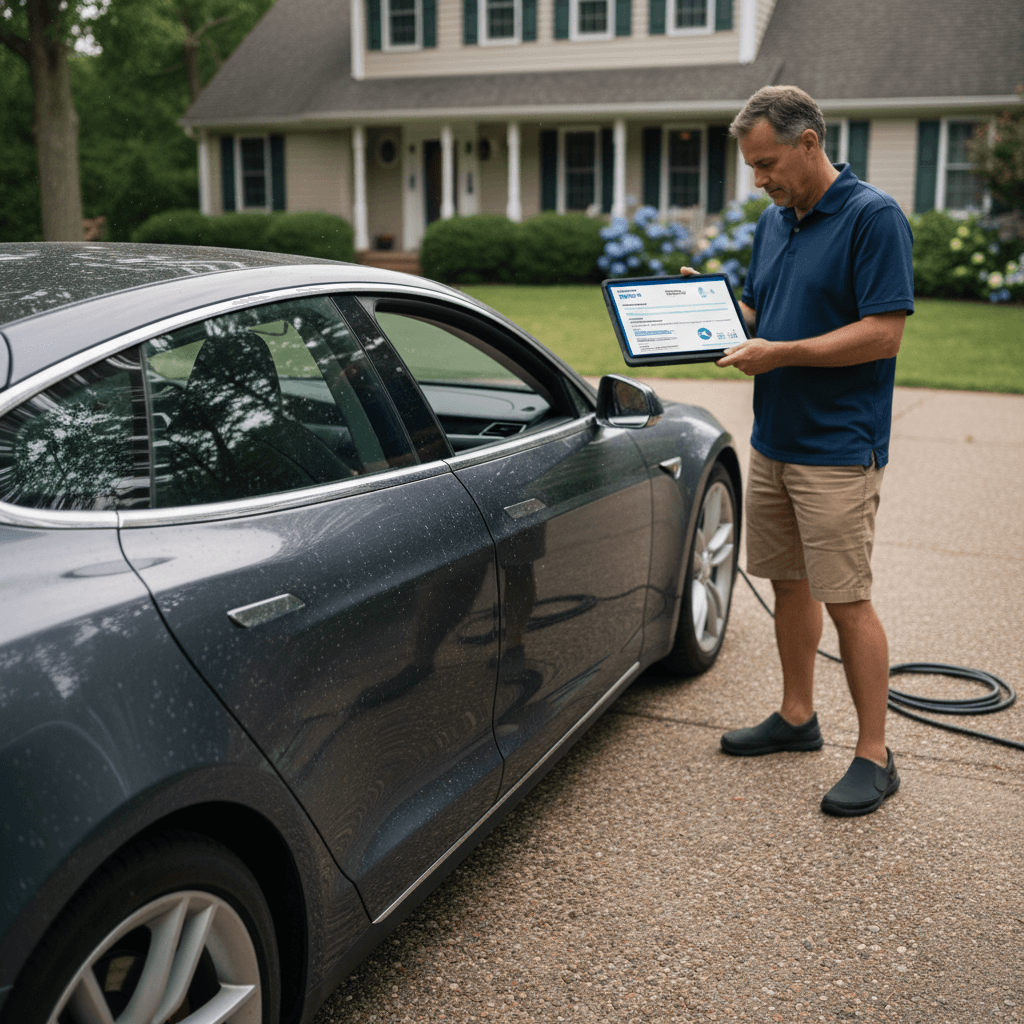
What actually drives Tesla Model S insurance costs?
Insurers don’t set a special “Tesla tax,” but they do crunch a long list of risk factors. The Model S just happens to light up quite a few of them. Here’s what matters most for your rate and why this car often comes in above average.
Major factors that shape your Model S insurance rate
From the car you pick to how, and where, you drive it
1. Performance & trim
2. Repair & battery costs
3. Limited repair network
4. Your state & ZIP code
5. Driver profile
6. Coverage & deductibles
Sticker‑shock alert
How Tesla Model S insurance compares to other cars
Context helps. National full‑coverage averages for all vehicles landed around the mid‑$2,000s per year heading into 2026. Typical EV premiums ran higher, and high‑end Teslas sat near the top of the charts. Several studies peg **average Tesla Model S premiums around 90% above the overall vehicle average**, with many quotes clustering in the $3,500–$4,500 range for full coverage on recent‑model cars.
2026 insurance cost comparison: Model S vs other vehicles
Approximate annual full‑coverage premiums for a 40‑year‑old driver with a clean record and good credit in a mid‑cost state.
| Vehicle | Approx. annual premium | How it compares |
|---|---|---|
| Average U.S. vehicle (all types) | $2,600–$2,800 | Baseline national full‑coverage average |
| Typical gas midsize sedan | $2,300–$2,500 | Often slightly below the overall average |
| Typical non‑luxury compact SUV | $2,400–$2,700 | Near the middle of the pack |
| Average EV (all models) | $3,200–$3,900 | Roughly 20–50% higher than gas vehicles |
| Tesla Model 3 (long‑range) | $2,800–$3,400 | Higher than average, but below Model S |
| Tesla Model S (standard dual‑motor) | ~$3,600–$4,200 | Significantly above average; luxury performance EV |
| Tesla Model S Plaid | $4,200+ | Among the most expensive EVs to insure |
Actual prices vary widely by state, driver profile, and insurer. These figures are directional, not guaranteed quotes.
Why the gap exists
Model S Plaid vs standard: big difference in insurance?
If you’re choosing between a standard dual‑motor Model S and the Plaid, assume the Plaid’s insurance bill will be higher, sometimes a lot higher. It’s the combination of power output, top speed, and price tag that makes actuaries nervous.
Standard dual‑motor Model S
- Lower performance ceiling than the Plaid, which can help on premiums.
- Still considered a luxury EV with high repair costs and advanced tech.
- Many insurers quote it in the **mid‑$3,000s per year** for full coverage in 2026 on a clean record.
- May qualify for slightly broader carrier options than Plaid in some markets.
Model S Plaid
- Supercar‑level acceleration and higher top speed translate into **higher risk** in insurers’ models.
- Higher original MSRP raises the ceiling for total‑loss payouts.
- Often lands in **$4,200+ per year** territory for full coverage, sometimes well above $5,000 for younger drivers or high‑cost states.
- Some insurers simply surcharge heavily on Plaid or decline the risk altogether.
Before you spec a Plaid
Does a used Tesla Model S cost less to insure?
Moving from a brand‑new Model S to a used one usually helps your insurance bill, but not as much as many buyers expect. Insurers care about **vehicle value**, but they also care about **parts pricing and repair complexity**, which don’t fall nearly as quickly as resale values.
- A 3–5‑year‑old Model S that’s dropped sharply in resale value can sometimes **trim a few hundred dollars a year** off your premium compared with a brand‑new example, assuming similar coverage.
- Older Model S vehicles may lack some of the newest active‑safety hardware, which can slightly increase risk, but they also **tend to be driven less aggressively** once they’re out of the “new toy” phase.
- If you finance a used Model S with a smaller loan amount than a new one, you may be more comfortable with **higher deductibles**, which lowers premiums further.
Where Recharged fits in
Ready to find your next EV?
Browse VehiclesIn short, yes, a used Model S often costs less to insure than a new one, especially once you adjust deductibles and coverage to match the vehicle’s lower value. But it will almost always remain more expensive than insuring a mainstream gas sedan or crossover of similar age.
Practical ways to lower your Tesla Model S insurance
You can’t change that the Model S is a high‑value, high‑performance EV. But you can attack the pieces of your profile and coverage that insurers weigh most heavily. Here are levers that actually move the needle.
Actionable ways to cut your Model S premium
1. Shop across multiple insurers
Rates for Teslas vary more between carriers than for many mainstream models. Always compare at least **3–5 quotes**, including Tesla’s own branded insurance where available in your state.
2. Consider telematics or usage‑based programs
Many insurers now offer **usage‑based or behavior‑based programs** that track your driving via an app or in‑car data. Conservative drivers with mainly daytime, suburban mileage can save meaningful money.
3. Adjust deductibles strategically
Raising your comprehensive and collision deductibles from $500 to $1,000 can often shave **10–20% off** your premium. Only do this if you could comfortably cover the higher out‑of‑pocket cost after a claim.
4. Right‑size your liability limits
Don’t skimp on liability, Model S drivers often have significant assets to protect, but avoid needless add‑ons you don’t need. Work with an agent to balance **adequate liability coverage** with cost.
5. Bundle and stack discounts
Bundling home, renters, or umbrella coverage can take a serious bite out of your Model S premium. Add **alarm, garage‑kept, good‑student, and multi‑vehicle discounts** where they apply.
6. Be intentional about mileage
If you also own a cheaper commuter car or work from home, accurately reporting **lower annual mileage** on your Model S, backed by odometer readings, can earn you a lower rate.
Leverage safety features
Insurance checklist for future Model S buyers
If you’re still shopping, especially in the used market, you can bake insurance thinking into your purchase process. That’s where buyers often leave the most money on the table.
Before you pick a specific car
- Decide your budget including insurance, not just the payment. Treat premium estimates like another line on the monthly cost sheet.
- Compare quotes on at least **two trims** (for example, standard dual‑motor vs. Plaid or Performance) and **two model years**.
- Check how rates change if you buy in your current ZIP vs. a neighboring one, this matters if you’re planning a move soon.
Once you’ve found “the one”
- Ask the seller for the **VIN upfront** and run real quotes rather than relying on averages.
- Verify the car’s **accident and claim history** through services like Carfax or AutoCheck; prior damage can influence insurer appetite and pricing.
- If you’re buying through Recharged, use the **Recharged Score Report** to have a detailed conversation with your agent about coverage levels and deductibles that fit the car’s condition.
Don’t wait until delivery day
FAQ: Tesla Model S insurance
Frequently asked questions about Tesla Model S insurance
Bottom line: Is Tesla Model S insurance worth it?
Insurance on a Tesla Model S in 2026 isn’t cheap, and it likely won’t be anytime soon. You’re insuring a high‑tech, high‑performance luxury EV with expensive components and repair requirements that still sit outside the everyday comfort zone for many shops and carriers. That reality pushes premiums well beyond what most drivers pay for a gas sedan or mainstream SUV.
But those higher premiums don’t have to be a deal‑breaker. If you build insurance into your total cost of ownership, shop your coverage aggressively, and make intentional choices about trim, model year, deductibles, and mileage, you can **keep Model S insurance manageable**. And if you’re exploring the used market, working with a specialist like Recharged, where each car comes with a detailed Recharged Score Report, expert EV guidance, financing options, and nationwide delivery, can make both the purchase and the ownership math much easier to live with.