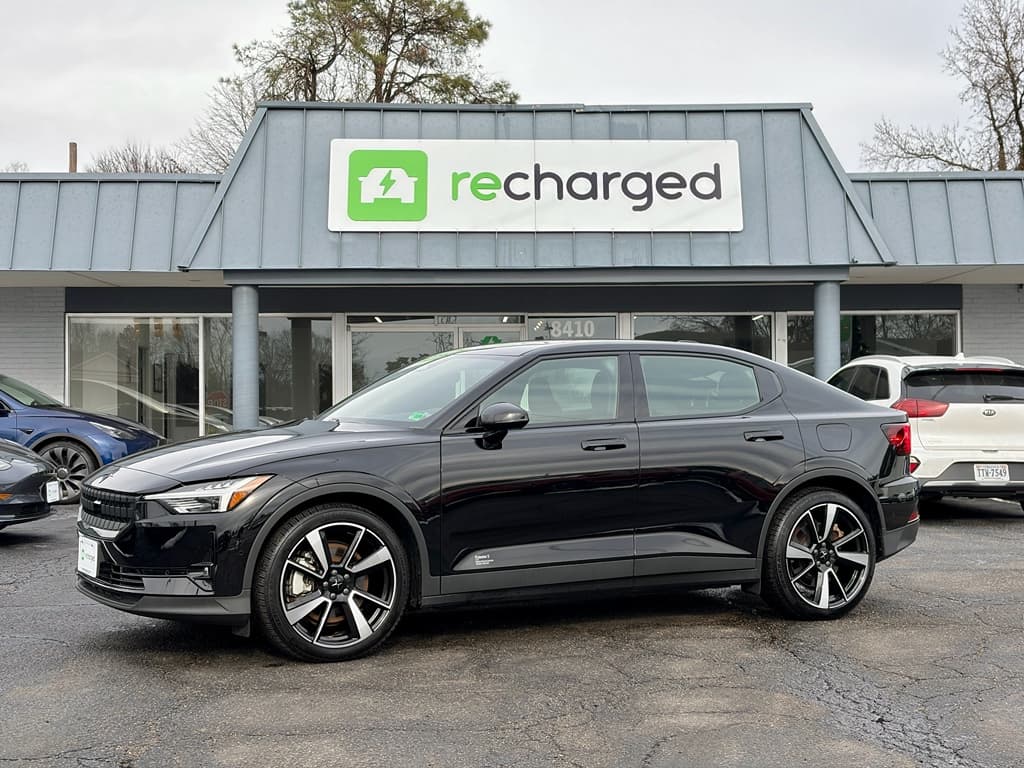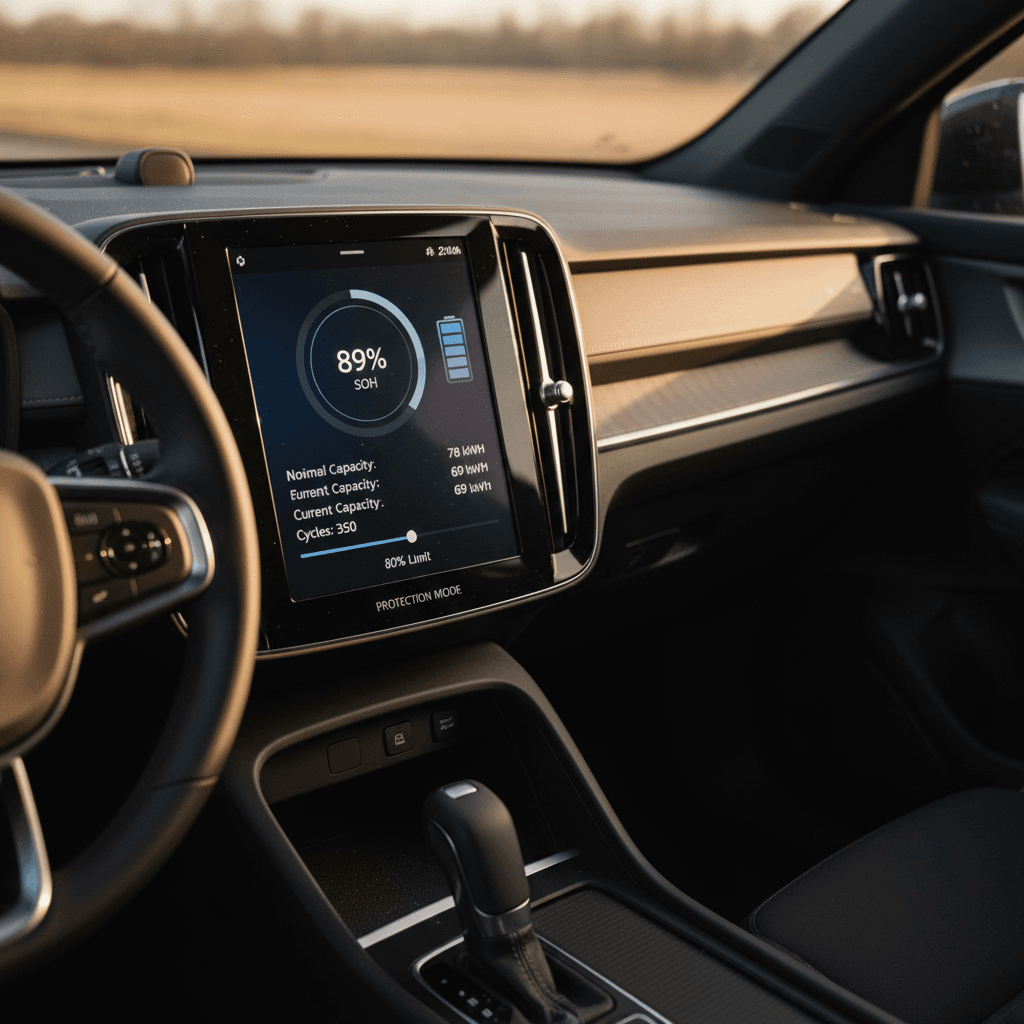
If you own a Polestar 2, or you’re eyeing a used one, the question in the back of your mind is probably simple: **how healthy is the battery, really?** A Polestar 2 battery health check tells you how much usable capacity is left in the pack, how that compares to new, and whether you’re on track for years of worry‑free driving or staring down an early‑life battery problem.
Battery health in one sentence
Why Polestar 2 battery health matters
The traction battery in a Polestar 2 is the EV equivalent of an engine and fuel tank combined. It drives **range, performance, and resale value**. A car that still has 90%+ of its original capacity will feel nearly new on the road; one that’s slipped into the 70s will have noticeably less range and will be worth less on the used market.
- Range: lower battery health = shorter real‑world range, especially in winter or at highway speeds.
- Fast‑charging comfort: a healthy pack accepts fast charge power more readily, so road trips are quicker.
- Resale value: buyers increasingly ask for State of Health (SoH) data, and weak numbers become a negotiation lever.
- Warranty protection: if a Polestar 2 pack falls below the warranty threshold, you may be entitled to repair or replacement.
Used‑buyer leverage
What “battery health” and SoH actually mean
When people talk about a **Polestar 2 battery health check**, they’re usually trying to get to one number: the **State of Health (SoH)**. SoH is a percentage showing how much usable energy the high‑voltage pack can still hold compared with when it left the factory. A brand‑new Polestar 2 is 100% SoH by definition. If today it can only store, say, 90% of that energy, its SoH is 90%.
Key Polestar 2 battery facts to keep in mind
SoH isn’t displayed as prominently in a Polestar 2 as fuel economy is in a gasoline car, and that’s part of why owners and used buyers go looking for a **“how‑to” battery health check**. You’re really trying to answer three questions: 1. Is the pack behaving normally for its age and mileage? 2. Is there any evidence of an underlying defect or abuse? 3. Am I covered by Polestar’s high‑voltage battery warranty if something goes wrong?
Quick Polestar 2 battery health check for current owners
If you already have the car in your driveway, you can get a surprisingly good read on battery condition just using the Polestar 2 itself, the Polestar app, and your own range experience. Think of this as a **first‑pass health check**, enough to flag whether you need a deeper diagnostic or an official certificate.
Three easy ways to sanity‑check Polestar 2 battery health at home
You don’t need tools to spot obvious red flags.
1. Compare app range vs. what you actually get
On a full or near‑full charge, note the car’s estimated range in the Polestar app or on the driver display. Then track how many miles you can realistically drive before reaching 10–20% charge in similar conditions.
If your real‑world range is consistently within 10–20% of the estimate, that’s generally normal. Huge gaps can hint at tired cells, aggressive driving, or extreme climates.
2. Watch consumption and range over a known route
Drive a familiar route, say a 50‑mile commute, at your usual speeds. Reset the trip meter at the start and note:
- Average consumption (kWh/100 km or mi/kWh)
- Percentage of battery used for that distance
Compare that to what owners with similar spec Polestar 2s report or to your early‑ownership notes. A big unexplained change can be an early warning sign.
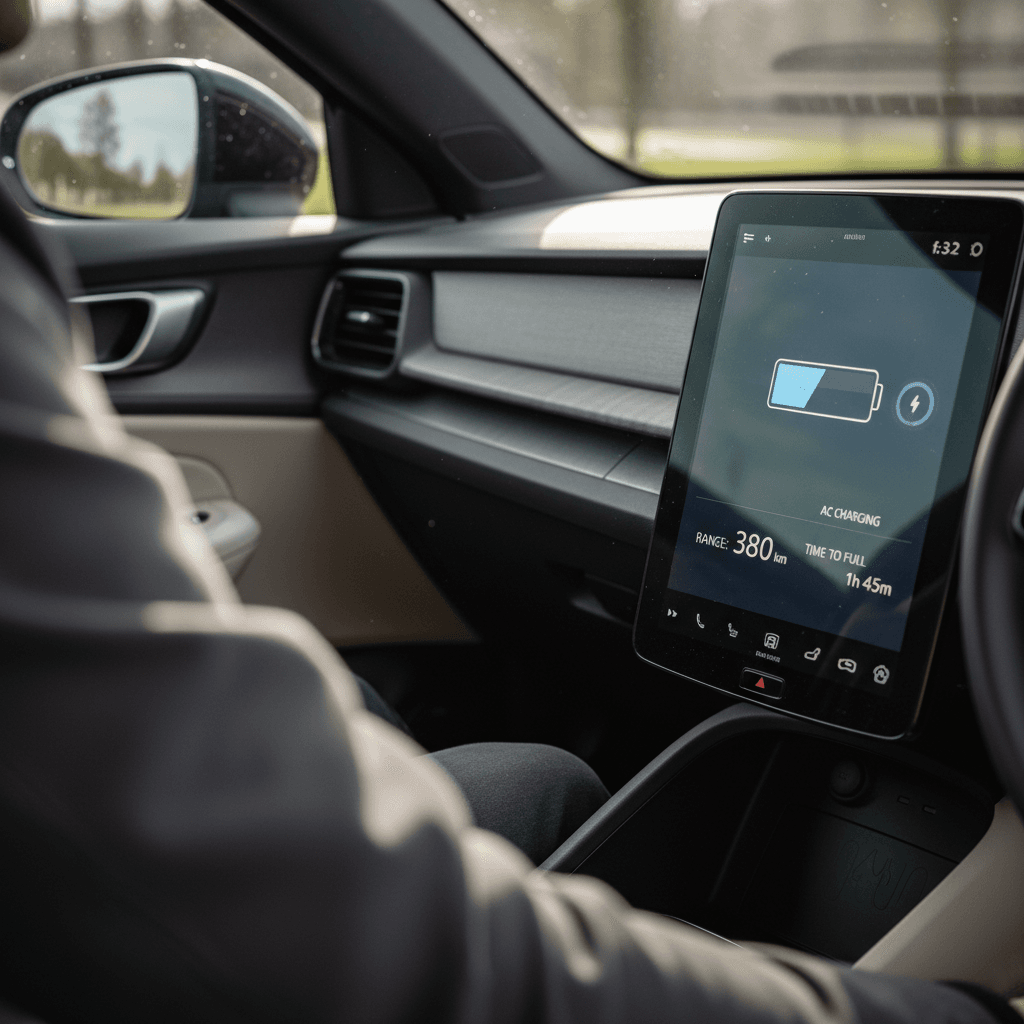
3. Time a charge session
At a DC fast charger that you trust, start a session around 10–20% state of charge and charge to 60–70%:
- Note how many kWh the charger reports delivering
- Watch how quickly power tapers off
A healthy pack in moderate temperatures should accept strong power early in the session. Drastically slow rates or early tapering, especially across multiple stations, may justify a professional check.
Don’t confuse weather with wear
How to get an official Polestar 2 battery health report
A proper **Polestar 2 battery health check** goes beyond guesswork and into hard data from the car’s battery management system (BMS). For that, you’re either working with a **Polestar/Volvo service center**, or with an independent that has EV‑specific test equipment.
Ways to get a formal Polestar 2 battery health report
From dealer certificates to independent lab tests, here’s how owners and used buyers can get hard numbers.
| Option | Where you get it | What you receive | Best use case |
|---|---|---|---|
| Polestar/Volvo dealer SoH test | Official Polestar or Volvo service center | State of Health % from factory diagnostics; sometimes a printed certificate or service record line item | Verifying warranty coverage, peace of mind on newer cars |
| Certified pre‑owned (CPO) program report | Polestar Pre‑Owned or brand‑aligned used program | Multi‑point inspection plus a battery SoH certificate as part of the CPO paperwork | Buying a used Polestar 2 from a brand dealer |
| Independent EV battery test | Specialist EV shop or third‑party test provider | Lab‑style report showing usable capacity, pack balance, sometimes cell‑level data | High‑mileage cars, private‑party sales, or if dealer data is vague |
| Recharged Score battery health check | Recharged marketplace when you buy a used EV | Standardized battery health rating informed by diagnostics, range behavior, and history | Shopping used Polestar 2s (and other EVs) online with transparent condition data |
For high‑value used purchases, combining a dealer‑generated SoH report with a road test is ideal.
Polestar has been rolling out formal **battery State of Health certificates** for used Polestar 2s sold through its own channels. That’s valuable, but it doesn’t yet cover every used example in the wild. If you’re buying elsewhere, or you just want reassurance on a car you already own, ask a Polestar‑authorized workshop to perform a high‑voltage battery test and provide SoH in writing.
Where Recharged fits in
Ready to find your next EV?
Browse VehiclesChecking battery health when buying a used Polestar 2
When you’re evaluating a used Polestar 2, you only get a short test‑drive window to spot issues that will matter for years. Battery health deserves its own mini‑checklist, right alongside cosmetic condition and tire wear, because it’s the single most expensive part of the car.
Used Polestar 2 battery health checklist
1. Ask for a recent battery health report
Request a printout or PDF from a Polestar/Volvo dealer showing the car’s <strong>State of Health</strong>. If the seller shrugs or provides only vague comments, push for a real test before you commit, or factor that uncertainty into your offer.
2. Verify mileage and build year against SoH
Cross‑check the SoH % with the car’s mileage and model year. A lightly used Polestar 2 with 20,000 miles showing 80% SoH deserves hard questions; a 5‑year‑old car with 80,000 miles at 88–92% is much more believable.
3. Look at charging history and habits
Ask how the previous owner charged: mostly at home to 70–80%, or frequent DC fast charging to 100%? Occasional fast charging and road trips are fine, but relentless high‑power use or always sitting at 100% isn’t ideal for long‑term health.
4. Check for battery‑related warnings or software updates
On the test drive, look for warning lights, limited‑performance messages, or charging errors. Ask whether any high‑voltage battery or inverter campaigns have been performed and request documentation, this is also where a Recharged Score can shortcut the homework.
5. Compare expected vs. observed range
Charge the car to at least 80% before your test drive (or have the seller do it) and note the estimated range. On a familiar‑distance route, say 40–50 miles, see how much percentage you actually use. Large unexplained differences between expected and actual range could signal a weak pack or out‑of‑date software.
6. Use battery health as a price lever
If the SoH is lower than you’d like, but still above the warranty floor, decide whether you’re comfortable owning a car with less future range. When you are, that lower health number should be reflected in the price you pay, just as engine wear would be on a gasoline car.
Walk away scenarios
What’s “normal” battery degradation on a Polestar 2?
Real‑world data from modern EVs, including Polestar 2s, points to a familiar pattern: a modest drop in capacity in the first couple of years, followed by a long, slow glide. The exact shape depends on climate, charging habits, and mileage, but **steady single‑digit losses over the first 100,000 miles** are the norm, not catastrophic early failures.
What usually looks normal
- After ~2–3 years and 25,000–35,000 miles: SoH in the low‑to‑mid 90s.
- Around 5 years and 60,000–80,000 miles: high‑80s to low‑90s SoH is common.
- Range that’s shrunk modestly but predictably compared to day one.
- No abrupt, step‑change loss in estimated range after a particular event.
What should make you dig deeper
- SoH readings in the 70s on a relatively young, low‑mileage car.
- Sudden 10–20% range loss over a short period after an update or fast‑charging binge.
- Repeated rapid‑charging errors, overheating messages, or power‑limited warnings.
- A car that can’t reach advertised DC fast‑charge power even on multiple stations.
Don’t over‑interpret one number
Habits that protect Polestar 2 battery health
Once you’ve confirmed your Polestar 2’s battery is healthy, the next step is keeping it that way. Polestar’s battery management system does a lot in the background, cell balancing, temperature management, charge‑rate control, but your day‑to‑day habits still matter.
Polestar 2 battery‑friendly habits
Small changes that pay off over years of ownership.
Live between ~20% and 80%
For daily driving, set your charge limit around 70–80% and avoid routinely arriving home nearly empty. Short stints at 100% before a trip are fine; long‑term parking at full charge is what you want to avoid.
Respect temperature extremes
Cold batteries charge and discharge less efficiently, while very hot packs age faster. Use pre‑conditioning before DC fast charging in winter and avoid repeated back‑to‑back fast‑charge sessions in extreme heat if you can help it.
Use DC fast charging strategically
Polestar 2 handles fast charging well, but daily reliance on high‑power DC isn’t ideal. Prefer Level 2 home or workplace charging most of the time and save DC for road trips and unusual circumstances.
Update software on schedule
Polestar frequently refines battery management and charging behavior via software updates. Keeping the car up to date can improve accuracy of range estimates and, occasionally, unlock better charging performance.
Drive smoothly
Hard launches and high‑speed running are fun, but sustained aggressive driving adds heat and stress. Occasional spirited driving is fine; just don’t treat every commute like a qualifying lap.
Follow service intervals
While there’s no “oil change” for the battery, scheduled maintenance includes checks on coolant, high‑voltage components, and software. Having these documented helps both long‑term durability and resale value.
Warning signs your Polestar 2 battery needs attention
Most Polestar 2 owners will never see a dramatic battery failure, degradation tends to be slow and boring. But there are a few **red flags** that should send you to a service bay rather than another forum thread.
- Persistent warning lights or messages related to high‑voltage system, charging system failure, or reduced performance.
- The car suddenly losing a big chunk of range after an update or charging incident, not explained by weather or route.
- Repeated failures to start DC fast charging at reliable stations, especially across networks.
- Very slow Level 2 charging at home despite a healthy wallbox and wiring.
- The 12‑volt battery repeatedly going flat or throwing app warnings, remember, the 12V system has to wake up the big pack to let you charge or drive.
Don’t ignore 12‑volt issues
FAQ: Polestar 2 battery health checks
Common questions about Polestar 2 battery health
Bottom line on Polestar 2 battery health checks
A Polestar 2 battery health check doesn’t have to be mysterious or intimidating. At home, you can get a feel for pack condition just by watching range, consumption, and charging behavior. When you’re making a big decision, like buying a used car or questioning whether your pack is aging normally, back that intuition up with a formal SoH test from a Polestar‑aligned service center, an independent EV specialist, or a Recharged Score Report.
The key is not to chase perfection, but to understand what’s normal for these cars and what’s a red flag. A healthy Polestar 2 driven and charged thoughtfully should deliver years of usable range and strong performance. When you pair that with transparent battery data, especially in the used market, you can focus less on worrying about degradation and more on simply enjoying the car.