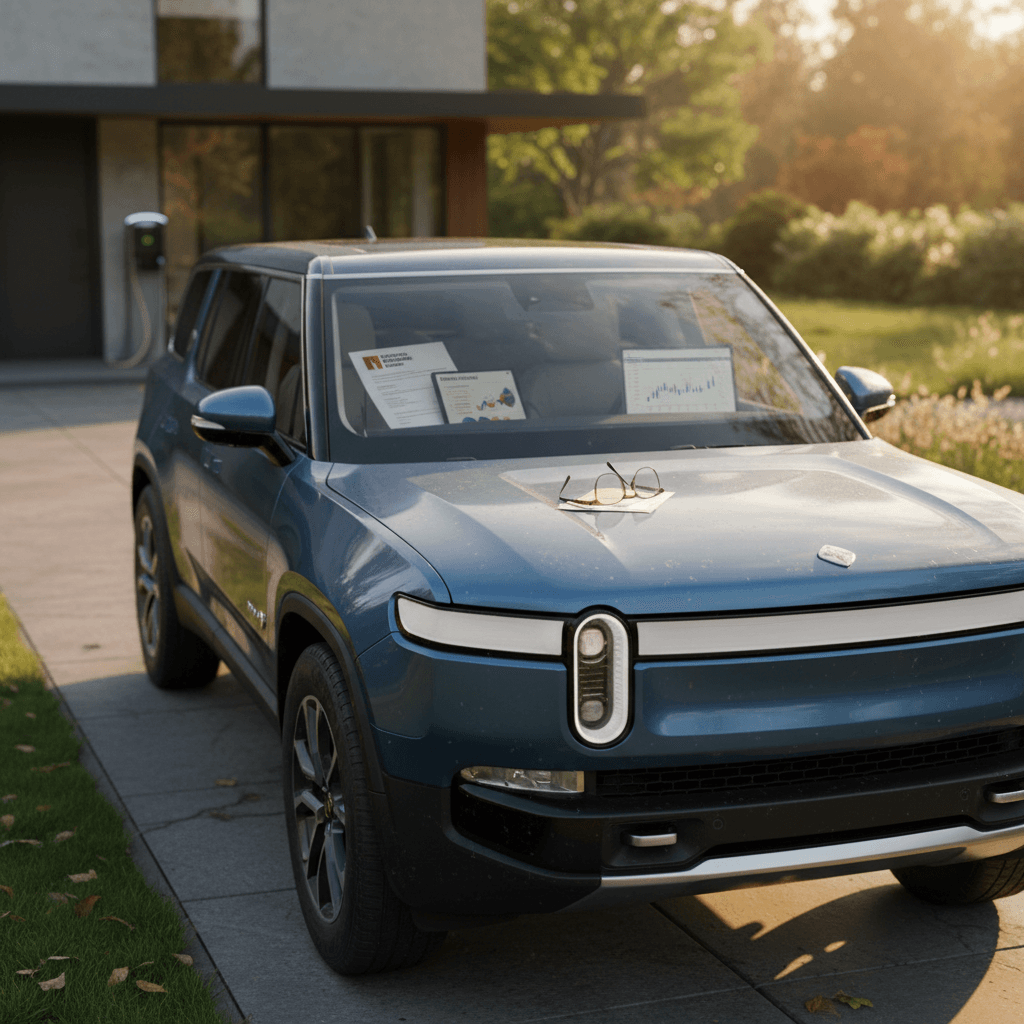
If you’re eyeing a Rivian R1S, you’re probably wondering the same thing as most shoppers: how much is insurance on a Rivian R1S, and how will it affect my real monthly payment? Because the R1S is a high‑value, all‑electric SUV packed with tech, its insurance costs don’t look like a typical gas crossover’s, but with the right strategy, they don’t have to be budget‑breaking either.
Quick context
Rivian R1S insurance at a glance
Rivian R1S insurance vs. the average driver
Think of those numbers as a starting lane on the highway, not a locked‑in quote. In owner reports, you’ll see everything from roughly $1,800 a year for a bare‑bones policy in a lower‑cost state to $5,000+ a year in places like California or New York with higher premiums and richer coverage. Your age, driving record, location, mileage, and chosen deductible can easily swing your R1S bill by hundreds of dollars per year either way.
How much is insurance on a Rivian R1S in 2026?
Pulling together recent carrier data, third‑party cost guides, and real‑world Rivian owner quotes from 2024–2026, here’s a realistic view of what insurance on a Rivian R1S looks like in 2026 for many U.S. drivers:
Typical 2026 Rivian R1S insurance costs (full coverage)
Illustrative ranges for a 2024–2026 Rivian R1S driven 10,000–15,000 miles per year. Your rate may fall outside these bands depending on your personal profile.
| Driver profile & location | Estimated annual premium | Rough monthly equivalent | What this usually looks like |
|---|---|---|---|
| Excellent record, 40s, lower‑cost state (e.g., OH, WI, ID) | $2,000–$2,600 | $165–$220 | Higher deductibles, good credit, relatively low‑risk ZIP code. |
| Good record, 30s–50s, average‑cost state | $2,600–$3,400 | $220–$285 | Middle‑of‑the‑road deductibles and coverage limits. |
| Newer driver or dense metro area (e.g., CA, NY, FL) | $3,400–$4,500+ | $285–$375+ | Higher claim frequency and medical/repair costs baked into rates. |
| High‑risk driver (recent at‑fault accident or tickets) | $4,500–$6,000+ | $375–$500+ | Multiple risk factors or very low deductibles on a high‑value EV. |
Estimates are directional, not quotes. Always compare live quotes for your specific situation.
Many Rivian R1S owners report premiums around $1,000–$1,800 for six months for full coverage when the vehicle is one of two or three cars on a policy, scaling up in higher‑cost states. That tracks with the table above and sits comfortably above the U.S. all‑vehicle average, but in line with other six‑figure luxury EVs.
Online “average R1S cost” numbers can mislead
Why Rivian R1S insurance can be higher than average
Insurers don’t care that the Rivian R1S is one of the most capable all‑electric SUVs on sale; they care what it costs to repair or replace and how often they’ll have to pay a claim. A few traits push R1S premiums above typical gas SUVs:
- High vehicle value: A well‑equipped new R1S often carries a sticker price in the $85,000–$100,000+ range. Insuring a more expensive vehicle means higher potential payouts for total losses and repairs.
- Expensive, specialized repairs: Aluminum body panels, complex battery packs, and sensor‑laden driver‑assist systems mean more costly repairs and a smaller pool of qualified shops.
- EV parts and labor constraints: Battery‑electric SUVs are still relatively new to the mass market. Longer repair times and limited parts availability can drive up claim costs.
- Power and performance: High‑output dual‑ and quad‑motor setups signal more potential risk to some carriers, even if *you* drive conservatively.
- Claim history for the model: As more R1S models hit the road, carriers constantly update how often these vehicles are in crashes and how expensive those crashes are. That experience feeds into their pricing models.
The upside: strong safety ratings
10 factors that shape your R1S insurance premium
Every carrier uses its own formula, but most look at the same core ingredients. Understanding these levers makes it easier to explain a quote, and to lower it.
Key inputs behind your Rivian R1S insurance quote
You can’t change all of them, but you can control more than you think.
1. Where you live
2. Driver age & experience
3. Driving record
4. State insurance laws
5. Coverage limits
6. Deductible choice
7. Credit‑based insurance score
8. Annual mileage & usage
9. R1S trim & options
10. Who else is on the policy
Insurers look at the risk of everyone who can regularly drive your R1S. Adding a teen driver or someone with a spotty record will usually raise the premium, even if you’re the primary driver.
Bonus: Your insurer’s Rivian comfort level
Some carriers still price newer EVs conservatively because they don’t have years of loss data. Shopping around matters, another company that understands EVs better may offer a very different number for the same R1S and driver profile.
How coverage choices change what you pay
When you ask, “How much is insurance on a Rivian R1S?” what you really mean is, “How much is *the level of protection I’m comfortable with*?” Here’s how common coverage decisions move the needle.
Coverage choices and their impact on Rivian R1S insurance
Broad patterns that many carriers follow when pricing a high‑value EV like the R1S.
| Coverage decision | Typical effect on premium | What to keep in mind |
|---|---|---|
| Full coverage vs. liability only | Full coverage is significantly more expensive, but protects your R1S itself. | Dropping comp/collision on a high‑value EV exposes you to a major out‑of‑pocket risk after a crash or theft. |
| Higher vs. lower liability limits | Higher limits add cost but can be modest relative to the protection gained. | Medical care and lawsuits are expensive. Many EV owners choose limits above state minimums to protect assets. |
| Comprehensive & collision deductibles | Raising deductibles from $500 to $1,000+ usually lowers premiums. | Great if you can comfortably cover the higher deductible after a claim; risky if you can’t. |
| Extras (rental, roadside, glass, OEM parts) | Each add‑on nudges your rate up. | On a tech‑heavy EV, OEM‑parts and roadside coverage often provide good value for the money. |
| New‑car replacement or GAP coverage | Adds noticeable cost but guards against early‑years total losses. | This can be especially important if you financed or leased your R1S with a small down payment. |
Actual pricing impact will vary by insurer and state, but these relationships are consistent.
Balance premium and protection, not just price
7 ways to lower Rivian R1S insurance costs
You don’t control every rating factor, but you do control enough of them to make a real difference. Here are practical steps that often shave meaningful dollars from a Rivian R1S policy without leaving you under‑insured.
Practical moves to cut your R1S premium
1. Shop multiple EV‑friendly insurers
Not all carriers price electric SUVs the same way. Get quotes from at least three companies that actively market EV coverage; some are far more comfortable with high‑tech repair costs than others.
2. Package home and auto
Bundling your R1S with a homeowner’s or renter’s policy often unlocks 10–20% multi‑policy discounts. Many R1S owners only see competitive numbers once they move all their coverage to a single carrier.
3. Dial in a realistic deductible
If you have savings, increasing a $500 deductible to $1,000 can cut your premium. Just be honest about what you could comfortably pay out of pocket after a claim.
4. Take advantage of telematics programs
Usage‑based insurance that tracks driving via an app or plug‑in can reward smooth braking, gentle acceleration, and lower mileage, traits many EV drivers already practice to maximize range.
5. Update garaging and mileage accurately
If your R1S lives in a locked garage, isn’t a daily commuter, or you’ve changed jobs and drive less, tell your insurer. Lower annual mileage and better garaging often qualify for lower rates.
6. Clean up tickets before you switch
If you’re months away from a speeding ticket or minor accident dropping off your record, consider timing your shopping around that date, quotes may fall once the violation ages out of the rating window.
7. Ask about EV‑ and safety‑specific discounts
Some carriers offer breaks for advanced safety features, anti‑theft tech, or ownership of an EV. The R1S’s crash‑test performance and driver‑assist suite can qualify you for these credits.

Insuring a used Rivian R1S: what’s different?
If you’re shopping the used market, where Recharged focuses, your Rivian R1S insurance story changes in a few subtle but important ways.
Lower vehicle value, modestly lower premium
As an R1S ages and its market value drops, comprehensive and collision portions of the premium often decline too. You’re insuring a smaller potential payout in the event of a total loss.
That said, repair complexity stays similar, so don’t expect a 50% drop just because the SUV is a few years old.
Condition and history still matter
Insurers don’t usually price individual used vehicles differently based on condition reports, but you should. A clean history and verified battery health mean you’re less likely to face out‑of‑warranty repairs that could tempt you to skip comprehensive or collision coverage.
Where Recharged comes in for used R1S shoppers
How insurance fits into your total R1S ownership cost
Insurance is just one slice of the Rivian R1S ownership pie, alongside depreciation, financing, electricity, maintenance, and taxes. Because the R1S is an EV, what you lose in fuel costs you may gain back partly in insurance and purchase price.
Where R1S insurance sits in the big picture
A high insurance bill can still be a fair trade‑off if the rest of the ownership math works in your favor.
Fuel vs. electricity
Maintenance & repairs
Loan, lease or cash
Don’t “fix” the budget by under‑insuring
How Recharged can help you manage R1S ownership costs
If you’re still in the shopping phase, you have more control over your eventual Rivian R1S insurance bill than you might think. The price you pay, how you finance, and even which specific R1S you choose all play a role.
- Fair, data‑driven pricing: Recharged uses market data and our Recharged Score to price used EVs, including Rivian models, so you’re not over‑insuring a vehicle that’s overpriced to begin with.
- Battery‑health transparency: A healthy, properly cared‑for battery pack reduces the odds of major out‑of‑pocket repairs, which makes choosing comprehensive and collision limits more straightforward.
- Expert EV guidance: Our EV specialists can help you understand realistic insurance and operating costs on the specific R1S you’re considering, not just averages for the model line.
- Financing options: Through Recharged, you can explore financing that fits your budget and leaves room for a sensible insurance policy, rather than forcing you to strip coverage just to make the monthly payment work.
- Online, no‑pressure experience: Because Recharged’s process is fully digital (with an Experience Center in Richmond, VA if you want to visit), you can compare different R1S vehicles and see payment impacts without sitting in a dealership office all afternoon.
Rivian R1S insurance: FAQ
Frequently asked questions about Rivian R1S insurance
When you add everything up, most Rivian R1S owners in 2026 should expect to pay more than the national insurance average, but not wildly more than other high‑end EV and luxury SUV drivers. The key is to go in with realistic expectations, shop smart among EV‑savvy insurers, and choose an R1S, and a purchase price, that leaves room in your budget for solid coverage. If you’re considering a used R1S, Recharged can help you understand battery health, fair pricing, and likely insurance costs so you can enjoy the adventure without losing sleep over the bill.