If you’re eyeing a Porsche Taycan, you’re not just buying an EV, you’re buying a six‑figure German luxury sedan with supercar performance and luxury‑car running costs. So how much does it cost to own a Porsche Taycan per year in the U.S. once you add up payment, electricity, insurance, maintenance, and depreciation?
Scope of this guide
Why Taycan ownership costs are tricky to pin down
With the Taycan, the spread between a smart used buy and a poorly timed new purchase can be enormous. New cars often sticker well into six figures, and early cars have already seen very steep depreciation, with many examples selling for less than half their original MSRP after just a few years. At the same time, you’re getting EV‑typical advantages like lower routine maintenance and much cheaper “fuel” than a gas Porsche Panamera.
So instead of asking for a single magic number, it’s better to think in ranges and scenarios: new vs used, home charging vs public DC fast charging, and how aggressively you drive (and burn through tires). This guide walks through each cost bucket and then pulls it together into realistic yearly totals.
Porsche Taycan annual ownership costs at a glance (typical U.S. driver)
Quick answer: what a Porsche Taycan costs per year
If you just want a quick ballpark before we dive into line items, here’s a realistic range for a U.S. Taycan owner driving about 12,000 miles per year:
Estimated Porsche Taycan annual ownership cost (U.S., 12,000 mi/yr)
High‑level ranges for typical drivers. These include only running costs plus depreciation, not taxes at purchase.
| Scenario | Loan/Lease Payment | Electricity (Charging) | Insurance | Maintenance & Tires | Depreciation | Total Annual Cost |
|---|---|---|---|---|---|---|
| New Taycan (approx. $120k purchase) | $12,000–$18,000 | $600–$900 | $2,500–$4,000 | $1,200–$2,500 | $6,000–$9,000 | ≈ $22,000–$34,000 |
| 3–4 yr‑old used Taycan (approx. $60k–$75k purchase) | $7,000–$11,000 | $600–$900 | $2,000–$3,000 | $1,200–$2,500 | $4,000–$6,000 | ≈ $14,800–$23,400 |
| 5–7 yr‑old used Taycan, paid cash | $0 | $600–$900 | $1,800–$3,000 | $1,500–$3,000 | $3,000–$5,000 | ≈ $6,300–$11,900 |
Actual costs will vary by trim, financing terms, state, and driving style.
The big swing factor: depreciation
Breaking down each Porsche Taycan ownership cost
1. Payment or lease: the largest visible expense
A new Taycan 4S, Turbo, or Cross Turismo can easily run from the high $90,000s to $150,000+ with options. A typical buyer financing over 72 months with a reasonable down payment is often looking at $1,600–$2,800 per month, or roughly $19,000–$34,000 per year just in payments.
Move to the used market and the story changes dramatically. Because early Taycans have already taken large hits, a 3–5‑year‑old car that originally stickered at $130,000 might now list in the $55,000–$75,000 range. Even with higher interest rates, that can put you closer to $900–$1,500 per month, more like $11,000–$18,000 per year in payments, or much less if you put more down or pay cash.
Don’t forget taxes and fees
2. Electricity: your new "fuel" bill
The Taycan is a heavy, seriously quick luxury EV, so it’s not the efficiency champion of the segment. In real‑world mixed driving, many owners report around 2.4–3.0 miles per kWh, depending on wheel size, climate, and driving style. At 12,000 miles per year, that’s roughly 4,000–5,000 kWh of electricity.
Using a rough national‑average residential electricity rate around $0.15–$0.18 per kWh, a mostly home‑charged Taycan will typically cost about $600–$900 per year in electricity. Heavy use of high‑priced public DC fast charging can bump that up toward or above $1,200.
Home charging vs public fast charging costs
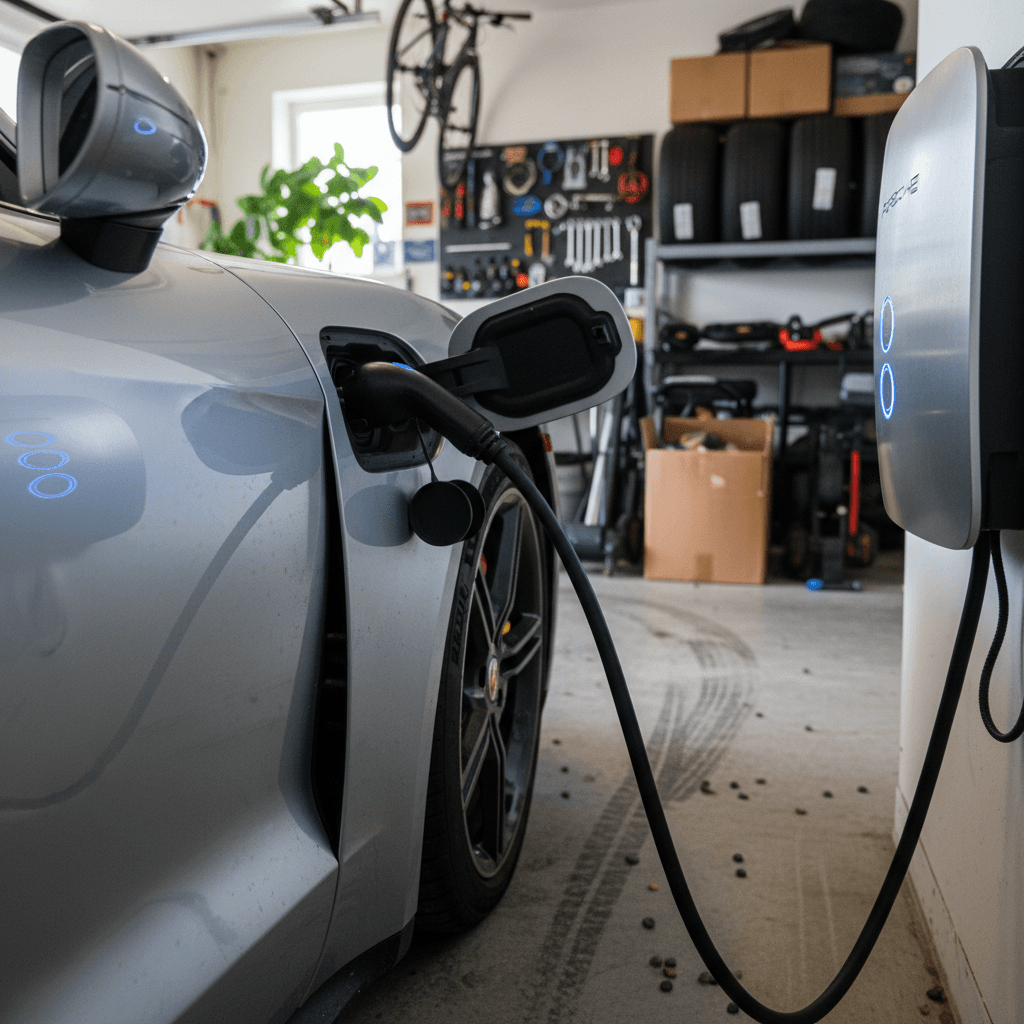
Home charging (Level 2)
If you can install a Level 2 charger at home, this is almost always the cheapest way to run a Taycan.
- Typical cost: about $600–$900 per year for 12,000 miles.
- One‑time install: $800–$2,000 for a 240V circuit and wallbox in many U.S. markets.
- Time: 8–10 hours for a near‑empty to full charge depending on model and onboard charger.
Once the hardware is in, your ongoing cost per mile is low and predictable.
Public DC fast charging
Relying on DC fast charging (especially high‑end networks) can double or even triple your energy bill.
- Effective cost: often similar to, or only slightly cheaper than, fueling a gas performance sedan.
- Battery wear: frequent fast charging can increase battery degradation over the long term.
- Best use: occasional road trips or when you can’t install home charging.
For budgeting, assume heavy DC use pushes annual "fuel" costs closer to $1,000–$1,500.
Run the numbers against a gas Porsche
Maintenance, tires, and warranty: what to budget
Routine maintenance and Porsche service plans
EVs generally spend less on routine maintenance than gas cars, and the Taycan does benefit from that, no oil changes, no spark plugs, no exhaust system. But this is still a Porsche with Porsche‑priced parts and labor, and the scheduled services aren’t cheap.
Porsche’s own scheduled maintenance plans for the Taycan price 6 years / 60,000 miles of service at around $7,550 MSRP, which averages out to roughly $1,250 per year if you actually hit those miles on schedule. Independent shops may be cheaper; dealer a la carte service can be more.
In practice, many owners find their real‑world, non‑tire maintenance (brake fluid, cabin filters, occasional software or hardware work outside warranty) runs roughly $700–$1,500 per year over the first 5–6 years, excluding rare out‑of‑warranty failures.
Tires, brakes, and wear items
The Taycan is heavy, fast, and often wears large, sticky performance tires. That’s a recipe for significant tire spend:
- Tires: A set of 20" or 21" performance tires can easily run $1,200–$2,000 installed. Spirited drivers in warmer climates might go through a set roughly every 15,000–20,000 miles, so budget $600–$1,500 per year.
- Brakes: Regenerative braking means pads and rotors last longer than on a similar gas Porsche. Unless you track the car or live in very hilly areas, you may go many years before a major brake job. Spread over time, budgeting $200–$400 per year for eventual brake work is reasonable.
- Miscellaneous: Wiper blades, alignment checks (important on a heavy, performance EV), and the odd suspension or sensor issue should be expected as the car ages.
Out‑of‑warranty repairs can be painful
Insurance costs for a Porsche Taycan
Insuring a Taycan isn’t like insuring a Corolla. You’re looking at a high‑performance, high‑MSRP luxury EV with expensive aluminum and composite bodywork, advanced ADAS sensors, and Porsche labor rates. Insurers price all of that in.
Across the U.S., many Taycan owners see premiums in the $1,800–$4,000 per year range for full coverage, with younger drivers and high‑cost states (California, New York, Florida) skewing toward the upper end or beyond. A clean record, strong credit, and living in a lower‑risk ZIP code can keep you closer to the bottom of that range.
- If you’re coming from a mainstream EV like a Tesla Model 3 or Hyundai Ioniq 5, expect a bump in premiums for a Taycan.
- If you’re cross‑shopping a gas Porsche Panamera or 911, insurance costs will often be in a similar ballpark.
- Shop several insurers; some have more EV‑friendly rating models and body shop networks than others.
Depreciation: the silent cost that matters most
When people ask how much it costs to own a Taycan per year, they usually think about electricity and maintenance. But for a big‑ticket EV like this, depreciation usually dwarfs everything else, especially in the first few years.
Early Taycans saw especially steep drops as the market repriced used EVs and Porsche refreshed software and hardware. It’s not unusual to see 3‑year‑old cars advertised at 40–50% below their original MSRP. That means the first owner may have eaten $20,000–$30,000+ per year in value loss.
Illustrative Porsche Taycan depreciation scenarios
Approximate, rounded numbers to show scale, not precise forecasts for every trim.
New Taycan buyer
Scenario: $130,000 new Taycan Turbo.
- After 5 years, car’s market value might be ~$50,000–$60,000.
- Total value lost: ~$70,000–$80,000.
- Annual depreciation: about $14,000–$16,000.
Smart CPO/used buyer
Scenario: Same car bought 3 years old for $70,000.
- Two years later, it’s worth maybe $50,000–$55,000.
- Total value lost: ~$15,000–$20,000.
- Annual depreciation: about $7,500–$10,000.
Long‑term keeper
Scenario: Buy at $55,000 and keep 7+ years.
- By year 7–8, market value may stabilize in the $20,000s.
- Spread over many years, depreciation per year drops sharply.
- Key is not selling right as battery warranty nears expiration.
Think in dollars per year, not just percent
New vs used Taycan: annual cost comparison
Put all the pieces together and the most important question isn’t “Can I afford a Taycan?” It’s “Can I afford a new Taycan, or does it only make sense used?” Here’s how the math often compares for a typical 12,000‑mile‑per‑year driver.
Illustrative annual Taycan ownership cost: new vs used (U.S., 12,000 mi/yr)
Assumes typical financing, mixed home/public charging, average U.S. insurance, and moderate driving.
| Cost category | New Taycan (approx. $120k–$140k) | 3–4 yr‑old Taycan (approx. $60k–$80k) |
|---|---|---|
| Loan/lease payment | $19,000–$34,000 | $11,000–$18,000 |
| Electricity (charging) | $600–$1,000 | $600–$1,000 |
| Insurance | $2,500–$4,000 | $2,000–$3,000 |
| Maintenance & tires | $1,500–$3,000 | $1,500–$3,000 |
| Depreciation (book value loss) | $10,000–$16,000 | $5,000–$9,000 |
| Estimated total per year | ≈ $33,600–$58,000 | ≈ $20,100–$34,000 |
These are directional examples, not quotes. Always run your own numbers for your state, lender, and specific car.
Where used Taycan ownership shines
How buying a used Taycan with Recharged can lower your costs
Because depreciation and unknown condition are the biggest financial wildcards with a Taycan, who you buy from matters. This is exactly the gap a used‑EV specialist like Recharged is built to fill.
Four ways Recharged can reduce your Taycan’s annual cost
It’s not just about the sticker price, it's about reducing risk and surprises over years of ownership.
1. Verified battery health
2. Fair, data‑driven pricing
3. EV‑specialist support
4. Financing, trade‑in, and delivery
Ready to find your next EV?
Browse VehiclesIf you’re anywhere near Virginia, you can also visit the Recharged Experience Center in Richmond, VA to see vehicles in person, talk through ownership costs, and get hands‑on with charging and battery‑health tools before you commit.
Tips to keep your Taycan ownership costs under control
Practical ways to lower your Taycan’s annual cost
1. Let someone else eat the first 2–3 years of depreciation
Aim for a Taycan that’s roughly <strong>3–5 years old</strong> with a strong service history and verified battery health. That’s usually the sweet spot where a big chunk of depreciation has happened, but you’re still well within the battery warranty window.
2. Charge at home as much as possible
Install a Level 2 charger if you can. The difference between paying home rates and relying heavily on public DC fast charging can easily be <strong>$500–$800 per year</strong> for a Taycan‑class EV.
3. Choose wheels and tires with your budget in mind
Those 21‑inch wheels look fantastic, but replacing ultra‑low‑profile performance tires frequently gets expensive. If you’re cost‑sensitive, consider trims and wheels that use more moderately priced tires.
4. Keep a maintenance reserve
Even if your Taycan is under warranty, set aside at least <strong>$1,500–$2,000 per year</strong> for tires, service, and the occasional out‑of‑pocket repair. That way the inevitable big bill doesn’t derail your budget.
5. Optimize insurance proactively
Shop around every year or two, ask about EV‑specific discounts or telematics programs, and consider higher deductibles if you have strong cash reserves. Saving even $500 per year on premiums adds up over a typical ownership period.
6. Plan to own for the long term
If you’re buying used, especially, try to keep the Taycan at least through the end of its 8‑year battery warranty or longer. Flipping the car every 2–3 years compounds depreciation and transaction costs.
When a Taycan might not pencil out
Porsche Taycan ownership costs FAQ
Frequently asked questions about Taycan annual costs
Bottom line: is a Porsche Taycan worth it?
Owning a Porsche Taycan is never going to be inexpensive in absolute terms. You’re combining the cost structure of a luxury performance Porsche with the still‑evolving economics of high‑end EVs. But if you understand where the money actually goes, electricity, insurance, maintenance, and especially depreciation, you can decide whether that experience is worth $15,000–$30,000+ per year for your situation.
For many buyers, the smartest move is to let someone else take the first big depreciation hit, buy a thoroughly vetted used Taycan with verified battery health, and charge mostly at home. That’s exactly the kind of scenario Recharged is built around: transparent battery diagnostics, fair market pricing, EV‑specialist support, and nationwide delivery so you can enjoy Taycan performance without blind spots in your budget.