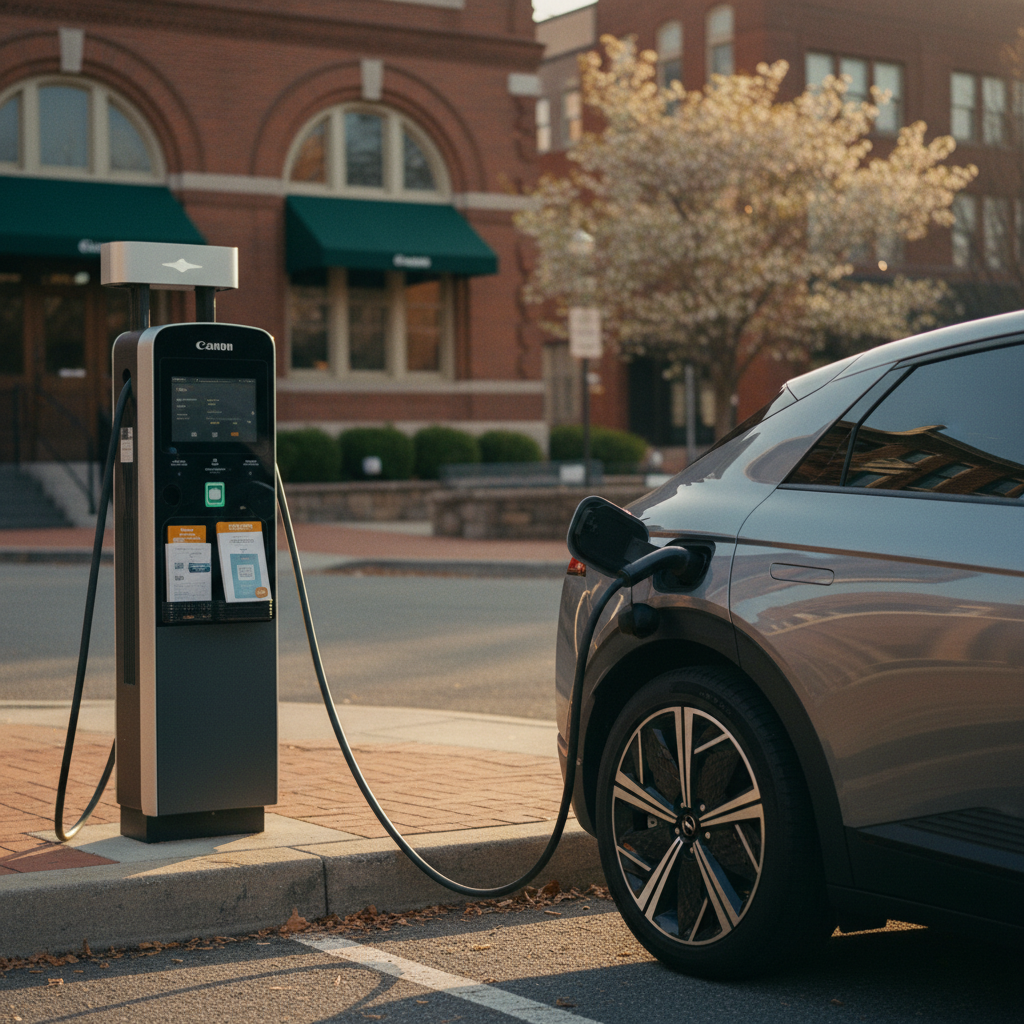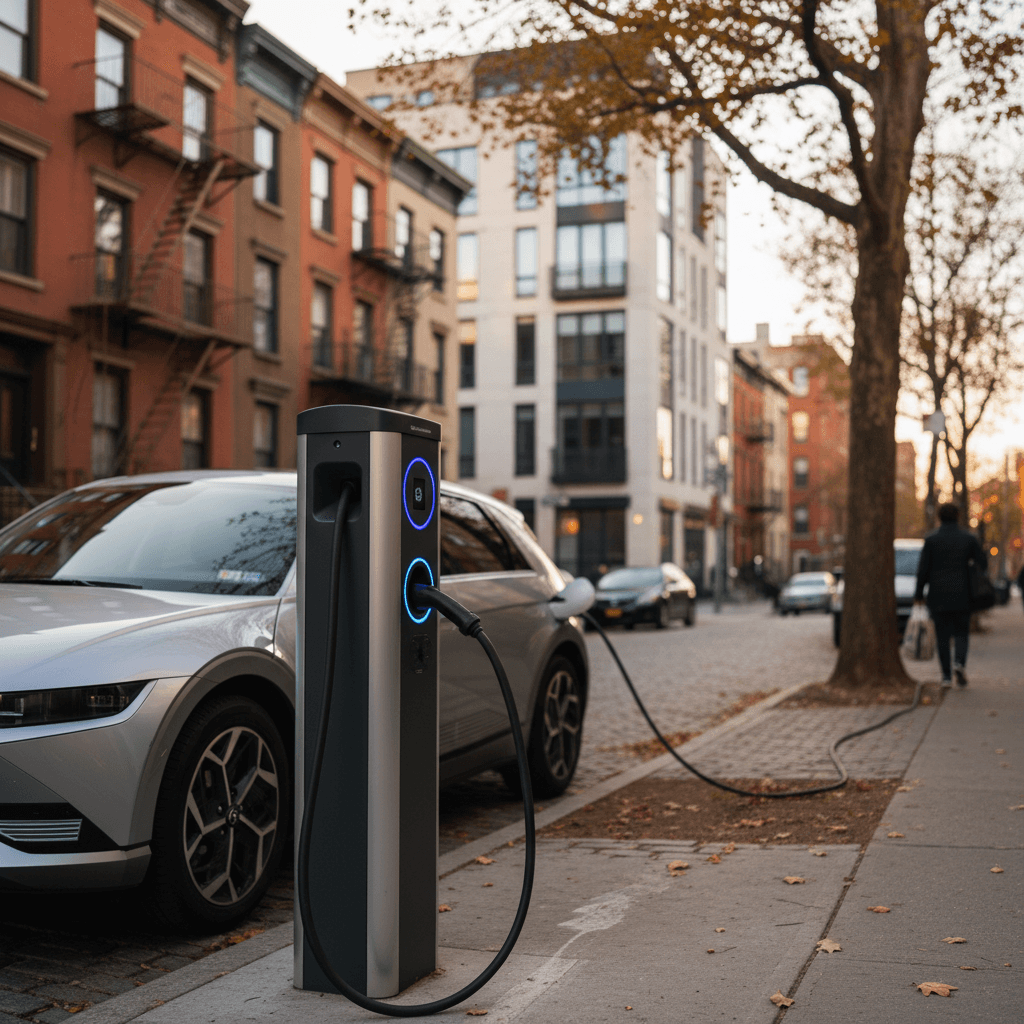
If you drive an electric car in Tampa, the good news is simple: EV charging stations in Tampa have grown fast, and it’s getting much easier to plug in around downtown, USF, the airport, and the I‑4 and I‑75 corridors. But to avoid frustration, you still need a smart plan, where you’ll charge, which apps to use, and what it will actually cost you.
At a glance: Tampa EV charging
Why EV charging in Tampa matters now
Florida is one of the fastest‑growing EV markets in the country, and the Tampa–St. Petersburg–Clearwater area now ranks among the top EV‑friendly metro regions in the state. At the same time, public fast‑charging across the U.S. grew by more than 30% in 2025, and Florida’s own public charging station count has climbed into the thousands. That combination, more EVs on the road and more places to charge, makes it a great time to consider an electric vehicle if you live in Tampa Bay.
Tampa EV charging by the numbers
Great coverage, uneven experience
How many EV charging stations does Tampa have?
When you search for EV charging stations Tampa on apps like PlugShare or ChargeHub, you’ll see just how dense the map has become. In early 2026, data from popular charging maps shows roughly 650 public charging ports (Level 2 and DC fast) within about 15 km of central Tampa. That includes workplaces, city‑owned garages, university lots, hotel chargers, and big‑box store parking lots.
- The City of Tampa operates around 10 public charging stations in downtown and Ybor City parking garages, mostly Level 2.
- The University of South Florida’s Tampa campus has more than a dozen ChargePoint stations spread across garages and surface lots.
- The broader Tampa–St. Petersburg–Clearwater metro counts well over 1,700 public charging locations when you include neighboring cities.
Downtown city‑owned stations
Types of EV charging stations in Tampa
Not all chargers are created equal. To build a smooth routine around EV charging stations in Tampa, you need to understand the difference between Level 1, Level 2, and DC fast charging, and where each fits into your life.
Level 1 (120V)
Standard household outlet using the portable cord that comes with most EVs.
- 2–5 miles of range per hour
- Best for overnight top‑ups at home
- Rarely used as public charging in Tampa
Level 2 (240V)
The workhorse of Tampa public charging. Found in parking garages, workplaces, hotels, and shopping centers.
- Typically 6–30 miles of range per hour
- Ideal for 2–4 hour stops (dinner, movies, work)
- Most public ports fall into this category
DC fast charging
High‑power stations along I‑4, I‑75, and major retail hubs.
- Can add 150–250 miles in 25–45 minutes (vehicle‑dependent)
- Ideal for road trips or quick top‑ups
- More expensive than Level 2 but time‑savers
Match charger type to your schedule
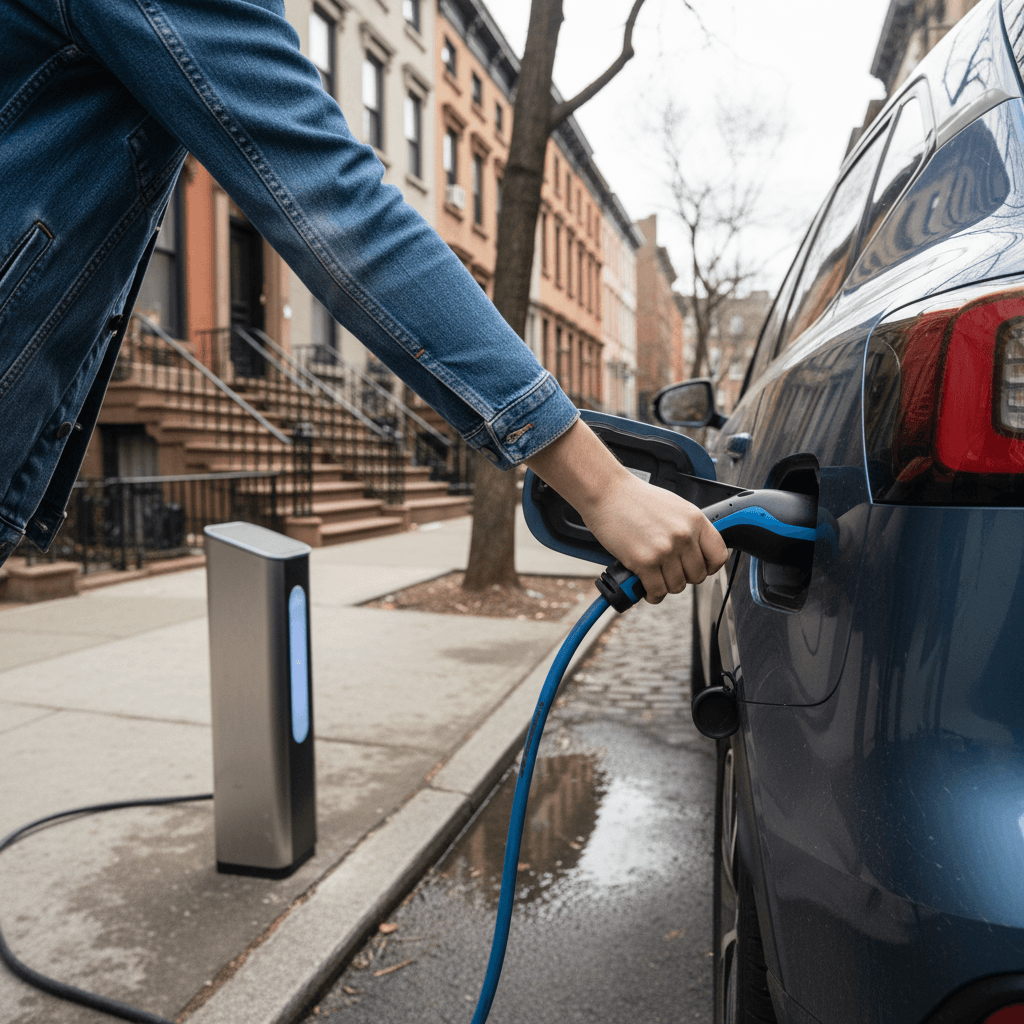
Major EV charging networks in Tampa Bay
Several large charging networks operate stations across Tampa and the surrounding metros. Each has its own app, pricing, and quirks. Getting comfortable with at least two of them will make your life much easier.
Key charging networks around Tampa
Download at least two of these apps before your first road trip.
Tesla Supercharger & Destination
Tesla’s network is dense along I‑4 and near major shopping and travel hubs.
- Fast, generally reliable DC charging
- Non‑Tesla EVs can now use many sites with adapters or built‑in compatibility
- Great for road trips between Tampa, Orlando, and Miami
ChargePoint
Common at workplaces, universities, hospitals, and city garages.
- Mostly Level 2 in Tampa proper
- Rates set by the site host (sometimes free)
- Good for daily or weekly routine charging
Electrify America & EVgo
Big players for DC fast charging in retail parking lots.
- Located at shopping centers, big‑box and grocery stores
- 150 kW+ fast chargers at many sites
- Useful when you’re short on time and need range quickly
Pro move: Build a small app toolkit
Popular EV charging areas around Tampa
You’ll find chargers scattered all over the region, but a few clusters stand out where it’s particularly easy to plug in and do something useful while you wait.
Tampa EV charging hotspots
Representative examples of where chargers tend to cluster around the city. Always confirm exact locations and availability in your apps before you set out.
| Area | Typical charger types | What’s nearby | Best use case |
|---|---|---|---|
| Downtown & Channelside garages | Mostly Level 2 | Offices, Amalie Arena, Riverwalk, restaurants | Park for work or events and add 30–80 miles while you’re there |
| Ybor City garages | Level 2, some free options | Dining, nightlife, historic district | Evening or weekend outings with a few hours of dwell time |
| USF Tampa campus | Level 2 ChargePoint | Campus buildings, medical facilities | Students, staff, and visitors who park for several hours |
| Tampa International Airport & nearby hotels | Mix of Level 2 and some DC fast | Airport parking, hotels, car rentals | Overnight stays or leaving your car during travel |
| I‑4 and I‑75 corridors | Primarily DC fast | Travel plazas, big‑box retail | Road trips between Tampa, Orlando, and South Florida |
| Suburban shopping centers (New Tampa, Brandon, Westchase) | Level 2 plus occasional DC fast | Groceries, dining, big‑box stores | Top up while running errands or during family outings |
Locations are illustrative, not exhaustive; charger counts and pricing can change.
Think in terms of "where you already go"
What it costs to charge your EV in Tampa
Costs at EV charging stations in Tampa vary by network, by location, and sometimes by time of day. You’ll generally see three different pricing models: pay‑per‑kWh (like your home electricity bill), pay‑per‑minute, or a flat session fee plus idle charges if you stay plugged in after your car is full.
Typical public charging costs
- Level 2: Often $0.15–$0.35 per kWh, or a small hourly fee. Some garages or employers offer it free while you park.
- DC fast: Commonly $0.30–$0.55 per kWh or a per‑minute equivalent, depending on speed and membership plans.
- Free stations: Hotels, workplaces, and some city facilities may include charging in your parking fee or stay.
In many cases, a full charge from nearly empty on a typical EV battery will cost less than a tank of gas, especially if you do most of your charging at home.
How it compares to home charging
- Residential electric rates in the Tampa area are often in the $0.13–$0.17 per kWh range, depending on your exact plan.
- If your EV averages around 3–4 miles per kWh, that works out to roughly 3–5 cents per mile when you charge at home.
- Public DC fast charging can cost 2–3× as much per mile, but saves time on the road.
For most Tampa drivers, the sweet spot is charging at home overnight and using public stations mainly for road trips and opportunistic top‑ups.
Watch for idle and parking fees
How to find EV charging stations in Tampa
Finding EV charging stations in Tampa is easy; finding the *right* station, available, compatible, and fairly priced, takes a little more strategy. The best approach is to combine one or two network apps with a community‑driven map.
Best tools for finding Tampa chargers
Keep these apps on your phone before your first road trip.
PlugShare
Crowd‑sourced map covering almost every public charger in Tampa Bay.
- See photos and real‑world reviews
- Check whether stations are working or blocked
- Filter by plug type, network, and speed
ChargePoint, Electrify America, EVgo apps
Essential if you regularly use a specific network.
- Start and stop sessions from your phone
- See live availability and pricing
- Collect discounts and membership rates
In‑car navigation & Google Maps
Most newer EVs and Google Maps can route you via chargers.
- Search “EV charging station Tampa” along a route
- Filter by fast charging only
- Get turn‑by‑turn directions to the next plug
Quick checklist for choosing a station
1. Confirm plug type
Make sure the station supports your connector (CCS, NACS/Tesla, or CHAdeMO on older Nissan LEAFs). Many new EVs in 2025–2026 are shipping with NACS ports or adapters for Tesla Superchargers.
2. Check power level
Look at the kW rating and your car’s charging capability. There’s no benefit paying for a 350 kW charger if your EV tops out at 100–150 kW.
3. Read recent reviews
Use PlugShare or the network app to scan comments from the last few weeks. If multiple users mention broken hardware, pick another station.
4. Look at pricing and idle fees
Tap the station in the app to see current rates and whether idle fees or parking charges apply, so there are no surprises on your bill.
5. Plan a backup
Especially on road trips, always have a second nearby station saved in your app in case the first is busy or down for maintenance.
Home charging in Tampa and local utility programs
Public infrastructure matters, but the easiest way to live with an EV in Tampa is to treat public stations as backup, not your primary fuel source. If you have off‑street parking, a Level 2 home charger can cover nearly all of your daily driving at the lowest possible cost.
Why Level 2 at home is a game‑changer
- Refill 25–40 miles of range per hour while you sleep.
- Wake up every morning with a “full tank,” even if you commute across the bay.
- Take advantage of lower overnight electric rates if your utility offers them.
For many Tampa drivers, a basic 240V circuit in the garage or carport plus a 32–40 amp Level 2 charger is all they’ll ever need.
Tampa Electric programs to know
Local utility Tampa Electric has been rolling out programs that can make home charging more affordable.
- Prime Time Plus™: Enroll a qualifying Level 2 EV charger (plus other home equipment) and earn monthly bill credits if Tampa Electric can briefly cycle that equipment during peak demand.
- Occasional rebates or time‑of‑use rates may be available for EV owners, check the latest offers on the Tampa Electric website.
It’s worth a call or online chat with your utility before you install a charger. The right plan can cut your fueling costs even further.
Hire a pro for electrical work
Used EVs and charging readiness in Tampa
If you’re shopping the growing market of used EVs around Tampa, charging should be one of your top decision factors, alongside battery health and price. Different models support different charging speeds and connector types, and that can dramatically change how they fit your local charging landscape.
Charging questions to ask about any used EV
A quick framework to be sure the car fits Tampa’s charging options.
How fast does it charge?
Ask about:
- Maximum DC fast‑charge rate (kW)
- Level 2 onboard charger rating (kW or amps)
- Real‑world charging curve, if the seller has data
A car that peaks at only 50 kW will spend more time at DC fast chargers than one that can accept 150 kW or more.
Is it compatible with local networks?
Confirm:
- Connector type (CCS, NACS/Tesla, CHAdeMO)
- Whether an adapter is included or required
- Charging history: Has the owner mainly used Level 2 or fast charging?
This helps you understand how easily you can use the most common Tampa chargers you saw on the maps above.
How Recharged helps Tampa buyers
EV charging in Tampa: FAQ
Common questions about EV charging stations in Tampa
Bottom line: EV charging stations in Tampa
Tampa has moved well past the days when spotting an EV charger felt like finding a four‑leaf clover. With hundreds of public EV charging stations in Tampa and many more spread across the Bay area, you can confidently drive electric here, especially if you pair public chargers with a solid home setup. The key is to learn which networks you like, bookmark chargers near places you already go, and keep one or two backup options in your pocket whenever you venture farther afield.
If you’re exploring a used EV as your next car, you don’t have to piece all of this together on your own. Recharged combines expert battery health diagnostics, transparent pricing, and EV‑savvy guidance so you understand exactly how a given car will charge around Tampa, at home, downtown, and on the highways that connect you to the rest of Florida.