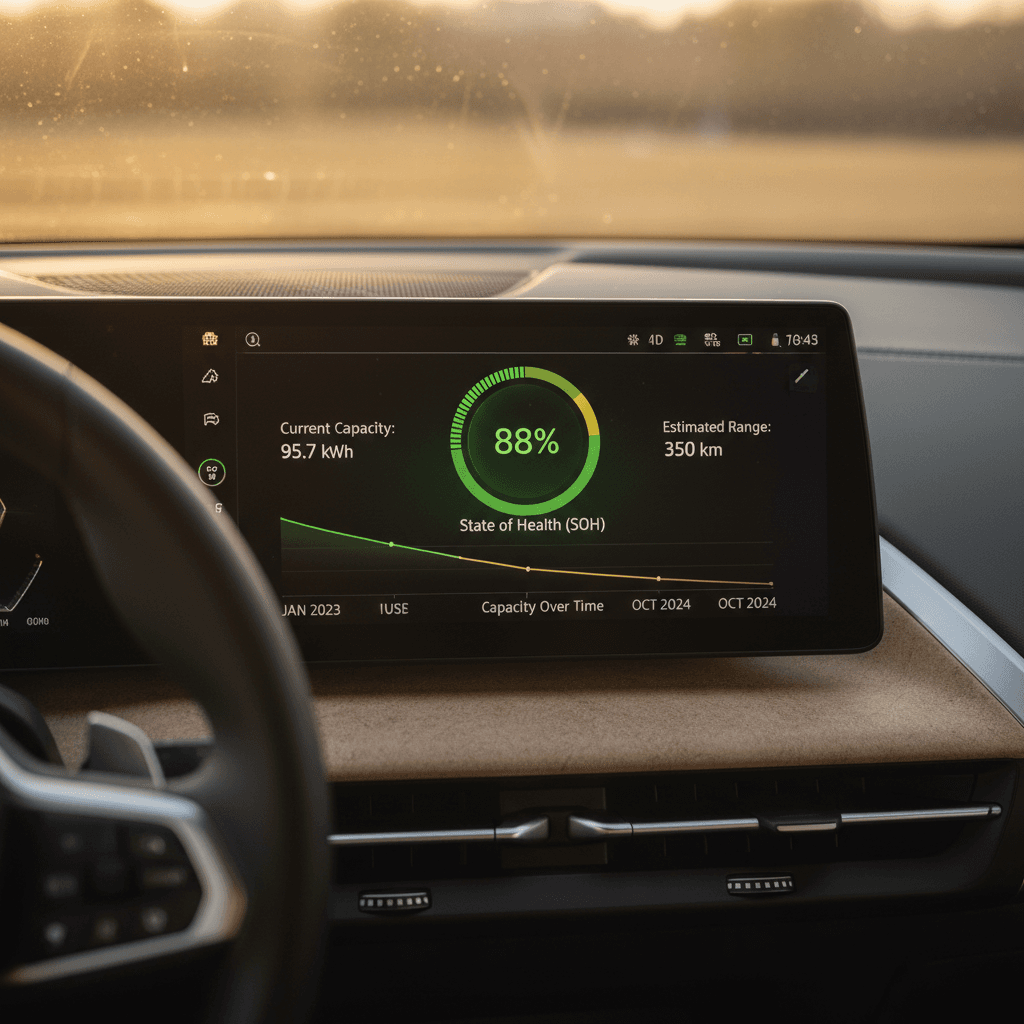
You’re not alone if you’re staring at an EV listing and wondering, “But how many miles does an electric car battery actually last?” Unlike a gas engine, an EV doesn’t suddenly die at a preset mileage. Instead, the battery slowly loses capacity over hundreds of thousands of miles, and the key is understanding how much range you’ll still have at 80,000, 150,000, or 250,000 miles, especially if you’re shopping used.
Quick Answer
Overview: How Many Miles Do Electric Car Batteries Last?
EV Battery Life at a Glance (2025)
When people ask how many miles an electric car battery lasts, they’re usually worried about a big, sudden cliff. In reality, the story is mostly about gradual range loss, not early failure. Federal data and independent studies now suggest a typical modern EV battery can deliver roughly 15–20 years of usable life and around 200,000 or more miles Some brands go even further. Real‑world data from Tesla and other long‑range EVs shows many packs still retaining around 85–90% of their original capacity after 200,000 miles, and projected lifespans of 300,000–500,000 miles are now common for these larger packs. That’s far beyond how long most people keep a car. Automakers and shoppers often talk in miles because that’s how we’ve always thought about engines. For many mainstream EVs today, a reasonable expectation is: The other way to look at it is calendar life, how long the pack lasts just sitting in your driveway and doing everyday duty: In the United States, automakers are required to warranty high‑voltage EV batteries for at least 8 years or 100,000 miles, whichever comes first. Many go beyond that on popular models, Tesla, Hyundai, Kia, and Rivian, for example, often offer longer mileage limits like 120,000 or even 150,000+ miles on certain trims. Approximate battery warranty coverage for popular electric vehicles sold in the U.S. (always confirm the exact terms for your specific model and year). Most warranties cover both outright failure and excessive degradation below a set capacity threshold. That capacity guarantee is important. In most cases, if your battery falls below about 70% of its original capacity during the warranty window, the manufacturer will repair or replace it. For a 300‑mile car, 70% capacity is about 210 miles. Many owners never hit that threshold during the warranty period, which is why warranty replacements for normal wear are still relatively rare. Lab projections are useful, but the last decade of EVs has given us something better: real‑world high‑mileage cars. And the news is good. Several large data sets show that most modern EV batteries keep over 80–90% of their range past 100,000 miles, and many keep chugging well beyond 200,000 miles. What’s actually happening out on the road, not just on spec sheets. Large owner data sets and independent analyses show many Tesla batteries still holding around 85–90% capacity at 200,000 miles, with typical lifespans projected between 300,000 and 500,000 miles before replacement becomes likely. A long‑term test of a VW ID.3 with a 77 kWh pack driven over 100,000+ miles found it still had roughly 91% of its original capacity, despite frequent DC fast charging and regular 100% charges. First‑generation EVs like early Nissan Leafs (with less advanced cooling and older chemistries) showed faster degradation, especially in hot climates. Newer packs, liquid‑cooled, better managed, are lasting far longer and are the standard for today’s used EV market. Battery life is often described in percentages, but you experience it as miles. When someone says, “This EV has 80% battery health,” what does that really mean? In practice, it’s just a smaller fuel tank than when the car was new. Most owners find that losing the first 10–15% of range has very little impact on day‑to‑day driving. It’s only when you drop closer to that 70% range that you might need to change your charging habits, topping up more often, or planning more stops on a road trip. Ready to find your next EV? Two identical EVs can age very differently. One might still be happily road‑tripping at 220,000 miles while the other feels tired at 140,000. The difference usually comes down to how and where they’ve been driven and charged. Heat is enemy number one for lithium‑ion batteries. EVs that live in very hot climates, parked outside in the sun and fast‑charged often, generally see faster degradation than those in moderate areas or garaged regularly. Extreme cold doesn’t damage batteries as quickly, but it does reduce usable range in winter. Constantly charging to 100% and running down to 0% puts more stress on the pack than staying in the middle band. Frequent DC fast charging also adds heat. Occasional fast charging is fine, but a steady diet of it can shave some life off the total miles your pack will comfortably deliver. Using 10–40% of the battery each day (say, from 80% down to 50%) is gentler than swinging from full to nearly empty. High‑mileage drivers who yo‑yo the battery from 100% to very low on a regular basis will rack up more aggressive wear per year, though overall they may still get hundreds of thousands of miles before replacement. Not all packs are created equal. Modern liquid‑cooled batteries and newer chemistries, like long‑range nickel‑rich packs and durable LFP (lithium iron phosphate) packs, tend to hold capacity better than early air‑cooled designs. This is one reason newer model years generally outperform older ones at the same mileage. EVs carefully manage their packs behind the scenes. They may reserve a buffer you can’t access, limit fast‑charging speed as the pack ages, or adjust thermal management strategies. Good battery management can make a big difference in how many miles you get before range feels tight. Simple habits like parking in the shade, avoiding long stretches at 100% charge, and keeping software up to date all help. Storing an EV long‑term at a medium state of charge (around 40–60%) is easier on the battery than leaving it full or nearly empty for months. The good news is you don’t need to baby your EV. Modern packs are robust, and smart software handles much of the protection automatically. A few everyday habits can meaningfully extend the total miles you’ll get out of your battery. If you’re looking at a used electric car, you’re not just buying an odometer reading, you’re buying whatever battery life is left. Two cars with 70,000 miles can have very different battery health depending on climate and care. That’s why a clear view into the pack matters more than a rule‑of‑thumb mileage limit. It’s less about a hard cutoff and more about matching the battery’s remaining life to your plans. For most modern EVs, this is still early life. You’ll often see minimal degradation, especially on long‑range models. If the battery report shows strong health and the climate history is reasonable, these cars can deliver many years and well over 100,000 more miles. This is the sweet spot for value: enough depreciation to lower the price, but usually plenty of battery life left. Expect some range loss, but a healthy pack here can still serve many owners to 180,000–200,000+ miles. High‑mileage EVs can be excellent deals if the battery is still healthy and the price reflects the remaining life. This is where you want hard data, not guesses, about current capacity and projected degradation. Every vehicle listed with Recharged comes with a Recharged Score Report, which includes verified battery health diagnostics, fair market pricing, and expert guidance. Instead of squinting at a guess like “seems fine,” you can see data‑driven projections of how much range and life the pack likely has left. If you strip away the myths, the picture that emerges in 2025 is reassuring: a modern electric car battery is typically good for hundreds of thousands of miles. For many drivers, the battery will comfortably outlast their ownership period, even on a used EV bought with 50,000–80,000 miles already on the clock. Instead of asking, “Will the battery fall off a cliff at 100,000 miles?”, a better question is, “Does this EV have enough range, now and in the future, for the way I drive?” With clear battery health data, realistic expectations about degradation, and a few smart charging habits, the answer is very often yes, and a used EV can be one of the smartest buys on the lot. If you’re ready to explore used EVs without guessing about battery life, take a look at Recharged’s inventory. Every car includes a Recharged Score Report, access to EV‑specialist support, flexible financing, and nationwide delivery, so you can shop by the numbers, not by rumors.Years vs. Miles: Two Ways to Think About Battery Life
Battery life in miles
Battery life in years
Think in “usable life,” not death
What Your EV’s Battery Warranty Really Promises
Typical EV Battery Warranties by Miles
Brand / Model Years Miles Guaranteed Capacity Tesla Model 3 / Y 8 100,000–120,000 70% Tesla Model S / X 8 150,000 70% Hyundai Ioniq 5 10 100,000 70% Kia EV6 10 100,000 70% VW ID.4 8 100,000 70% Ford Mustang Mach‑E 8 100,000 70% Rivian R1T / R1S 8 175,000 70% Warranty ≠ expiration date
Real‑World Mileage: Tesla, VW, and Other EVs
Real‑World EV Battery Mileage Examples
Tesla Models S/3/X/Y
Volkswagen ID.3 test
Early EVs vs. new packs
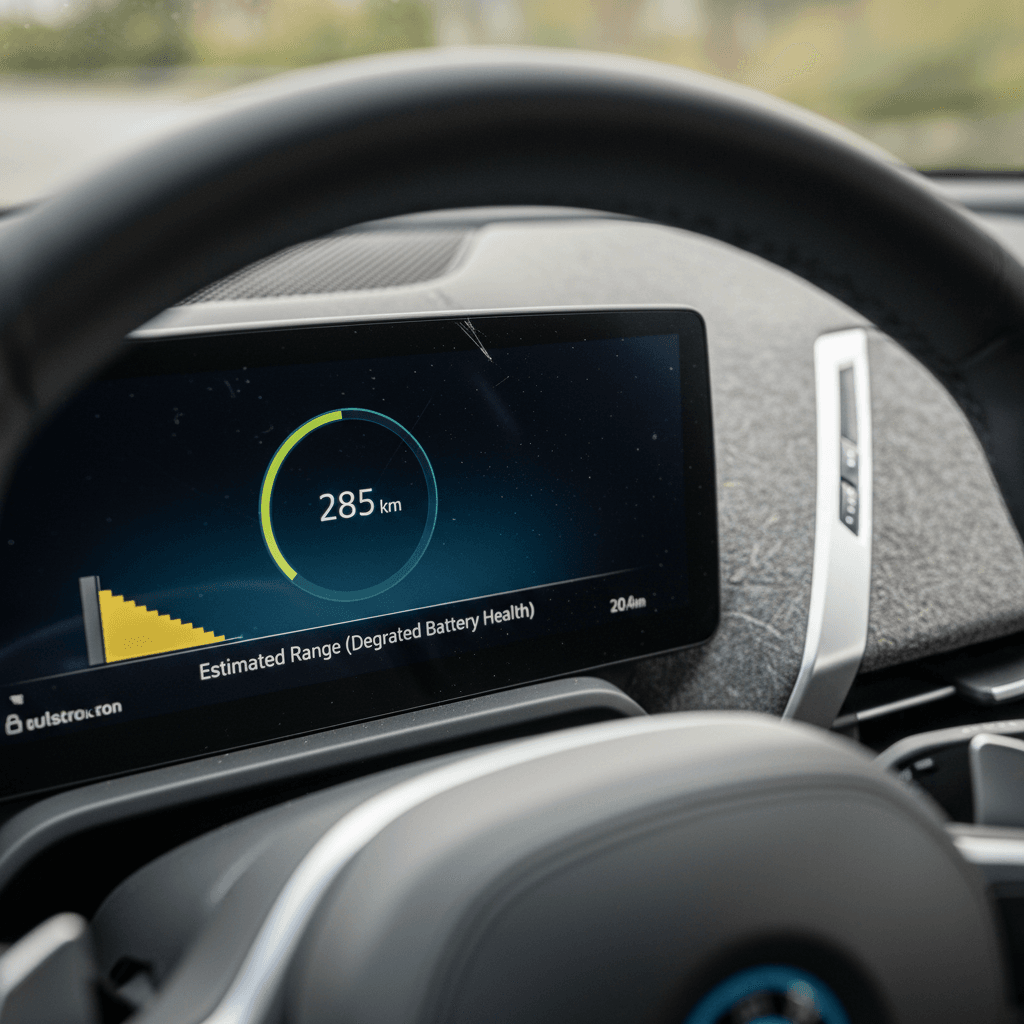
What “80% Battery Health” Actually Feels Like on the Road
Why used EVs can be a smart buy
6 Factors That Change How Many Miles Your EV Battery Lasts
Key Drivers of EV Battery Mileage
1. Climate and temperature
2. Charging habits
3. Daily mileage and depth of discharge
4. Battery chemistry and cooling design
5. Software and battery management
6. Owner maintenance and storage
The big don’ts
How to Make Your Electric Car Battery Last Longer
Normal use is expected, don’t stress every plug
Shopping Used EVs: Battery Miles and Health to Watch For
How Many Miles Is “Too Many” for a Used EV?
Under 60,000 miles
60,000–120,000 miles
Over 120,000 miles
How Recharged helps
Checklist for evaluating battery life on a used EV
FAQ: Electric Car Battery Miles & Lifespan
Frequently Asked Questions About EV Battery Miles
Bottom Line: How Many Miles Does an EV Battery Really Last?