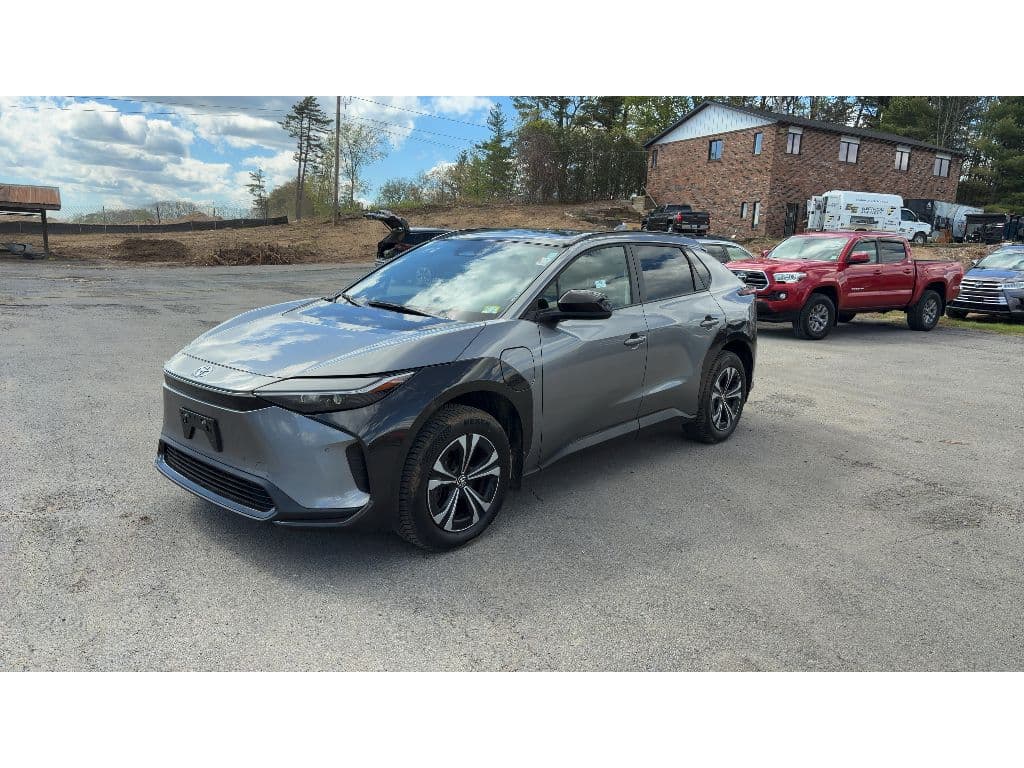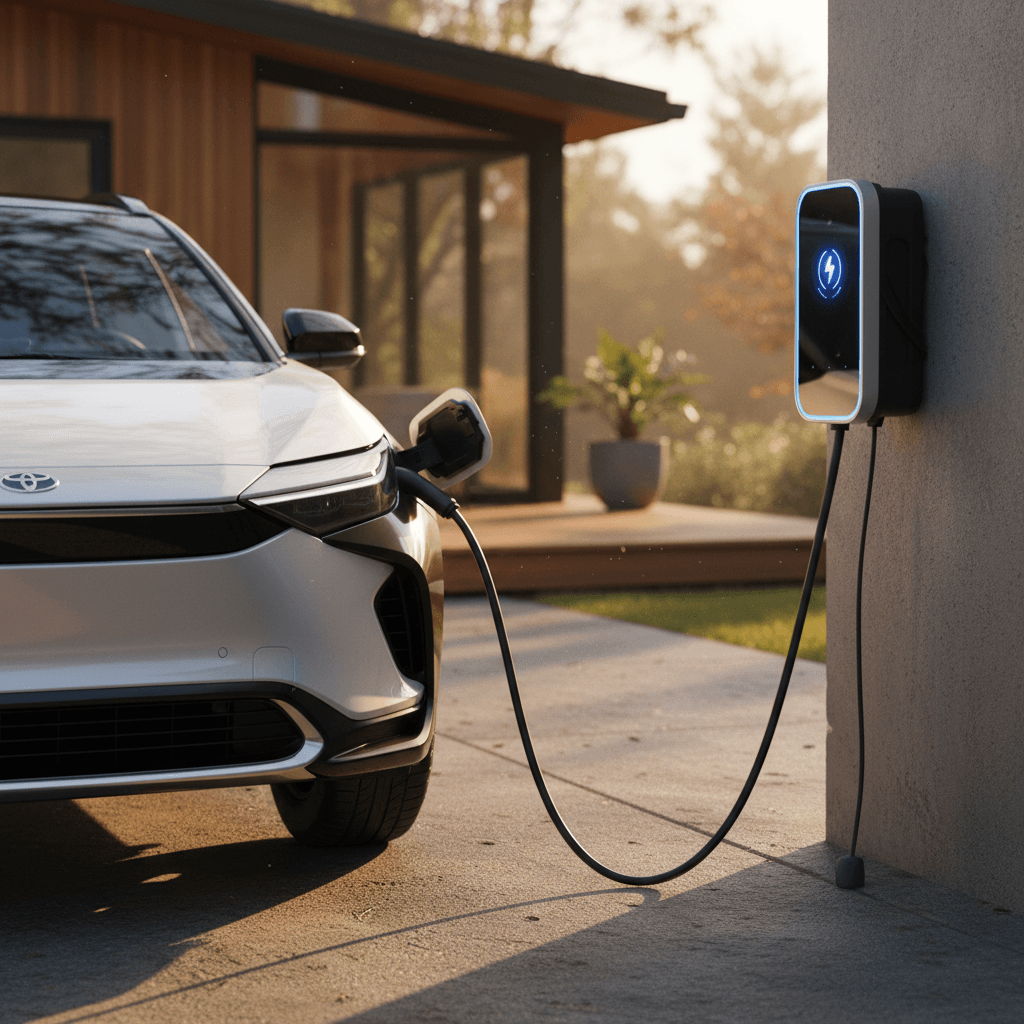
If you’re trying to figure out how long to charge a Toyota bZ4X, the honest answer is: it depends on where you plug in. The same SUV can take two days on a wall outlet, overnight on a home Level 2 charger, or roughly half an hour on a strong DC fast charger. This guide breaks down realistic charging times so you can plan your day, whether you own a bZ4X now or you’re shopping for a used one on Recharged.
Quick answer
Toyota bZ4X charging time at a glance
Typical Toyota bZ4X charging times by charger type
Approximate times for a mostly empty battery in mild weather. Real‑world results will vary with temperature, state of charge, and charger quality.
| Charger type | Power (typical) | Charge window | Approx. time | Best use case |
|---|---|---|---|---|
| Level 1 home (120V outlet) | 1.4 kW (12A) | Low → 100% | ~45–50 hours | Last resort, light overnight top‑ups |
| Level 2 home (240V, 32A) | 7.2 kW max onboard | Low → 100% | ~9–10 hours | Daily home charging, overnight |
| Public Level 2 | 6–7 kW typical | 20% → 80% | ~6–7 hours | Workplace or long parking stops |
| DC fast, older AWD | Up to ~100 kW peak | 10% → 80% | ~45–60 minutes | Road trips, quick highway stops |
| DC fast, newer FWD / updated models | Up to ~150 kW peak | 10% → 80% | ~30–40 minutes | Fastest realistic road‑trip charging |
All times refer to a modern U.S.-spec bZ4X with roughly a 63–65 kWh usable battery. “Low” means the low-battery warning light or about 10% state of charge.
Why your experience might differ
bZ4X battery size and charging hardware basics
To understand how long it takes to charge a Toyota bZ4X, it helps to know what’s under the floor. U.S.-spec bZ4X models use a lithium‑ion pack with roughly 63–65 kWh of usable capacity, depending on front‑wheel drive vs all‑wheel drive and model year. That energy is what you’re refilling every time you plug in.
Toyota bZ4X battery and charging highlights
Every bZ4X includes a portable Level 1 cord for a standard household outlet, but the SUV is really designed around Level 2 home charging and occasional DC fast charging. Toyota also builds in software limits on how often and how hard you can fast‑charge in a 24‑hour period to protect long‑term battery health, which is another reason real‑world times can stretch versus the marketing claims.
How long to charge a Toyota bZ4X on Level 1 (120V)
Level 1 is just a regular 120‑volt household outlet, using the factory portable cord. For a big battery like the bZ4X, it’s painfully slow, but it does work.
- Typical power: about 1.3–1.4 kW (120V at 12A)
- Energy added per hour: roughly 3–4 miles of range
- From low battery light to 100%: around 45–50 hours of continuous charging
- Overnight top‑up (10–12 hours): about 30–40% of a battery, or 60–80 miles of range for many drivers
When Level 1 charging is actually fine
How long to charge a Toyota bZ4X on Level 2 (240V)
Level 2 (240‑volt) charging is the sweet spot for most bZ4X owners. This is what you get from a dedicated home EV charger on a 240V circuit or many public “destination” chargers at workplaces, parking garages, and hotels.
Realistic Level 2 charging times for a Toyota bZ4X
Based on the bZ4X’s ~6.6–7.2 kW onboard charger and a healthy battery.
Home Level 2 (32A on 240V)
- Power at the car: up to ~6.6–7.2 kW
- Low → 100%: about 9–10 hours
- 20% → 80%: about 6–7 hours
- Range added per hour: roughly 20–22 miles
This is the typical "plug in after dinner, full by morning" setup.
Public Level 2 (work, parking decks)
- Power often limited to 6 kW or less
- 20% → 80%: around 7–8 hours in many cases
- Best for all‑day parking, offices, or overnight hotel stays
Use these where your car would be sitting anyway.
Why Level 2 is ideal for battery health
How to pick the right Level 2 charger for your bZ4X
1. Match or slightly exceed the car’s limit
The bZ4X can accept about 6.6–7.2 kW on AC. A 32‑ to 40‑amp Level 2 unit on a 240V circuit is plenty, you don’t gain speed by installing a 19.2 kW monster charger if the car can’t use it.
2. Plan for your parking habits
If you’ll plug in every night, a 32A unit is fine. If you sometimes skip days or share the charger between cars, stepping up to 40A can add a bit more flexibility.
3. Consider smart features
Wi‑Fi or app control lets you schedule charging for off‑peak utility rates and monitor exactly how long your bZ4X takes to charge from typical daily levels.
4. Think about future EVs
If you might add another EV later with a higher onboard charger rating, installing a slightly larger circuit (if your panel allows it) can provide some future‑proofing.
How long to DC fast charge a Toyota bZ4X
DC fast charging is what you’ll use on road trips or when you need a big chunk of range in a short stop. Here the bZ4X’s reputation is mixed: it can hit decent peak speeds on newer FWD and updated models, but its charging curve is conservative, especially on early AWD versions.
Typical DC fast charge times
- FWD / updated bZ4X: 10% → 80% in about 30–40 minutes on a strong 150 kW station in mild weather.
- Older AWD models: 10% → 80% often takes 45–60 minutes, and may rarely exceed ~100 kW.
- 80% → 100%: The last 20% can take nearly as long as 10–80%; Toyota recommends using DC fast mainly up to 80%.
Think of DC fast as: "about half an hour to an hour to get back on the road," depending on trim, temperature, and charger quality.
Why the bZ4X feels slow next to rivals
- Conservative thermal management to favor long battery life.
- Charging power tapers early and aggressively as state of charge rises.
- Software limits how often you can use DC fast charging in 24 hours.
That can be frustrating beside something like a Hyundai Ioniq 5, but it’s part of Toyota’s long‑game strategy on battery durability.
Don’t chase 100% on DC fast
5 factors that change your bZ4X charging time
What really affects how long it takes to charge a Toyota bZ4X
If your times don’t match the brochure, one (or several) of these are usually to blame.
1. Battery and air temperature
2. State of charge when you plug in
3. Charger power and sharing
4. Onboard charger limits
5. Battery health and age
Bonus: How you schedule charging
Smart charging strategy for daily use
Home charging vs public charging for bZ4X owners
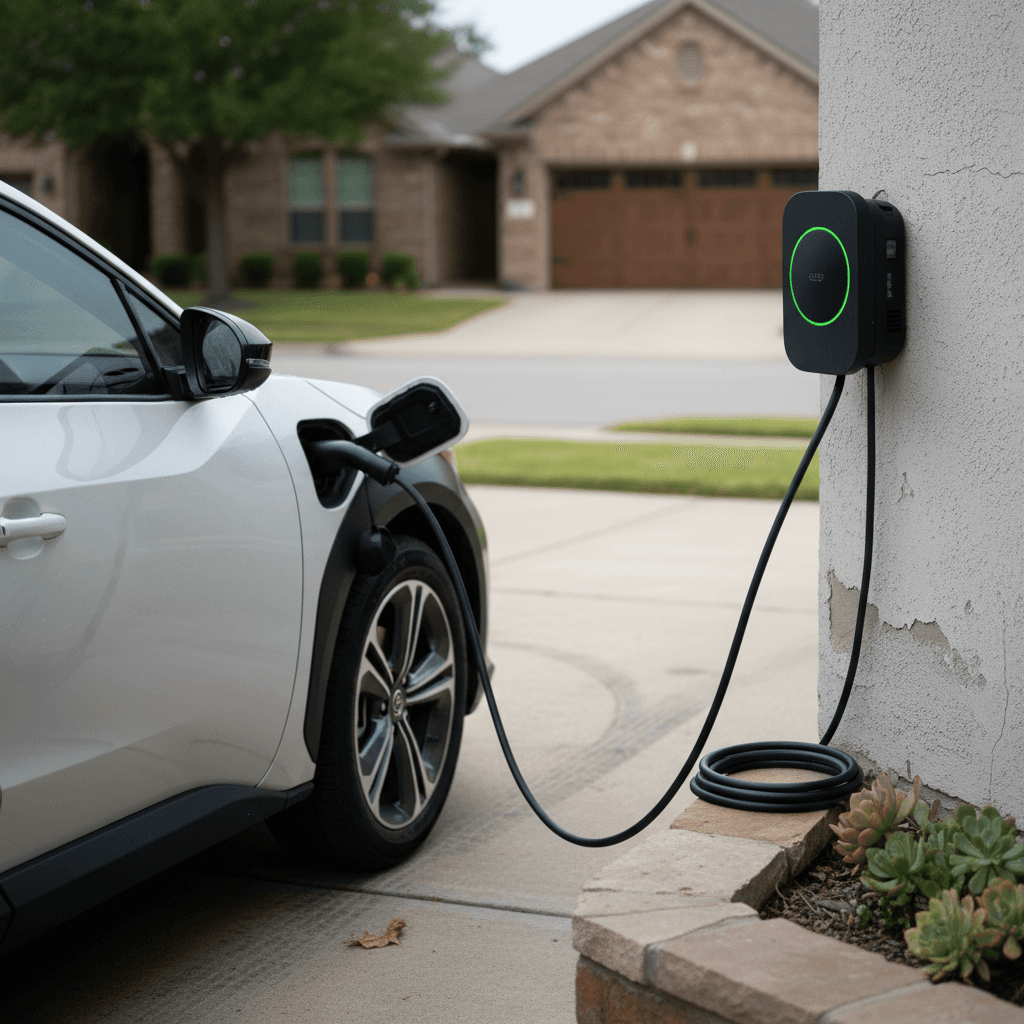
Once you understand how long it takes to charge a Toyota bZ4X on each type of plug, the next question is where you want to spend your time: at home, at work, or sitting at a fast‑charge station. The most convenient (and often cheapest) setup is a reliable Level 2 charger where the car sleeps.
Home Level 2: "Always full" lifestyle
- Plug in when you get home; wake up with a full battery or your target percentage.
- Charging happens while you sleep, your time cost is effectively zero.
- Residential electricity rates are usually far below DC fast charging prices.
- Great for battery health: gentle, predictable charging cycles.
If you have a garage or driveway and plan to keep your bZ4X for years, installing Level 2 is one of the best ownership upgrades you can make.
Public charging: occasional tool, not a lifestyle
- Workplace Level 2 can cover your entire daily driving if you park all day.
- Public DC fast is perfect for road trips or rare long days.
- Relying solely on public fast charging is costly and exposes you to station downtime or queues.
Think of public infrastructure as your backup plan, even if you’ll use it regularly on trips.
Where Recharged fits in
Charging time, used bZ4Xs, and battery health
As bZ4Xs enter the used market in bigger numbers, shoppers are asking two smart questions: How healthy is the battery? and Will it still charge like new? Those are fair concerns, especially for early AWD models that developed a reputation for slow fast‑charging in tougher conditions.
- A healthy bZ4X battery should still reach similar times on Level 2 as when it was new, because AC charging is gentle and power‑limited.
- Small capacity loss over years (say, a few kWh) won’t dramatically change how long it takes to charge, it mostly affects how many miles you get from each full battery.
- DC fast‑charging behavior can evolve with software updates and usage history; conservative charging profiles may actually help long‑term durability.
- What matters most is verified state of health and how the car was used: lots of hot‑weather fast‑charging vs mainly home Level 2.
How Recharged helps you avoid guesswork
Ready to find your next EV?
Browse VehiclesToyota bZ4X charging time: FAQs
Frequently asked questions about Toyota bZ4X charging times
Key takeaways for charging your Toyota bZ4X
The Toyota bZ4X isn’t the quickest‑charging EV on the market, but with the right setup it’s very livable. Expect about 9–10 hours from low to full on a good Level 2 home charger, and roughly 30–45 minutes to go from 10–80% on DC fast depending on trim and conditions. Level 1 works as a backup, but it’s too slow to be your only solution for most drivers.
If you’re considering a used bZ4X, don’t just look at the window sticker range. Pay attention to how and where you’ll charge, and try to get objective data on battery health. That’s exactly what Recharged’s Recharged Score and EV‑specialist support are built for, helping you match the right car, charging setup, and budget so your day‑to‑day charging experience is predictable, affordable, and drama‑free.