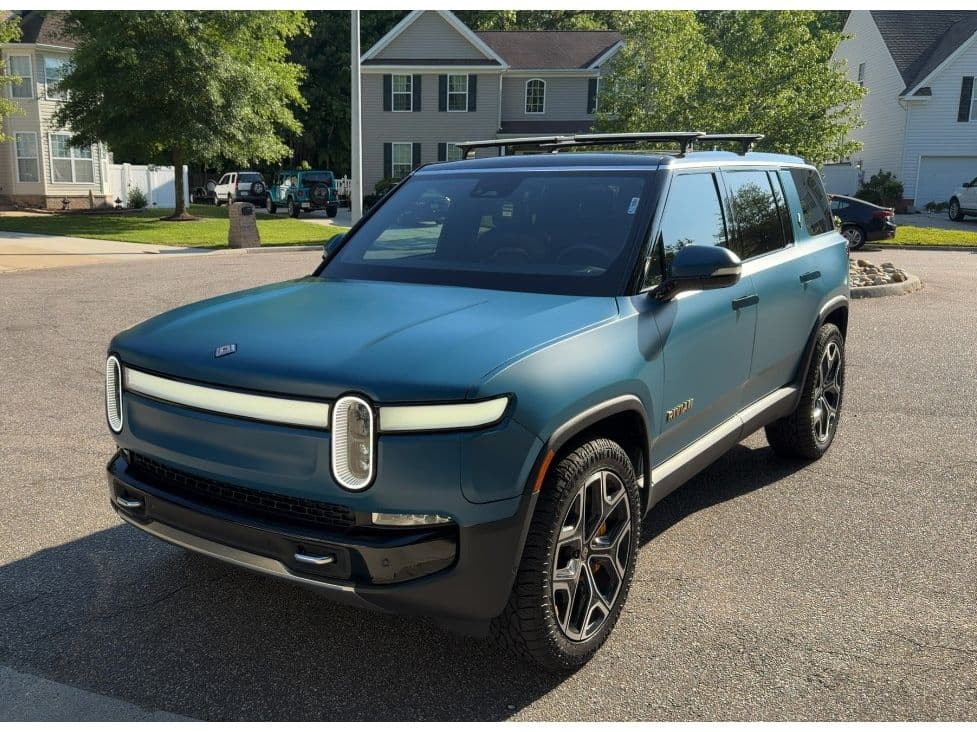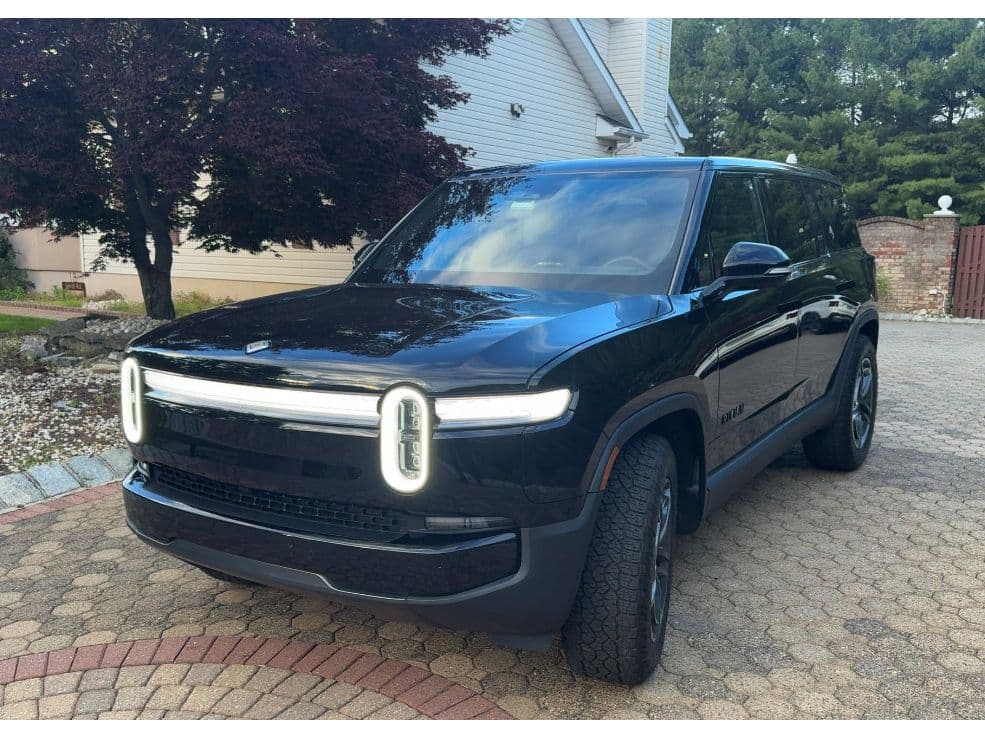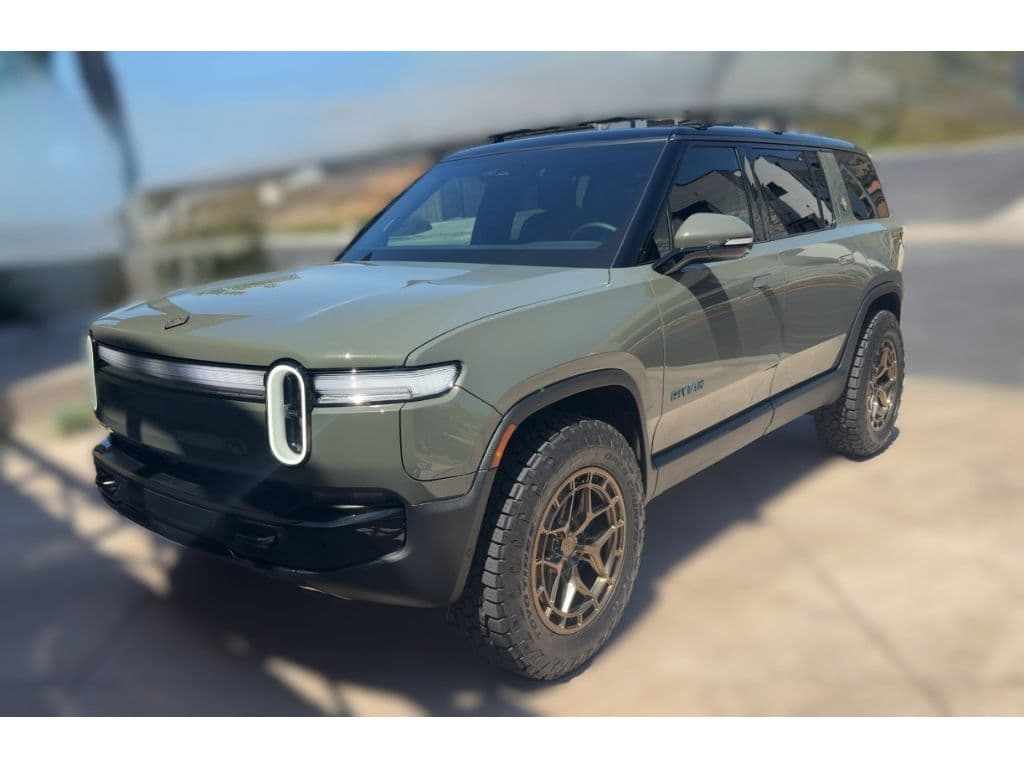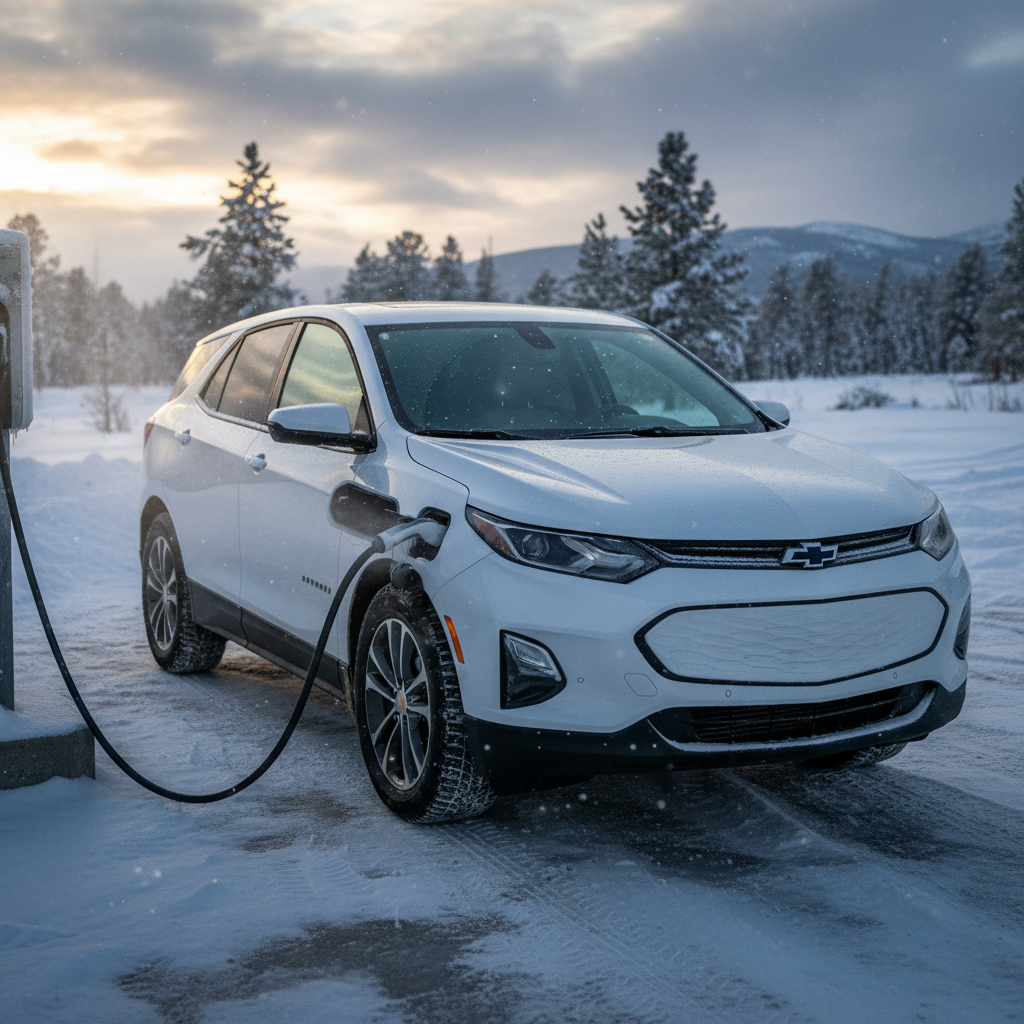
If you’re considering a Rivian R1S, or already waiting for delivery, one of your first questions is naturally, “How long does it take to charge?” The answer depends heavily on the charger you use, your starting state of charge (SoC), and which battery pack your R1S has. This guide breaks down realistic Rivian R1S charging times at home and on the road so you can plan daily driving and road trips with confidence.
Quick answer
Rivian R1S charging time at a glance
Typical Rivian R1S charging times
Those are typical ranges. To understand what they mean for you, it helps to know what’s happening under the skin of the R1S and why “how long to charge a Rivian R1S” doesn’t have a single one-size-fits-all number.
Rivian R1S battery and charging basics
Across model years, the Rivian R1S has been offered with several large battery packs (often called Standard, Large, and Max). Usable capacities are roughly in the 120–150 kWh range depending on pack and generation, roughly double what you find in a compact EV. That’s great for range and towing, but it does mean longer charge times than a smaller-battery EV at the same charger speed.
- Onboard AC charger: about 11.5 kW on most R1S trims, so that’s your ceiling for Level 2 (home/public) charging.
- DC fast charging peak: many R1S packs now see around 210–215 kW peak on strong DC fast chargers after recent software updates.
- Charge ports: CCS1 DC fast port plus a J1772-compatible AC inlet (often via adapter) on earlier models; newer Rivians are adding NACS support via adapter and future hardware.
Think in “miles per hour,” not just kW
How long to charge a Rivian R1S at home
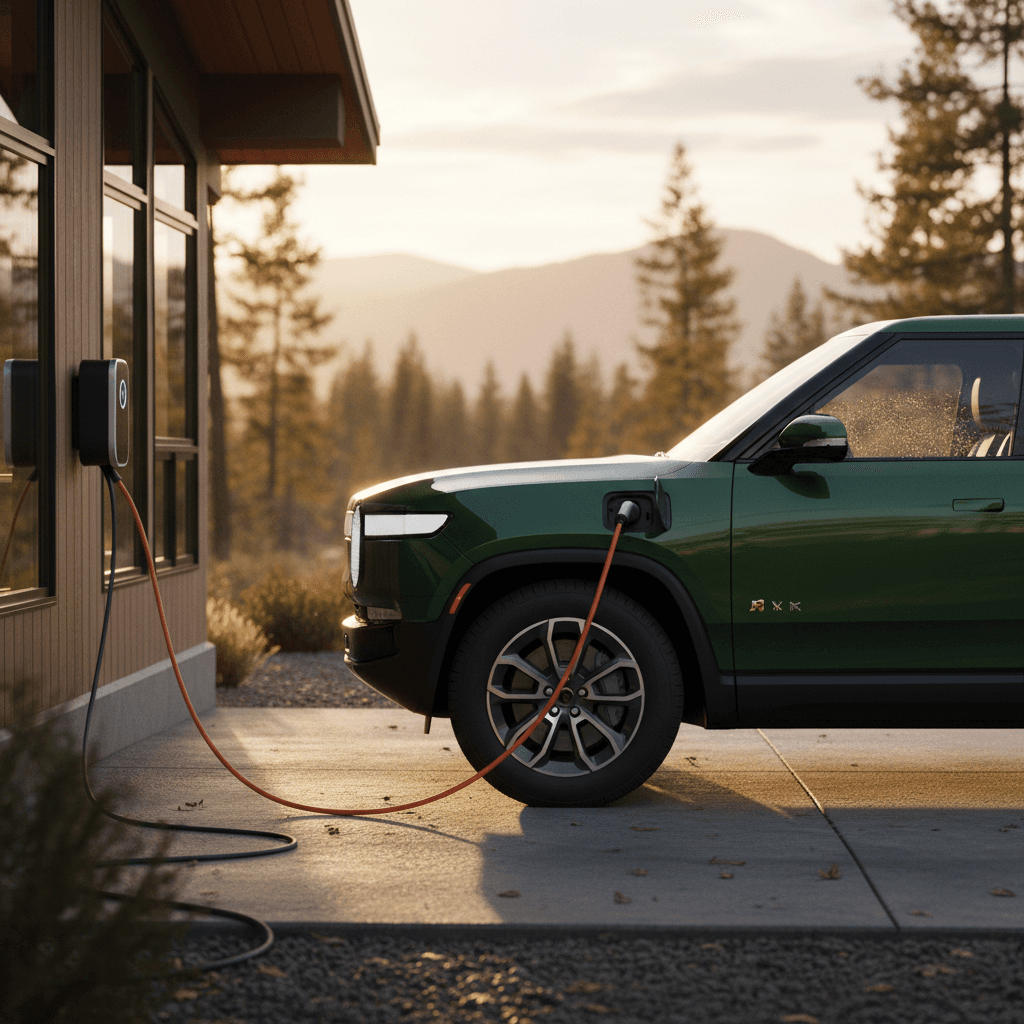
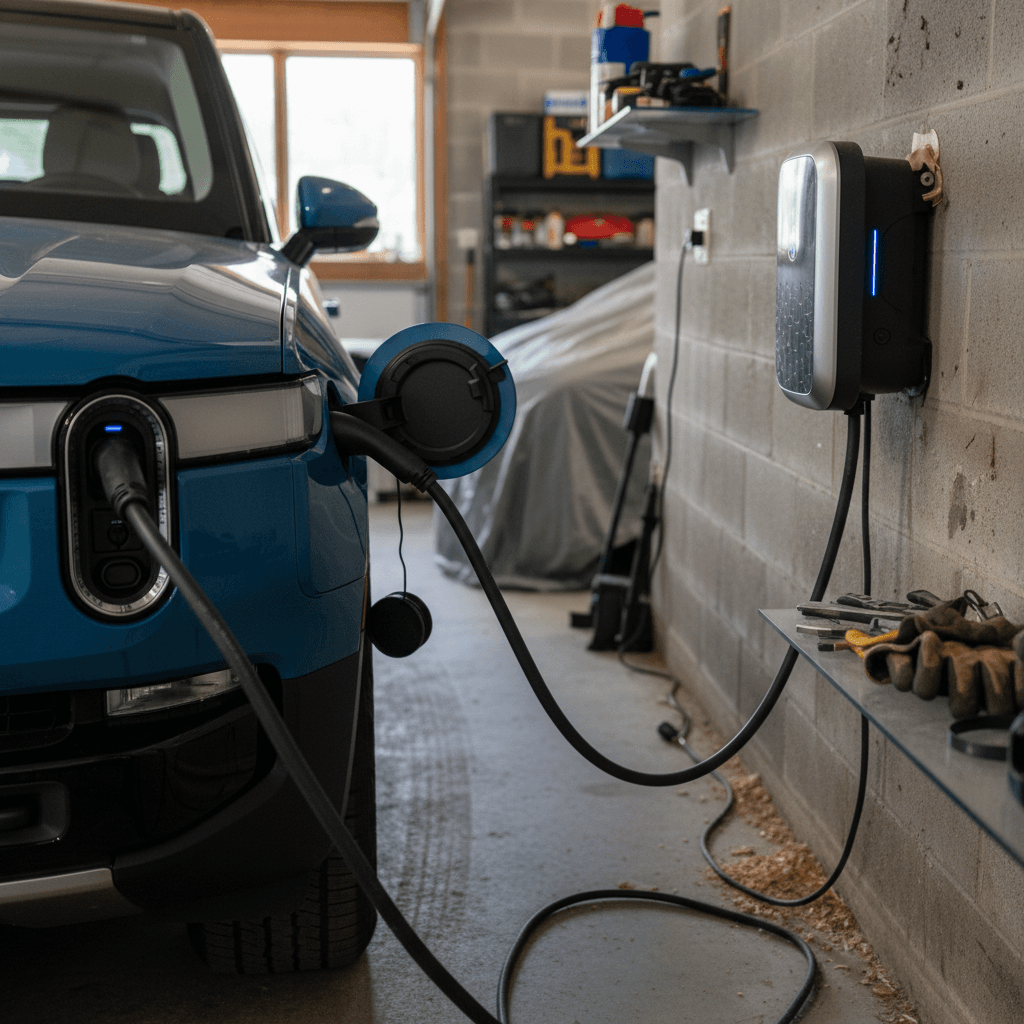
At home, you’ll almost always be using AC charging. That means either a standard 120V wall outlet (Level 1) or a 240V circuit (Level 2). Because of the R1S’s big pack, Level 2 is strongly recommended for most owners.
Rivian R1S home charging times by charger type
Approximate times from ~10% to 90% on a modern R1S pack. Real-world times vary with temperature, pack size, and efficiency.
| Charger type | Typical power | Miles of range added per hour | Approx. 10–90% time |
|---|---|---|---|
| Level 1 (120V, 12A household outlet) | ≈1.4 kW | 3–4 mi/hr | 40+ hours (not recommended as primary) |
| Portable Level 2 (240V, 32A) | ≈7.5 kW | 12–18 mi/hr | 18–24 hours |
| Wall-mounted Level 2 (240V, 40A) | ≈9.6 kW | 18–24 mi/hr | 14–18 hours |
| Wall-mounted Level 2 (240V, 48A – max onboard) | ≈11.5 kW | 20–30 mi/hr | 10–14 hours |
Home charging is about convenience, not speed, aim to refill overnight rather than from 0–100% in a single session.
Electrical limits matter
So, how long does it take to charge a Rivian R1S at home in practice? For many owners with a 40–48A Level 2 setup, you’re looking at roughly 8–12 hours to go from a low state of charge back to your usual daily limit (often 70–80%). That fits comfortably into an overnight window and off-peak utility rates in many parts of the U.S.
Set up home charging the right way
1. Decide how many miles you need daily
If you typically drive 30–50 miles per day, even a mid-speed Level 2 charger (7–9 kW) will comfortably replace that overnight.
2. Install a dedicated 240V circuit
For best results, plan a 50–60A circuit with a NEMA 14-50 outlet or hardwired EVSE. Avoid sharing the circuit with other big loads.
3. Choose a 40–48A Level 2 charger
Look for an EVSE that can deliver 40A or 48A, so you can take full advantage of the R1S’s 11.5 kW onboard charger.
4. Use scheduled charging
Set charging to run at night during off-peak hours to save on electricity and ensure the battery is warm and ready each morning.
5. Don’t obsess over 100%
For battery longevity, daily charging to 70–80% is enough. Save full 100% charges for long trips where you truly need the range.
Buying a used R1S?
How long to charge a Rivian R1S on DC fast charging
On the road, you’ll rely on DC fast charging, Rivian’s Adventure Network, third-party CCS stations, and increasingly Tesla Superchargers via adapters. This is where the R1S’s charging curve and recent software updates really matter.
- Recent updates have nudged many packs to a peak of around 210–215 kW on strong DC fast chargers.
- Rivian advertises roughly “up to 150 miles in about 20 minutes” on DC fast charging under ideal conditions.
- Independent testing and owner reports often see 10–80% in roughly 30–40 minutes, depending on pack size and temperature.
Rivian R1S DC fast charging time estimates
Approximate times for a modern R1S on a 250–350 kW DC fast charger with a preconditioned battery. Numbers are rounded for simplicity.
| SoC window | Approx. time | What it’s good for |
|---|---|---|
| 10–60% | 20–25 minutes | Quick top-up on a road trip, often 120–170 miles added. |
| 10–80% | 30–40 minutes | Standard road-trip stop; balances time and range well. |
| 20–80% | 25–35 minutes | Arrive with a bit more charge, leave with plenty of buffer. |
| 80–100% | +30–40 extra minutes | Only for special cases, towing or very sparse chargers. |
DC fast charging gets you back on the road quickly, focus on the 10–80% “sweet spot” instead of charging to 100%.
Avoid sitting at 100% on DC fast chargers
If you’re wondering how long to charge a Rivian R1S on a quick lunch stop, think in chunks: **about half an hour for a meaningful top-up** on a strong DC fast charger, assuming you arrive in the 10–30% range and target 70–80%.
Real-world examples: daily driving vs road trip
Example 1: Suburban commuter
You commute 35 miles round trip and run errands for another 15 miles a day, call it 50 miles per day. With a Level 2 home charger adding, say, 25 miles per hour:
- You need only 2 hours of charging most nights.
- Even if you skip a night or two, you’ll catch up quickly.
- You rarely, if ever, need DC fast charging.
Example 2: 600-mile road trip
You start your trip at 90%, drive 220–260 miles, and arrive at a DC fast charger around 15–20%:
- Plug in and charge from about 15% to 75% in 30–35 minutes.
- Repeat that pattern every 200–250 miles.
- Your total “charging overhead” adds roughly 60–90 minutes to a long day on the road, depending on speed, weather, and stops.
Road-tripping a used R1S
Ready to find your next EV?
Browse VehiclesTips to charge your Rivian R1S faster and smarter
Smart Rivian R1S charging strategies
Save time at chargers and treat your battery kindly.
Precondition the battery
Arrive low, leave mid
Choose strong stations
Set a smart daily limit
Use off-peak pricing
Keep software current
Watch your breaker size at home
Charging a used Rivian R1S: what changes over time?
If you’re shopping used, you might worry that an older R1S will take much longer to charge. In reality, moderate battery degradation usually has a small impact on charge times, you’re filling a slightly smaller usable capacity, so the window from 10–80% can actually shorten by a few minutes. The bigger variables are software version, how often the previous owner fast-charged, and overall battery health.
- A healthy used R1S should still hit near-original DC fast charge peaks on good hardware.
- Level 2 home-charging speeds are mostly governed by the onboard AC charger and your wiring, not minor capacity loss.
- The best clue is a transparent battery-health report and real-world charging tests rather than guesswork.
How Recharged helps
FAQ: how long to charge a Rivian R1S
Frequently asked questions about Rivian R1S charging times
Bottom line: how long it really takes to charge an R1S
When you see Rivian’s big battery specs, it’s easy to assume charging a Rivian R1S will always be slow. In reality, with a proper Level 2 home setup, most owners simply plug in at night and wake up with more range than they’ll use in a day. And on the road, a well-planned route using strong DC fast chargers typically means 30–40 minute stops every few hours, no worse than a meal and restroom break in a gas SUV.
If you’re comparing a new or used R1S to other EVs, focus less on the “0–100%” number and more on how its real-world charge times fit your lifestyle. And if you’re exploring used Rivian R1S options, Recharged can help you evaluate battery health, charging speed expectations, and total ownership costs, all from your couch, with nationwide delivery and EV-focused support from first click to final signature.