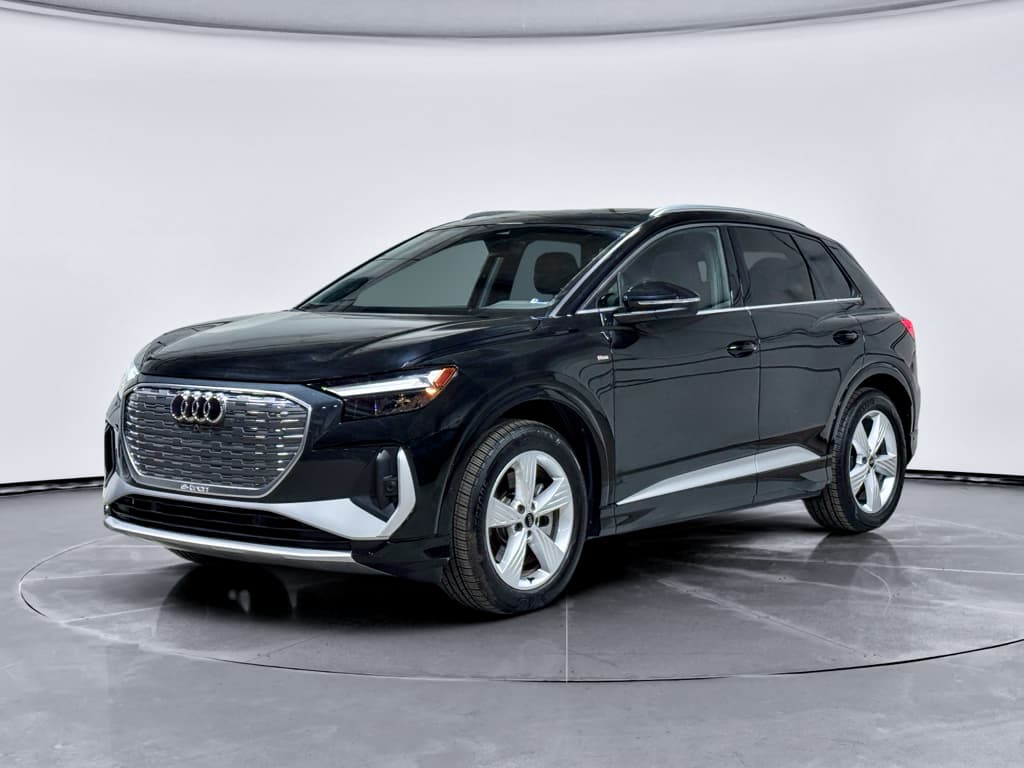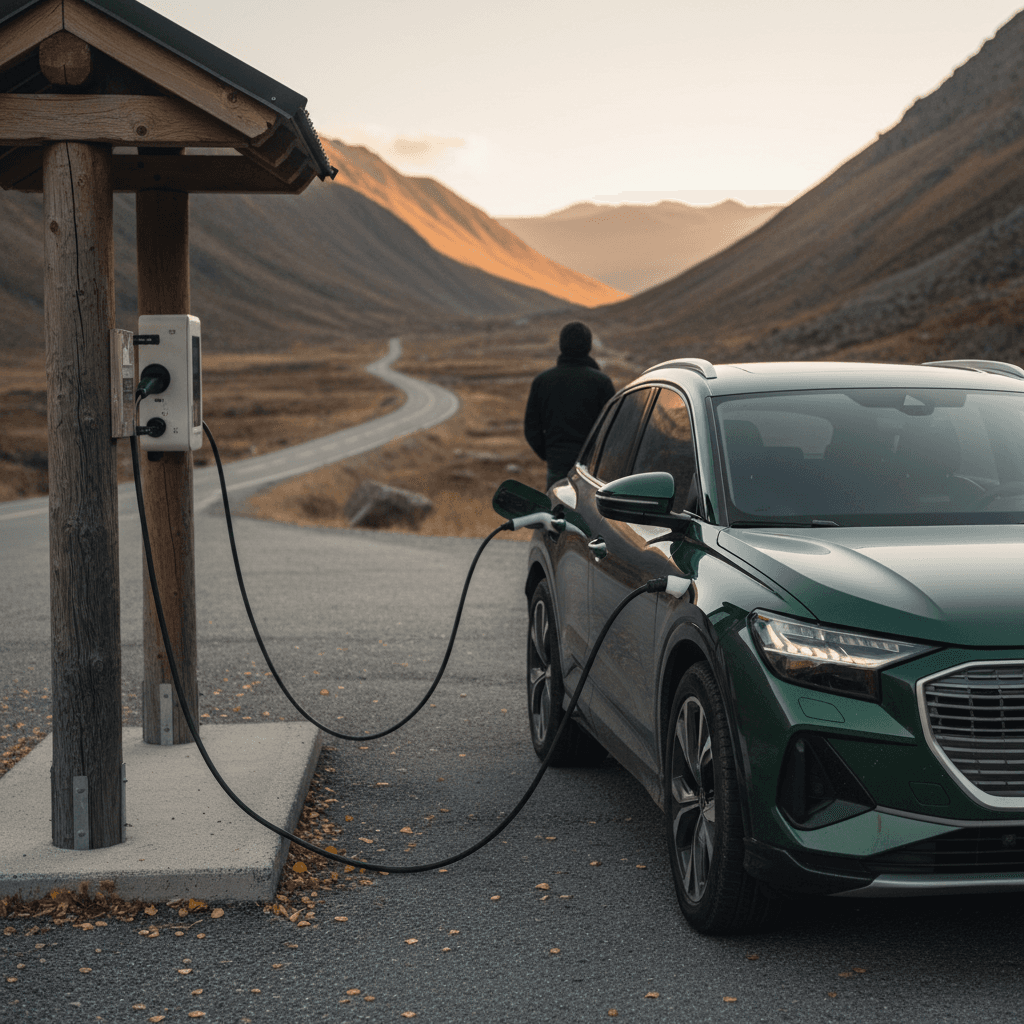
If you’re eyeing an Audi Q4 e-tron and wondering whether it can handle serious highway miles, you’re asking the right question. On paper, this compact luxury SUV offers roughly mid‑200‑mile range, quick DC fast‑charging, and a quiet, upscale cabin. In this Audi Q4 e-tron road trip review, we’ll look beyond the brochure specs and focus on how it actually behaves over long distances, range, charging rhythm, comfort, and what to watch for if you’re considering a used one.
Which Q4 e-tron are we talking about?
Audi Q4 e-tron road trip overview
Audi Q4 e-tron road-trip basics at a glance
The Q4 e-tron rides on the Volkswagen Group’s MEB platform, shared with the VW ID.4 and others, but wrapped in a more refined Audi shell. Most U.S. examples use an 82 kWh gross battery with about 77 kWh usable and an EPA-rated range that tops out around the mid‑250‑mile mark, depending on trim and body style. Real‑world road-trip range at 70–75 mph is lower than the EPA sticker, but the combination of decent efficiency, improved charging speeds on 2024+ models, and a quiet, well‑tuned chassis makes the Q4 e-tron a competent long‑distance partner when you plan your stops smartly.
Think in legs, not total range
Real-world range you can really expect
Highway range (what road-trippers care about)
On all‑electric road trips, you live on the highway. At a steady 70–75 mph, most Q4 e-tron models with the big pack will realistically return:
- ~210–230 miles in mild weather on rear‑drive (40/45) versions
- ~190–215 miles on dual‑motor quattro versions with the same battery
- A bit more if you’re disciplined about 65 mph, a bit less if you run 80+ mph
That’s assuming you start charges around 90–100% and pull into the next DC fast charger near 10–15% state of charge.
Factors that shrink (or stretch) your range
- Speed: Aerodynamic drag climbs fast over 70 mph; 75–80 mph can eat 10–15% of your range vs. 65 mph.
- Temperature: Cold weather can easily shave 20–30% off your highway range, especially on short legs where the battery and cabin stay cold.
- Elevation & headwinds: Long uphill grades or strong headwinds work the Q4’s motors harder and can pull you well below EPA numbers.
- Payload: A full load of passengers and luggage hurts less than speed, but it’s still a noticeable drag on range.
Plan your first day with conservative legs until you see how your particular Q4 e-tron behaves.
Don’t chase 0%
Charging on the road: speeds, stops and networks
Long‑distance EV travel lives or dies on how often, and how long, you stop to charge. Early Q4 e-tron models supported DC fast‑charging up to about 125–150 kW; updated 2024+ versions push that ceiling closer to 175 kW on the big‑battery variants, with advertised 10–80% times in the neighborhood of 28–30 minutes under ideal conditions. In the real world, you’ll often be limited more by the charger than the car, but the Q4’s DC performance is good enough to make a full day’s drive feel natural with well‑timed breaks.
What DC fast-charging looks like in a Q4 e-tron
From plug‑in to back on the road
10% → ~55%: "refill" zone
This is the quickest part of the curve. On a healthy charger, you may see triple‑digit kW for much of this span, especially on newer Q4s with improved thermal management.
Plan: If you just need a short hop, unplug here and go.
~55% → 80%: still efficient
Charging slows as you climb above 60%, but it’s still reasonably quick up to about 80%, ideal for longer legs or when chargers are sparse ahead.
Plan: Most road-trippers will charge in this band.
>80%: diminishing returns
Beyond ~80%, power tapers more sharply. You’re paying in time for relatively few extra miles, a common behavior in modern EVs.
Plan: Only go higher if the next charger is truly a stretch.
Choose the right charging network
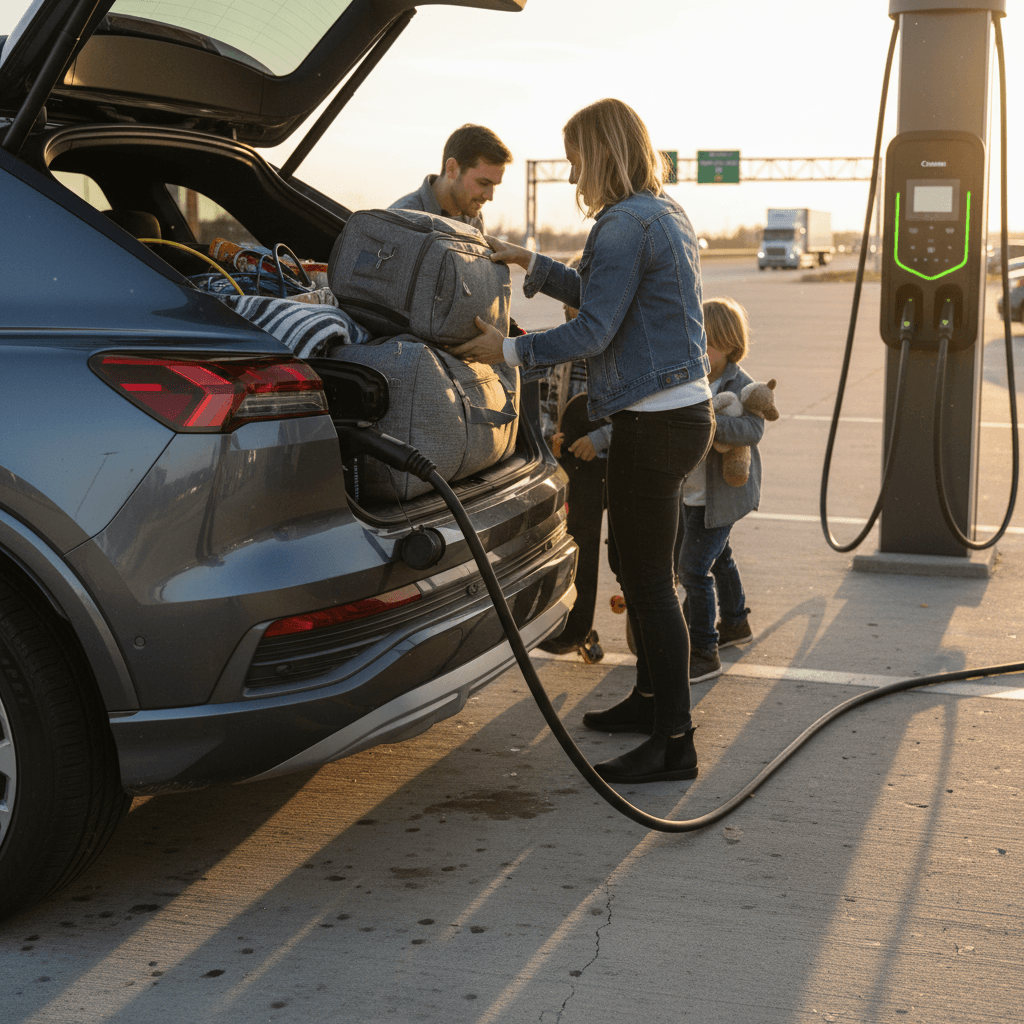
Route-planning checklist for a drama-free Q4 e-tron road trip
1. Map your DC fast chargers first
Use apps like A Better Routeplanner, PlugShare, and network apps (Electrify America, EVgo, etc.) to lay out fast‑charge stops every 150–200 miles initially. Adjust once you see your real‑world consumption.
2. Favor higher‑power sites
All else equal, pick stations labeled 150 kW or 350 kW with multiple stalls. They’re more likely to deliver strong power and have a working backup if one unit is down.
3. Avoid arriving nearly empty in remote areas
In dense corridors, 5–10% arrivals are fine. In rural stretches with fewer chargers, target 15–20% arrival so you have flexibility if a station is busy or offline.
4. Pack your RFID cards and apps
Some networks still behave better with RFID cards, others with apps or Plug & Charge setups. Have multiple options ready to start a session, don’t rely on a single app at 2 a.m.
5. Precondition when possible
On updated Q4 e-tron models with route‑based thermal management, setting a DC fast charger as your destination can warm or cool the battery ahead of arrival for quicker charging.
6. Build breaks into your expectations
Think of each charging stop as a scheduled stretch‑your‑legs break. Most drivers should take 15–30 minutes every few hours anyway; the Q4 simply bakes that habit into your travel rhythm.
Watch for slow or shared chargers
Highway efficiency and driving manners
On the highway, the Q4 e-tron feels more like a traditional Audi SUV than a science experiment. It’s quiet, planted, and composed, with enough power in all trims to handle quick passes and on‑ramp merges. Later 2024–2025 updates brought more efficient rear‑axle motors and revised suspension tuning, which sharpen response and help eke a bit more range out of each kWh while preserving ride comfort.
What it’s like to drive long distance
Not just about the battery
Ride & noise
The Q4 e-tron is tuned on the comfortable side: it shrugs off most expansion joints and broken pavement, especially on the smaller wheel/tire packages.
Wind and road noise are well‑controlled, though big wheels with low‑profile tires can introduce more thump over rough surfaces.
Power & response
Rear‑drive models have ample punch for daily driving; dual‑motor versions feel properly quick, especially at passing speeds.
Steering is light but accurate, good for long days behind the wheel without fatigue.
Highway sweet spot
Comfort, cargo and family friendliness
A road trip isn’t just about electrons, it’s about how everyone feels after hours on the interstate. Here, the Q4 e-tron plays to its strengths as a premium compact SUV. The upright seating position, generous glass area, and well‑bolstered seats make it an easy car to spend a whole day in, while the rear seat and cargo area are more generous than the compact footprint suggests.
Audi Q4 e-tron practicality snapshot
Key comfort and packing points that matter once you leave the city
| Feature | Real-world road-trip impact | What to watch for |
|---|---|---|
| Front seats | Supportive with good adjustment; taller drivers fit comfortably for long stints. | Try both standard and sport seats if possible; big wheels can slightly firm the ride. |
| Rear seat | Plenty of legroom for adults; floor is nearly flat, helpful for a middle passenger. | Three across is tight for adults on very long trips, but fine for kids. |
| Cargo area | Boxy space swallows multiple carry‑on suitcases plus soft bags; Sportback trades a bit of headroom for style. | If you have a stroller or camping gear, test‑fit before your first big trip. |
| Cabin storage | Deep door pockets and a useful center console help keep snacks, cables, and devices organized. | If you travel with lots of tech, add a small organizer for cables and adapters. |
| Towing | Properly equipped Q4 e-tron variants can tow a modest trailer or small camper. | Check the exact tow rating and tongue weight for your specific trim and year. |
Exact figures vary by trim and body style, but the big picture is consistent: the Q4 e-tron is more spacious inside than many gas crossovers of similar exterior size.
Packing tip for EV road trips
Tech, driver assistance and route planning
The Q4 e-tron’s tech suite is built around a digital cockpit, central touchscreen, and a driver‑assistance package that handles much of the grind of highway miles. Features like adaptive cruise control and lane‑keeping assist reduce fatigue, while the built‑in navigation in newer models can integrate EV‑specific route planning and battery preconditioning for DC fast chargers.
Tech features that matter on a road trip
What helps, and what can frustrate
Adaptive cruise & lane assist
When dialed in, these systems let the Q4 handle speed and spacing while you focus on the big picture. They’re especially nice in heavy traffic or long, straight stretches.
Tip: Learn the controls before the trip so you’re not guessing at 75 mph.
EV-aware navigation
On updated Q4 e-tron models, setting a fast charger as your destination can prompt the car to precondition the battery for faster charging and prioritize powerful stations along the route.
Still, it’s wise to double‑check with third‑party apps for station reliability.
App & remote features
The companion app lets you check charge status, pre‑heat or cool the cabin, and sometimes start or stop charging remotely.
That’s handy when you’re finishing lunch and want to be sure you’re topped off before walking back to the car.
Tech reality check
How the Q4 e-tron compares to other road-trip EVs
In today’s EV landscape, the Q4 e-tron sits in a crowded field of compact electric SUVs: Tesla Model Y, Hyundai Ioniq 5, Kia EV6, Ford Mustang Mach‑E, and its VW sibling, the ID.4. Each approaches the road‑trip equation a bit differently, and understanding where the Q4 shines, or merely holds serve, can help you choose the right fit.
Audi Q4 e-tron vs. popular road-trip EV alternatives
A high‑level look at how the Q4 e-tron stacks up on road-trip priorities.
| Model | Road-trip strengths | Road-trip tradeoffs |
|---|---|---|
| Audi Q4 e-tron | Quiet, upscale cabin; solid DC fast-charging on newer models; comfortable ride; familiar Audi feel. | Range and charging not quite class‑leading; relies on third‑party CCS networks. |
| Tesla Model Y | Excellent fast‑charging via Supercharger network; strong efficiency and range; robust route planning. | Ride can be firmer; minimalistic interior isn’t for everyone; pricing can swing with incentives and changes. |
| Hyundai Ioniq 5 / Kia EV6 | Ultrafast 800‑V charging on compatible stations; roomy, lounge‑like cabins; strong driver-assistance suites. | Networks that can fully exploit 800‑V hardware aren’t everywhere; styling is more polarizing. |
| VW ID.4 | Similar platform; good comfort and usable range at generally lower prices. | Less premium interior; earlier software versions can feel clunky; performance is more modest. |
| Ford Mustang Mach-E | Sporty character; strong performance options; improving charging profile. | Rear visibility and cargo opening less practical; ride firmness varies widely by trim. |
Exact specs depend on model year and trim. This table focuses on the general character of each vehicle for long-distance use.
Where the Q4 e-tron lands
Buying used? Road-trip checklist for a Q4 e-tron
The Q4 e-tron makes a lot of sense as a used EV: early depreciation can put them within reach of more buyers, and initial reliability data has been encouraging. But for a car you plan to take on long trips, battery health and charging behavior are mission‑critical. That’s exactly where a transparent used‑EV marketplace like Recharged can tilt the odds in your favor.
Used Audi Q4 e-tron: road-trip readiness checklist
Get a verified battery health report
Range on day one isn’t the same as range years later. A Recharged listing includes a <strong>Recharged Score battery health report</strong>, so you can see how much usable capacity remains before you ever show up for a test drive.
Confirm DC fast-charging behavior
Some issues only appear at high power. If possible, do a brief DC fast‑charge session or review charging logs. You’re checking that the car will climb to expected kW when the battery is warm and low, then taper normally.
Check software and navigation updates
Updated software can improve charging logic, route planning, and driver‑assistance smoothness. Verify that the Q4 e-tron you’re considering is current on major updates, especially if it’s a 2021–2022 model.
Inspect tires and wheels
Oversized wheels with aggressive tires can hurt ride comfort and efficiency on long trips. Make sure the tire condition and specification match the type of driving you actually do.
Review charging history, if available
A car that has spent its life on DC fast chargers isn’t automatically a problem, but consistent high‑power abuse can accelerate wear. Balanced use of home Level 2 and occasional fast‑charging is ideal.
Plan your financing and trade-in
If you’re moving into a Q4 e-tron from an ICE vehicle, Recharged can help you <strong>get pre‑qualified, value your trade, and arrange nationwide delivery</strong>, so your first big road trip can start from your driveway.
How Recharged can simplify your Q4 e-tron decision
Ready to find your next EV?
Browse VehiclesFAQ: Audi Q4 e-tron road trips
Frequently asked questions about Q4 e-tron road trips
Bottom line: Is the Audi Q4 e-tron road-trip ready?
Taken as a whole, the Audi Q4 e-tron is a thoroughly competent road‑trip machine: quiet, comfortable, and easy to live with, backed by usable real‑world range and DC fast‑charging that suits the natural rhythm of breaks most drivers should be taking anyway. It won’t win every spec‑sheet comparison, but spend a day behind the wheel and its blend of refinement and practicality starts to make more sense than a few extra miles of range on paper.
If you’re considering a used Q4 e-tron as your next highway companion, the key is confidence, confidence in the battery, in charging behavior, and in the total cost of ownership. That’s where shopping through Recharged helps: every vehicle includes a Recharged Score Report with verified battery health, transparent pricing, and EV‑savvy support from first click to delivery. With the right example in your driveway and a bit of route planning, the Audi Q4 e-tron can absolutely be your ticket to stress‑free, all‑electric road trips.