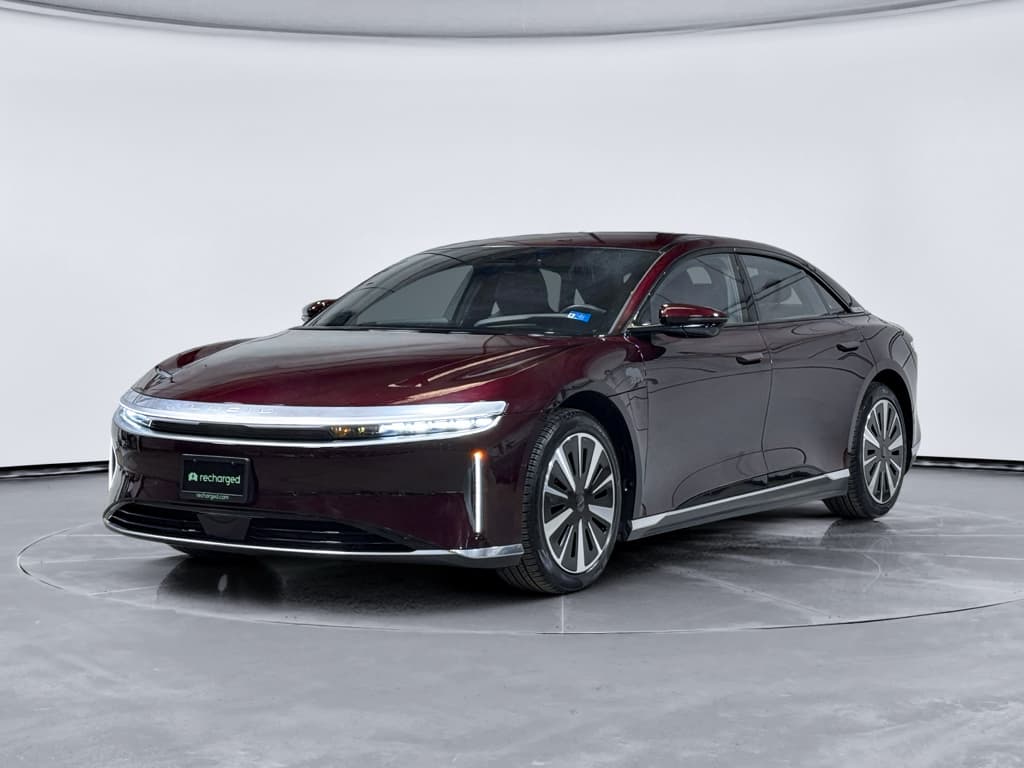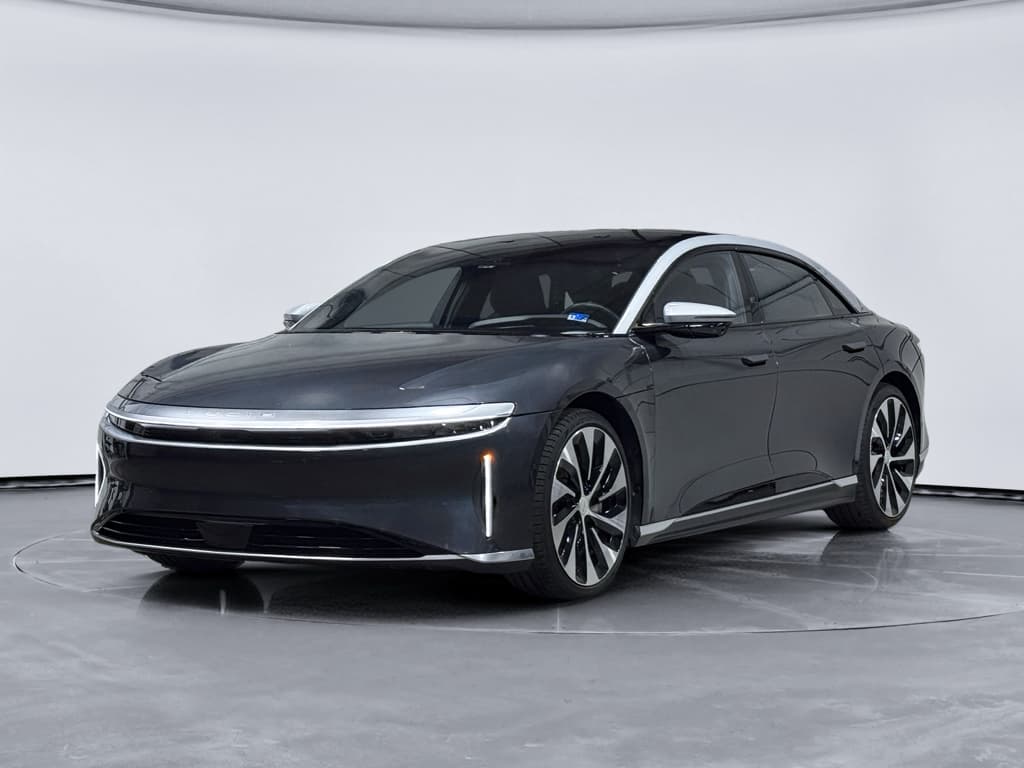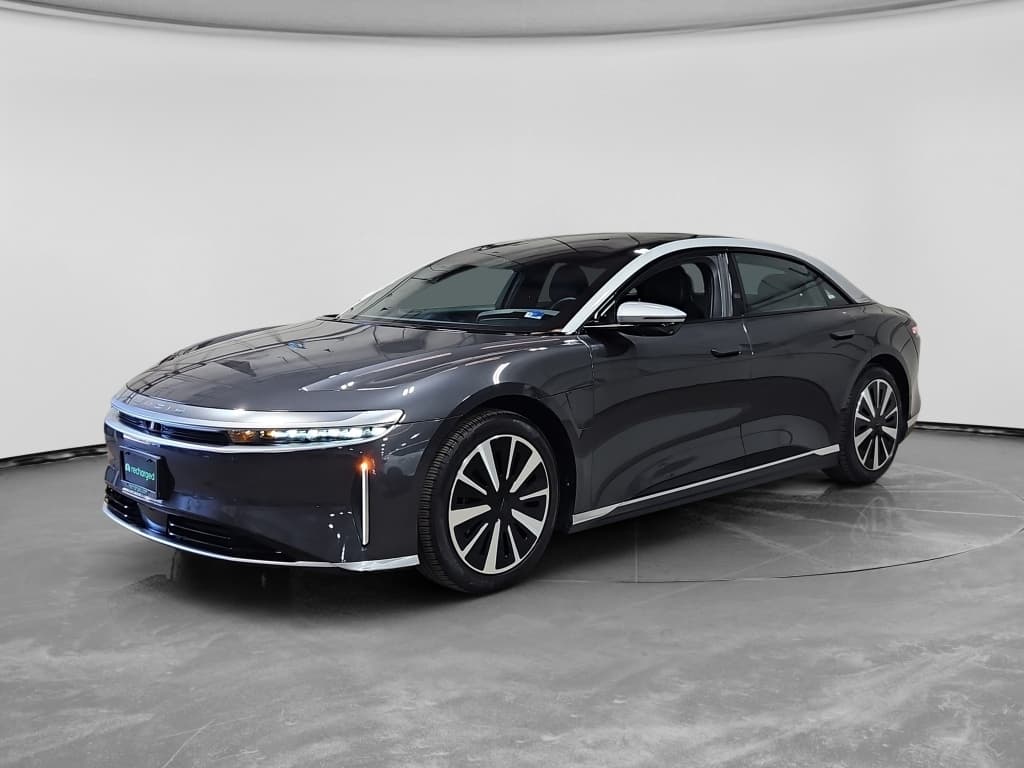
If you’re looking at a Lucid Air, or already own one, the natural question is: how long does it take to charge? Because the Air combines a huge battery with ultra-fast DC capability, the answer depends a lot on where you plug in: a wall outlet, a 240V Level 2 charger, a 350 kW DC fast charger, or even a Tesla Supercharger via Lucid’s NACS adapter. This guide breaks down realistic Lucid Air charging times and what they mean for your daily life.
Key takeaway
Lucid Air charging time at a glance
Typical Lucid Air charging times (ballpark)
Those are broad averages across the Lucid Air lineup (Pure, Touring, Grand Touring, Dream, Sapphire). Exact times change with battery size, state of charge (SOC), charger quality, temperature, and even how healthy the pack is. For shopping or planning a road trip, though, these ranges are a good starting point.
Lucid Air battery and charging basics
To understand how long to charge a Lucid Air, you need two key pieces of info: battery size and charging power.
- Battery sizes: Depending on trim and year, Lucid Air packs are roughly in the 88–118 kWh usable range, with most long‑range models around 110–118 kWh.
- Max DC fast charging power: Up to ~300 kW on a compatible 800–900V CCS fast charger under ideal conditions.
- Max AC (Level 2) power: Up to 19.2 kW when paired with an 80A, 240V circuit and a capable home charger, such as Lucid’s Connected Home Charging Station.
- Efficiency: Real‑world owners often see 3.5–4.5 mi/kWh, which means you add a lot of miles for each kWh you pump in.
Charging speed vs. battery size
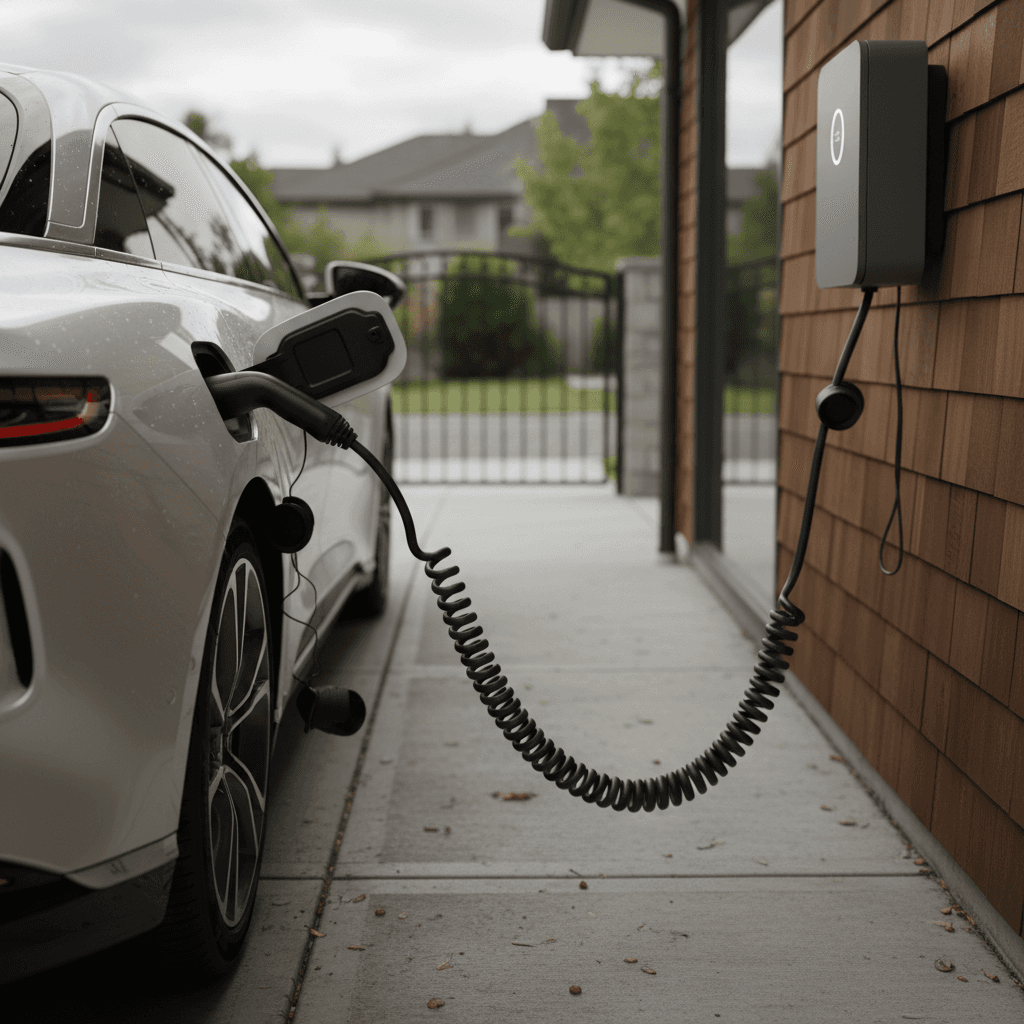
How long to charge a Lucid Air at home
Most of your Lucid Air charging will happen at home. Here’s how long it takes on different setups in the U.S. market.
Lucid Air home charging times by outlet type
Approximate times from very low (near 0%) to 100% on a large‑pack Lucid Air (≈110–118 kWh). Actual results vary with model year, battery size, and conditions.
| Charger type | Typical power | Miles of range added per hour* | Approx. time 0–100% | Best use case |
|---|---|---|---|---|
| Level 1 (120V wall outlet) | 1.2–1.4 kW | 3–5 mi/hr | 45–70 hours (2–3 days) | Emergency top‑ups when nothing else is available |
| Level 2 – 32A (NEMA 14‑50 on 40A circuit) | 7.7 kW | 25–30 mi/hr | 14–18 hours | Good budget home solution or for moderate daily mileage |
| Level 2 – 40A (hard‑wired or strong portable) | 9.6 kW | 30–35 mi/hr | 11–14 hours | Comfortable overnight 0–100% for most trims |
| Level 2 – 48A (60A circuit) | 11.5 kW | 35–40 mi/hr | 9–12 hours | Faster overnight recovery; good for high‑mileage drivers |
| Level 2 – 80A (Lucid Connected Home, 100A circuit) | Up to 19.2 kW | ~60–80 mi/hr | 6–8 hours | Maxing out the Air’s onboard charger for very heavy daily use |
These are planning numbers, not guarantees, think in terms of overnight vs. all‑week charging.
Check your panel before chasing 19.2 kW
Home charging: what’s “good enough” for a Lucid Air?
1. Match power to your driving
If you drive ~30–50 miles per day, even a 32A (7.7 kW) Level 2 charger is typically fine, your Lucid Air will easily recover daily mileage overnight.
2. Aim for 240V Level 2 if at all possible
Level 1 (120V) can technically work, but it’s slow enough that you’ll be living at the charger. A basic 240V circuit dramatically improves your experience.
3. Decide if you really need 80A
Lucid’s 19.2 kW onboard charger is impressive, but unless you’re routinely burning through 200+ miles a day, 40–48A is enough for most owners.
4. Plan for future EVs
If you’re opening walls anyway, oversizing conduit and wiring now can make it easier to add a second EV or upgrade to higher power later.
5. Use scheduled charging
Most utilities offer cheaper off‑peak rates overnight. Use the Lucid app or your wall box settings to time charging when power is cheapest.
How long to charge a Lucid Air on DC fast charging
DC fast charging is where the Lucid Air really differentiates itself. Thanks to its ~900V architecture, it can briefly pull around 300 kW on a strong 350 kW CCS charger in ideal conditions, then hold high power deeper into the pack than many competitors.
Typical Lucid Air DC fast charging times
Assumes healthy battery, warm pack, and a strong 200–350 kW CCS charger.
10–60%
~15–20 minutes in many independent tests. This is the sweet spot for quick road‑trip top‑ups.
10–80%
~25–30 minutes under good conditions. You’ll add hundreds of miles of range in one stop.
10–100%
40–60+ minutes, and the last 10–20% is much slower. On road trips, it’s usually not worth going past 80–90%.
Why 10–80% matters
Factors that make your Lucid Air charge faster
- High‑power charger: 200–350 kW CCS stations (often along interstates) are ideal.
- Warm battery: Driving before charging or using preconditioning helps the pack accept higher power.
- Lower starting SOC: Plugging in closer to 10–20% gives you more time at max power.
- Healthy pack: A well‑maintained battery can sustain higher power longer.
Things that slow down DC charging
- Cold weather: A cold pack will charge more slowly until it warms up.
- Weak chargers: Older 50–150 kW units cap your rate regardless of the car’s capability.
- High SOC: Above ~80–90%, the car sharply reduces power to protect the battery.
- Shared power cabinets: Some networks split power when multiple cars share a charger bank.
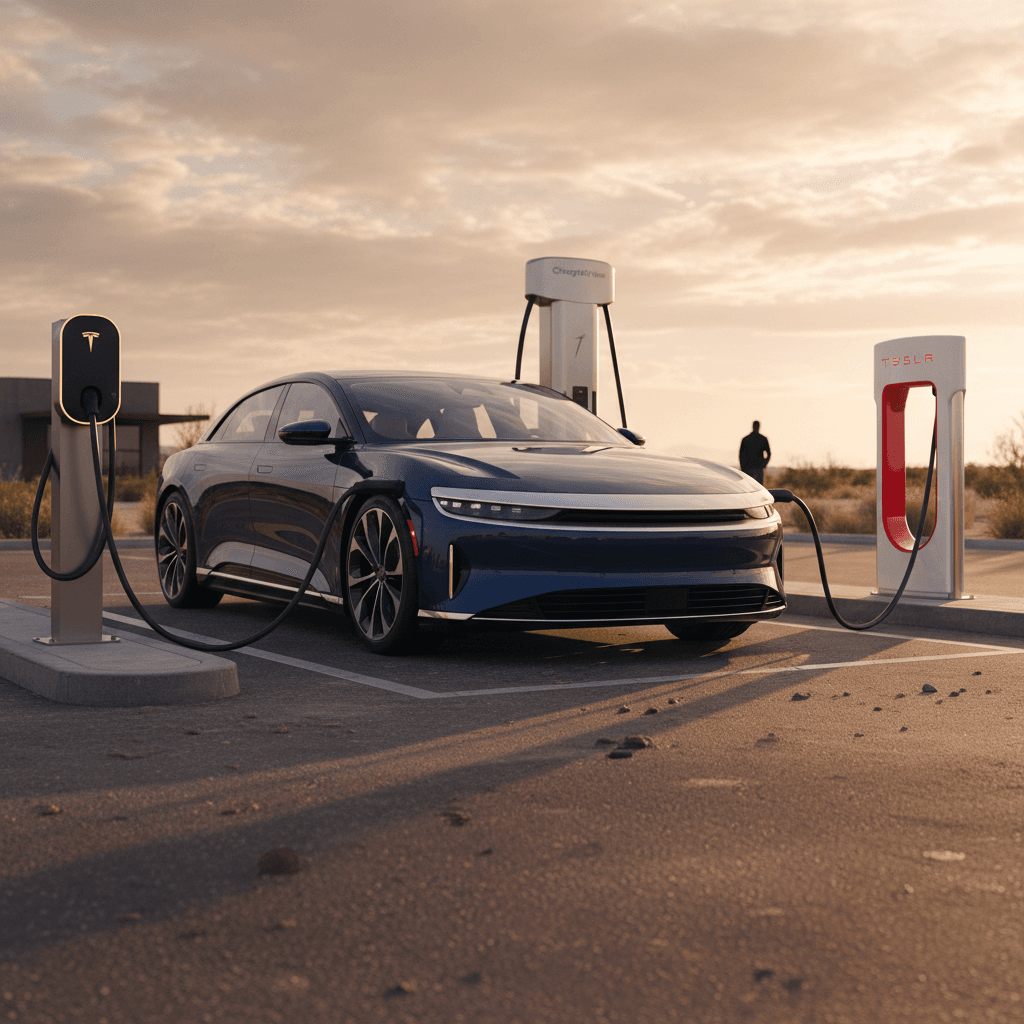
Lucid Air and Tesla Superchargers: How fast is the NACS adapter?
Lucid now offers a DC NACS‑to‑CCS adapter so Air owners can use compatible Tesla Superchargers (V3 and newer) in North America. This is a huge win for route flexibility, but there’s an important catch for charging time.
Lucid Air charging speed on Tesla Superchargers vs CCS fast chargers
How the Lucid Air’s charging time changes when you use Tesla’s network via Lucid’s adapter.
| Network / connector | Max power to Air | Typical use case | What it means for time |
|---|---|---|---|
| CCS DC fast (Electrify America, EVgo, etc.) | Up to ~300 kW | Primary road‑trip charging | 10–80% often in ~25–30 minutes on a strong 350 kW charger. |
| Tesla Supercharger (NACS via Lucid adapter) | Up to ~50 kW | Backup / coverage filler | Think of this like a faster Level 3 "medium" charge, roughly 100–200 miles of range per hour of charging, not the full 300 kW potential. |
For true “ultra‑fast” charging, CCS 350 kW stations still make the most of the Lucid Air’s 900V hardware.
Don’t expect 300 kW on Tesla, yet
Real-world examples: How long you’ll actually spend charging
Specs and charging curves are useful, but what you really care about is how long your Lucid Air will be tied to a cable in everyday scenarios. Here are a few realistic examples.
Practical Lucid Air charging scenarios
From commuting to cross‑country road trips.
Daily commuter (~40 miles/day)
Setup: 32A Level 2 at home.
Time: ~1–2 hours per night.
You’ll barely notice it, set charging to run overnight and wake up near your target SOC every morning.
Weekend getaway (200 miles each way)
Setup: Leave home at ~90%, arrive with ~30–40%.
Top up once at a 200–350 kW CCS charger for ~15–25 minutes each way to stay in the 10–80% band.
Cross‑country road trip
Setup: Chain together 10–80% DC fast sessions.
Roughly every 2.5–3.5 hours of driving, plan a 20–30 minute stop. The Air’s efficiency and big pack mean fewer stops than many rivals.
Why Lucid Air feels “less tethered”
Tips to charge your Lucid Air faster and smarter
Charging time isn’t just about raw kW. How you use the car and where you plug in can easily shave minutes, or entire hours, off your charging routine while extending battery life.
7 ways to optimize Lucid Air charging time and battery health
1. Live in the 20–80% window day to day
For daily use, aim to let the battery drift between roughly 20–80% rather than regularly running it to 0% or sitting at 100%. This reduces degradation over the long run.
2. Save 100% for big trips
If you need full range for a road trip, schedule charging so you hit 100% right before departure, not hours (or days) ahead.
3. Precondition before fast charging
Use the car’s navigation to route to a DC fast charger, this lets the Lucid Air warm or cool the battery so it can accept higher power when you arrive.
4. Prioritize strong CCS fast chargers
When time matters, look for 200–350 kW CCS sites rather than relying on slower 50 kW units or the limited‑to‑50 kW Tesla adapter.
5. Don’t chase 100% on DC
Above ~80–90%, charging slows dramatically. On road trips, it’s usually faster overall to unplug early and drive to the next charger.
6. Dial in your home setup
If you’re still on 120V or a very low‑amp Level 2, upgrading to 40–48A can transform the ownership experience, especially if you stack miles quickly.
7. Use the app to monitor and stop charging
The Lucid app lets you watch SOC remotely and stop charging when you’ve hit your target, saving time and minimizing unnecessary high‑SOC dwell.
Avoid these Lucid Air charging mistakes
Is a Lucid Air right for your charging situation?
Lucid Air is an excellent fit if…
- You can install at least a 32–40A Level 2 charger at home or work.
- You regularly drive long distances and want to minimize stops.
- You have access to strong CCS fast‑charging corridors for road trips.
- You value keeping the car for many years and want robust battery tech.
You’ll need to plan more if…
- You’re limited to 120V or very low‑power Level 2 at home long‑term.
- Your area has few CCS fast chargers and you’d be relying heavily on the 50 kW‑limited Tesla adapter.
- You live in an apartment with uncertain charging and drive high mileage.
If you set yourself up with a decent Level 2 charger and learn to work within the 10–80% fast‑charge window, the Lucid Air is one of the least "tethered" EVs you can own. You’ll spend more time driving and less time watching kilowatts go by, even if the car’s big battery means full 0–100% charges are longer on paper. That balance of massive range and rapid DC charging is exactly what makes the Air appealing in the used market, where you can often get that capability for less than the price of a new gas luxury sedan.
How Recharged can help
Ready to find your next EV?
Browse Vehicles