If you’re trying to figure out how long it takes to charge a Hyundai Kona Electric, you’re not alone. Between different battery sizes, home setups, and DC fast chargers that rarely hit their advertised maximums, real‑world times can be confusing. Let’s break it down into clear, honest numbers so you can plan daily charging and road trips with confidence.
Two generations, different charging behavior
Kona Electric batteries and why charge time varies
Before you look at minutes and hours, it helps to know which Kona Electric you have and where you’re charging. Time is always “battery size ÷ charger power,” then adjusted for efficiency and tapering as the pack fills up.
Common Hyundai Kona Electric battery setups
Your battery size and charger type drive how long charging really takes.
First‑gen (2019–2023, U.S.)
Battery: ~64 kWh pack
On‑board AC: ~7.2 kW (about 32A on 240V)
DC fast peak: mid‑70 kW in ideal conditions
Most used Kona Electrics in the U.S. today fall into this group.
Second‑gen (2024+, Standard Range)
Battery: mid‑40 kWh (varies by market)
On‑board AC: up to ~11 kW in some regions
DC fast peak: around 75–100 kW depending on trim
Smaller pack = quicker 0–100% times on the same charger.
Second‑gen (2024+, Long Range)
Battery: ~64–65 kWh equivalent
On‑board AC: 7.2–11 kW depending on market
DC fast: manufacturer claims around 38–47 minutes from 10–80% on 100 kW DC in ideal conditions.
Think of this as the spiritual successor to the first‑gen 64 kWh car.
How to identify your battery quickly
Quick answer: how long to charge a Hyundai Kona Electric
Typical Hyundai Kona Electric charging times (first‑gen 64 kWh as a reference)
Those numbers are ballpark figures. Your actual Hyundai Kona Electric charging time will shift with temperature, how full the battery already is, and the true output of the station you’re using. Let’s zoom into each charging level so you know what to expect in daily life.
Level 1 charging: how long on a 120V outlet?
Level 1 is simply plugging into a regular 120‑volt household outlet using a portable EVSE. In North America, that typically means around 1.2–1.4 kW of power (about 12 amps at 120V). It’s slow, but surprisingly useful if your daily driving is light.
- From near empty to 100% on a 64 kWh Kona can take 50–70 hours on Level 1, depending on the exact current draw and charging losses.
- That works out to roughly 3–5 miles of range per hour added.
- Charging overnight (10–12 hours) typically restores about 30–60 miles of range, which is fine if your commute is short.
- Because the car spends most of its life parked, Level 1 can work if you’re patient and don’t frequently arrive home with a nearly empty pack.
Safety first with Level 1
Level 2 home charging: how long on 240V?
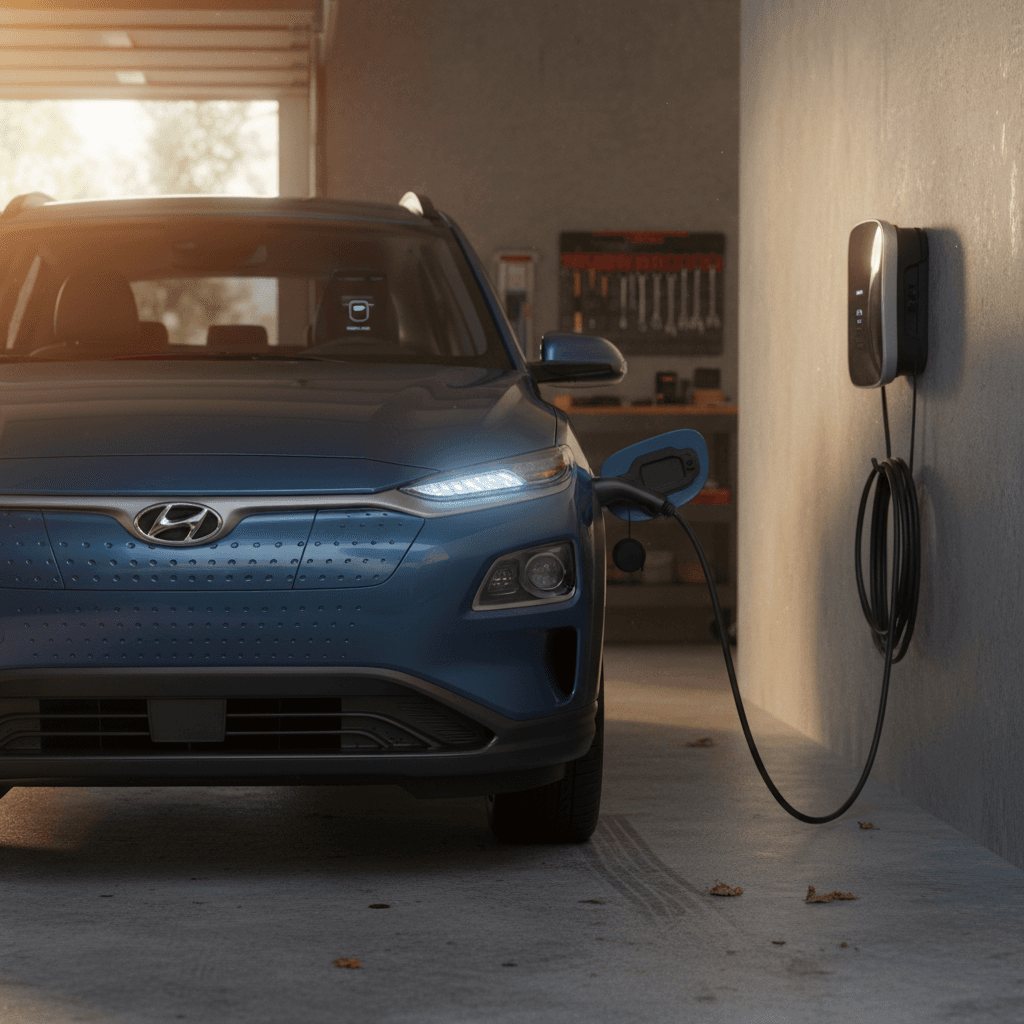
For most Kona Electric owners, Level 2 home charging is the sweet spot. It uses a 240‑volt circuit, similar to an electric dryer, paired with a wallbox or portable Level 2 unit. This is what lets you reliably “fill up” overnight.
First‑gen 64 kWh Kona (2019–2023)
- On‑board AC limit: about 7.2 kW (32A on 240V)
- Empty to full (0–100%): ~9 hours on a 40A home EVSE, a bit longer on 30–32A public posts.
- 10–80%: typically 6–7 hours at home.
- Range per hour: ~25–30 miles of real‑world driving added each hour of charging.
This is why most Kona owners plug in at night and wake up full, even if they arrive home with a low state of charge.
Second‑gen Kona Electric (2024+)
- Standard Range battery: smaller pack means shorter charge times on the same Level 2 charger, often in the 5–7 hour range from low to full.
- Long Range battery: similar usable capacity to the old 64 kWh car; expect comparable 7–9 hour 0–100% times at home.
- In some markets, a higher‑power 10.5–11 kW on‑board charger is offered, trimming 10–100% times into the 6–7 hour window on a suitable 3‑phase supply.
If you’re in the U.S., plan around the more conservative 7.2 kW figure unless you know your car supports higher AC rates.
Choosing the right home charger amperage
DC fast charging: how long on road trips?
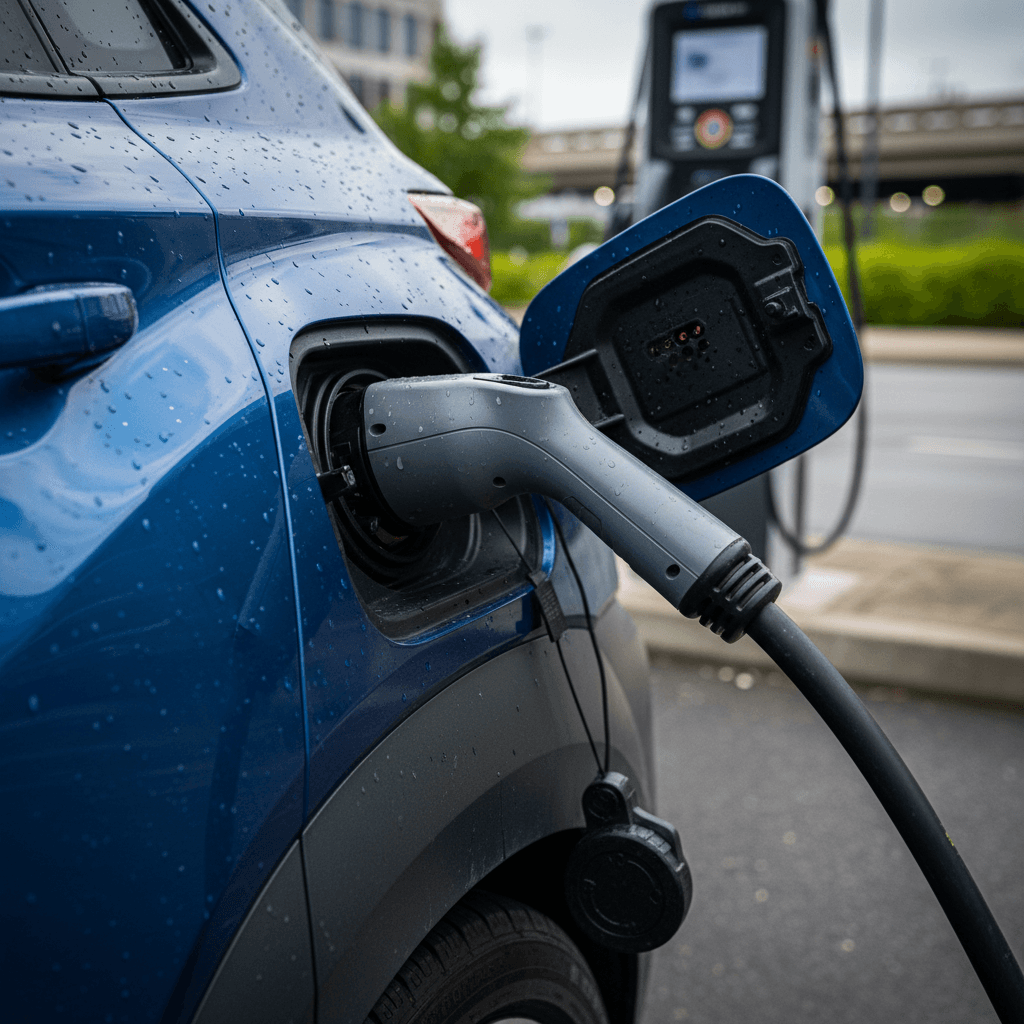
When you’re on the highway, you’ll rely on DC fast charging (DCFC). Here the Kona Electric uses the CCS combo inlet, and the station supplies DC power directly to the battery, bypassing the on‑board AC charger. This is where specs like “50 kW” or “100 kW” start to matter, but only up to a point.
Typical Kona Electric DC fast charging times (10–80%)
Real‑world ballpark times assuming a healthy battery and cooperative charger.
On a 50 kW DC fast charger
- First‑gen 64 kWh Kona: about 60–75 minutes from 10–80% in good conditions.
- Second‑gen Long Range: manufacturer data suggests ~60–65 minutes for 10–80% where 50 kW is the limit.
- Standard Range battery: expect closer to 40–50 minutes because the pack is smaller.
On a 100 kW DC fast charger
- First‑gen Kona peaks in the high‑70 kW range, so you’ll see around 45–55 minutes from 10–80% if the charger and battery are warm and happy.
- Second‑gen Long Range: Hyundai quotes roughly 40–47 minutes for 10–80% in ideal conditions.
- Remember: peak power is brief; average power over the session is lower.
Why 10–80%, not 0–100%?
Above ~80%, the Kona’s charge curve tapers hard to protect the battery. The last 20% can easily take as long as the jump from 10–60%.
On road trips, it’s usually fastest to drive between roughly 10–80% and avoid "topping off" to 100% on DC unless you absolutely need the range.
Cold batteries charge more slowly
Charging time table for Hyundai Kona Electric
These estimates assume a typical 64–65 kWh Kona Electric as a reference point. If you have the smaller Standard Range pack, knock 20–30% off the times; if your charger or wiring is weaker than listed, add time accordingly.
Approximate Hyundai Kona Electric charging times by charger type
Use this as a planning guide rather than a promise, real‑world times vary with temperature, charger health, and how full the battery already is.
| Charger type | Power (approx.) | From / to | Estimated time | Best use case |
|---|---|---|---|---|
| Level 1 (120V outlet) | 1.2–1.4 kW | 0–100% | 50–70 hours | Emergency use, very light daily driving |
| Level 1 overnight | 1.2–1.4 kW | 50–90% | 15–25 hours | Slowly recovering charge over a weekend |
| Level 2 240V (16A) | 3.3 kW | 0–100% | 18–22 hours | Occasional use on a shared or low‑amp circuit |
| Level 2 240V (32A) | 6.6–7.2 kW | 0–100% | 8–10 hours | Typical home wallbox, overnight full charge |
| Level 2 240V (40A+) | 7.2–9.6 kW* | 10–80% | 5–7 hours | Daily commuting, topping up every night |
| DC fast 50 kW | 35–45 kW average | 10–80% | 60–75 minutes | Road trips where only 50 kW is available |
| DC fast 100 kW | 60–75 kW average | 10–80% | 40–55 minutes | Best‑case road‑trip stop with strong charger |
| DC fast (any) | Varies | 80–100% | 30–60 minutes | Only when you absolutely need maximum range |
All times assume a relatively low starting state of charge and a target suited to the charger type.
Why the asterisk on high‑amp Level 2?
Factors that slow down or speed up Kona charging
You’ve probably noticed that two identical cars on two identical chargers sometimes finish at very different times. That’s because several variables affect how long it takes to charge a Hyundai Kona Electric, no matter what the brochure says.
Key factors that change your Kona’s charge time
1. Battery temperature
Lithium‑ion batteries are picky about temperature. Very cold or very hot packs charge more slowly, especially on DC fast chargers. Some newer EVs actively precondition the pack before DC charging; the Kona is more limited here, so it pays to drive a bit before fast charging in winter.
2. State of charge when you plug in
Charging from 5% to 55% is usually much faster than going from 75% to 95%. The Kona’s charging curve tapers as you approach full to protect the battery, so high‑SOC top‑ups always feel slower.
3. Actual charger output vs. rated output
A “50 kW” unit that’s overloaded or derated by the site might only deliver 30–35 kW to your car. Similarly, public Level 2 posts sometimes share power between two stalls. Always check the real‑time kW shown on the screen if you’re curious where your time is going.
4. Home electrical setup and wiring
Long runs of thin wire, old panels, or shared circuits may limit the safe amperage available for your home EVSE. Even if the hardware says 40A, your electrician may size the circuit for 32A continuous use, which slightly lengthens charge times but is safer and code‑compliant.
5. Battery age and health
As EV batteries age, usable capacity and internal resistance change. A healthy Kona pack will generally follow the expected charge curve; one that’s been abused with frequent 100% DC fast charges or extreme heat may charge a bit more slowly and hold less energy overall.
Don’t chase 0–100% DC fast charges
Charging strategy: daily use vs. road trips
Knowing how long it takes to charge is only half the story. The other half is choosing a charging strategy that fits your lifestyle so your Kona Electric feels effortless to live with.
Match your Kona charging strategy to your driving
Daily commuter (20–60 miles per day)
Install a 32–40A Level 2 charger at home if possible; you’ll typically add the next day’s miles in 1–3 hours.
Use scheduled charging to take advantage of cheaper off‑peak electricity rates overnight.
Set your daily AC charge limit around 80–90% to protect long‑term battery health.
Save DC fast charging for occasional trips or days when your schedule changes unexpectedly.
Apartment or street parker
Look for reliable Level 2 options at work or nearby public garages; even a few hours a couple times a week may be enough.
A 120V outlet at your parking spot can still help you slowly add 30–40 miles over a long night.
Plan weekend stops at DC fast chargers to top up when you’re already out running errands.
Use apps like PlugShare to see real‑world reviews and reliability ratings before you rely on a station.
Frequent road‑tripper
Plan legs to arrive at fast chargers between 10–30% state of charge and leave around 70–80%, that’s where the Kona charges quickest.
Favor higher‑power (100 kW) CCS stations when available, but remember that average power matters more than the number on the sign.
In winter, try to drive 20–30 minutes before your first DC stop so the pack isn’t ice‑cold.
Build 45–60 minute breaks into your day for meals and rest while the car charges instead of “waiting on the car.”
How Recharged fits in
Ready to find your next EV?
Browse VehiclesCharging a used Kona Electric: what to expect
A well‑cared‑for Kona Electric is one of the more efficient and range‑friendly used EVs on the market, but no two used cars have lived the same life. That history can subtly change how long charging takes and how much range you get from each session.
What affects charge time on a used Kona
- Battery degradation: A pack that’s lost 10–15% of its original capacity technically charges from 10–80% faster (there’s less energy to add), but it also delivers less driving range.
- DC fast charging history: Heavy fast‑charge use in hot climates can raise internal resistance, which may reduce peak DC speeds slightly over time.
- Software updates: Some model years receive updates that tweak the charge curve or improve reliability at certain stations.
How Recharged helps de‑risk things
- Every Kona Electric sold through Recharged includes a Recharged Score Report with verified battery health data.
- You see estimated remaining capacity, so you can translate published charging times and range into your car’s reality.
- Our specialists can walk you through home‑charging options, installation questions, and likely DC fast‑charge behavior for that specific vehicle.
If you’re comparing two used Konas, this information can be the difference between a car that feels brand‑new and one that feels tired on long trips.
FAQ: Hyundai Kona Electric charging times
Frequently asked questions about Kona Electric charging times
Bottom line: how long your Kona really takes to charge
For most owners, the practical answer to “how long does it take to charge a Hyundai Kona Electric?” is simple: with a 240V Level 2 at home, it easily fills overnight, and with DC fast charging, you’ll spend roughly 45–60 minutes going from about 10–80% on a road trip. Level 1 will work in a pinch, but it’s too slow to rely on as your only fuel source unless you drive very little.
Once you understand how battery size, charger power, and conditions interact, the Kona Electric becomes predictable and easy to live with. If you’re in the market for a used Kona, Recharged can help you compare real‑world charge times, assess battery health with the Recharged Score, and even sort out home‑charging options before the car ever reaches your driveway.