When you’re considering an electric vehicle, especially a used one, the first practical question is almost always the same: how long does Level 2 charging take in the real world? Not lab tests, not best‑case scenarios, but the actual hours you’ll spend plugged in at home or at work.
Quick context
What is Level 2 charging, exactly?
Level 2 charging uses a 240‑volt circuit (similar to an electric dryer or oven) instead of the standard 120‑volt household outlet used for Level 1. It can be a wall‑mounted unit in your garage, a plug‑in portable charger on a 240‑volt outlet, or a public station in a parking lot. It always delivers AC power that your car’s onboard charger converts into energy stored in the battery.
- Typical power: about 3.3–11 kW, with many home units and cars landing around 7 kW
- Voltage: 240V in North America (208V in many commercial buildings)
- Connector: usually J1772 (or NACS on Teslas and some newer EVs), often with an included adapter
- Use case: daily charging at home, work, or slower public stations
Don’t confuse Level 2 with “fast charging”
Short answer: how long does Level 2 charging take?
Typical Level 2 charging times at a glance
For most modern EVs using a reasonably strong Level 2 charger (around 7 kW), you can expect: - **20–40 miles of range added per hour** of charging, depending on the car’s efficiency and weather. - **4–8 hours** to recharge a typical daily use (say 30–60% of the battery). - **8–12 hours** for a full 0–100% charge on a typical 60–80 kWh battery. Crucially, you rarely need to charge from 0–100%. Most owners live between about 20–80%, which makes Level 2 feel very “set it and forget it”, especially overnight.
5 key factors that control Level 2 charging time
What actually determines your Level 2 charge time?
It’s not just the charger, your car matters as much as the wall box.
1. Battery size (kWh)
2. Charger power (kW)
3. Onboard charger limit
4. Starting & target state of charge
5. Temperature & conditions
6. Home vs. workplace power
Look up your car’s onboard AC charger
Level 2 charging time by battery size (typical ranges)
To make things concrete, here’s a simplified look at how long Level 2 charging might take from **10% to 80%** for different battery sizes on a 7 kW Level 2 setup. These are ballpark figures, not promises, your exact times will vary by car, temperature, and efficiency.
Approximate Level 2 charging times (10–80% on ~7 kW)
Assumes an average 7 kW effective power level and typical charging curves. Real‑world times can be somewhat shorter or longer.
| Battery size (kWh) | Example segment | Energy added (kWh) 10–80% | Approx. time on Level 2 | Miles of range added* |
|---|---|---|---|---|
| 30 kWh | Older compact EVs | 21 kWh | ~3–3.5 hours | ~70–90 miles |
| 40 kWh | Compact EVs, short‑range | 28 kWh | ~4–4.5 hours | ~100–130 miles |
| 60 kWh | Mainstream EVs | 42 kWh | ~6–7 hours | ~150–200 miles |
| 75 kWh | Mid‑size crossovers | 52.5 kWh | ~7.5–9 hours | ~180–230 miles |
| 90 kWh | Larger SUVs | 63 kWh | ~9–10.5 hours | ~200–260 miles |
Use this as a directional guide when comparing EVs, especially in the used market.
About those range numbers
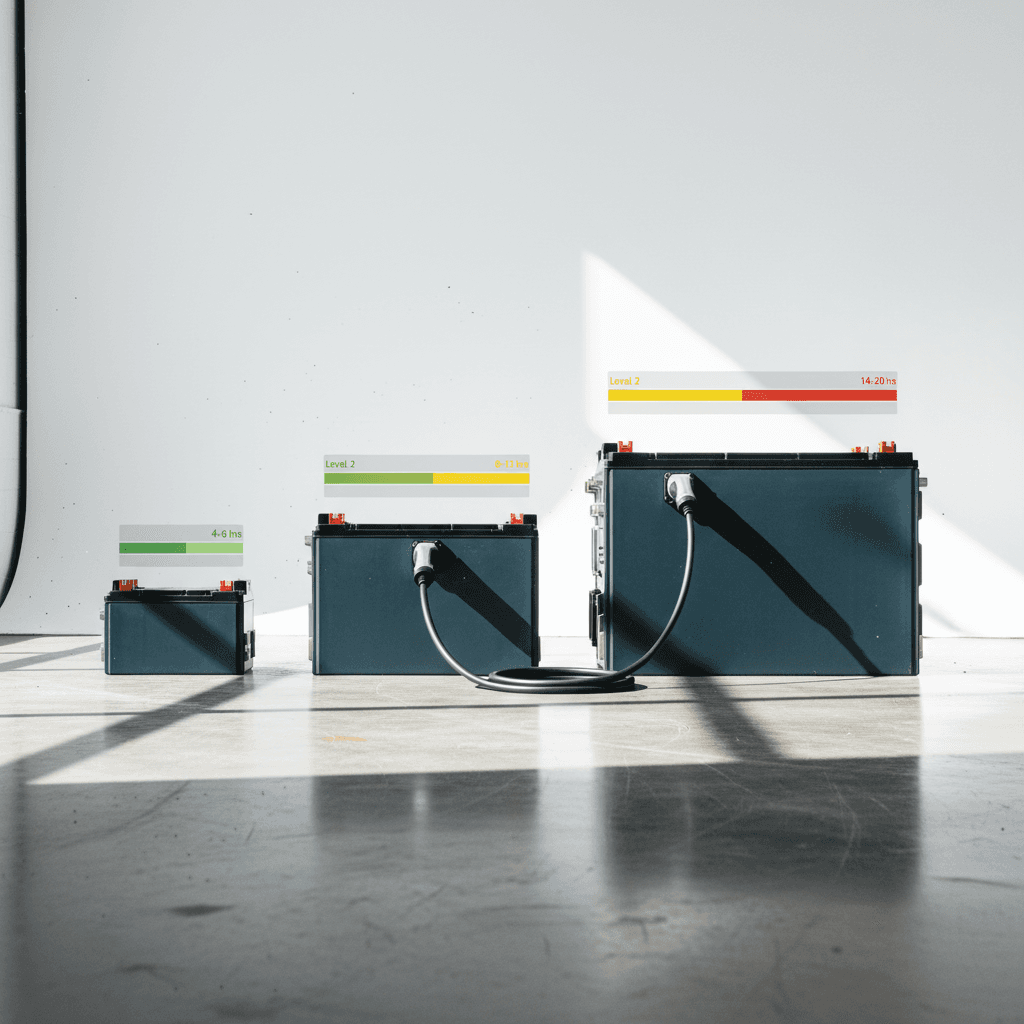
Home vs. public Level 2 chargers: does one charge faster?
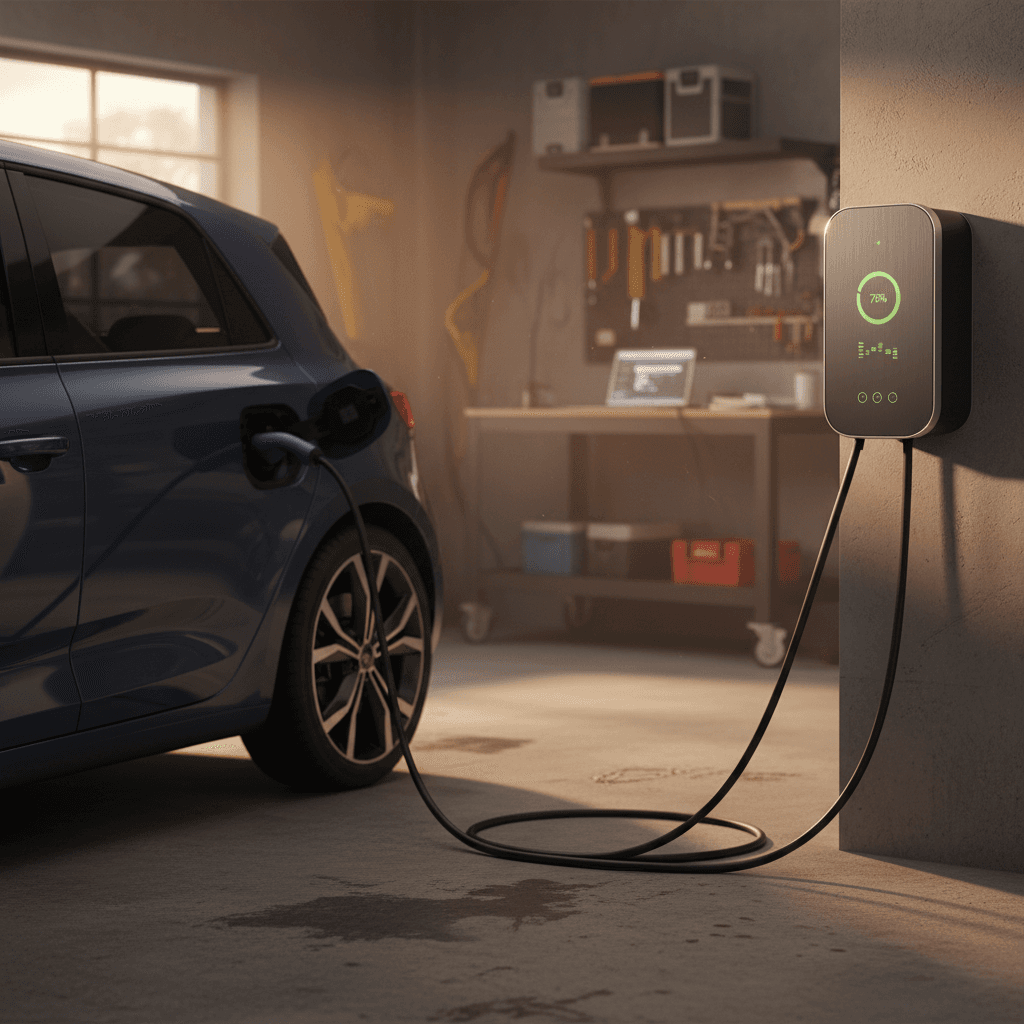
Home Level 2 charging
For most owners, a home Level 2 setup is the backbone of EV ownership.
- Common power levels: 6.6–9.6 kW depending on circuit and car.
- Best use case: Overnight charging while you sleep.
- Convenience: Always “your turn” at the charger; no waiting in line.
- Cost control: Easy to use off‑peak electricity rates where utilities offer them.
Public Level 2 charging
Public Level 2 stations, at workplaces, garages, and shopping centers, can be similar or slightly slower/faster than home, depending on hardware.
- Power: Often 6–11 kW, but many are around 6–7 kW on 208V power.
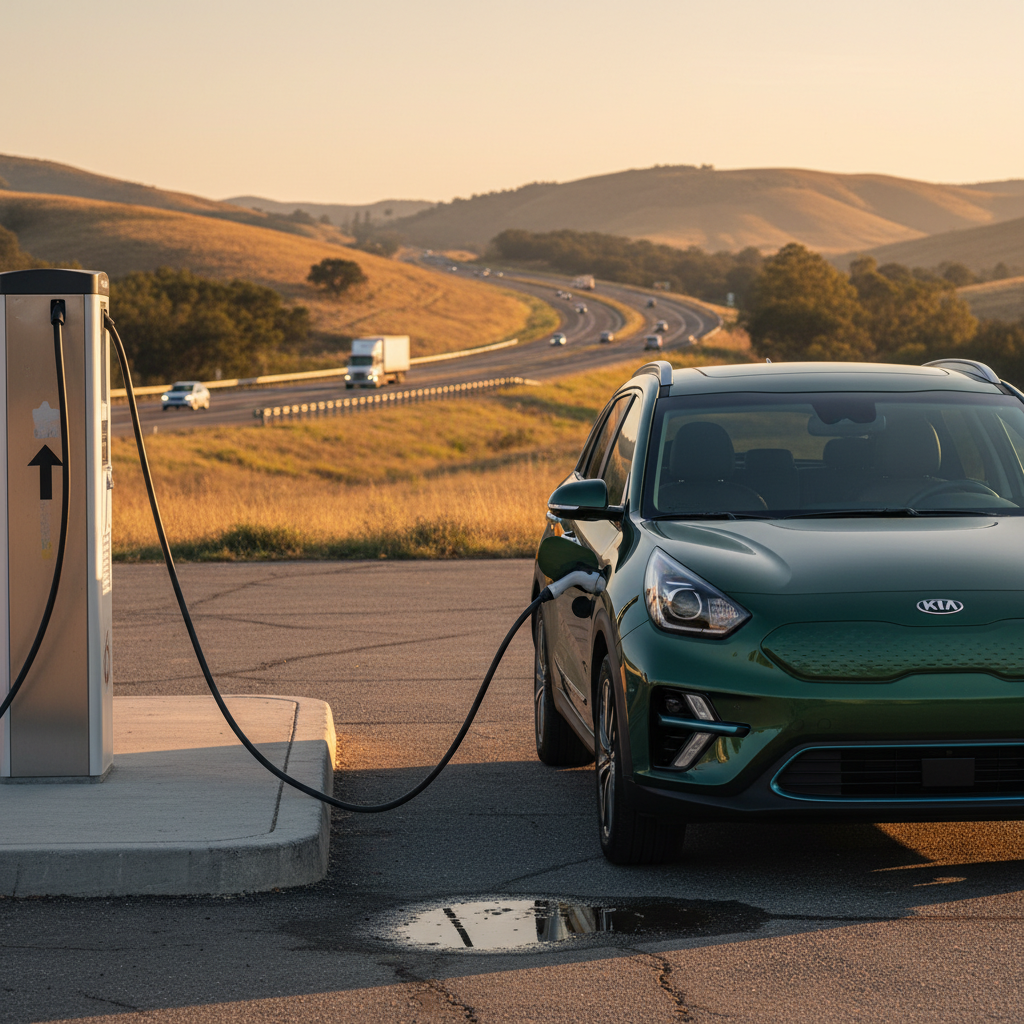
- Use case: Workdays, condo living, errands where you stay parked for hours.
- Trade‑off: You may need to share stations and move your car when done.
- Pricing: Can be free, flat‑fee, or per‑kWh, read the signage or app details.
The real win is consistency
How to estimate your own Level 2 charging time
You don’t need a physics degree to predict how long your EV will take to charge on Level 2. A simple back‑of‑the‑napkin approach will usually get you close enough for planning.
Simple steps to estimate your Level 2 charge time
1. Find your battery size (kWh)
Look in your owner’s manual or spec sheet for battery capacity. It might say something like 64 kWh or 77 kWh. If there are “usable” and “gross” numbers, use the usable figure.
2. Decide how much charge you’re adding
Figure out your start and target percentages. For example, going from 30% to 80% means adding 50% of the pack. For a 64 kWh battery, that’s 0.5 × 64 = 32 kWh.
3. Check your car’s max AC charge rate
Find the maximum AC (Level 2) power your car supports, often 6.6, 7.2, 9.6, or 11 kW. This is usually available in the owner’s manual or online specs.
4. Estimate your home or public charger power
Most home installations on a 40‑amp breaker deliver about 7 kW. Some public units list their kW rating on a label or in the charging network’s app. Use the lower number between charger and car limit.
5. Divide energy needed by kW
Take the kWh you plan to add and divide by your effective kW. Example: 32 kWh ÷ 7 kW ≈ 4.6 hours. That’s a reasonable estimate for a 30–80% top‑up at home.
6. Add a safety margin
Real life is messy. Add 10–20% time for cold weather, battery management tapering, and efficiency losses. In the example above, planning for 5–5.5 hours is realistic.
Think in hours parked, not 0–100%
Level 1 vs. Level 2 vs. DC fast: time comparison
To see why Level 2 is such a sweet spot, it helps to compare it against Level 1 (120V) and high‑power DC fast charging.
Charging level comparison by time and use case
Approximate values assuming a mid‑size EV with ~250‑mile EPA range and typical hardware.
| Charging type | Typical power | Miles of range per hour | Best use case | Time for ~150 miles* |
|---|---|---|---|---|
| Level 1 (120V) | 1–1.4 kW | 3–5 mi/hr | Emergency or very low‑mileage driving | ~30–40 hours |
| Level 2 (240V) | 3.3–11 kW | 20–40 mi/hr | Daily home/work charging | ~4–8 hours |
| DC fast charging | 50–350 kW | ~150–1000+ mi/hr equivalent | Highway road trips, quick top‑ups | ~15–45 minutes (10–80%) |
Exact numbers vary by model, but this comparison shows why most owners rely on Level 2 for daily life and DC fast for trips.
Why you shouldn’t live on DC fast charging
Used EV buyers: how Level 2 charging fits your life
If you’re shopping the used EV market, understanding Level 2 charging time helps you decide which models actually work for your routine. Battery size, efficiency, and AC charge rate matter just as much as infotainment features or paint color.
How different drivers experience Level 2 charging
Match your lifestyle to the right battery and charging behavior.
Short‑commute driver
Heavy‑mileage commuter
Apartment or condo resident
How Recharged helps you evaluate charging fit
Tips to charge faster and smarter on Level 2
- Use the thickest, shortest cable runs you reasonably can. For home installations, a properly sized circuit and good wiring help maximize safe power delivery.
- Right‑size your circuit. A 40‑amp circuit (32A charging) is a sweet spot for many homes; higher currents require heavier wiring and may not speed things up if your car is the limiting factor.
- Schedule charging during off‑peak hours. Many EVs let you set charging windows; this doesn’t change time to fill, but it lowers your cost per hour plugged in.
- Precondition in cold weather. Use your car or app to warm the battery while plugged in so Level 2 charging runs at closer to its full potential.
- Avoid pushing to 100% daily. Living between roughly 20–80% not only shortens how long you need to be plugged in but can also help preserve long‑term battery health.
- Keep an eye on shared public chargers. If the station load‑shares between two plugs, your car may charge slower when both are in use. Apps sometimes show this detail.
Use a licensed electrician for new 240V circuits
Frequently asked questions about Level 2 charging time
Level 2 charging time: common questions
Bottom line: how long Level 2 charging really takes
On paper, a full 0–100% Level 2 charge for a modern EV can look like an 8–12 hour commitment. In practice, most owners never notice, because their car is parked at home or work for far longer than that anyway. What matters is whether Level 2 can comfortably add back the energy you use between plug‑ins, and for the vast majority of drivers, it can.
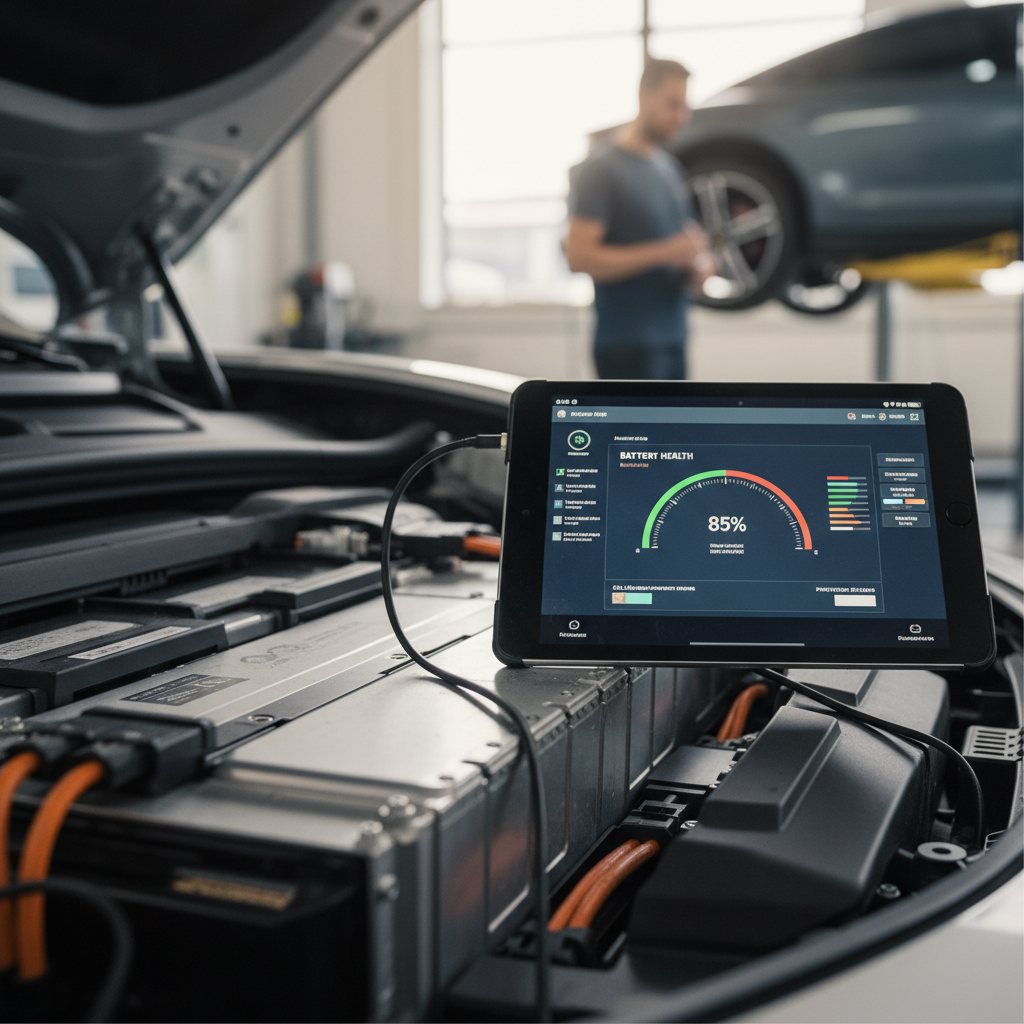
If you’re evaluating a used EV, think through your typical mileage, whether you’ll have reliable access to Level 2, and how long your car is parked overnight or at work. When those line up, charging time becomes something you plan once, not something you worry about daily. And when you shop with Recharged, you get transparent battery health data, fair pricing, and experts who can translate kilowatts and kilowatt‑hours into a simple answer: will this car fit your life on Level 2?