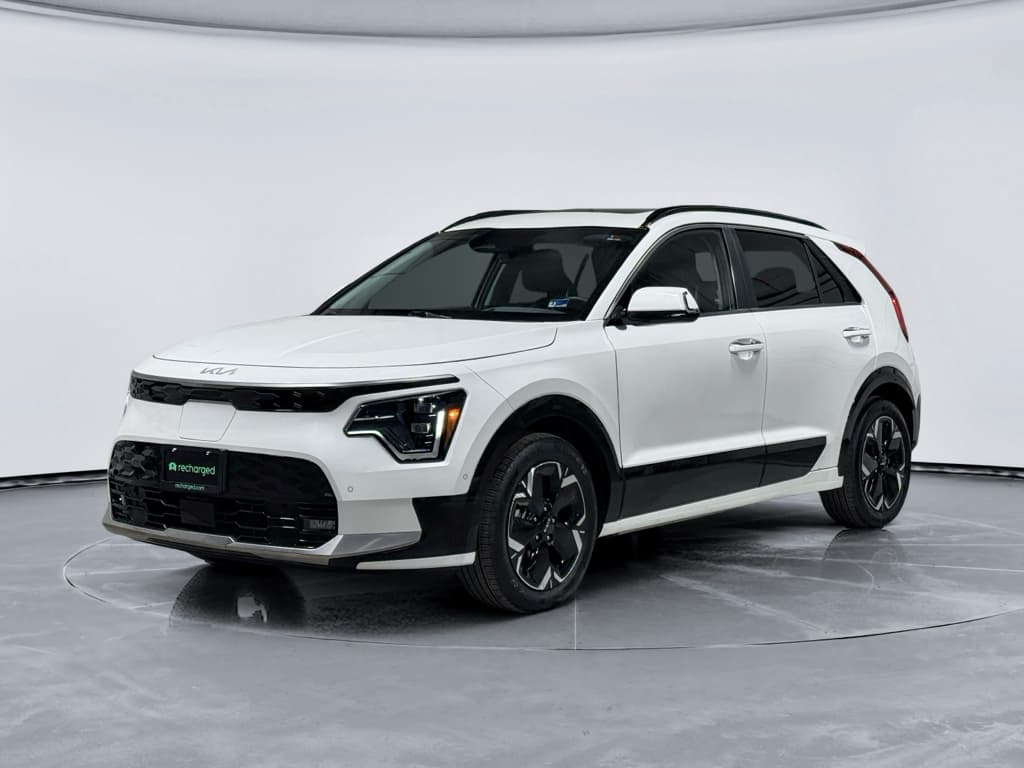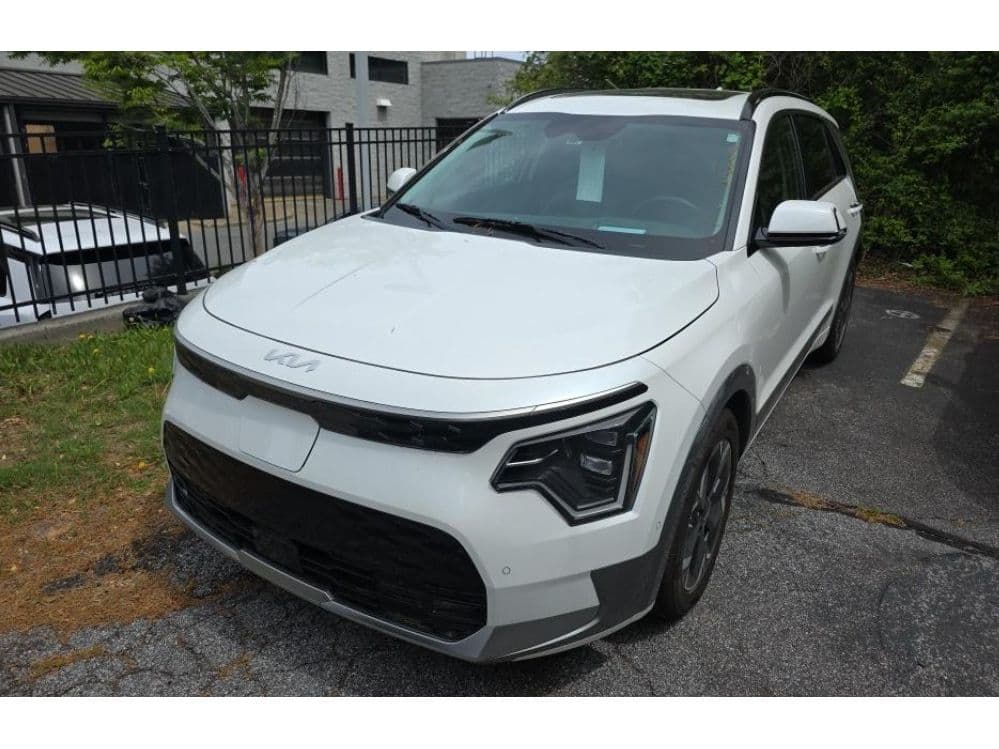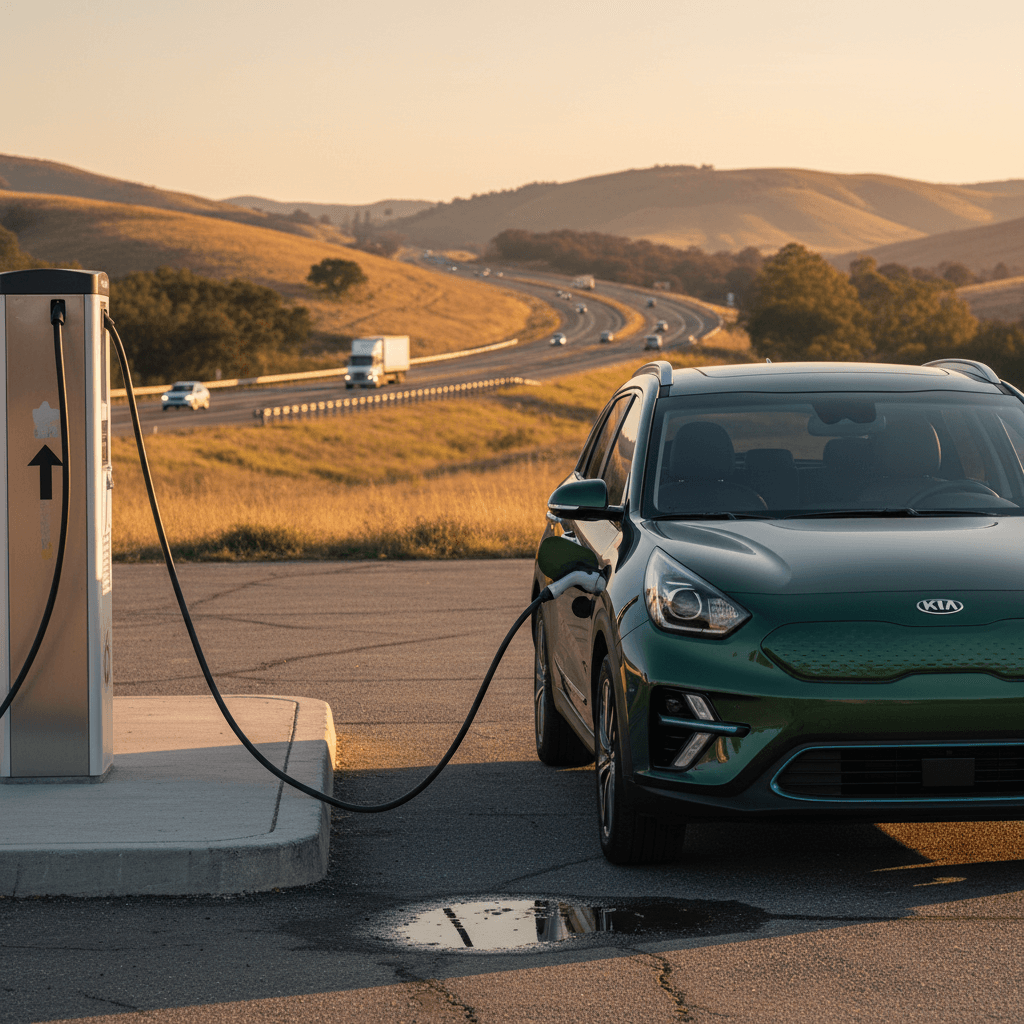
If you’re eyeing a Kia Niro EV and wondering whether it can handle real highway miles, you’re not alone. On paper, the Niro Electric’s ~64.8 kWh battery and ~239–253‑mile EPA range look road‑trip capable, but long trips expose every strength and weakness an EV has: charging curve, seat comfort, noise, and how quickly your SOC drops at 75 mph. This Kia Niro EV road trip review focuses on 2023–2025 U.S. models and what you can realistically expect when you point one at the interstate for a full day of driving.
Model years covered
Overview: Is the Kia Niro EV Road-Trip Ready?
The good news
- Genuinely efficient compact crossover with real‑world highway range that can crack ~200 miles in mild conditions.
- Comfortable and quiet cabin with supportive seats and a relaxed driving position for hours at a time.
- 11 kW onboard charger makes overnight Level 2 top‑ups at hotels and Airbnbs easy.
- Vehicle‑to‑Load (V2L) capability is great for camping and tailgating stops.
The tradeoffs
- DC fast charging tops out around 80–85 kW, with an average around the mid‑40 kW range over a 10–80% session, fine, but slower than many newer rivals.
- Front‑wheel drive only and modest power mean it’s more about efficiency than thrills.
- Range shrinks fast at 75+ mph or in winter; plan conservatively if you’re used to gas cars.
If you’re expecting Tesla‑level charging speeds and 300+ miles between stops, you’ll be disappointed. If you’re comfortable stopping every 2–3 hours for 30–45 minutes, the Niro EV is a solid, stress‑free road‑trip partner.
Kia Niro EV Road Trip Numbers at a Glance
Key Specs That Matter on the Highway
For a road trip, three specs matter more than anything: battery size, real‑world range, and charging speed. The 2023–2025 Kia Niro EV uses a 64.8 kWh (usable) lithium‑ion pack paired with a 201 hp front motor. Officially, Kia quotes an EPA range of roughly 239–253 miles depending on trim and wheel size, and DC fast charging up to about 80–85 kW via a CCS port on the nose of the car.
Kia Niro EV Core Road Trip Specs (2023–2025)
These specs shape how often you’ll stop and how long you’ll spend charging on a long drive.
| Category | Spec | Why it matters on a road trip |
|---|---|---|
| Battery (usable) | 64.8 kWh | Determines how far you can go between charges. |
| EPA rated range | ~239–253 miles | A baseline; highway speeds and weather will reduce this. |
| Motor / drive | 201 hp FWD | Plenty for merging and passing, but tuned for efficiency. |
| DC fast peak | ~80–85 kW | Defines how quickly you can add miles at highway chargers. |
| 10–80% DC time | ~40–45 minutes | Typical rest‑stop length every 2–3 hours of driving. |
| Onboard AC charger | 11 kW | Allows full overnight refills on many Level 2 hotel chargers. |
Figures are typical for U.S. 2023–2025 Kia Niro Electric models; exact specs vary slightly by trim and wheel/tire combo.
Think in legs, not total miles
Real-World Highway Range: What You Can Actually Expect
Official EPA range numbers are useful, but what you care about on I‑95 or I‑70 is how far you can go at a steady 65–75 mph with luggage and maybe a couple of passengers. The Niro EV is a relatively light, efficient crossover, so it holds up well compared with many larger EV SUVs, but highway speed, temperature, and elevation still matter a lot.
Typical Kia Niro EV Highway Range Scenarios
Approximate planning numbers for U.S. 2023–2025 models
Mild weather, 65 mph
Best‑case realistic highway scenario.
- Temps ~60–75°F
- Moderate speeds (60–65 mph)
- Light load, no roof box
Expect roughly 210–230 miles between 10–80% if you’re driving gently.
Typical U.S. interstate, 70–75 mph
Most common real‑world use case.
- Temps ~40–80°F
- Speeds 70–75 mph
- Family + luggage
Plan for 180–210 miles between fast‑charge stops with a buffer.
Cold weather, 70 mph
Challenging conditions.
- Temps near or below freezing
- Cabin heat in use
- Winter tires possible
Conservatively plan on 140–170 miles between stops and lean on preconditioning where possible.
Watch your speed
DC Fast Charging Experience on the Road
The Niro EV doesn’t chase headline‑grabbing 200+ kW peaks. Instead, it offers a relatively modest peak around 80–85 kW, with a reasonably flat charging curve through the heart of the battery. In testing, a 10–80% DC fast charge typically takes about 40–45 minutes on a healthy 100 kW+ charger, adding roughly 180–210 miles of highway‑usable range.
Kia Niro EV DC Fast Charging Benchmarks
Approximate DC fast‑charging performance for planning road trip stops.
| State of charge window | Approx. time | Average power | Approx. highway range added |
|---|---|---|---|
| 10–80% | ~40–45 min | Mid‑60 kW | ~180–210 miles |
| 20–70% | ~25–30 min | ~70 kW | ~130–160 miles |
| 10–50% | ~18–22 min | High‑60 kW | ~90–115 miles |
Times assume a functioning 100 kW+ station and a warm battery. Colder packs or under‑powered stations will charge more slowly.
What the charging curve feels like
Road Trip Fast-Charging Best Practices for Niro EV Drivers
1. Aim for 10–70% when you can
You’ll get the best average charging power by arriving near 10–20% state of charge and unplugging around 70–80%, then driving again instead of waiting for a slow trickle to 100%.
2. Prefer 100 kW+ stations
The Niro EV can’t use 350 kW peak power, but it does benefit from robust 100–150 kW hardware with good cooling and modern software.
3. Precondition the battery when possible
If your route planning app or the car’s built‑in navigation supports it, navigating to a fast charger can pre‑warm the pack and improve early‑session speeds.
4. Keep an eye on shared cabinets
On older sites where two stalls share one power cabinet, your Niro may charge more slowly if another car is heavily drawing from the same unit.
5. Don’t panic about the last 20%
Charging from 80–100% is always slow. If the next charger is reasonably close, it’s usually faster overall to leave around 70–80% and add a short extra stop later.
Comfort, Noise, and Storage on Long Drives
Long drives are where some EVs feel tiring, not because of the powertrain but because of seat shape, noise, and how the suspension deals with expansion joints and rough pavement. The Kia Niro EV does well here for a compact crossover: it’s not a luxury car, but it’s quiet and easy to live with for 6–8‑hour days.
How the Niro EV Feels After Hours on the Road
Comfort, space, and practicality for real‑world trips
Seats & driving position
The front seats are supportive with adjustable lumbar in higher trims. The seating position is slightly elevated like a compact SUV, which many drivers find ideal for long days behind the wheel.
Cabin noise
Wind and road noise are well controlled up to typical U.S. interstate speeds. You’ll hear more from coarse concrete surfaces and aggressive winter tires, but overall the Niro EV is quieter than many gas crossovers in its class.
Cargo and usability
With the rear seats up, you get enough room for several suitcases and soft bags. The split‑folding rear seat expands space for longer items, and the flat floor makes loading easy.
Family‑friendly road tripper
Tech, Driver Assistance, and Navigation
On a long drive, good driver‑assistance features and a clear navigation system can reduce fatigue just as much as quiet tires. The Niro EV’s tech package varies by trim and option, but many used examples on the market include adaptive cruise control, lane‑centering assistance, and a modern infotainment system with EV‑specific data.
- Highway Driving Assist (where equipped) helps keep the car centered in its lane and automatically adjusts speed to match traffic, which is especially helpful in stop‑and‑go congestion near metro areas.
- A digital instrument cluster and infotainment EV menu make it easy to monitor range, nearby stations, and how much energy your HVAC system is using.
- Apple CarPlay and Android Auto support let you run third‑party apps like A Better Routeplanner or PlugShare for more advanced trip planning and charger reviews.
- Available head‑up display and blind‑spot monitoring reduce the cognitive load of lane changes on busy interstates.
Use multiple apps
Winter Weather, Hills, and Other Road Trip Wild Cards
Elevation gains, headwinds, and cold weather can all chew through range faster than you’d expect if you’re new to EV road trips. The Kia Niro EV’s efficient powertrain softens some of that blow, and available features like a heat pump and battery warmer (on many higher‑spec trims) further help preserve range in harsher climates.
Cold‑weather considerations
- Preconditioning the cabin while plugged in keeps you warm without torching range on the first leg.
- A heat pump (if equipped) cuts the energy penalty of heating compared with simple resistance heaters.
- Plan shorter legs (140–170 miles) on very cold days, especially if you’re using a roof box or carrying heavy cargo.
Hills and mountain passes
- Climbs will temporarily raise energy use, but regen on the way down recovers some of that energy.
- Use the Niro’s adjustable regen paddles to manage long descents and reduce brake use.
- Don’t arrive at a big climb with a razor‑thin buffer; add an extra 10–15% SOC at the prior stop if you can.
Never count on 0%
Road Trip Planning in a Kia Niro EV
A well‑planned Niro EV trip feels relaxed and predictable. A poorly planned one can mean creeping along at 55 mph to reach a distant charger. The goal is to work with the car’s strengths: solid efficiency, predictable charging, and overnight Level 2 capability.
Step-by-Step: Planning a Kia Niro EV Road Trip
1. Map your DC fast spine first
Use a route planner to find 100 kW+ fast chargers roughly every 120–180 miles, then choose which ones to actually stop at based on your schedule and food/rest needs.
2. Plan overnight Level 2 charging
Search for hotels, rentals, or campgrounds with Level 2 chargers. With the Niro EV’s 11 kW onboard charger, you can easily refill from low SOC to 80–100% overnight.
3. Target 10–70% operating window
For long days, it’s often optimal to bounce between ~10–70% instead of insisting on 100% each time. This keeps you in the faster part of the charging curve.
4. Build in buffers and backups
Assume that one out of several chargers might be busy, derated, or offline. Always have a backup site within 20–30 miles of your primary stop.
5. Sync your stops to meals
Use 30–40‑minute fast‑charge windows for meals, coffee, or leg‑stretch breaks. You’ll feel less like you’re “waiting on the car” and more like you’re just stopping as you normally would.
6. Watch weather and wind
Check forecasted temperatures and wind along your route. Strong headwinds and low temps are your main enemies; adjust your speed and leg lengths accordingly.
Used Kia Niro EV: Is It a Smart Road Trip Buy?
For many shoppers, the sweet spot is a used Kia Niro EV. You avoid the steepest part of new‑car depreciation but still get modern safety tech, solid range, and a comfortable highway demeanor. The key is verifying battery health and understanding how the prior owner used the car, especially if it saw frequent DC fast charging.
Pros of a used Niro EV for road trips
- Lower upfront cost frees budget for home charging or more frequent getaways.
- Modern driver‑assist tech and infotainment comparable to new compact crossovers.
- Battery chemistry and thermal management designed for daily use plus occasional long trips.
What to check before buying
- Battery health and any history of rapid degradation complaints.
- Charging history, if available (heavy DC fast usage vs mostly home Level 2).
- Remaining factory battery warranty based on in‑service date and mileage.
How Recharged can help
Kia Niro EV Road Trip FAQ
Frequently Asked Questions About Road Tripping in a Kia Niro EV
Bottom Line: Who the Kia Niro EV Road Tripper Is For
If your ideal road trip is hammering out 600 miles with only 10‑minute gas stops, the Kia Niro EV isn’t a fit. But if you’re open to a slower, steadier rhythm, roughly 150–200‑mile legs, 30–40‑minute breaks, and overnight Level 2 top‑ups, the Niro EV delivers a calm, efficient, and surprisingly refined highway experience.
Its strengths are clear: solid real‑world range for a compact crossover, predictable charging, and comfortable long‑distance manners. Its weaknesses, modest DC fast speeds and front‑drive only, are manageable with realistic expectations and good planning. For many drivers, especially those shopping the used market, the Niro EV is an appealing all‑rounder that can handle weekday commuting and a few big trips each year without drama.
If you’re considering a Kia Niro EV as your next road‑trip companion, it’s worth taking the extra step to understand the specific car you’re buying: battery health, charging behavior, and remaining warranty. That’s exactly what the Recharged Score Report is designed to surface, so you can head out on your first road trip already knowing what to expect from the car in your driveway.