If you’re wondering how long an EV battery lasts, you’re not alone. Battery life is the number-one question for many shoppers comparing a used electric vehicle to a gas car, and the answer is much better than most people expect. Modern EV packs routinely last 12–20+ years and often outlive the vehicle itself.
Quick answer
EV battery lifespan basics: years, miles, and reality
What recent data says about EV battery life
Early EVs more than a decade ago had smaller packs and less sophisticated thermal management. Today’s cars use larger batteries, better chemistry, and smarter software, and the data is catching up: real-world studies of thousands of vehicles show that batteries degrade slowly and predictably, not catastrophically.
Think "capacity", not "failure"
How long does an EV battery last in years?
From a time perspective, modern EV packs are expected to last about as long as, or longer than, the vehicles they’re installed in. Federal modeling and independent testing suggest that in a moderate climate (think much of the U.S.), most EV batteries should last around 12–15 years before range loss becomes a serious limitation. In hotter or very cold regions where batteries are stressed more often, a realistic expectation is 8–12 years.
- In moderate climates: roughly 12–15 years of useful life
- In hot or very cold climates: roughly 8–12 years
- With gentle use and careful charging, many packs may go beyond 15–20 years
EVs are matching gas-car lifespans
How many miles does an EV battery last?
Mileage is trickier because drivers’ habits vary so widely. But if you average today’s data, most EV batteries are expected to deliver at least 150,000 miles before any significant capacity loss, and many will reach 200,000–300,000 miles with usable range.
Rough EV battery lifespan by miles
These are conservative ballpark ranges for modern EVs; individual results vary based on climate, driving, and charging behavior.
| Usage pattern | Annual miles | Years | Total miles | What to expect |
|---|---|---|---|---|
| Average commuter | 12,000 | 12 | 144,000 | Most packs still above ~80% capacity |
| High-mileage driver | 20,000 | 10 | 200,000 | Noticeable but usually manageable range loss |
| Rideshare / delivery | 30,000+ | 8–10 | 240,000–300,000+ | Deeper degradation but packs often remain usable |
| Low-mileage household | 6,000 | 15 | 90,000 | Battery age more than miles becomes the limiter |
Mileage expectations for a typical modern EV battery pack.
Real-world example
What battery degradation really looks like day to day
Year 1–3: The early dip
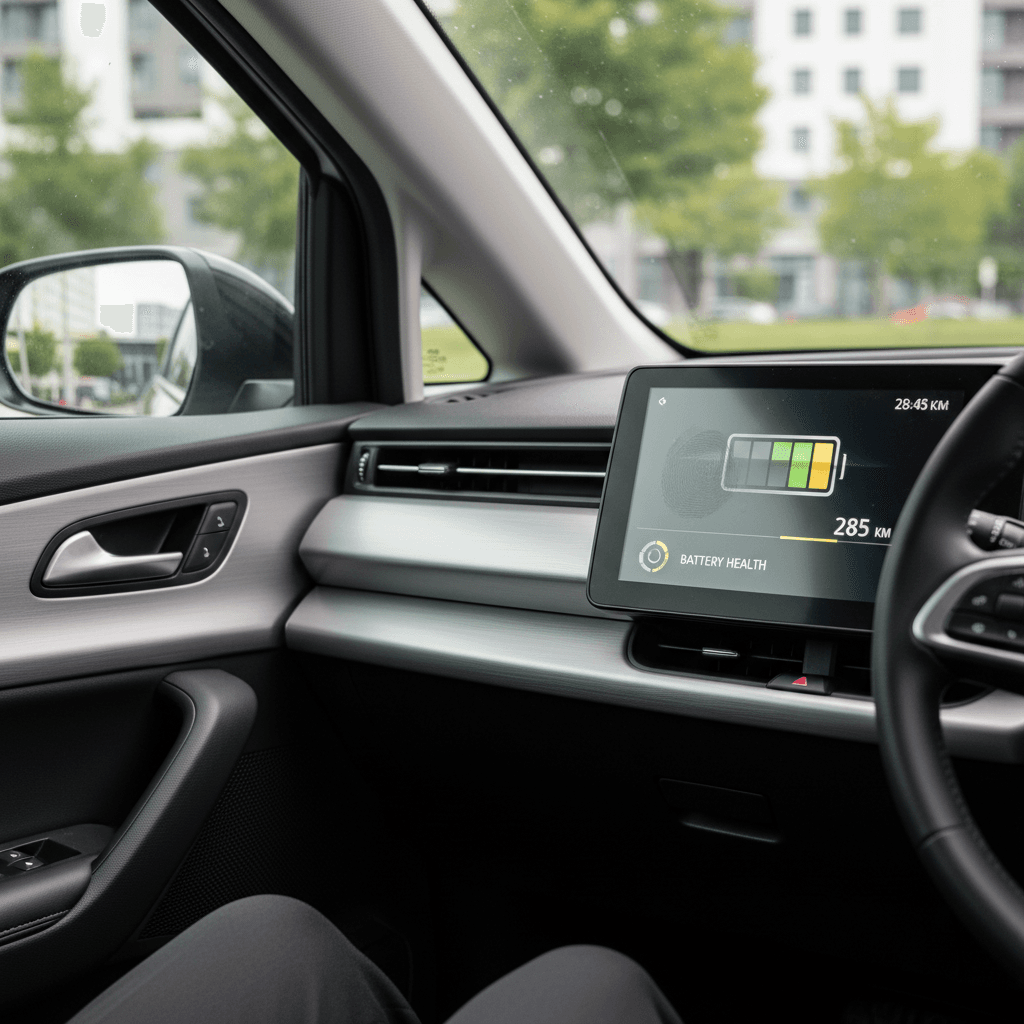
Most lithium-ion packs see a slightly faster loss in the first few years, often around 3–5% total. You might notice your car that once charged to 300 miles now shows 290 or 285. It’s normal and not a sign the battery is failing.
Year 4–10+: Slow and steady
After that early adjustment, degradation tends to flatten out to roughly 1–2% per year. Over a decade, many owners still have around 80–90% of their original capacity, especially if they’ve avoided extreme heat and constant fast charging.
Range vs. usability
7 factors that affect how long an EV battery lasts
What makes an EV battery last longer, or wear out sooner?
You can’t control everything, but you can control a lot more than you think.
1. Temperature extremes
Heat is enemy number one for lithium batteries. Repeated exposure to very high temperatures (e.g., parking in hot sun, desert climates) accelerates chemical wear. Severe cold mainly reduces temporary range, but frequent deep winter fast-charging can add stress.
2. Fast-charging frequency
DC fast charging (Level 3) is convenient on road trips but harder on the pack than Level 2 home charging. Using fast charging occasionally is fine; relying on it for most charging will typically increase degradation over time.
3. State-of-charge habits
Living at the extremes, regularly charging to 100% and running down to near 0%, puts more wear on the pack. Most experts recommend keeping your daily charging window roughly between 20–80% when practical.
4. Annual mileage
More miles equals more charge cycles. A high-mileage rideshare driver will age a battery faster than a commuter who drives 8,000–10,000 miles a year, even in the same climate.
5. Driving style
Hard acceleration, heavy loads, and constant high-speed driving all increase battery heat. Occasional spirited driving is fine, but an aggressive driving style every day adds up over years.
6. Battery and thermal design
Not all battery packs are created equal. Cars with sophisticated liquid cooling and heating generally protect the cells better than air-cooled packs, especially in extreme climates.
7. Long-term storage
Lifespan by battery type: NMC vs LFP and others
Most modern EVs use some form of lithium-ion chemistry, but not all packs age the same way. Two acronyms you’ll see a lot are NMC (nickel-manganese-cobalt) and LFP (lithium iron phosphate). They trade off energy density, cost, and durability.
Common EV battery chemistries and expected longevity
Generalized expectations for mainstream EV chemistries used today.
| Chemistry | Typical use today | Energy density | Expected lifespan | Notable traits |
|---|---|---|---|---|
| NMC / NCA | Most long-range EVs in North America | High | ~150k–250k miles, 10–15 years | Great range per kWh, more sensitive to heat |
| LFP | Many newer entry and mid-range EVs, some Teslas, commercial fleets | Medium | ~250k–400k+ miles, 15–20+ years | Extremely durable, tolerates full charges well |
| Older chemistries / small packs | Early EVs and plug‑in hybrids | Lower | Often under 150k miles | More noticeable early degradation, fewer are still on the road |
Battery life varies by design and use, but chemistry is a big lever.
Why LFP matters for used shoppers
EV battery warranties: what’s actually covered
In the U.S., federal rules require automakers to warranty EV batteries for at least 8 years or 100,000 miles against defects. Many brands, especially in states that follow California rules, go further with 10-year / 150,000-mile coverage on emissions-related components, which includes the traction battery.
- Most EVs: minimum 8 years / 100,000 miles battery warranty
- Some brands / states: 10 years / 150,000 miles
- Many warranties promise at least ~70% capacity retention within the warranty window
Capacity vs. failure coverage
Used EVs: how to check battery health before you buy
Battery health matters most when you’re buying a used EV. The good news: because packs are aging better than expected, the vast majority of used EVs on the market still have plenty of life left. The key is to get real data, not guesses.
Four ways to understand a used EV’s battery
Combine these for the clearest picture.
1. Check in-car battery and range readouts
Start simple. Look at the indicated range on a full or near‑full charge and compare it with the model’s original EPA rating. A modest gap (5–15%) is normal. A very large gap can be a red flag worth investigating.
2. Use third-party battery reports
Some services and apps can read battery data through the car’s diagnostic port, estimating state of health (SoH). This can give you a more granular view of remaining capacity and any imbalances across cells.
3. Review warranty status
Confirm whether the factory battery warranty is still active based on the in‑service date and mileage. A few years of coverage remaining can provide real peace of mind.
4. Ask for a professional battery assessment
For higher‑value purchases, a structured evaluation is worth it. At Recharged, every vehicle gets a Recharged Score with verified battery diagnostics, so you can see how the pack compares to similar cars before you buy.
Quick checklist for evaluating used EV battery health
1. Ask for recent range screenshots
Request photos of the car at a high state of charge (90–100%) showing the estimated range. Compare with the original EPA rating for that trim.
2. Confirm software and recall status
Battery-related recalls and software updates can affect longevity. Make sure everything is up to date before you commit.
3. Look at charging history if available
Many cars log fast-charge vs. AC-charge history. A life spent mostly on DC fast chargers is not an automatic deal-breaker, but it’s worth factoring into your decision.
4. Consider climate history
An EV that lived in a moderate climate and slept in a garage often has an easier life than one parked outdoors in extreme heat year-round.
5. Get a third-party or Recharged Score report
Objective diagnostics beat gut feel. A structured battery health report is the single best way to buy a used EV with confidence.
10 habits that help your EV battery last longer
Whether you already own an EV or are planning to, a few simple habits can stretch the life of the pack and preserve more range for years to come. You don’t need to obsess over every charge, just follow these guidelines most of the time.
Battery-friendly habits for everyday driving
1. Use 20–80% for daily driving
Set your charge limit to around 80% for routine use and avoid running the battery down into the single digits unless you really need the extra range.
2. Save 100% charges for trips
It’s fine to charge to 100% right before a long drive, but don’t leave the car sitting full for days. Start your trip soon after a full charge.
3. Favor Level 2 over DC fast charging
Use home or workplace Level 2 charging for the bulk of your needs. Treat DC fast charging as a road-trip tool, not an everyday habit.
4. Watch battery temperature in extreme weather
If your car lets you precondition the battery before fast charging in winter, use it. In extreme heat, try to park in shade or a garage when possible.
5. Avoid long-term storage at very high or low SOC
If you’re leaving the car parked for weeks, aim for ~40–60% charge and check in occasionally rather than leaving it full or nearly empty.
6. Keep software updated
Automakers continuously refine battery management software. Staying current helps the car protect its pack as effectively as possible.
7. Drive smoothly when you can
Frequent full-throttle launches and hard braking heat up the pack and drivetrain. Smoother driving is easier on everything, including tires.
8. Use scheduled charging
Many EVs let you start charging late at night, closer to your departure. This can keep the battery at a moderate state of charge for more of the day.
9. Follow manufacturer maintenance guidance
Some EVs recommend periodic coolant checks or other inspections for the battery system. Skipping these can reduce long-term durability.
10. Don’t panic over a few percent
A small drop in displayed range is normal and expected. Focus on whether the car still covers your actual daily needs, not just the number on the screen.
FAQ: Common questions about EV battery life
Frequently asked questions about EV battery lifespan
Key takeaways for shoppers and owners
The bottom line: when you ask “How long does an EV battery last?”, the honest answer is that today’s packs, managed properly, usually last longer than most people keep their cars. You’re looking at a decade or more of usable life in typical U.S. conditions, and often far more, before range loss becomes a serious constraint.
If you’re shopping for a used EV, focus less on fear of the battery and more on the data. Look at range, climate history, warranty coverage, and, ideally, a verified battery health report like the Recharged Score that comes with every vehicle on Recharged. With transparent information and a few smart habits, EV battery life becomes one of the strongest arguments in favor of going electric, not a reason to hesitate.